Last updated: November 2026
Quick answer: Espresso nails are a deep, velvety brown manicure that flatters most skin tones and outfits: choose a shade that suits your undertone, prep nails carefully, apply thin coats, and refresh the top coat every few days.
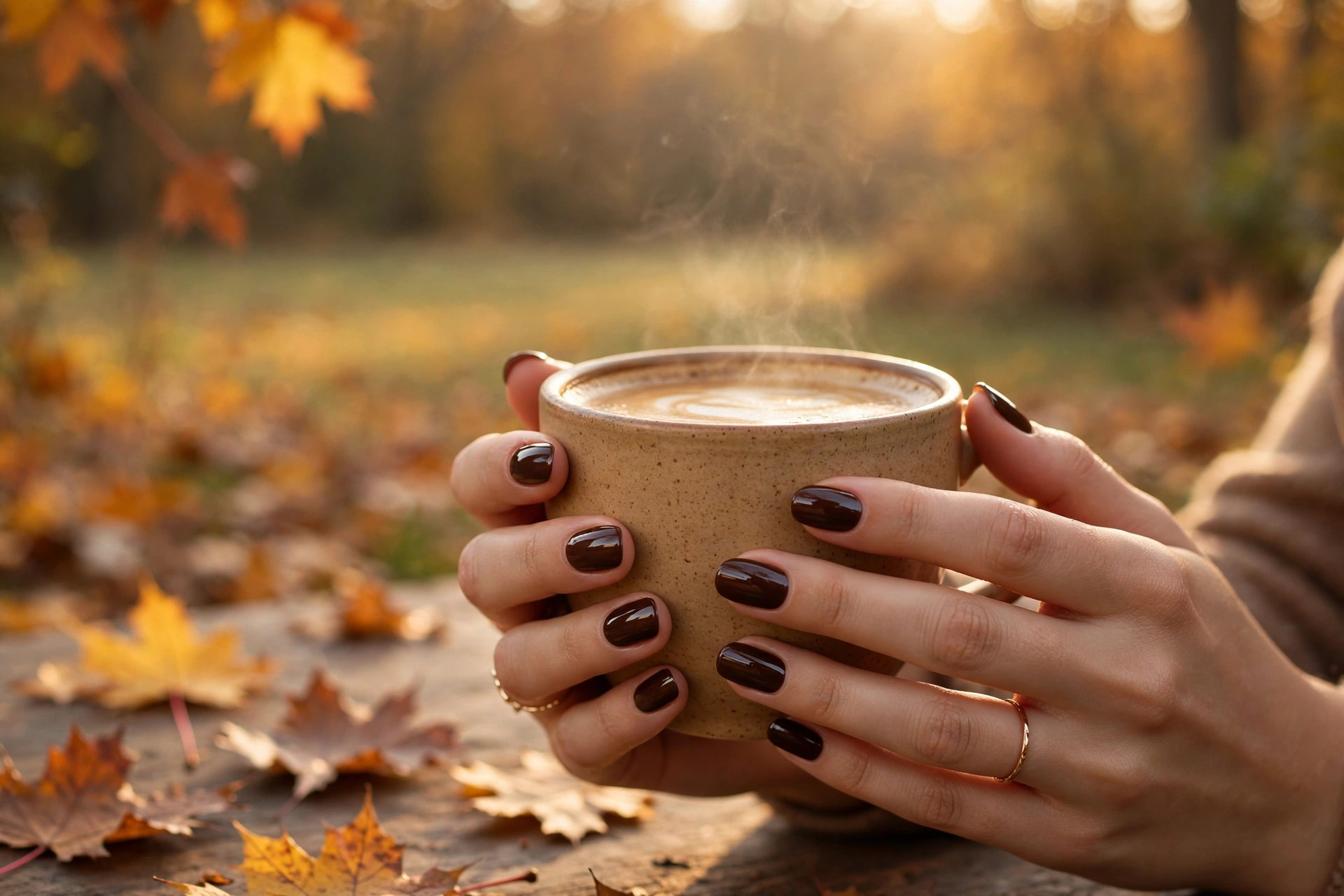
Every autumn, one nail colour quietly takes over. This fall, the shade everyone is wearing has a name as delicious as the colour itself: espresso nails. Think of the darkest, richest part of a freshly pulled espresso shot — that deep, velvety brown with the faintest hint of warmth — translated into a manicure that looks expensive on absolutely everyone.
Espresso brown sits in that perfect middle ground between classic and interesting. It is darker and moodier than a nude, softer and more modern than black, and it works with every outfit in a fall wardrobe, whether your nails are long stilettos or short, neat squares.
Why Are Espresso Nails Fall’s Richest Manicure?
Espresso brown works like a neutral, pairing with everything, yet its warmth keeps it from looking harsh like black or washed out like nude, giving a quietly luxurious finish that suits both office and evening wear.
- Brown behaves like black or nude in your wardrobe, going with everything without competing.
- Unlike black, it rarely reads harsh; unlike nude, it rarely washes skin out.
- It fits the “quiet luxury” mood: understated, refined, and quietly confident.
- Dark browns are forgiving — they hide minor application imperfections better than pale nudes and make nails look longer and slimmer.
How Do You Find Your Perfect Espresso Shade?
Pick your espresso by undertone and depth: cool undertones suit grey-black browns, warm undertones suit reddish caramel browns, and checking the bottle against your fingertips in daylight reveals the most flattering shade.
| Your undertone | Best espresso | Clue |
|---|---|---|
| Cool | Deep brown with a hint of grey or black | Veins look blue or purple; silver jewellery suits you best |
| Warm | Warmer espresso with reddish or caramel depth | Veins look green; gold jewellery is your friend |
| Neutral / in between | Most espresso shades | A mix of both clues — you can wear the full range |
Depth matters as well. Very fair skin can look striking against the darkest, near-black espresso shades. Medium and olive skin tones glow against classic mid-depth espresso browns. Deep skin tones look incredible with rich, warm browns that have enough saturation to show up beautifully. When in doubt, hold the polish bottle against your fingertips in natural daylight.
Finish is the final piece of the puzzle: high-gloss cream is the classic espresso look, matte looks modern and velvety like suede, and a subtle shimmer or metallic bronze-brown adds festive warmth.
Why Is Nail Prep the Step Most People Skip?
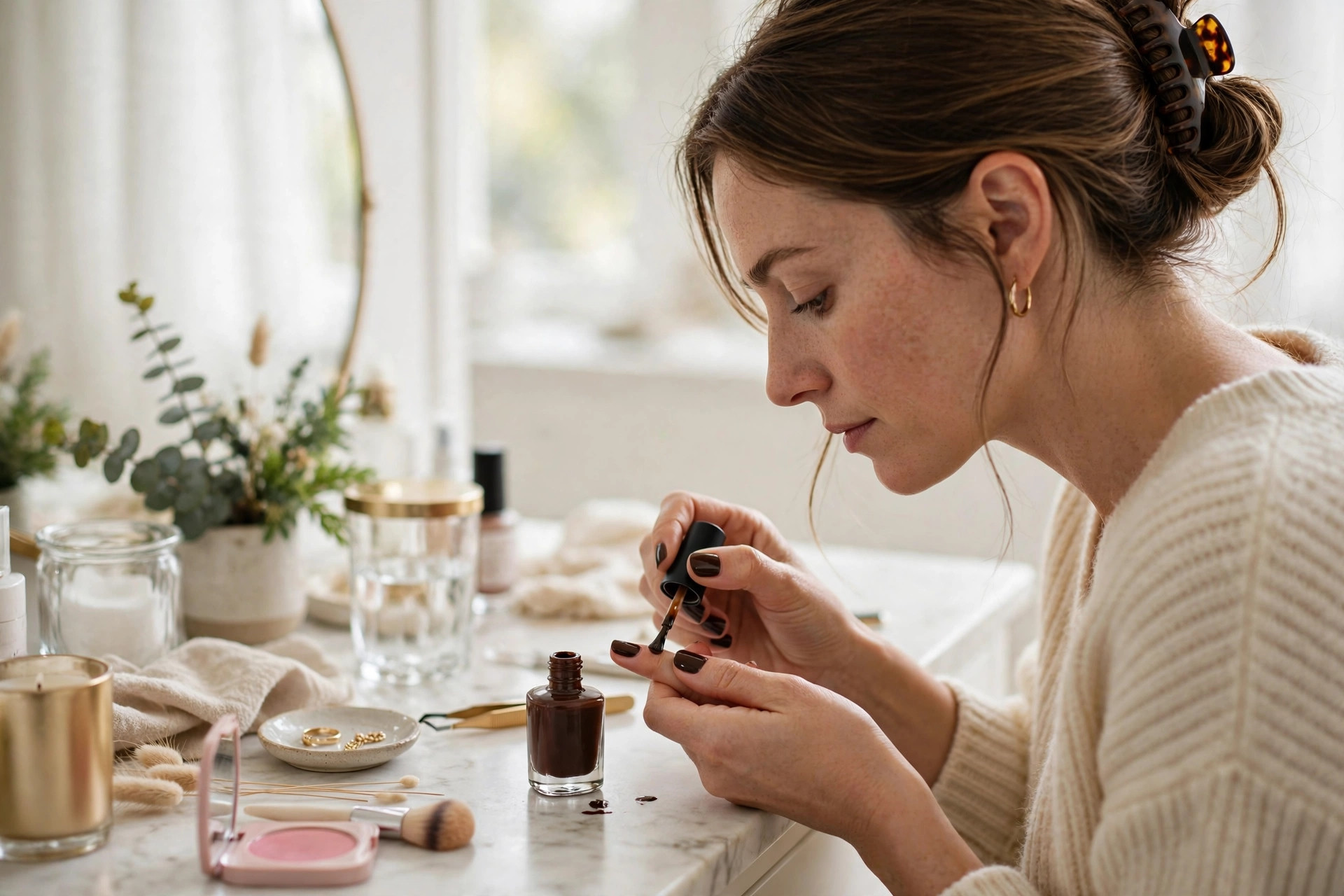
Good prep makes the manicure: remove old polish, file in one direction to an even length, gently push cuticles back without cutting living tissue, buff lightly, and wipe nails clean so polish grips properly.
- Remove any old polish completely, then shape your nails — almond and oval shapes are especially striking in espresso. File in one direction rather than sawing back and forth.
- Keep lengths even — dark polish makes uneven lengths glaringly obvious.
- Soak fingertips in warm water for a few minutes, then softly push cuticles back with a cuticle pusher or orangewood stick. Never cut living cuticle tissue — it protects your nail bed from infection.
- Lightly buff the nail surface with a fine-grit buffer, then wipe each nail with polish remover or rubbing alcohol on a lint-free pad to remove oils.
Dermatologists from the American Academy of Dermatology advise the same gentle approach: keep nails clean and dry, file in one direction, and never remove the cuticle, since doing so can damage the nail and increase the risk of infection (American Academy of Dermatology, via Newswise).
How Do You Apply Espresso Polish Flawlessly?
Apply thin coats only: base coat first, a lightly loaded brush in three strokes per nail, seal the free edge, build to full opacity in two or three coats, then finish with top coat and allow proper drying time.
- Base coat first, always. Dark browns can stain the natural nail; a base coat helps colour adhere and prevents chipping. Let it dry for two minutes.
- Load the brush lightly. Wipe one side of the brush on the bottle neck so you work with a controlled amount of polish.
- Paint in three strokes. Place the brush slightly above the cuticle, push gently toward it without touching skin, then pull down to the tip: one stroke down the centre, one down each side.
- Cap the free edge. Run the brush horizontally along the very tip of the nail to seal the edge and reduce tip wear.
- Build thin layers. Apply your second coat once the first is touch-dry (usually 2–3 minutes). Most espressos reach full opacity in two coats.
- Top coat to finish. A glossy top coat deepens the colour and protects against chips. Reapply every two to three days.
Clean up as you go with a small angled brush or cotton bud dipped in polish remover, then let your nails dry properly — give it a full fifteen to twenty minutes before doing anything with your hands.
Which 12 Espresso Nail Ideas Should You Try This Fall?
Espresso is a dream base for nail art: try glossy or matte finishes, French tips, gold foil, tortoiseshell, ombré, chrome or minimal line art, starting with the simplest designs if you are new to nail art.
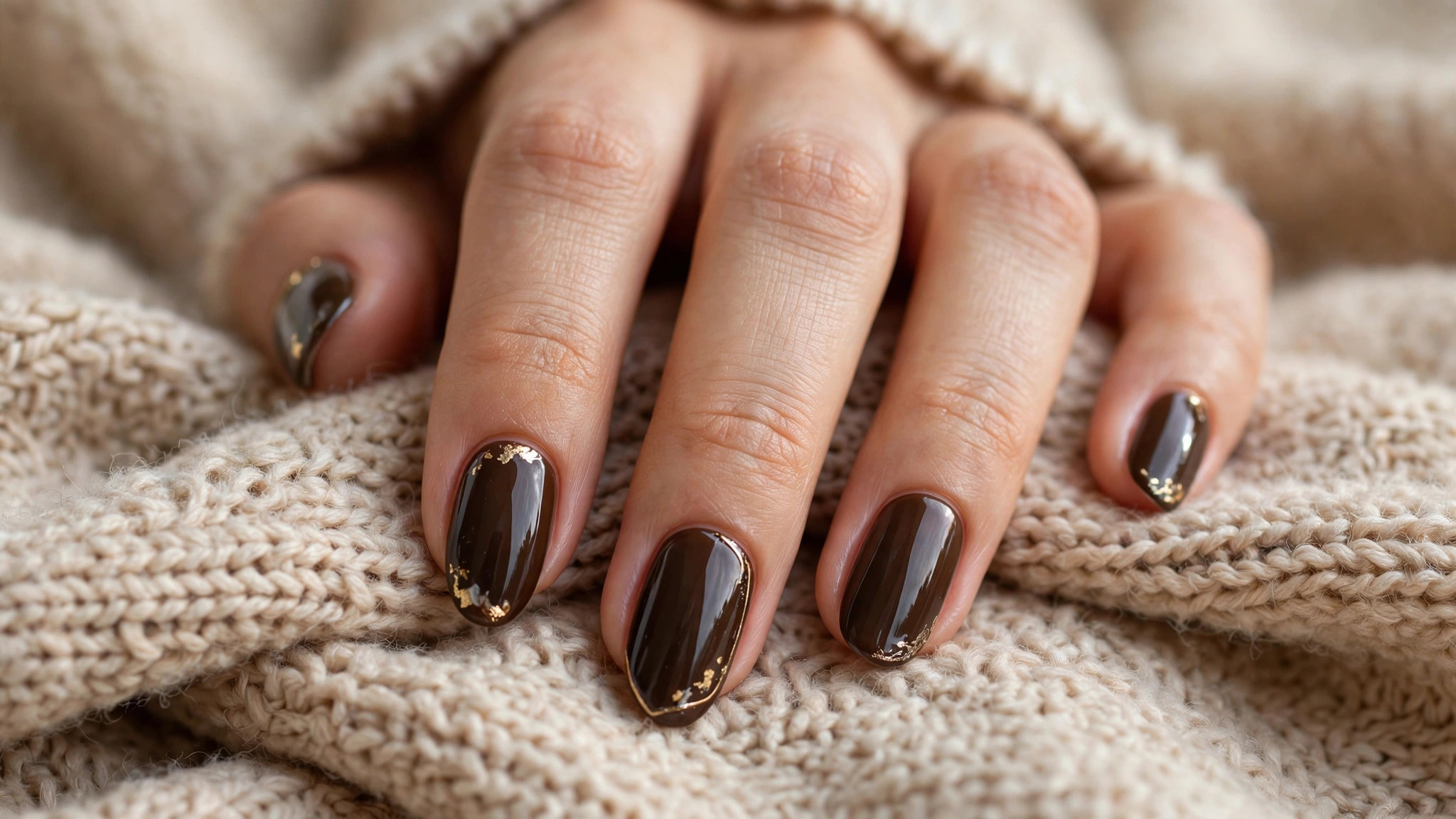
- Classic glossy espresso: two coats of deep brown cream plus high-shine top coat.
- Matte espresso: the same shade with a matte top coat for a velvety, suede-like finish.
- Espresso French tips: a nude or sheer base with deep brown tips.
- Gold foil accents: tiny flecks of gold foil pressed into one or two accent nails.
- Tortoiseshell effect: espresso blended with caramel and amber tones.
- Espresso ombré: a fade from warm caramel at the cuticle to deep espresso at the tip.
- Chrome over espresso: a brown or bronze chrome powder rubbed over an espresso base.
- Minimal line art: a single thin gold or cream line on bare or espresso nails.
- Espresso and cream colour-blocking: alternate solid espresso nails with warm cream ones.
- Glazed espresso: a sheer pearl or glazed topper over espresso for a “glazed chocolate” glow.
- Autumn leaf accents: tiny hand-painted leaves in gold and copper on one accent nail.
- Espresso aura nails: a soft, airbrushed halo of caramel or gold glowing from the centre of each nail.
If you are new to nail art, start with ideas 1 through 4 — they require no special tools and look polished immediately. Save the ombré and aura effects for when you are feeling adventurous, or ask your nail technician to create them.
How Do You Make Your Espresso Manicure Last?
Make the manicure last by treating nails like jewels, wearing gloves for water and cleaning, oiling cuticles daily, refreshing top coat every two to three days, and repairing small chips promptly with matching polish.
- Treat your nails like jewels, not tools: no prying open cans or typing with your nail tips.
- Wear gloves for household chores involving water or cleaning products, and dry hands thoroughly after washing.
- Massage a drop of cuticle oil into each nail daily, and apply hand cream nightly.
- Refresh top coat every two to three days — it takes ninety seconds and extends glossy life.
- Repair chips with a tiny dab of matching polish sealed with top coat.
Be realistic about lifespan: even a perfect at-home manicure typically lasts five to seven days before tip wear shows, while gel or salon manicures stretch to two or three weeks.
How Do You Remove Polish and Care for Nails Afterwards?
Remove polish gently by soaking a pad in remover, pressing it on the nail, and wiping toward the tip, then give nails a polish-free rest day with cuticle oil so the next manicure holds even better.
- Soak a cotton pad in acetone or non-acetone remover, press it onto the nail for ten to fifteen seconds, then wipe firmly toward the tip. Repeat rather than scouring.
- If staining remains despite base coat, a gentle buff usually lifts surface discolouration, and the stain fades on its own within a week or two as the nail grows.
- After removal, give nails a little recovery time — even one polish-free day lets nails rehydrate.
- Massage in cuticle oil, apply a strengthening treatment if nails feel soft or bendy, and keep them at a sensible length while they recover.
Espresso nails prove that the most powerful beauty trends are often the simplest. One rich, deep brown — chosen for your skin tone, applied with care, and maintained with a few easy habits — delivers weeks of quietly luxurious style.
Leave a Reply