Last updated: November 2026
Quick answer: October garden clean-up is selective tidying that sets up next spring: clear leaves and spent plants, plant bulbs and garlic, mulch beds, protect tender plants, and leave wild corners and seed heads for wildlife.
October is the garden’s turning point. The summer show is over, the leaves are falling, and everything you do now quietly shapes what your garden will look like next spring. A few weekends of thoughtful tidying in October will save you hours of rescue work in March.
This is not about stripping the garden bare. The best October clean-up is selective: clearing what needs clearing, protecting what needs protecting, and deliberately leaving the rest for wildlife and winter interest. Work through these twelve jobs at your own pace, and your garden will rest well through winter.
How Do You Clear Fallen Leaves Without Harming Wildlife?
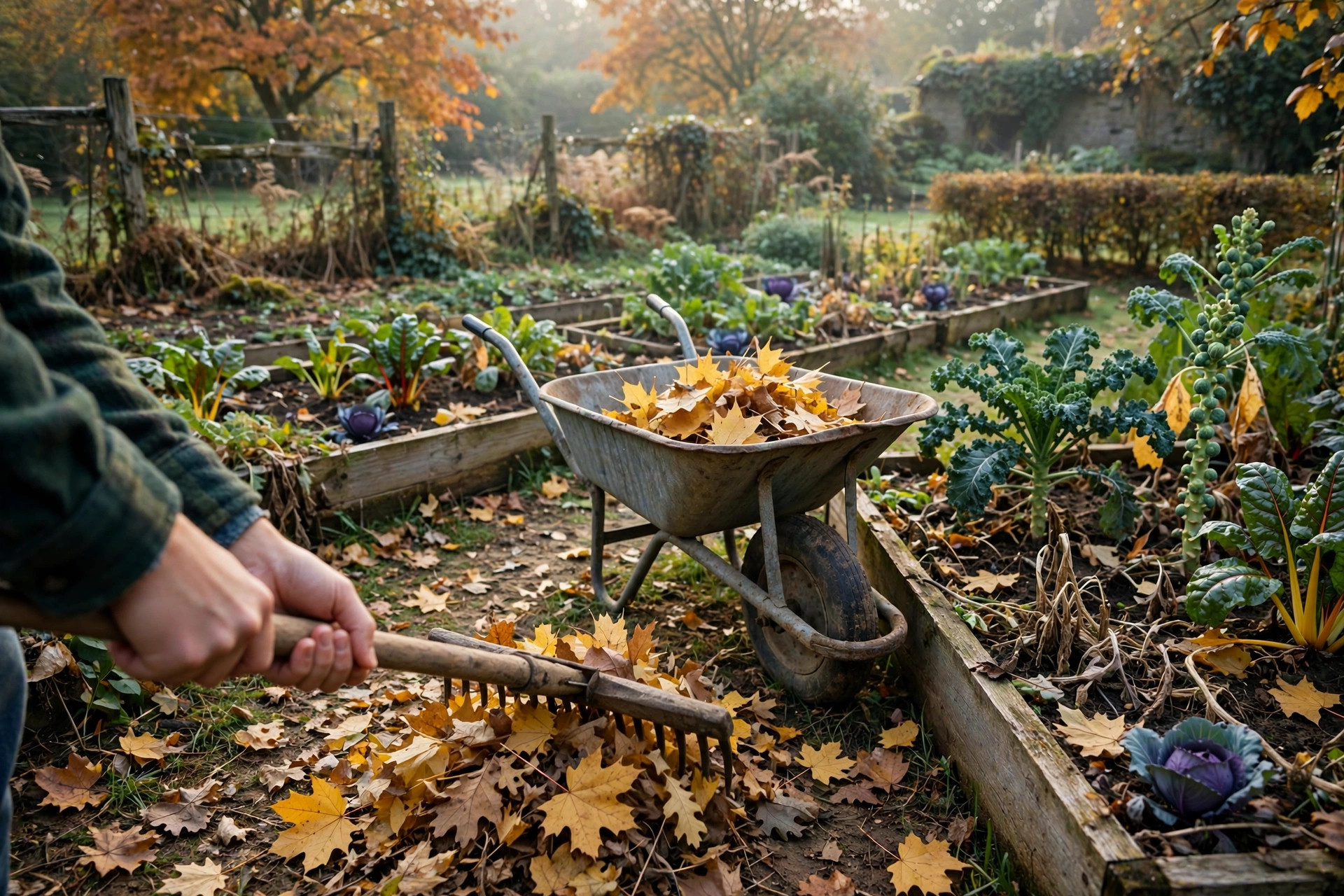
Rake leaves off lawns and paths, where a wet mat blocks light and air and turns paths slippery, but leave a light scattering in borders and piles in quiet corners as shelter for hedgehogs and insects.
- Rake leaves off the grass and hard surfaces regularly through October.
- Do not be too thorough in the borders — a light scattering breaks down naturally and feeds the soil.
- Leave piles of leaves in quiet corners as vital winter shelter for hedgehogs, frogs and beneficial insects.
When Should You Cut Back Spent Perennials?
Cut spent perennials down once their foliage yellows to keep borders tidy and remove winter hiding places for slugs, but leave attractive seed heads standing for frost beauty and birds until late winter.
- Once herbaceous perennials have finished flowering and foliage has yellowed, cut stems to a few centimetres above ground level.
- Leave echinacea, sedum and ornamental grasses standing — they look beautiful rimed with frost, and birds feast on the seeds.
- Leave a few hollow stems as shelter for overwintering insects.
How Do You Plant Spring Bulbs in October?
October is prime bulb-planting time: plant daffodils, tulips, crocuses and alliums about three times as deep as they are tall, pointed end up, in generous drifts rather than single rows.
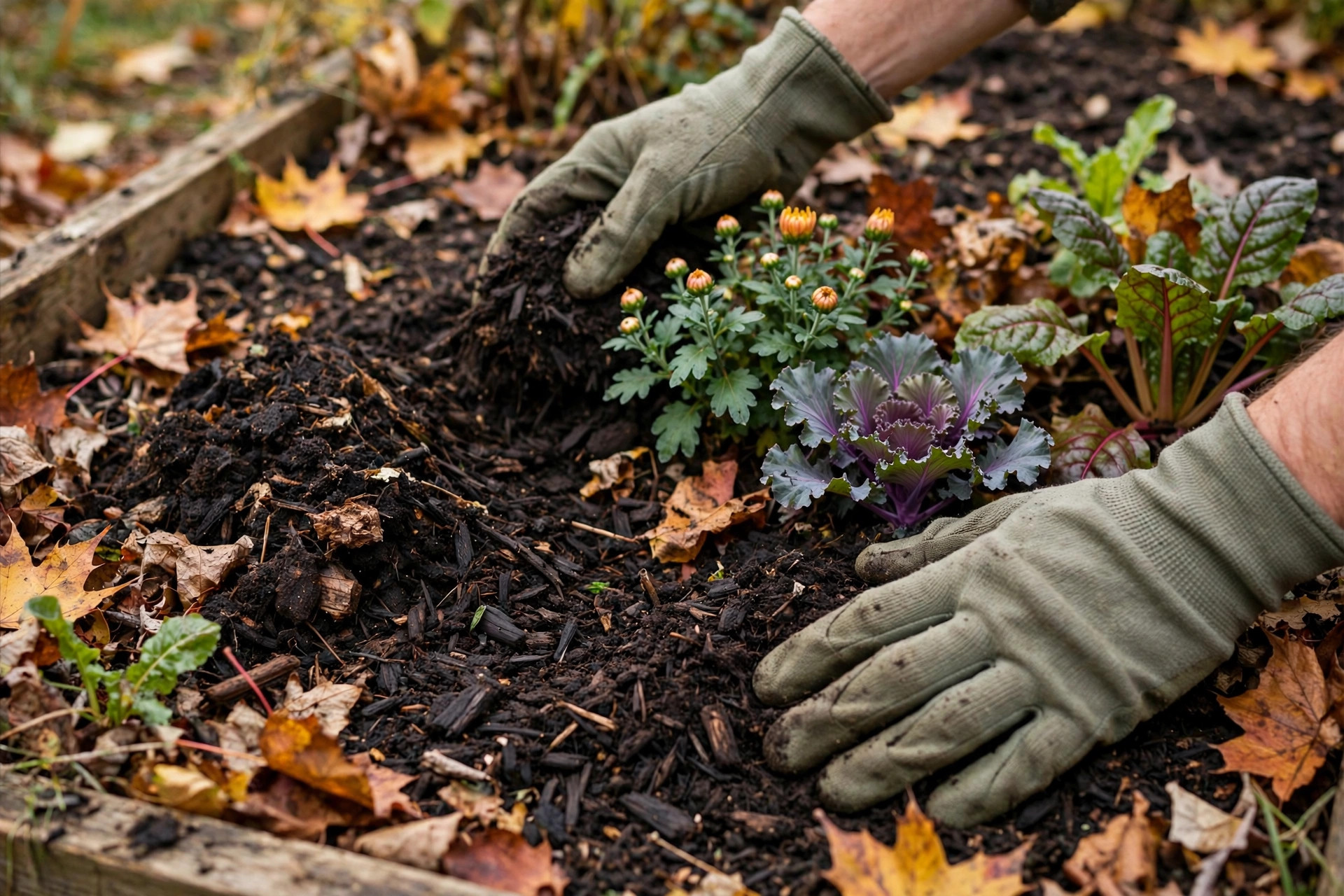
October is prime bulb-planting time. Daffodils, tulips, crocuses and alliums planted now will root before the ground gets too cold and reward you with colour from late winter onwards. The Royal Horticultural Society advises planting most bulbs at two to three times their depth, with the pointed end uppermost (RHS), and its tulip guidance notes that tulips grow well when planted between September and December (RHS).
- Plant each bulb about three times as deep as it is tall, pointed end up.
- Work in generous drifts rather than single rows — twenty bulbs in an informal cluster look far more natural than twenty in a straight line.
- Short on border space? Layer bulbs in pots, largest deepest and smallest near the surface, for a long succession of flowers.
How Do You Mulch Your Beds?
Spread five to eight centimetres of well-rotted compost, bark or leaf mould over bare soil, kept clear of stems, to insulate roots from frost, suppress winter weeds and slowly feed the soil.
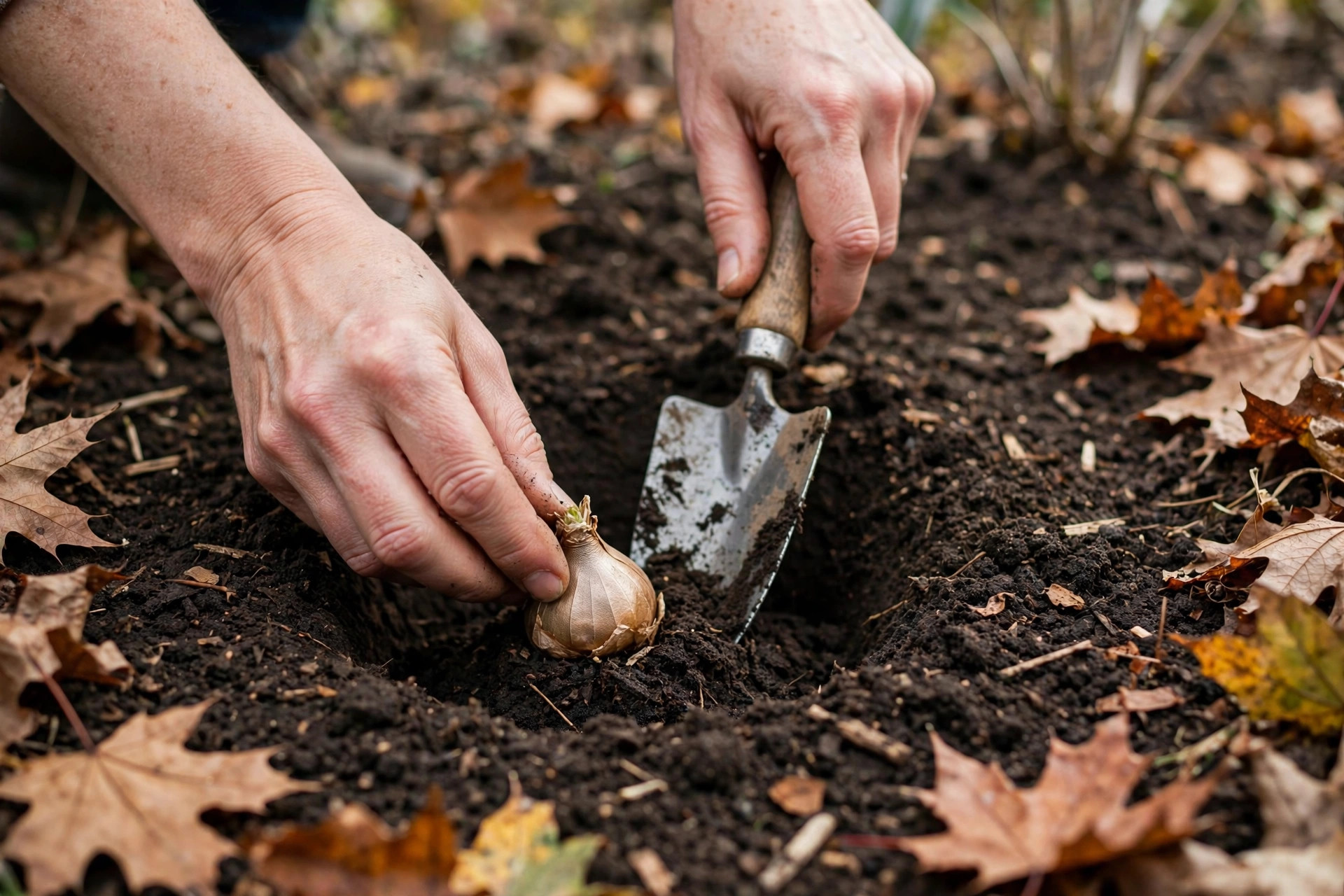
A layer of mulch in October is one of the kindest things you can do for your soil. Spread 5 to 8 centimetres of well-rotted compost, bark chips or leaf mould over bare soil in your borders, keeping it clear of plant stems to avoid rot. Mulch insulates roots against frost, suppresses winter weeds, and slowly feeds the soil as worms pull it down. If you only do one job this month, make it this one.
How Do You Tidy the Vegetable Patch?
Pull up finished summer crops, compost only healthy material, leave pea and bean roots in the ground to feed the soil, and cover bare soil with mulch or cardboard so it wakes up crumbly in spring.
- Pull up finished tomatoes, beans and courgettes; add healthy material to the compost heap.
- Leave roots of peas and beans in the ground — the nitrogen-fixing nodules on them feed the soil for whatever follows.
- Cover bare soil with a thick mulch or a sheet of cardboard weighed down with stones.
How Do You Protect Tender Plants From Frost?
Move tender pots under cover before the first hard frost, wrap plants that must stay outside in horticultural fleece, and lift, dry and label dahlia tubers for frost-free storage over winter.
- Move citrus, olive and pelargoniums into a greenhouse, conservatory or bright indoor spot before the first hard frost.
- Wrap tree ferns or large agaves in horticultural fleece when frost threatens.
- Lift dahlia tubers after the first frost blackens their foliage, dry them somewhere airy, and store in a frost-free place in barely damp compost or wood shavings — and label everything.
How Do You Clean and Store Garden Tools?
Knock soil off tools, sharpen blades, wipe metal with an oily rag to prevent rust, drain hosepipes before frost can split them, and service the mower now so it starts first pull in spring.
- Knock soil off spades and forks, sharpen blades with a file, and wipe metal parts with an oily rag.
- Drain hosepipes and store them under cover so trapped water cannot freeze and split them.
- Service the lawnmower — or book it in — while garden centres are quiet.
How Do You Feed the Lawn for Winter?
Give the lawn an autumn feed that strengthens roots rather than pushing soft growth, keep mowing at a raised height while grass grows, and scatter seed on worn patches while soil is warm and moist.
- Use a product specifically labelled for autumn use, which is lower in nitrogen and higher in potassium and phosphate than summer feeds.
- Keep mowing while the grass is still growing, but raise the cutting height a notch for the last cuts of the year.
- Scatter grass seed on any worn patches now; autumn soil is warm and moist, ideal for germination.
How Do You Plant Garlic and Autumn Onions?
Plant garlic cloves and autumn onion sets in October in a sunny, well-drained spot, pointed end up and about twice as deep as the clove is tall, then mulch lightly and leave them to root over winter.
- Choose a sunny, well-drained spot — garlic and onions need a cold period to develop properly.
- Plant garlic cloves pointed-end up, about twice as deep as the clove is tall, spacing them roughly 15 centimetres apart.
- Onion sets go in similarly. Mulch lightly and leave them alone — they will quietly root through winter and surge into growth in spring.
How Do You Empty and Store Pots?
Tip out spent summer bedding, scrub pots clean, stack terracotta upside down under shelter so frost cannot crack them, and refill your best pots with pansies, cyclamen or small conifers for winter colour.
- Tip out finished summer bedding and scrub containers with hot soapy water to remove pests or diseases.
- Stack terracotta pots upside down somewhere sheltered — they can crack if left full of wet compost through hard frosts.
- Refill your best pots with winter colour: pansies, cyclamen, ornamental cabbages or small conifers.
How Do You Make Leaf Mould?
Turn raked leaves into free leaf mould by stuffing damp leaves into a perforated bag or wire bay and leaving them for about a year, when they become a rich, crumbly soil conditioner and mulch.
- Stuff damp leaves into a perforated bin bag or a simple wire-mesh bay.
- Leave them for a year — leaf mould is slow magic rather than instant compost.
- Start this year’s bay now, and next autumn you will be spreading rich, crumbly leaf mould exactly where your soil needs it most.
How Do You Help Wildlife Through Winter?
Help wildlife by leaving a log pile, an area of long grass and hollow stems as winter shelter, and by cleaning bird feeders and birdbaths and feeding birds regularly as natural food becomes scarce.
- Leave a log pile in a shady corner and keep one area of long grass uncut.
- Resist tidying every hollow stem — these are winter hotels for insects, amphibians and small mammals.
- Clean out bird feeders and birdbaths, and start feeding birds regularly as natural food becomes scarce.
How Do You Fit All Twelve Jobs Into October?
Spread the twelve jobs across October: clear in week one, plant and protect in weeks two and three before frost arrives, and finish with tools, lawn care and feeders in the final week.
| When | Focus | Jobs |
|---|---|---|
| Week 1 | Clearing | Rake leaves, pull up finished vegetable crops, empty summer pots, organise the compost heap |
| Weeks 2–3 | Planting and protecting | Plant spring bulbs, garlic and autumn onions; spread mulch; move tender plants under cover |
| Final week | Finishing touches | Clean and oil tools, drain hosepipes, feed the lawn, set up the leaf-mould bay, clean feeders and birdbaths |
If a cold snap is forecast and you are short on time, prioritise planting and frost protection over anything cosmetic — a missed frost-protection evening can undo months of care. Twelve jobs, a few October weekends, and your garden is ready for its winter rest.
Leave a Reply