
Last updated: October 2026
Quick answer: A cosy, safer fireplace or wood stove starts with the safety essentials — a spark guard, smoke and carbon monoxide alarms, and a fire extinguisher or blanket — plus a swept chimney, dry seasoned wood, a solid tool set, and stove-specific pieces like a thermometer and heat-powered fan.
There are few things in life as reliably comforting as a real fire on a cold evening. The flicker of the flames, the soft crackle of burning wood, the deep warmth that seems to settle into your bones — a fireplace or wood stove transforms a house into a home the moment it is lit. But behind every effortless-looking fire is a small collection of accessories doing the quiet work: tools that keep the fire safe, storage that keeps the wood dry, and extras that turn fire-tending from a chore into a ritual.
Whether you have a traditional open fireplace or a modern wood-burning stove, autumn is the moment to get your hearth in order. Chimneys need checking, tools need to be within reach, and the wood pile needs to be dry and ready. This guide covers fifteen fireplace accessories and wood stove essentials — the safety must-haves first, then the practical pieces, then the lovely extras that make fire season feel special. Let us get your hearth ready for the cosiest months of the year.
What Are the Non-Negotiable Fireplace Safety Essentials?
Before anything decorative, cover the pieces that keep a fire safe: a full-coverage spark guard, working smoke and carbon monoxide alarms, a nearby extinguisher or fire blanket, and a fire-resistant hearth rug. These are the foundation everything else sits on.
- A fireguard or spark screen. Open fires throw sparks and embers, sometimes surprisingly far, and a sturdy mesh guard or glass screen stands between those sparks and your rug, your furniture, and your pets. Choose one that covers the full opening of your fireplace and stands stable on the hearth. If you have children or animals, this is not a nice-to-have — it is essential.
- A smoke alarm and a carbon monoxide alarm. Test them monthly through fire season, and replace batteries at the start of autumn as a matter of routine. Carbon monoxide is colourless and odourless, and a blocked flue or a stove burning inefficiently can produce it — an alarm is your warning. This is the cheapest, most important safety purchase you will ever make.
- A fire extinguisher or fire blanket within quick reach. Not in the garage, not upstairs, but close enough to grab in seconds. A small dry-powder extinguisher rated for domestic fires, or a fire blanket for smothering small flare-ups, gives you a way to act fast if something goes wrong. Make sure everyone in the household knows where it is and how to use it.
- A hearth rug. Choose one made from fire-resistant materials — wool is naturally flame-resistant and a traditional choice — and large enough to extend well beyond the fireplace opening. It protects your flooring from stray embers and from the general wear of fire-tending, and it happens to be the perfect spot for stretching out in front of the fire.
The National Fire Protection Association (NFPA) publishes home heating safety guidance, including keeping anything that can burn away from heating equipment and having heating systems inspected — general principles that underpin the checklist in this guide. (Source: NFPA — Heating safety)
Why Must You Not Skip Chimney Care in Autumn?
Creosote — the tarry residue that builds up inside chimneys — is highly flammable, so a professional sweep once a year, dry seasoned wood only, and prompt professional help if smoke comes back into the room are the habits that keep a chimney safer.
- Get your chimney swept before fire season. A professional sweep once a year, ideally in early autumn before you start burning in earnest, removes creosote build-up and lets the sweep check the condition of your flue.
- Burn only well-seasoned, dry wood. Wet or unseasoned wood burns cool and smoky, which increases creosote build-up, and it produces far less heat for your effort. A moisture meter takes the guesswork out: split a log and test the freshly exposed face. Wood above about twenty per cent moisture needs more drying time.
- Never burn treated or painted wood. Treated timber, painted wood, plywood, or household rubbish can release harmful chemicals when burned and damage your flue and stove. Stick to natural, seasoned firewood from a reputable supplier.
- Watch for warning signs. If you notice smoke coming back into the room, a strong smell of smoke, or a roaring sound in the chimney, stop using the fire and call a professional before lighting it again.
The US Fire Administration advises having chimneys, fireplaces, and wood stoves inspected and cleaned as needed, and keeping a three-foot zone around heating equipment clear — a useful general rule alongside the NFPA guidance above. (Source: US Fire Administration — Home fire prevention)
What Is in a Proper Fireplace Tool Set?
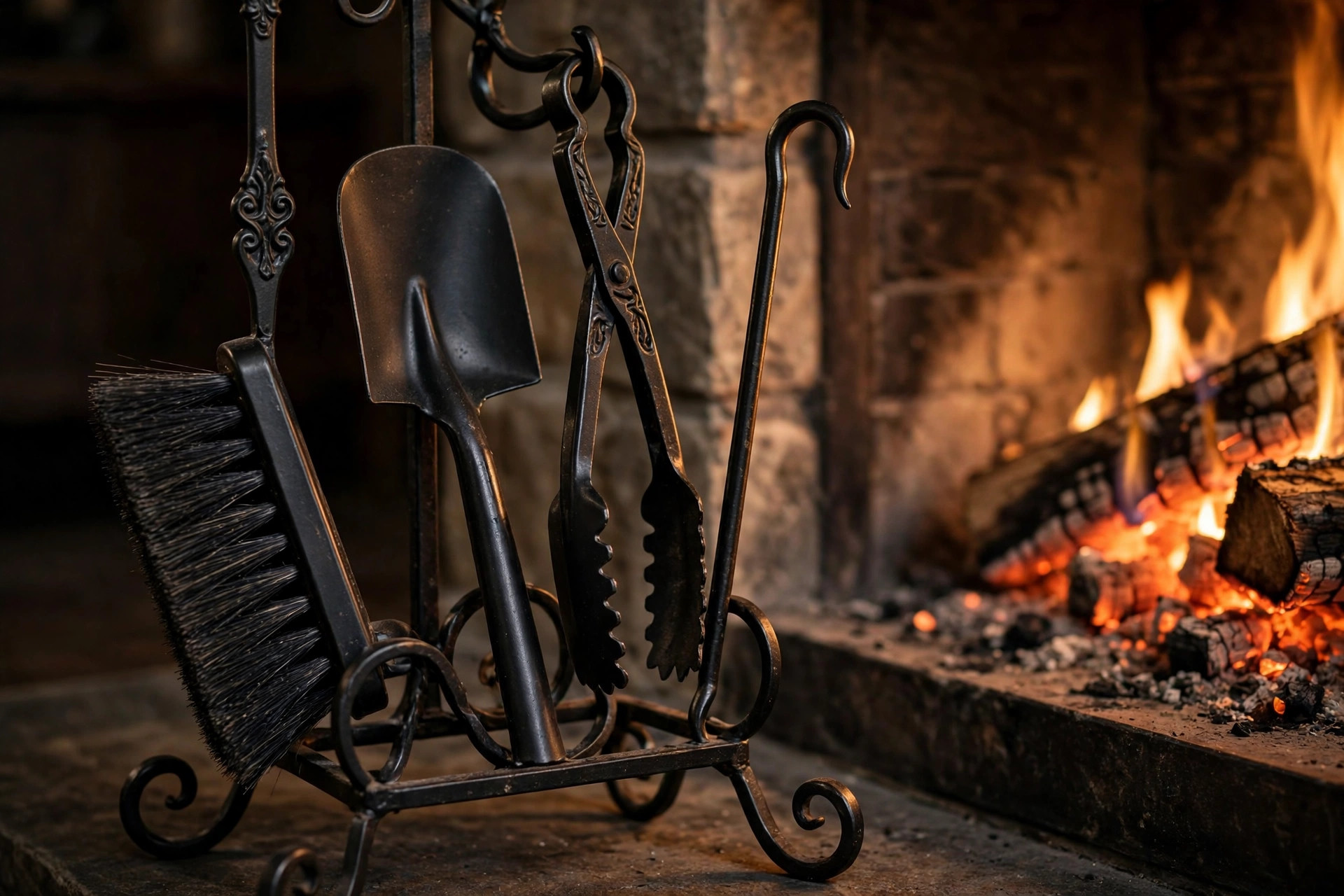
The classic four-piece set — poker, tongs, brush, and shovel — has survived for centuries because each tool does a job nothing else can do as well. Buy a set that feels solid and balanced in the hand; flimsy tools bend, wobble, and make fire-tending frustrating.
| Tool | What it does | What to look for |
|---|---|---|
| Poker | Adjusts logs, breaks up embers, coaxes air into a struggling fire | Long enough to keep your hand well clear of the heat, comfortable handle, sturdy hooked end |
| Tongs | Places and repositions logs with precision | Scissor action and grippy ends for far more control than the single-piece spring type |
| Brush and shovel | Sweep ash and debris from the hearth the morning after | Soft bristles; a shovel that scoops cooled ash into a metal bucket |
Ash safety matters most the morning after. Never sweep hot ash — wait until it is completely cold, which can take longer than you think. Ash can stay hot enough to start a fire for days, so always store it in a metal container with a lid, kept outside and away from anything flammable.
A log basket or hod keeps an evening’s worth of wood by the fire, so you are not trudging to the woodpile in the cold every hour. Woven baskets look beautiful and suit traditional fireplaces; canvas or leather log carriers are brilliant for transporting wood from the store to the hearth without dropping bark and debris across the floor. Keep the basket a safe distance from the fire itself — convenient, not close.
What Essentials Does a Wood Stove Need Differently?
Wood-burning stoves share much of the fireplace list but add stove-specific pieces: a stove thermometer, a heat-powered fan, a smaller companion tool set, and strict respect for clearance distances around the stove. These are what make stove season smooth.
- A stove thermometer. It sits on the stove top or the flue pipe and tells you what temperature zone you are burning in — too cool and you are making creosote and wasting wood; too hot and you risk damaging the stove. Learning to read it and adjust your air controls accordingly is the single fastest way to become a better, safer stove user.
- A heat-powered stove fan. It sits on top of the stove, needs no electricity — it runs on the heat itself — and silently pushes warm air out into the room instead of letting it pool around the stove. In a large or awkwardly shaped room, a fan can make the difference between a hot corner and a warm house.
- A companion set and metal ash bucket with a lid. The stove version of fireplace tools, usually smaller and neater, handles ash removal and fire adjustment through the stove’s smaller door. The ash bucket is equally essential, for the same reason as with open fires: ash stays dangerously hot far longer than expected.
- Firelighters and dry kindling. A stove lights best with a proper top-down fire — large logs at the bottom, kindling in the middle, a natural firelighter on top — and having dry kindling to hand makes lighting effortless rather than a battle.
- Clear space around the stove. Stoves radiate serious heat in all directions, and manufacturer guidelines specify minimum clearances to furniture, walls, and curtains. Respect them. A stove pushed too close to a sofa is not cosy — it is a hazard. Give your stove its space and it will reward you with safe, glorious heat.
How Do You Start Every Fire Right?
A great fire starts with preparation: dry kindling, natural firelighters, long matches or a long-reach lighter, and heat-resistant gloves, assembled as a kit by the hearth. With the kit ready, a top-down build lights cleanly almost every time.
- Dry kindling first. Thin sticks of dry softwood catch easily and build the heat needed to ignite larger logs. You can buy bags of kindling, split your own from softwood offcuts, or collect fallen twigs — making sure they are thoroughly dry. Store a basket indoors so it is always ready; damp kindling is the number one cause of failed fires.
- Natural firelighters. The wood-wool and wax type are far better than newspaper or lighter fluid. They light with a single match, burn long enough to get kindling going, and do not produce the acrid smoke of chemical starters.
- Long matches or a long-reach lighter. They save your knuckles and make lighting a calm, controlled affair rather than a rushed one.
- Heat-resistant gloves. For adjusting the air vents on a hot stove, handling the door, or rescuing a situation that needs a steady, protected hand.
- Build top-down. Largest logs at the bottom, a lattice of kindling above, and a firelighter on top. Light the top. The fire burns downward, preheating the flue as it goes, which means less smoke, a faster draw, and a cleaner, hotter burn. It feels backwards the first time; by the third fire you will never build one the old way again.
What Are the Lovely Extras That Make Fire Season Special?
With safety and practicality covered, the fun part arrives: stove-top kettles, fire popcorn poppers, bellows, and the comfort layer around the hearth. None of these are strictly necessary, but they turn a functional hearth into the heart of the home.
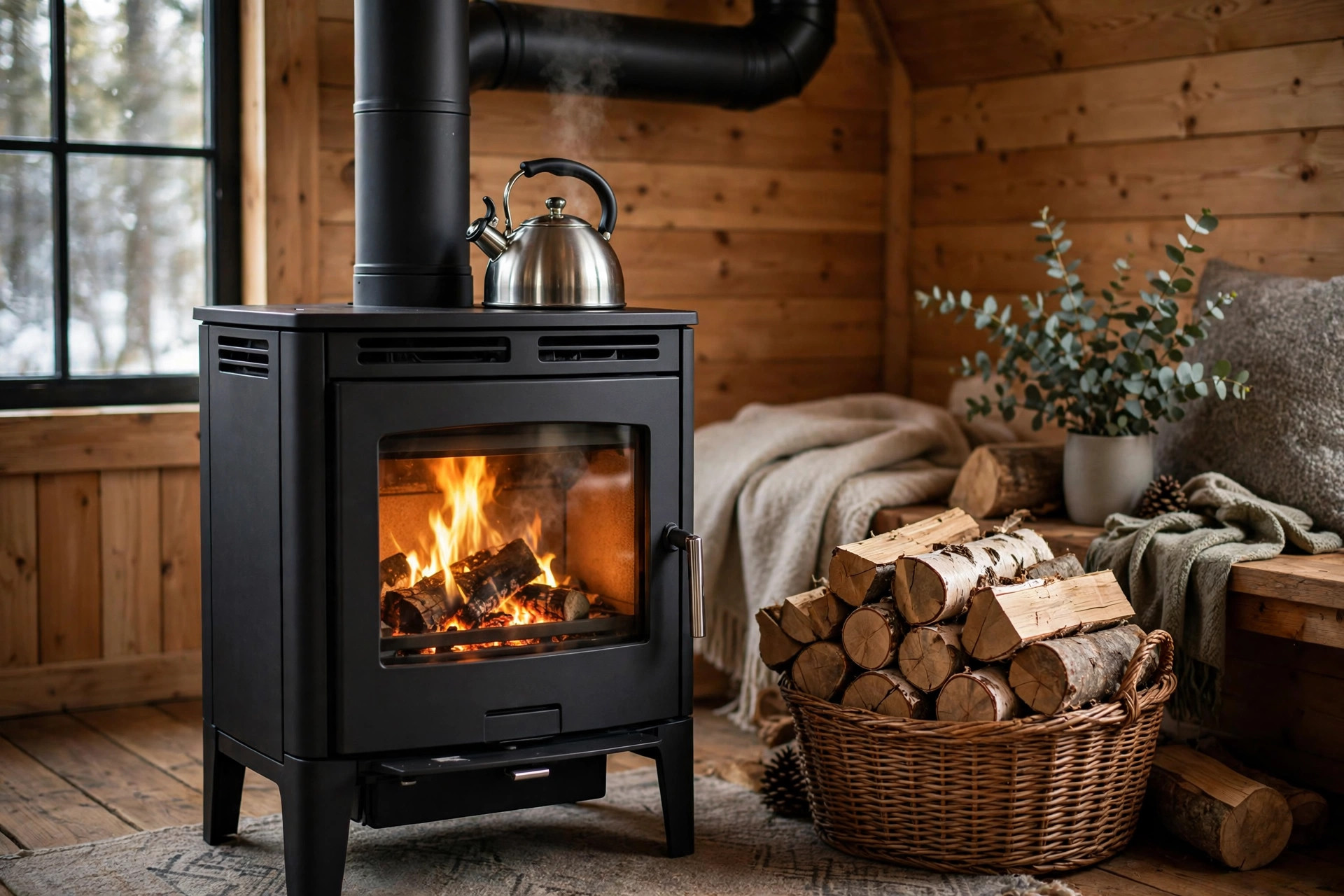
- A kettle or steamer for the stove top. A wood stove classic — it humidifies the dry winter air while looking utterly charming, and a proper stove-top kettle means hot water for tea without touching the kitchen.
- A popcorn popper designed for open fires. It turns a quiet evening into an event, especially with children.
- Beautiful bellows. They hang by the fireplace as both decoration and a genuinely useful tool for reviving a dying fire with a precise puff of air.
- The comfort layer. A deep, soft rug to lie on, a basket of thick throws within arm’s reach, a small side table for mugs of cocoa. None of these are fireplace accessories in the technical sense, but they are what make the fire a place rather than just a heat source. The fire draws people; the cosiness around it keeps them there.
- Scent. A bowl of dried orange slices and cinnamon sticks near the hearth, or a simmering pot of water with cloves and apple peels on the stove top, layers autumn fragrance over the woodsmoke. It is a small touch with an outsized effect — the kind of detail guests remember without quite knowing why the evening felt so special.
What Is on Your Autumn Hearth Checklist?
Run through this list before the cold sets in — it takes an afternoon to sort, and then the whole season is yours to enjoy. A fireplace or wood stove asks for a little respect and a little preparation, and in return it gives you the defining comfort of autumn.
- Chimney swept
- Smoke and carbon monoxide alarms tested
- Fireguard in place
- Tool set complete
- Ash bucket emptied and ready
- Wood supply dry and under cover
- Kindling and firelighters stocked
- Extinguisher or fire blanket within reach
Get the essentials in place now, add the lovely extras as you find them, and settle in. Fire season is the best season — make the most of every flame.
Leave a Reply