Last updated: October 2026
Quick answer: A gentle ten-minute evening stretch routine can help you release the day’s tension before bed. Move slowly through neck rolls, side bends, a forward fold, twists, cat-cow, child’s pose, hip stretches, and slow breathing, finishing about an hour before sleep.
By the time evening arrives, your body has been collecting tension all day. Hours at a desk tighten the shoulders, looking down at a phone stiffens the neck, and rushing around leaves the lower back achy and the legs heavy. Most of us carry all of that straight into bed, and then wonder why we toss and turn.
A short evening stretch routine is one of the kindest things you can do for your body at the end of the day. Ten gentle minutes of slow, easy movement can help release the day’s tightness, quiet a busy mind, and create a calm bridge between the busyness of the day and the rest of the night. It is not exercise and not a workout. Think of it as a way of telling your body: the day is done, you can let go now.
This routine needs no equipment, no special clothes, and no experience. You can do it in your pyjamas on your bedroom floor, and you can adapt each move to whatever your body allows.
How do I set up my ten minutes?
Dim the lights, silence your phone, and choose a comfortable spot on the floor with a blanket nearby. Wear loose, warm clothes, keep the movements gentle, and stop if anything feels sharp or painful. Comfort matters far more than depth or perfect form.
- Dim the overhead lights and switch on a lamp or a candle instead.
- Put your phone on silent and leave it in another room. These ten minutes are yours.
- Play soft, slow music if you like it, or enjoy silence. Either is perfect.
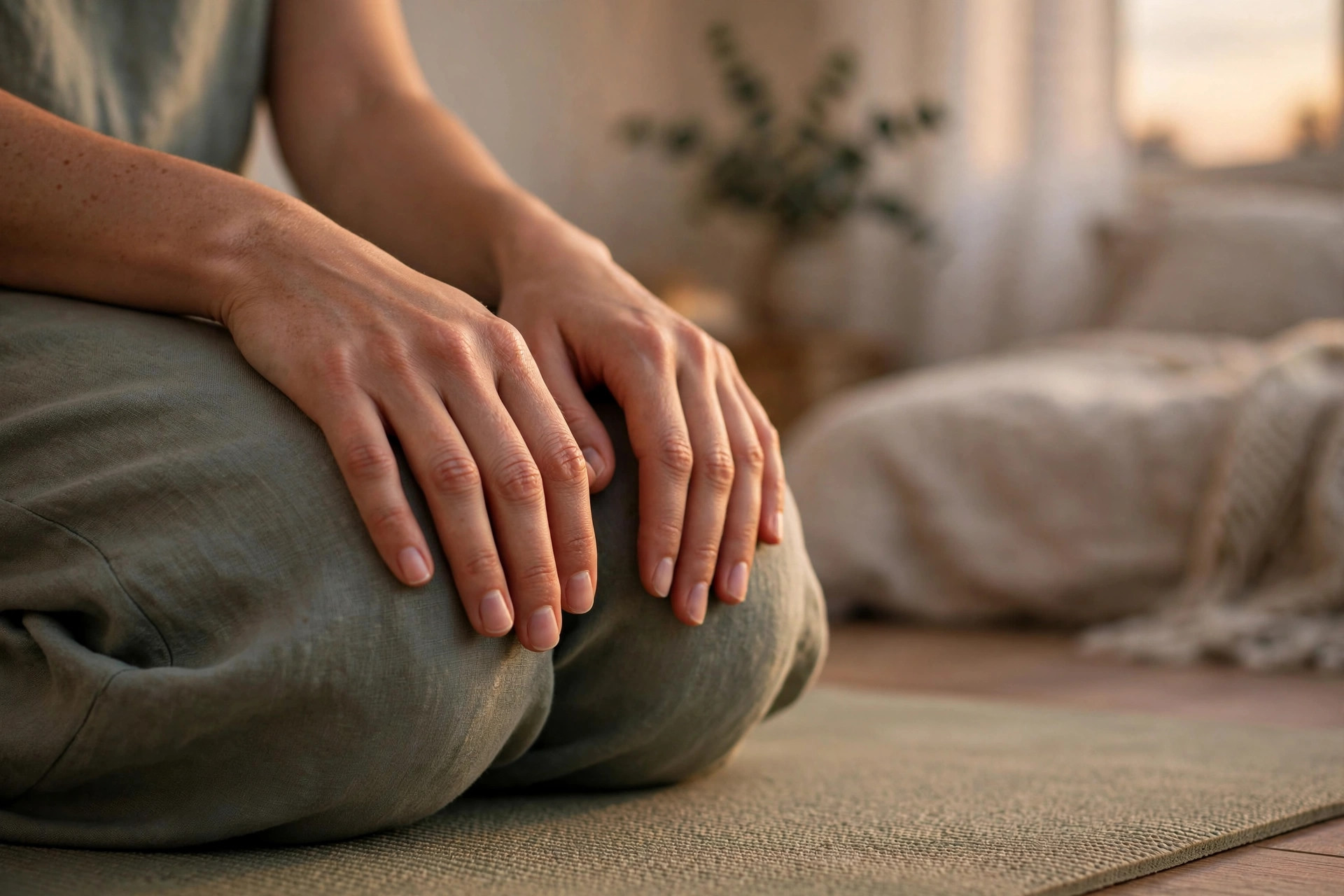
- Find a comfortable spot on the floor: a rug, a yoga mat, or a folded blanket.
- Wear something loose and warm, and keep a jumper or blanket nearby, as your body may cool down while it relaxes.
The goal is comfort, not performance. There is no pose to achieve and no depth to reach. If a stretch ever feels sharp or painful, ease off immediately. Gentle is the whole point.
A note of care: if you are pregnant, recovering from an injury, or living with a condition that affects your joints, muscles, or balance, check with your doctor or physiotherapist before starting any new movement routine. Stretching should always feel kind, never forced.
What is the ten-minute routine?
Spend about a minute on each gentle move, breathing slowly in through your nose and out through your mouth. Start with neck rolls and shoulder shrugs, then move through seated bends, twists, cat-cow, child’s pose, hip stretches, and a final minute of slow breathing.
Move through these stretches slowly, breathing deeply and evenly throughout, and let each exhale invite a little more softness. There is no rush. If ten minutes feels like too much at first, do five. The routine will still be waiting tomorrow.
- Minute 1–2: Neck rolls and shoulder shrugs. Sit comfortably, cross-legged on the floor or on the edge of your bed. Drop your chin toward your chest and slowly roll your head in a lazy circle, first one way, then the other, keeping the movement small and easy. Then lift both shoulders toward your ears, hold for three slow breaths, and let them drop with a sigh. Repeat three times.
- Minute 2–3: Seated side bends. Stay seated and raise your right arm overhead. Lean gently to the left, feeling a long, easy stretch along your right side, from your hip to your fingertips. Hold for three slow breaths, then switch sides. Keep both sitting bones on the floor and do not force the lean.
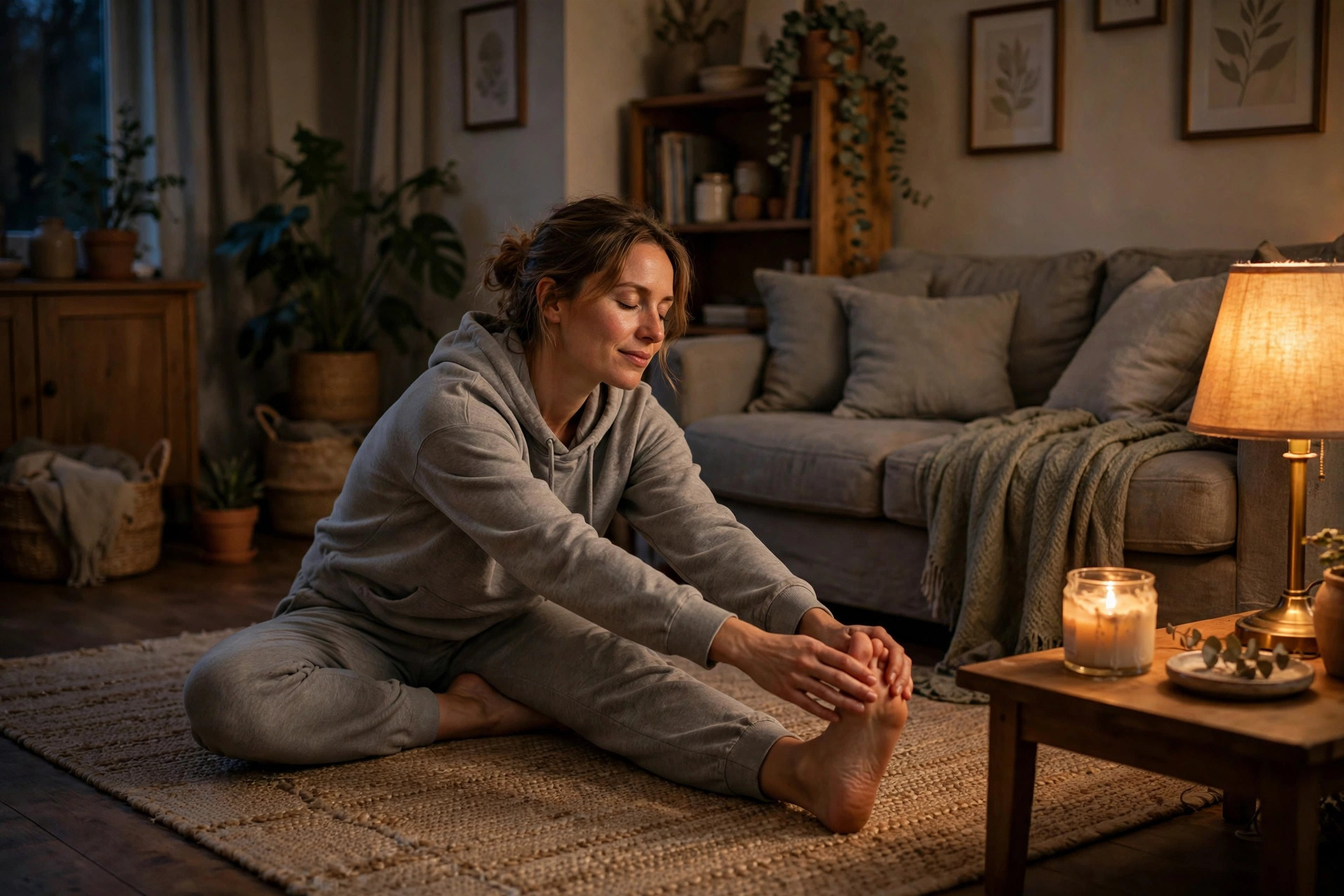
- Minute 3–4: Seated forward fold. Extend both legs out in front of you, feet relaxed. Breathe in to lengthen your spine tall, then fold forward over your legs as you breathe out. Let your hands rest wherever they land, and let your head hang heavy. Stay for four or five slow breaths, letting gravity do the work, then come up slowly.
- Minute 4–5: Gentle spinal twist. Sit with your legs extended, then bend your right knee and place your right foot flat on the floor outside your left knee. Wrap your left arm around the right knee and gently twist to the right, looking over your right shoulder. Hold for three slow breaths, feeling the twist through your mid-back rather than forcing it with your arms. Unwind slowly and repeat on the other side.
- Minute 5–6: Cat-cow on all fours. Come onto your hands and knees, hands under shoulders and knees under hips. As you breathe in, let your belly drop toward the floor, lift your head slightly, and arch your back gently. As you breathe out, round your back toward the ceiling, tuck your chin, and let your head hang. Flow slowly between the two shapes for about a minute, letting your breath lead the movement.
- Minute 6–7: Child’s pose. From all fours, sit your hips back toward your heels, stretch your arms out in front of you, and rest your forehead on the floor or on a cushion. Let your whole body go heavy and stay here for a full minute, breathing slowly into your back. If your forehead does not reach the floor comfortably, rest it on a folded blanket or cushion.
- Minute 7–8: Lying figure-four hip stretch. Lie on your back with your knees bent. Cross your right ankle over your left knee, then gently draw your left knee toward your chest until you feel an easy stretch deep in your right hip. Hold for three slow breaths, then switch sides. Keep your shoulders relaxed on the floor and your jaw unclenched.
- Minute 8–9: Supine twist. Still on your back, hug both knees into your chest for a breath, then let them fall gently to the right while you extend your arms out to the sides and turn your head to the left. Hold for three or four slow breaths, enjoying the stillness, then bring your knees back to centre and repeat on the other side. Let gravity do the work.
- Minute 9–10: Legs up and slow breathing. Finish by scooting close to a wall and resting your legs up against it, or simply lying flat with a cushion under your knees. Close your eyes, place one hand on your chest and one on your belly, and breathe in slowly through your nose for a count of four, then out through your mouth for a count of six. When the minute ends, roll to one side and sit up slowly.
How do I make stretching a nightly habit?
Do the routine thirty to sixty minutes before bed, linked to something you already do, like brushing your teeth or changing into nightclothes. Keep the barrier low: three stretches on the bed still count on tired nights, and a flexible habit lasts.
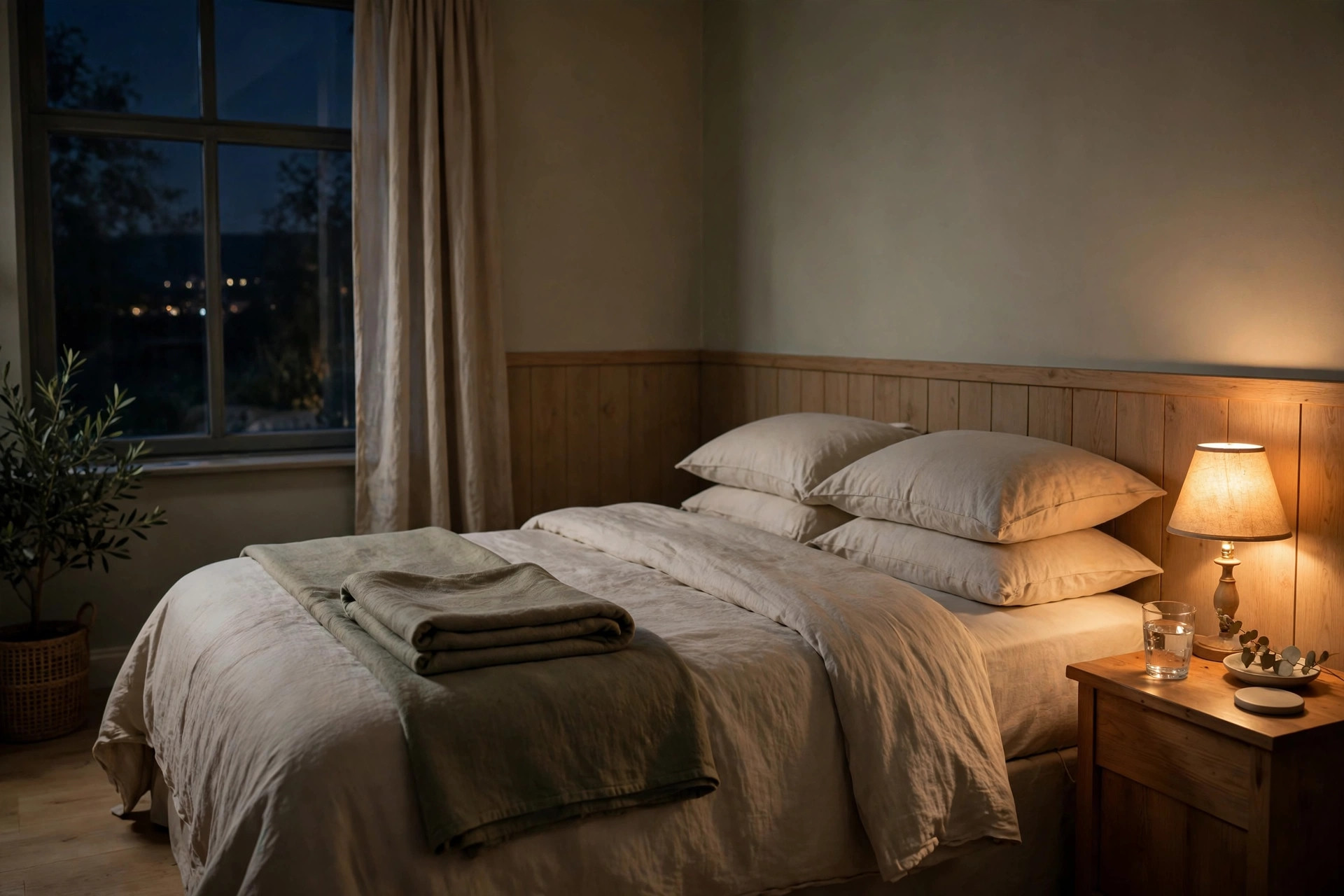
The best time for this routine is about thirty to sixty minutes before bed, as part of your wind-down. Pair it with something you already do: after brushing your teeth, after changing into pyjamas, or right after your evening cup of herbal tea. Linking it to an existing habit makes it far more likely to stick. The NHS advises relaxing for at least an hour before bed, for example by taking a bath or reading a book, and notes that adults generally need seven to nine hours of sleep a night.
Keep the barrier low. You do not need to change into special clothes or unroll a mat with ceremony. Some nights you might do the full ten minutes on the floor; other nights you might do three stretches sitting on the edge of the bed. Both count. The habit that survives is the one that bends.
If you share your evenings with family or a partner, invite them to join you. A shared stretch routine can become a lovely little ritual: ten quiet minutes together at the end of the day, phones away, bodies unwinding side by side.
What small comforts deepen the routine?
A warm bath or shower beforehand can loosen your muscles, while a gentle scent, a soft blanket, warm socks, and a glass of water make the ten minutes feel more restorative. End with slow breathing, in for four counts and out for six.
A few gentle additions can make your ten minutes feel even more restorative. A warm bath or shower beforehand loosens the muscles so the stretches feel easier. A drop of lavender or eucalyptus scent in the room, from a candle, a diffuser, or simply a scented hand cream, adds a layer of calm.
After stretching, wrap yourself in something warm straight away: a soft blanket, a dressing gown, warm socks. The contrast between the gentle movement and the cozy stillness afterwards is deeply comforting. Keep a glass of water nearby too, as slow stretching can leave you feeling pleasantly thirsty.
- Dim the lights and put your phone in another room before you begin.
- Keep a blanket nearby. Your body cools down as it relaxes.
- Never push into pain; a mild, pleasant stretch is always enough.
- Three stretches on the bed still count on the nights you are exhausted.
- End with slow breathing: in for four counts, out for six.
What should I expect from stretching?
Stretching is a comfort, not a cure: it may help you feel more relaxed and ease the day’s stiffness, but it will not fix ongoing pain or sleep problems on its own. If pain or sleep troubles persist, please speak to a doctor or qualified professional.
It is worth saying plainly: stretching is a comfort, not a cure. A gentle evening routine like this can help you feel more relaxed and ease the day’s stiffness, but it will not fix chronic pain, treat insomnia, or resolve anxiety on its own. If you live with persistent pain, regular sleep difficulties, or ongoing stress that affects your daily life, please speak to a doctor or another qualified professional. You deserve proper support, not just a stretch routine.
What this routine can do is give you ten minutes of kindness at the end of every day. Ten minutes where nobody needs anything from you, where your body gets to soften, and where the day officially ends. That is a small thing, and small things, done nightly, add up to something meaningful.
How do I begin tonight?
Tonight, dim the lights, find a spot on the floor, and give your body ten slow minutes of gentle movement and breathing. Roll your neck, fold forward, breathe deeply, then climb into bed warm, loose, and unhurried.
Tonight, when the day is done and the house grows quiet, try it. Dim the lights, find a spot on the floor, and give your body ten slow minutes. Roll your neck. Fold forward. Breathe. Let the day drain out of your shoulders and into the floor beneath you.
Then climb into bed, warm and loose and unhurried. Calmer nights are not about doing more. They are about letting go a little earlier. And ten gentle minutes is all it takes to begin.
Leave a Reply