Last updated: October 2026
Quick answer: A high-protein fall bowl has five parts: a hearty base, a generous protein, roasted autumn vegetables, something fresh, and a sauce. Beef, burger, chicken, turkey, and salmon bowls all follow that formula, with meat cooked safely and checked with a food thermometer.
There is a reason the bowl became the defining dinner format of the last decade: it is the easiest good meal in existence. Take a base, add a protein, pile on vegetables, finish with a sauce, and you have dinner — no complicated technique, no precise timing, nothing to go wrong. And in autumn, when appetites grow and evenings demand something warm and substantial, the high-protein bowl comes into its own.
Protein matters in autumn for a simple reason: it keeps you full. When the weather turns cold, the body craves energy-dense food, and a dinner light on protein can leave you raiding the cupboards an hour later. A well-built protein bowl delivers the kind of deep, lasting satisfaction that a plain salad or a bowl of pasta never quite manages. It is comfort food that actually fuels you.
This guide walks you through ten high-protein bowl recipes perfect for fall, from smoky beef bowls to deconstructed burger bowls, plus the formula for building your own and the food-safety basics for cooking meat properly. No medical claims, no diet preaching — just genuinely good dinners that happen to be packed with protein.
What Is the Five-Part Bowl Formula?
Every great protein bowl has five parts — base, protein, roasted vegetables, something fresh, and sauce — and once you know them, you can improvise endlessly with whatever is in your fridge. This formula is the most useful thing in this article.
- A hearty base. This is the foundation that makes the bowl filling. Brown rice, quinoa, farro, barley, roasted sweet potato chunks, or crispy roast potatoes all work beautifully in autumn. Cook a big batch of your base at the start of the week and bowl-building becomes a five-minute job.
- The protein. The star of the show. Minced beef, chicken thighs or breast, turkey mince, salmon, eggs, tofu, tempeh, lentils, or chickpeas. Aim for a generous portion — roughly a palm-and-a-half-sized serving per bowl — and season it boldly, because the protein carries the flavour of the whole dish.
- Roasted autumn vegetables. This is where fall bowls beat summer bowls. Roasted butternut squash, Brussels sprouts, carrots, red onion, cauliflower, and mushrooms, tossed in olive oil and roasted until caramelised, add sweetness, texture, and colour. Roast a big tray while your protein cooks and you have vegetables for days.
- Something fresh. A handful of rocket, baby spinach, shredded cabbage, or quick-pickled red onions cuts through the richness and keeps the bowl from feeling heavy. The contrast between warm roasted things and something crisp and fresh is what makes a bowl feel complete rather than stodgy.
- The sauce. Never skip the sauce. A bowl without sauce is just ingredients sitting near each other; a bowl with sauce is a meal. Tahini-lemon, chipotle yoghurt, peanut-lime, garlic-herb yoghurt, or a simple vinaigrette — pick one, drizzle generously, and watch everything come together.
How Do You Cook Meat Safely for Bowls?
Use a food thermometer rather than colour alone, chill leftovers within two hours, and reheat until steaming hot throughout. USDA guidance gives the reference temperatures to check, so you never have to guess.
The US Department of Agriculture’s Food Safety and Inspection Service publishes a safe minimum internal temperature chart for meat and poultry, and advises using a food thermometer to check doneness, since colour alone can mislead. Its chart is the authoritative reference for the temperatures below. (Source: USDA FSIS — Safe minimum internal temperature chart)
| Food | USDA safe-temperature guide |
|---|---|
| Poultry (chicken, turkey) | Cook to 74°C (165°F) throughout, checked with a thermometer. |
| Minced beef, pork, or turkey | Cook to 71°C (160°F) throughout, with no pink remaining. |
| Whole cuts of beef, lamb, and pork steaks | Cook to 63°C (145°F) plus a few minutes of resting, though many people prefer them cooked further in bowls. |
- Chill promptly. Refrigerate leftovers within two hours of cooking, and store components separately when you can — grains, proteins, and vegetables in their own containers keep their textures far better than pre-assembled bowls.
- Use within three to four days. That window applies to cooked leftovers kept in the fridge.
- Reheat once, thoroughly. When reheating meat, make sure it is steaming hot all the way through, and only reheat once.
These small habits keep your high-protein meal prep both delicious and safe.
Which Beef Bowls Are the Hearty Classics?
Beef is the natural protein for autumn bowls — rich, savoury, deeply satisfying — and minced beef in particular is a weeknight hero. It cooks in minutes, takes on any seasoning you give it, and stretches a long way. These three beef bowls are the ones to learn first.
- Smoky chipotle beef bowl. Brown minced beef with diced onion, garlic, chipotle paste or smoked paprika, cumin, and a pinch of oregano. Serve over brown rice with roasted sweet potato, black beans, sweetcorn, and a big spoonful of chipotle yoghurt sauce. Top with fresh coriander and a squeeze of lime. It is smoky, sweet, a little spicy, and enormously satisfying — like the best burrito bowl you have ever had, made better by autumn vegetables.
- Korean-inspired beef bowl. Minced beef cooked with soy sauce, brown sugar, garlic, ginger, and a drizzle of sesame oil, served over rice with roasted carrots, sautéed spinach, and a fried or soft-boiled egg on top. Finish with sesame seeds and spring onions. The sweet-savoury beef against the jammy egg yolk is one of those combinations that makes you close your eyes for a second. It tastes like takeaway; it cooks in fifteen minutes.
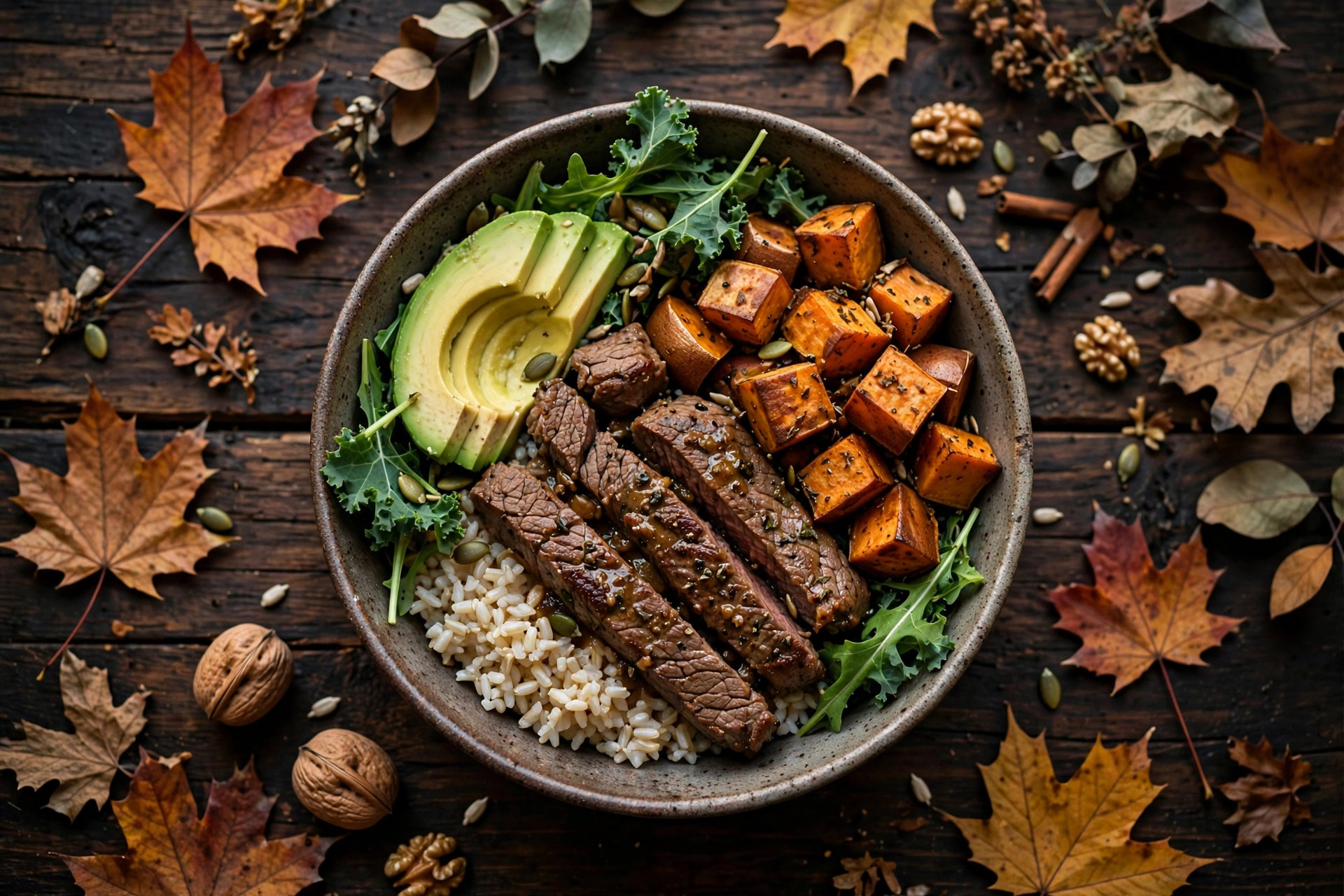
- Autumn harvest beef bowl. Seasoned minced beef or sliced steak over farro or barley, with roasted butternut squash, Brussels sprouts, and red onion, plus a handful of rocket and a maple-mustard vinaigrette. The maple in the dressing ties everything to the season. It is the bowl equivalent of a walk through autumn leaves — earthy, sweet, and deeply comforting.
What Makes a Burger Bowl Better Than a Burger?
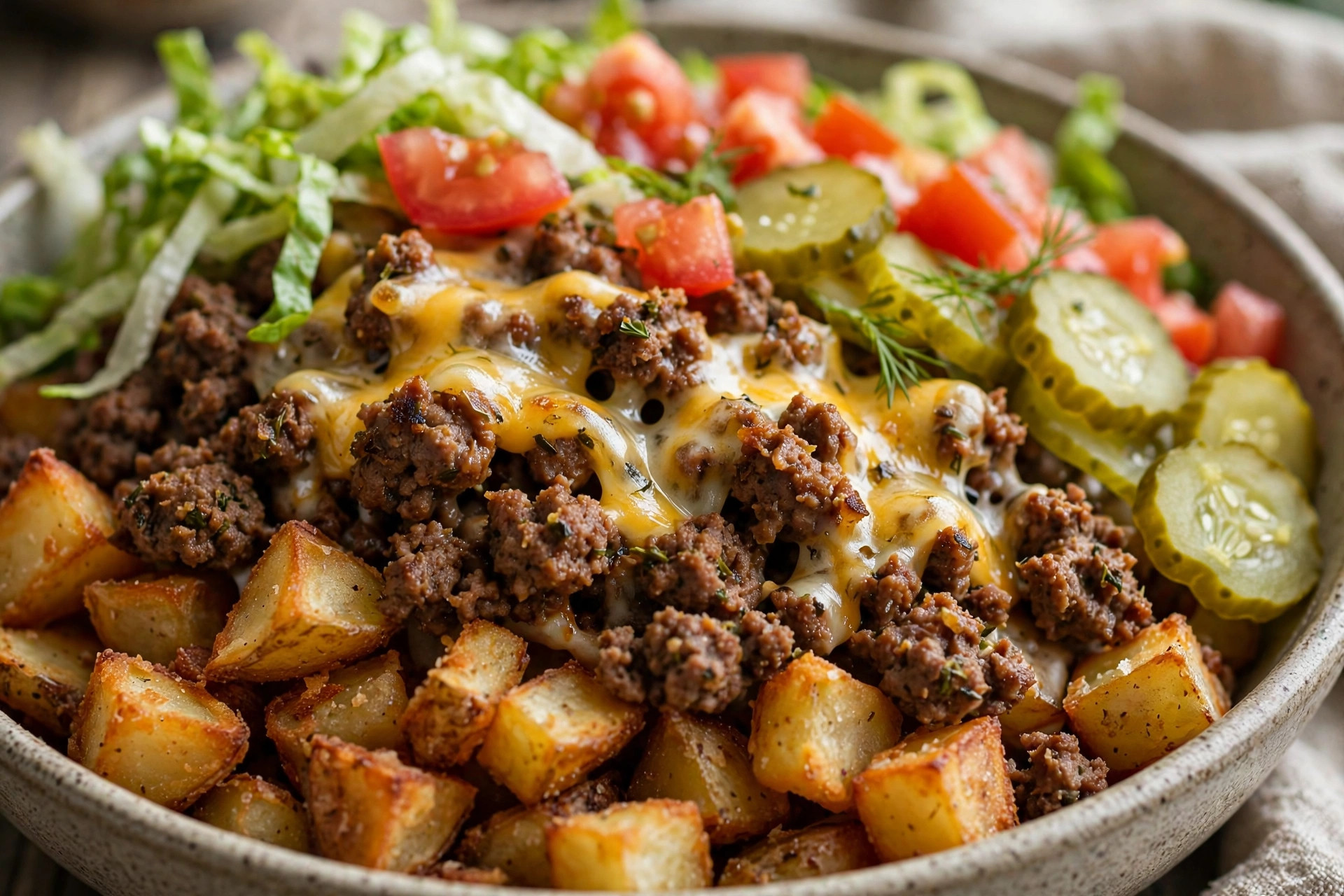
A burger bowl — sometimes called a deconstructed burger — is everything you love about a burger, served over crispy potatoes or rice instead of in a bun. Without the bun, the beef, cheese, and toppings shine brighter, and you can add vegetables that would never fit in a burger.
- Classic cheeseburger bowl. Season minced beef simply with salt, pepper, garlic powder, and a little Worcestershire sauce, and brown it until crisp at the edges. Serve over crispy roast potato cubes with shredded lettuce, diced tomato, sliced pickles, red onion, and a slice of melted cheese draped over the hot beef. The essential finish is burger sauce — mayonnaise, ketchup, mustard, and finely chopped pickles whisked together.
- Bacon cheeseburger bowl. Take the classic and add crispy bacon bits and a drizzle of smoky barbecue sauce alongside the burger sauce. The bacon adds a salty crunch that takes the whole bowl up a level. Serve it over sweet potato wedges for an autumn twist — the sweetness of the potato against the salty bacon is genuinely excellent.
- Mushroom Swiss burger bowl. For something a little more grown-up, top your seasoned beef with sautéed mushrooms and melted Swiss cheese, and serve over roasted cauliflower or brown rice with rocket and a garlic-herb yoghurt sauce. The earthy mushrooms and nutty Swiss are a classic pairing for a reason, and the yoghurt sauce keeps it feeling fresh rather than heavy.
The beauty of burger bowls is how customisable they are. Everyone at the table can build their own from the components, which makes them brilliant for families with different tastes — and for using up the odds and ends in the fridge. Leftover roast vegetables, half a bag of salad, the last of the cheese: it all belongs in a burger bowl.
Which Chicken, Turkey, and Salmon Bowls Should You Try?
Beef may be the autumn headline act, but the supporting cast deserves its moment too. Chicken, turkey, and salmon each bring something different to the bowl, and rotating your proteins through the week keeps things interesting without any extra effort.
- Harvest chicken bowl. Chicken thighs roasted with smoked paprika, garlic, and thyme — thighs stay juicier than breast and forgive a few extra minutes in the oven — sliced over quinoa with roasted butternut squash, kale massaged with olive oil, dried cranberries, and toasted pecans. An apple vinaigrette ties it together. This is the bowl that tastes most like fall itself.
- Turkey taco bowl. Turkey mince is leaner than beef but takes seasoning beautifully. Brown it with taco spices, onion, and garlic, and serve over rice with black beans, roasted peppers, sweetcorn, shredded lettuce, and salsa. A dollop of Greek yoghurt stands in for sour cream with extra protein. It is lighter than the beef version but just as satisfying.
- Miso-glazed salmon bowl. Salmon fillets brushed with a mixture of miso, honey, and soy sauce, roasted until caramelised at the edges. Serve over brown rice with roasted broccoli, pickled cucumber, and edamame, finished with sesame seeds. The miso glaze goes sticky and savoury-sweet, and salmon’s richness means a modest fillet feels luxurious.
- Buffalo chicken bowl. Shredded chicken tossed in buffalo sauce, served over roasted cauliflower or rice with celery sticks, shredded carrot, and a drizzle of blue cheese or ranch yoghurt dressing. All the flavour of buffalo wings in a fork-friendly, vegetable-packed format. Use rotisserie chicken to make this a true ten-minute dinner.
For general healthy-eating context, USDA’s MyPlate guidance groups protein foods — including seafood, poultry, meat, beans, peas, lentils, eggs, and soy products — as an important part of a balanced plate, with variety across the week encouraged. (Source: USDA MyPlate — Protein foods)
How Do You Meal-Prep Bowls for the Whole Week?
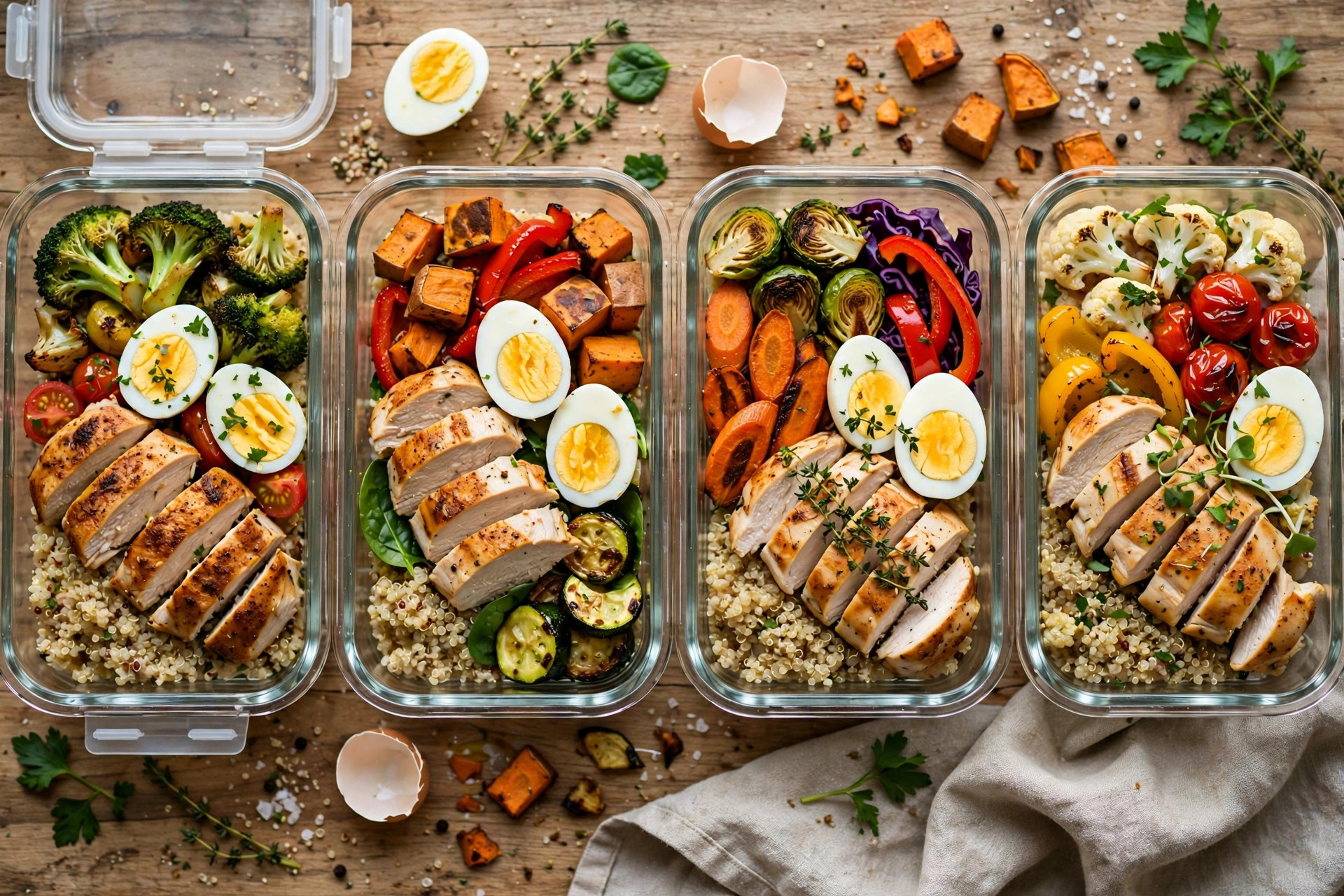
Spend ninety minutes on a Sunday cooking two grains, roasting two trays of vegetables, cooking two proteins, whisking two sauces, and washing your fresh greens. Five components, endless combinations — and you can eat well all week with almost no weeknight cooking.
| Component | How long it keeps in the fridge |
|---|---|
| Grains | Four to five days |
| Roasted vegetables | Three to four days |
| Cooked meats | Three to four days |
| Sauces | Up to a week |
Store each component in its own container in the fridge. Assemble bowls fresh each day rather than pre-building them — it takes two minutes and the textures stay far better. Keep the sauce separate until serving so nothing goes soggy.
A sample week from one prep session: Monday’s smoky beef bowl, Tuesday’s harvest chicken bowl, Wednesday’s burger bowl with leftover beef, Thursday’s salmon bowl (cook the salmon fresh — it only takes twelve minutes), Friday’s clean-out-the-fridge bowl with everything remaining. Same components, five different dinners, zero boredom. That is the real magic of the bowl formula: variety without extra work.
One more tip for the prep-minded: double your sauce recipes. Sauce is the component people run out of first, and having extra means the difference between a great bowl and a dry one on Thursday. A jar of tahini-lemon or chipotle yoghurt in the fridge also rescues plenty of other meals — drizzled over roast vegetables, spread in wraps, dolloped on soup. Make more than you think you need.
How Does Your Fall Bowl Season Start?
Start with the formula and one recipe that caught your eye — the smoky chipotle beef bowl is the crowd-pleaser, the burger bowl is the fun one, the harvest chicken bowl is the most autumnal. Remember the five parts and you are never far from a great dinner.
The high-protein bowl is the rare dinner format that is simultaneously healthy, comforting, cheap, fast, and customisable. It asks almost nothing of you — a tray of roasted vegetables, a pan of seasoned meat, a pot of grains — and gives back dinners that feel abundant and satisfying on the coldest evenings. In a season when cooking can start to feel like a chore, bowls keep it joyful. Happy bowl season.
Leave a Reply