
Last updated: October 2026
Quick answer: The pen pal revival is a mindful, slow hobby where you exchange handwritten letters with a friend, near or far. You choose a pen pal safely, write about ordinary life, and enjoy the calm ritual of writing, waiting, and receiving real mail.
Somewhere between the hundredth notification and the third doomscroll of the day, a quiet rebellion is brewing — and it smells faintly of paper and ink. Letter writing is back. Grown adults are buying fountain pens, choosing stationery, licking stamps, and waiting — actually waiting, with genuine excitement — for the post to arrive. Autumn, with its long evenings and cosy instincts, is the perfect season to join in.
Why now? Perhaps because we are all a little tired of instant everything. A letter is the opposite of a message: it takes time to write, time to travel, and time to read. It cannot be liked, forwarded, or screenshotted into drama. It is private, personal, and physical — you can hold it, keep it, and re-read it years later and find a pressed flower still tucked inside. In our experience, that slowness is exactly what makes it feel like self-care.
Whether you are looking for a new friend across the world or a deeper connection with someone you already know, this guide will walk you through finding a pen pal safely, knowing what to write, and building a letter-writing ritual you will treasure.
Why Are Handwritten Letters So Good for the Soul?
Handwriting slows you down, builds anticipation, deepens friendship, and leaves you with keepsakes. A letter asks for attention in a way a quick message never does, and that attention is what makes it feel so nourishing.
- Slowness calms the mind. You cannot write as fast as you think, so your thoughts have to queue up politely, one at a time. Many people find that writing by hand untangles worries that felt knotted when they were just circling in their heads.
- Anticipation is a pleasure in itself. Looking forward to something can bring as much happiness as the thing itself, and a pen pal gives you a permanent, low-stakes something to look forward to: the possibility, every day, that something wonderful is sitting in your letterbox.
- Care builds connection. When someone takes an hour to write to you — choosing paper, thinking about what to say, telling you things they would never type into a chat box — you feel the care in every line. Letters do not just communicate friendship; they build it, envelope by envelope.
- Letters become keepsakes. A shoebox of old letters is a treasure chest: your friend’s handwriting changing over the years, the ticket stub they tucked in, the doodle in the margin. Messages get deleted or lost in the cloud; letters get kept.
The NHS lists connecting with other people among its five steps to mental wellbeing, noting that strong relationships help build a sense of belonging and self-worth. A pen pal is a gentle, low-pressure way to practise exactly that kind of connection. (Source: NHS — Five steps to mental wellbeing)
How Do You Find a Pen Pal Safely?
Start with trusted platforms or communities, share only your first name and general area at first, and agree on pace early. A little caution at the start keeps the whole hobby joyful and relaxed.
- Use reputable pen pal platforms. Established pen pal websites and communities let you create a profile describing your interests and find matches by age, country, and hobbies. Look for clear safety guidelines and the ability to block or report users. Avoid anyone who pushes you off the platform to private messaging apps immediately — that is a red flag.
- Start within communities you trust. Hobby forums, book clubs, crafting groups, and fan communities often have pen pal threads where members are already known to each other. A shared interest gives you instant things to write about and a layer of social accountability.
- Consider a slow start. Some beginners prefer to begin with a friend or relative they already know — a cousin across the country, an old school friend — before writing to strangers. There is no rule that pen pals must be strangers. Writing to someone you love, just more beautifully, is a wonderful way to begin.
- Protect your privacy at first. In your early letters, share your first name and general area only — not your full name, home address, workplace, or daily routine. Many experienced pen pals use a PO box or receive letters at a trusted friend’s address. Share more only gradually, as trust genuinely builds over months of letters.
- Trust your instincts. A good pen pal exchange feels warm, respectful, and mutual. If someone asks for money, personal photos you are uncomfortable sharing, or pushes boundaries you have set, stop writing. You owe a stranger nothing, and ending an exchange needs no more explanation than “I don’t think this is working for me.”
- Match on pace and style. Some people write long letters monthly; others prefer short notes every couple of weeks. Mention your realistic pace in your profile or first letter. A mismatch is the most common reason pen friendships fizzle, and it is easily avoided with one honest sentence.
What Should You Write About in Every Letter?
You never need to be brilliant or profound — ordinary life, described with warmth, is exactly what pen pals want to read. A few simple prompts, plus answering their letter properly, will carry any correspondence for years.
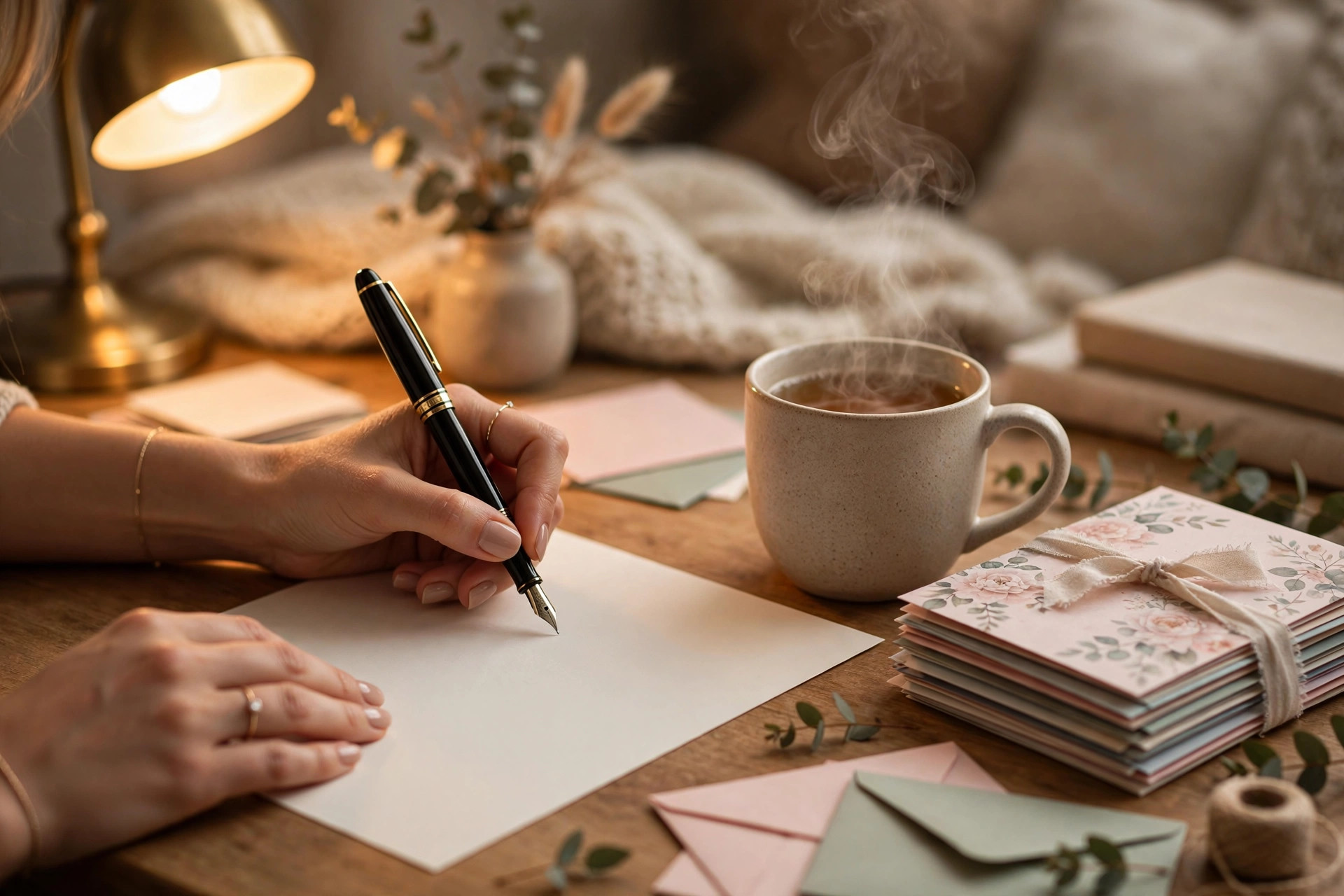
- The “right now” snapshot. Describe exactly where you are as you write: the tea going cold beside you, the rain on the window, the cat asleep on your foot. These small, vivid details make your reader feel they are sitting with you.
- Three small things. Three good things from your week, three things you are looking forward to, three things you noticed on a walk. Simple structure, endless content.
- Questions, questions. What is your favourite autumn tradition? What book are you reading? What did you want to be at ten years old? Good questions keep a correspondence alive for years — many pen pals keep a running list.
- Your local world. Describe your street, your favourite café, the view from your window, a local custom. For an international pen pal, your ordinary is their fascinating.
- Lists and recommendations. Films you loved, recipes you tried, songs on repeat, podcasts worth an hour. Everyone loves a good recommendation from a trusted source.
- Answer their letter properly. The golden rule: respond to what they wrote. Quote their news back, ask follow-up questions, react to their stories. Nothing kills a correspondence faster than two people writing past each other.
- Include little extras. A pressed autumn leaf, a favourite tea bag, a postcard of your town, a photo, a recipe card, stickers. These “happy mail” touches are what make letters feel like gifts.
And remember: your letter does not need to be long. Two pages of genuine warmth beat six pages of dutiful rambling. Write until you have said what matters, then sign off with love.
What Are Eight Thoughtful Touches That Make Letters Special?
Part of the joy of this hobby is the craft of it — making each envelope a little work of art. These eight ideas, from simple to splendid, turn an ordinary letter into something your pen pal will treasure.
- Choose paper you love. You do not need expensive stationery; even pretty supermarket notepaper lifts the whole experience. Writing on paper you enjoy touching makes the act itself more pleasurable.
- Use a pen that glides. A smooth gel pen or an inexpensive fountain pen transforms handwriting from a chore into a pleasure. If your hand cramps, you are pressing too hard or writing too long at once — take breaks.
- Decorate the envelope. Washi tape borders, hand-drawn doodles, colourful stamps arranged with care — the envelope is the first thing your pen pal sees, so make it sing. Keep the address area clear and legible for the postal service.
- Try a wax seal. Inexpensive seal stamps and wax sticks are widely available, and nothing says “this letter matters” like a sealed envelope. It is pure theatre, and it is delightful.
- Match stamps to your pal. If your pen pal loves cats, hunt down cat stamps. Into space? There are space stamps. This tiny detail shows you were thinking of them at the post office, which is absurdly touching.
- Date every letter. Always write the date at the top. Future you — re-reading these in five years — will be so grateful. Dates turn letters into a diary you did not know you were keeping.
- Number your letters. “Letter 7” at the top helps if post goes astray, which is common with international mail, and gives the correspondence a lovely sense of unfolding story.
- Keep copies or photos. Photograph or photocopy your letters before sending. Not only is this a precious archive, it saves you asking “what did I tell them last time?” — the pen pal’s eternal question.
How Do You Build a Cosy Letter-Writing Ritual?
Choose a regular time, gather your supplies, and treat the hour as calm with a purpose. The happiest pen pals treat letter writing as a ritual, not a task, and post the letter promptly.
- Pick a regular time — Sunday afternoon, a quiet weekday evening — and protect it the way you would any appointment you look forward to.
- Set the scene. Make your drink of choice: tea, hot chocolate, or a warm spiced drink. Light a candle if you like. Put on music without words, or embrace the silence.
- Gather everything first. Your paper, your good pen, the letter you are answering, and any extras you plan to include.
- Write slowly. This is not an email to dash off; it is an hour of calm with a purpose. If your handwriting is rusty, it will improve within weeks — nobody is judging it, and most pen pals find imperfect handwriting charming. It is proof a real human wrote it.
- Finish and post promptly. Prepare the envelope — addressing it carefully, choosing stamps, sealing it with whatever flourish you fancy — then make posting part of the ritual: the walk to the post box, the satisfying clunk as it drops in. A finished letter sitting on your desk for a fortnight helps no one.
What Happens When Life Gets Busy?
Every pen pal goes through busy patches, and every correspondence survives them — as long as you communicate. A quick note, an honest change of pace, or a kind goodbye keeps the friendship intact.
- Send a quick note. “Life is hectic, your letter is safe on my desk, I will write properly soon” takes thirty seconds and saves the friendship from the slow fade of silence.
- Adjust your pace honestly rather than guiltily. If monthly letters become too much, suggest every six weeks. If long letters are impossible, send short ones — a postcard with five warm lines still counts, and still delights.
- Let endings be kind. If a correspondence naturally ends — interests diverge, life intervenes — a final short letter thanking them for the exchange is a gracious goodbye. Not every pen pal becomes a lifelong friend, and that is fine.
Most pen pals would far rather receive a short, honest note than a long, perfect letter that never comes. The ones that last, though, can last decades. There are pen friendships out there older than the internet, still going strong, one envelope at a time.
Why Is Receiving a Letter So Joyful?
Receiving is where the magic really lives: recognising a friend’s handwriting among the bills and flyers, then reading slowly and keeping the letter. That fizzy happiness is the real return on this hobby.
Build a small ritual around receiving too. Keep a special place for unread letters. Read them slowly, twice — once for the news, once for the pleasure. Answer in your head as you go, noting the questions you want to respond to. And keep them: a box, a ribbon-tied bundle, a drawer. One day, years from now, you will open that box on a rainy afternoon and be transported. That is the real return — not just friendship, but a personal archive of being known and loved, in ink, on paper.
For a practical note on sending, the US Postal Service’s guidance on letters covers addressing, postage, and delivery options for domestic and international mail, which is worth checking before your first overseas letter. (Source: USPS — Sending letters)
How Do You Start Your First Letter Tonight?
You need only a pen, some paper, a stamp, and the willingness to be a little bit slow in a fast world. Find your person, introduce yourself warmly, and post the letter this week.
Find your person — through a platform, a community, or your own address book — and write your first letter this week. Introduce yourself warmly, ask good questions, and tell them one true thing about your day. Then walk to the post box, drop it in, and feel that small, old-fashioned thrill. Somewhere, in a few days or weeks, a stranger or a friend will hold your words in their hands and smile. And one day soon, you will find their reply waiting for you — and understand exactly why letters are back. Happy writing, pen pal. The post is waiting.
Leave a Reply