Last updated: October 2026
Quick answer: The throwback kid trend means adults deliberately playing like children again — colouring, blowing bubbles, building blanket forts, flying kites — purely for fun. It is not about avoiding adulthood; it is about making room for joy, rest, and silliness in a grown-up life.
When was the last time you did something purely for fun — not to get fit, not to learn a skill, not to post about it, just because it made you grin like a ten-year-old? If you are struggling to remember, you are not alone. Somewhere between school and salaries, most of us quietly retired from play. We filed it under “childish” and got on with being serious. The throwback kid trend is here to file an appeal.
Across social media and, more importantly, in real gardens, parks, and living rooms, grown adults are blowing bubbles, drawing with chalk, building blanket forts, and rediscovering the gloriously unserious joys of childhood. No goals. No self-improvement angle. No ten-step programme. Just play — the way kids do it, for the sheer delight of it.
Before the sceptics arrive: this is not about avoiding adulthood. Your bills still need paying and your inbox still needs answering. It is about remembering that joy is a legitimate use of your time, and that the quickest route back to it might run through your own childhood. This guide explains why play feels so good, offers twelve throwback activities to try, and shows you how to build a little more silliness into your grown-up life — no permission slip required.
What Is the Throwback Kid Trend, Exactly?
The throwback kid trend is adults deliberately doing the playful, nostalgic activities they loved as children — not just reminiscing about childhood, but actively taking part in it again, at home or in a local park.
Colouring books (the fancy grown-up kind, or honestly the children’s kind — both count). Chalk drawings on the pavement. Bubble wands. Skipping ropes. Swings — yes, swings; the park does not check ID. Sticker collections. Friendship bracelets. Baking biscuits and decorating them badly on purpose. Building a fort out of sofa cushions and eating snacks inside it.
What makes it a trend rather than just nostalgia is the intention behind it. This is not wistful reminiscing; it is active participation. People are scheduling “play dates” with friends, hosting colouring evenings, and spending Saturday afternoons at the playground — on the swings, not just watching from the bench. The shared understanding is that play is not something you age out of; it is something you were talked out of, and you are allowed to take it back.
It also helps that the barrier to entry is delightfully low. Most throwback activities cost next to nothing, require no skill, and can be done in an ordinary home or local park. You do not need to be artistic to enjoy chalk, athletic to enjoy a skipping rope, or crafty to enjoy stickers. The only requirement is a willingness to look slightly silly — and, as you will see, that turns out to be part of the fun.
Why Does Play Feel So Good for Grown-Ups?
Play pulls you into the present moment, gives your problem-solving mind a genuine break, and reconnects you with what genuinely delights you. Those three effects together explain why an hour of silliness can leave you feeling fresher.
- Play anchors you in the present. Try blowing bubbles while worrying about your inbox — you cannot do it. The bubble demands your full attention: the breath, the wand, the wobbling sphere catching the light. That total absorption is the same quality mindfulness teachers spend years cultivating, and children achieve it effortlessly with a bottle of bubbles. Play is mindfulness that does not feel like homework.
- Play rests the analytical mind. Adult life keeps the planning, deciding, optimising brain switched on all day. Play switches it off, or at least turns the volume down. An hour spent building a cushion fort or doing a jigsaw is an hour your mind spends in a different, restful gear — and people often find they return to their responsibilities feeling fresher and more creative.
- Play reconnects you with yourself. The activities you loved at eight years old are clues to what genuinely delights you, underneath all the adult “shoulds.” If you adored drawing, mixing colours still lights you up. If you lived on your bike, a cycle still feels like freedom. Revisiting these joys is a way of remembering who you are when nobody is watching.
A gentle note: play is a wellness habit, not a treatment. If you are dealing with ongoing stress, low mood, or mental health difficulties, playful self-care is a lovely complement — but please also speak to a professional if you need support. Joy and help are not either/or; the wisest self-care includes both. The NHS lists connecting with others and being active among its five steps to mental wellbeing, both of which playful activities can support in a light, everyday way. (Source: NHS — Five steps to mental wellbeing)
What Are Twelve Playful Throwback Ideas to Try?
Here are twelve ideas, roughly ordered from “do it tonight” to “make a day of it.” Pick the one that makes you smile just reading about it — that is your starting point.
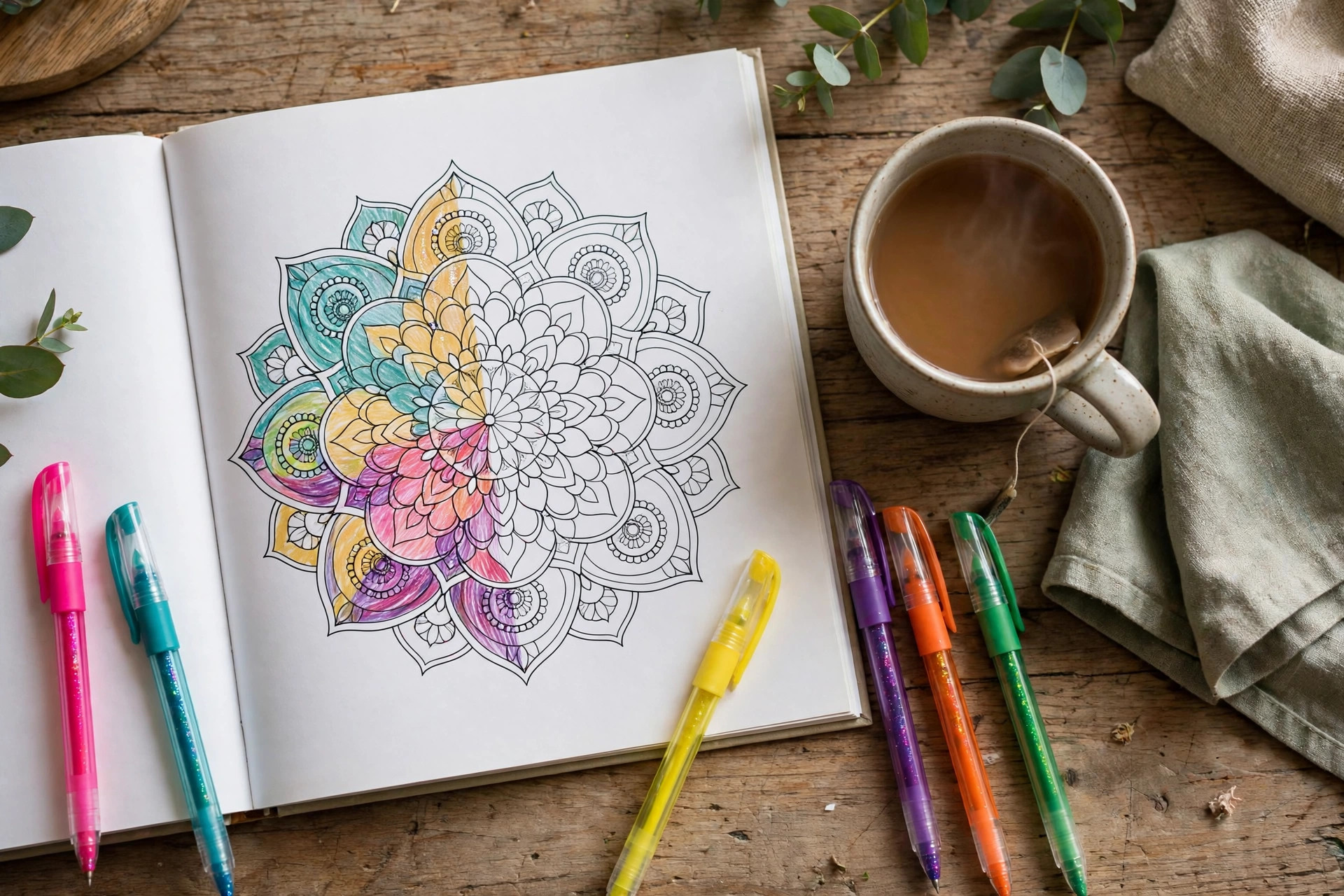
- Colour something in. Get a colouring book — children’s or “adult,” whichever makes you happier — and a pack of gel pens or crayons. Colour for the joy of colour, staying in the lines or gloriously ignoring them. Put on music, make tea, and do not photograph it unless you want to.
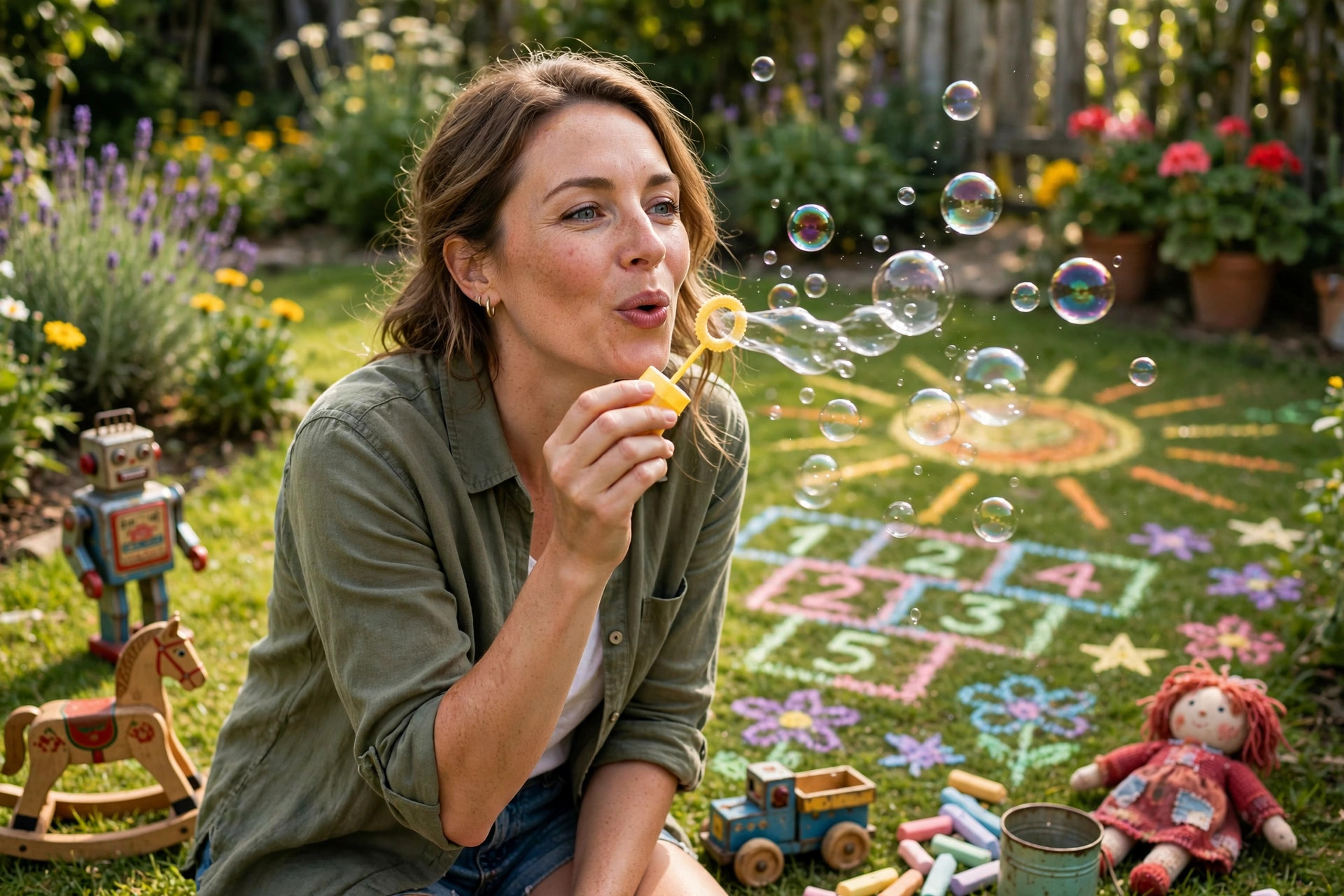
- Blow bubbles. A bottle of bubble mixture costs almost nothing and delivers instant delight. Do it in the garden, in the park, or — for maximum throwback points — while sitting on your front step like you did at nine years old.
- Draw with pavement chalk. Buy a box of chunky chalks and decorate your driveway, your garden path, or a quiet corner of pavement. Hopscotch is mandatory. Your inner child will handle the design brief.
- Build a blanket fort. Sofa cushions, blankets, fairy lights if you have them. Crawl inside with snacks and a book or film. There is no age limit on forts, and anyone who says otherwise has forgotten how good they are.
- Have a swing. Go to the local playground at a quiet time and swing. Pump your legs, go as high as you dare, feel that stomach-flip. It is still exactly as thrilling as you remember.
- Make friendship bracelets. Embroidery thread, a safety pin, and a tutorial video are all you need. Make one for yourself and one for a friend — the giving is half the joy.
- Do a jigsaw puzzle. The ultimate slow-evening activity. Choose a picture you love, clear the table, and let the quiet clicking of pieces become your evening’s soundtrack. Border first, obviously.
- Fly a kite. Autumn winds are kite season. A simple kite, an open hill or beach, and a breezy afternoon — it is hard to feel grown-up and gloomy while running with a kite.
- Bake and decorate biscuits badly. The key word is badly — gloriously, hilariously badly. Icing everywhere, lopsided faces, colours that should never meet. Eat the evidence.
- Play a playground game. Hopscotch, skipping rope rhymes, “What’s the time, Mr Wolf?” — rope in a friend or just do it solo. Skipping is also secretly excellent exercise, but do not tell anyone you did it for fitness. This is play.
- Start a sticker collection. Buy a sticker book (they still exist, and they are wonderful) and collect stickers that make you happy. Put them on your journal, your laptop, your water bottle. There are no rules; that is the point.
- Have a water fight or leaf fight. Seasonal options: water pistols in the last warm weeks, or a full-scale autumn leaf fight — gathering armfuls of crisp leaves and throwing them at willing friends. Silly? Completely. Wonderful? Absolutely.
Notice what these all have in common: no screens, no scores that matter, no audience required. Just you, having fun, on purpose. The NHS notes that adults should aim to be active daily and build up to regular moderate activity over time; playful movement like skipping, swinging, and kite-flying can be a cheerful way to add movement to a day without turning it into a workout. (Source: NHS — Benefits of exercise)
How Do You Set Up a Play Corner at Home?
Give play one visible home — a shelf, basket, or drawer stocked with your supplies — and keep the bar low on purpose. When everything lives in one place, you are far more likely to reach for it on a grey Sunday afternoon.
- Stock one small spot. Colouring things, chalk, bubbles, stickers, a kite, a skipping rope. Your play corner is not a craft room requiring setup and cleanup marathons; it is a toy box.
- Keep instant options ready. The whole philosophy is spontaneity: see the bubbles, blow the bubbles. If an activity needs more than five minutes of preparation, save it for a planned play date.
- Keep a “play list,” not a to-do list. Write down the activities that appeal to you most, as a menu of ideas for when you have an hour and a vague feeling of restlessness. Decision fatigue kills play faster than anything; a ready-made menu removes it.
How Do You Invite Friends Into the Fun?
Invite people plainly, confidently, and with zero apology — most adults are secretly desperate for an invitation like this and just need someone else to suggest it first. Shared play is far more memorable than another evening of scrolling side by side.

Try this message: “I’m doing something silly on Saturday — blanket fort and biscuit decorating at mine, 3pm. Come if you want to feel nine again.” Notice what it does: it names the activity plainly, sets the tone (silly, nostalgic), and gives permission. Be that person.
Good group throwback activities include:
- Colouring evenings (everyone brings their own book, you provide the tea)
- Park trips with kites and a football
- Baking-decorating competitions with prizes for “most gloriously awful”
- Pavement-chalk art sessions
Keep it low-pressure: the only rule is that nobody is allowed to say “this is childish” except as a compliment. And if friends are hesitant? Go anyway, and tell them about it afterwards. Nothing converts sceptics like genuine, visible joy. Your photos of a magnificent cushion fort will do more persuading than any argument. Within weeks, they will be asking when the next one is.
How Do You Keep Play Screen-Free and Simple?
Protect the analogue, unobserved part of play by keeping your phone in your pocket during the activity itself. A snapshot afterwards is a keepsake; performing the whole thing for an audience is a different activity entirely.
The trend’s real gift is unobserved, unperformed fun: play that exists only for the players. That does not mean never taking a photo — a snapshot of your chalk masterpiece before the rain comes is a keepsake, not a crime. It means keeping the phone in your pocket during the activity itself. Notice how different play feels when no one is watching, not even your future followers. It is freer, sillier, and somehow more vivid. That is the feeling you are chasing.
Simplicity matters too. If an activity starts needing special equipment, booked venues, or matching outfits, it has drifted away from throwback territory into event planning. The best play is improvised: chalk because it was raining yesterday and the pavement is dry now, bubbles because you found the bottle in a drawer, a fort because the sofa was right there. Follow the impulse. That is what kids do.
How Do You Keep Play in Balance?
Play works best as a break from adulthood, not a hiding place from it. A useful rule of thumb: play should leave you feeling lighter, not heavier — refreshed and ready, not guilty and behind.
An afternoon of bubbles is restorative; avoiding your responsibilities for a week in a blanket fort is not play anymore — it is hiding. Breaks only refresh us when there is something to take a break from. If you emerge from your fort refreshed and ready for the evening, perfect. If you emerge feeling guilty and behind, the play was not the problem — the neglected task was, and it is kinder to do the task first and play after. Fun plus responsibility, in that order, is the grown-up superpower.
Also, be kind to yourself about looking silly. The first swing, the first bubble, the first chalk drawing in public — they can feel exposing. That feeling passes within minutes, replaced by something much better: the realisation that nobody is judging you, and several people are quietly wishing they had your courage. Play is a gift you give yourself, and the wrapping paper is allowed to be a bit undignified.
So, Are You Ready to Go On and Play?
Somewhere inside you, there is a kid who has been waiting very patiently for permission to come out and play. Consider this that permission, signed and stamped — no earning it, no scheduling it perfectly, no justifying it to anyone.
So this weekend, do one throwback thing. Just one. Blow bubbles in the garden. Draw a hopscotch grid. Build the fort. Feel how quickly the years fall away, and how good it feels to grin for absolutely no reason. Adulthood will still be there when you crawl back out — but you will return to it lighter, brighter, and just a little bit younger at heart. Now go on. Play.
Leave a Reply