Last updated: October 2026
Quick answer: Tinted moisturizer is sheer, hydrating coverage that looks like natural skin and takes about a minute to apply. Foundation gives fuller coverage that lasts longer and photographs better, but takes more time. Choose tinted moisturizer for easy everyday wear and foundation for events, photos, and days you want more polish.
Trying to decide between tinted moisturizer vs foundation? You are not the only one standing in front of the mirror, bottle in each hand, unsure which to reach for. Fall is the season when our skin changes a little. The air gets cooler, the light gets softer, and heavy summer makeup starts to feel like too much.
This simple guide explains tinted moisturizer vs foundation in plain, easy words. No beauty-expert talk, no confusing terms. Just honest answers about what each one does, who it suits best, and how to wear it so your skin looks like skin, only better.
What is tinted moisturizer, really?
Quick answer: Tinted moisturizer is a light, hydrating base that evens out skin tone with sheer color instead of full coverage. It blends in about a minute with your fingers, feels like a daily cream, and suits beginners, busy mornings, and anyone who wants a natural, dewy finish.
Think of tinted moisturizer as skincare with a little bit of color. It is lighter than foundation and feels more like a daily cream on your face. The color is sheer, which means it evens out your skin tone without hiding your natural skin. You can still see your glow, your freckles, and the real you.
- Hydration built in. Most formulas add moisture, which your skin will love as the weather turns cooler.
- One-minute application. A small amount, blended with your fingers, and you are done.
- Forgiving shades. The shade does not have to match you perfectly. If your tube feels a little too dark, mix a pea-sized amount with your regular moisturizer to sheer it out even more.
In our experience, a pea-sized amount is enough for the whole face. Start small — you can always add a little more where you need it.
What is foundation, and how is it different from tinted moisturizer?
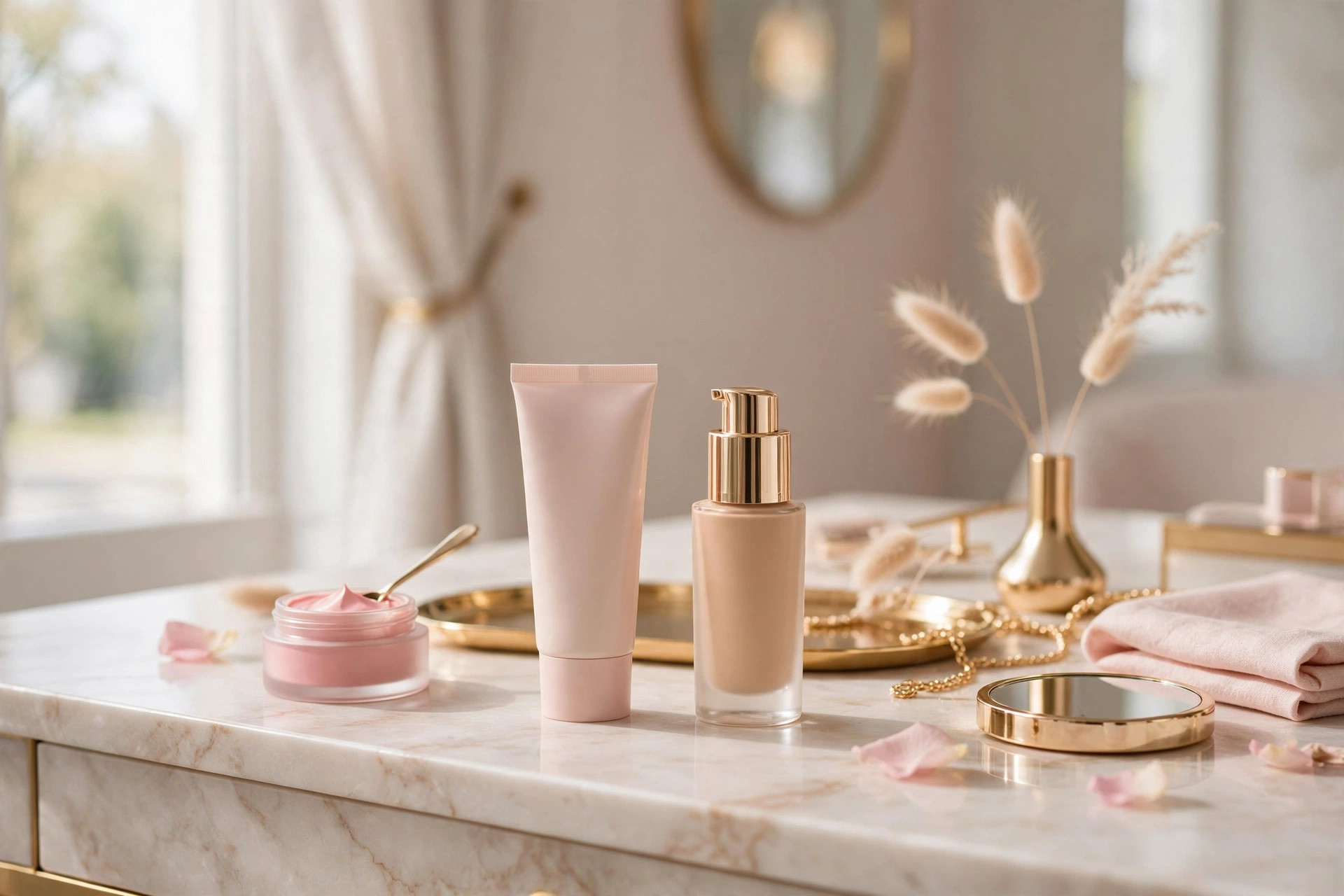
Quick answer: Foundation is a traditional makeup base that gives medium to full coverage, hiding redness and uneven tone more completely. It comes in more shades, lasts longer, and takes a few minutes to apply with a brush or sponge, feeling slightly heavier than tinted moisturizer.
Foundation gives more coverage, which means it covers redness, dark spots, and uneven areas more fully. The finish can be dewy, natural, or matte, depending on the formula you pick.
- More shades. Foundation usually comes in a wider shade range, so finding your match is often easier.
- Longer wear. It lasts longer through the day, especially if you set it lightly with powder.
- More control. Want just a little polish? One thin layer is enough. Need full coverage for a wedding? Build a second layer only where you need it. Build slowly — it is much easier to add more than to take away.
The trade-off is that foundation feels a little heavier on the skin, and applying it takes a bit more time and care.
Tinted moisturizer vs foundation: how do they compare side by side?
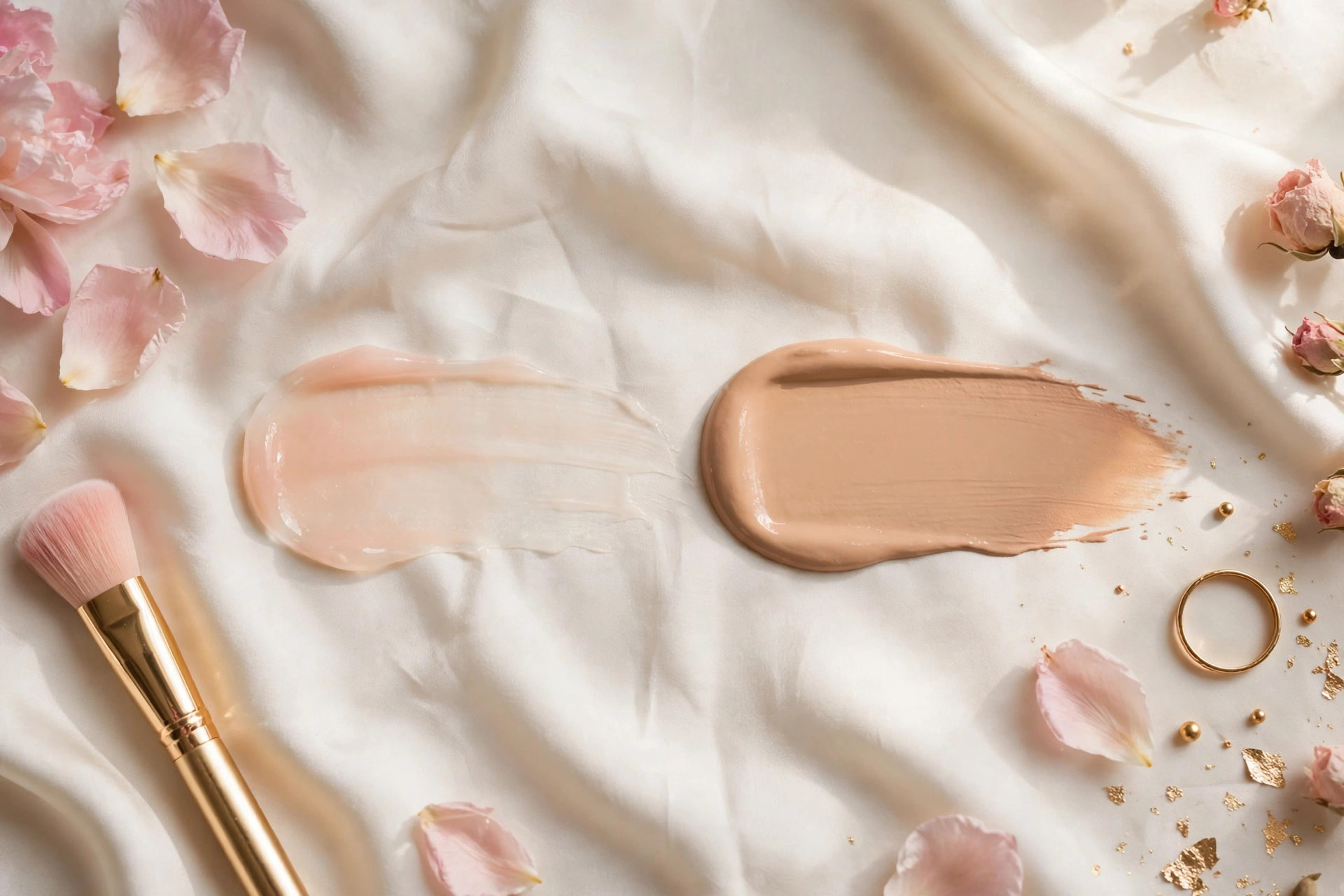
Quick answer: The main differences come down to coverage, feel, finish, application time, and shade range. Tinted moisturizer is sheer, fast, and dewy; foundation is fuller coverage, longer lasting, and available in more shades. The table below lays out each difference clearly.
| Feature | Tinted moisturizer | Foundation |
|---|---|---|
| Coverage | Light, sheer | Medium to full |
| Feel on skin | Like a light cream | A little more like makeup |
| Finish | Dewy and natural | Dewy, satin, or matte |
| Application time | About one minute with fingers | A few minutes with a brush or sponge |
| Shade range | Fewer shades | Many more shades |
| Best for | Relaxed everyday looks | Events, photos, and polished days |
Should I choose tinted moisturizer or foundation for different occasions?
Quick answer: You do not need to pick one product forever. Tinted moisturizer suits relaxed weekdays, video calls, and travel days, while foundation suits evenings out, weddings, and photos. Match your base to the day, and keep both on hand if you can.
| Occasion | Best pick | Why |
|---|---|---|
| Normal weekday, office, video calls | Tinted moisturizer | Fast, light, and looks like healthy skin on camera |
| Evenings out, weddings, events, photos | Foundation | Cameras and bright lights can wash out sheer coverage, so a little more polish helps |
| Travel days | Tinted moisturizer plus a little concealer | Comfortable for hours and never looks heavy after a long journey |
| Rough-skin days | Whichever feels kinder | A little extra coverage can help confidence, but be gentle with yourself first |
Which one is right for my skin type?
Quick answer: Dry skin usually loves tinted moisturizer for its hydration, while oily skin often prefers foundation for better shine control. Sensitive skin benefits from fewer layers, and combination skin can use both products on different areas of the face.
| Skin type | Best pick | Tip |
|---|---|---|
| Dry | Tinted moisturizer | The extra hydration keeps skin comfortable and does not settle into dry patches |
| Oily | Foundation | Better shine control; if you use tinted moisturizer, use a light hand and skip extra moisturizer underneath |
| Sensitive | Tinted moisturizer | Fewer layers sitting on your face, which sensitive skin often prefers |
| Clear and even | Tinted moisturizer | Probably all you need day to day; save foundation for special days |
| Combination | Both | Try tinted moisturizer on drier cheeks and a light layer of foundation through the T-zone |
Your skin also changes with the seasons. A foundation that felt perfect in summer humidity might feel heavy in dry fall air, and that is completely normal. It is fine to switch your base with the weather, just like you switch your clothes.
How do I apply my fall base so it looks natural?
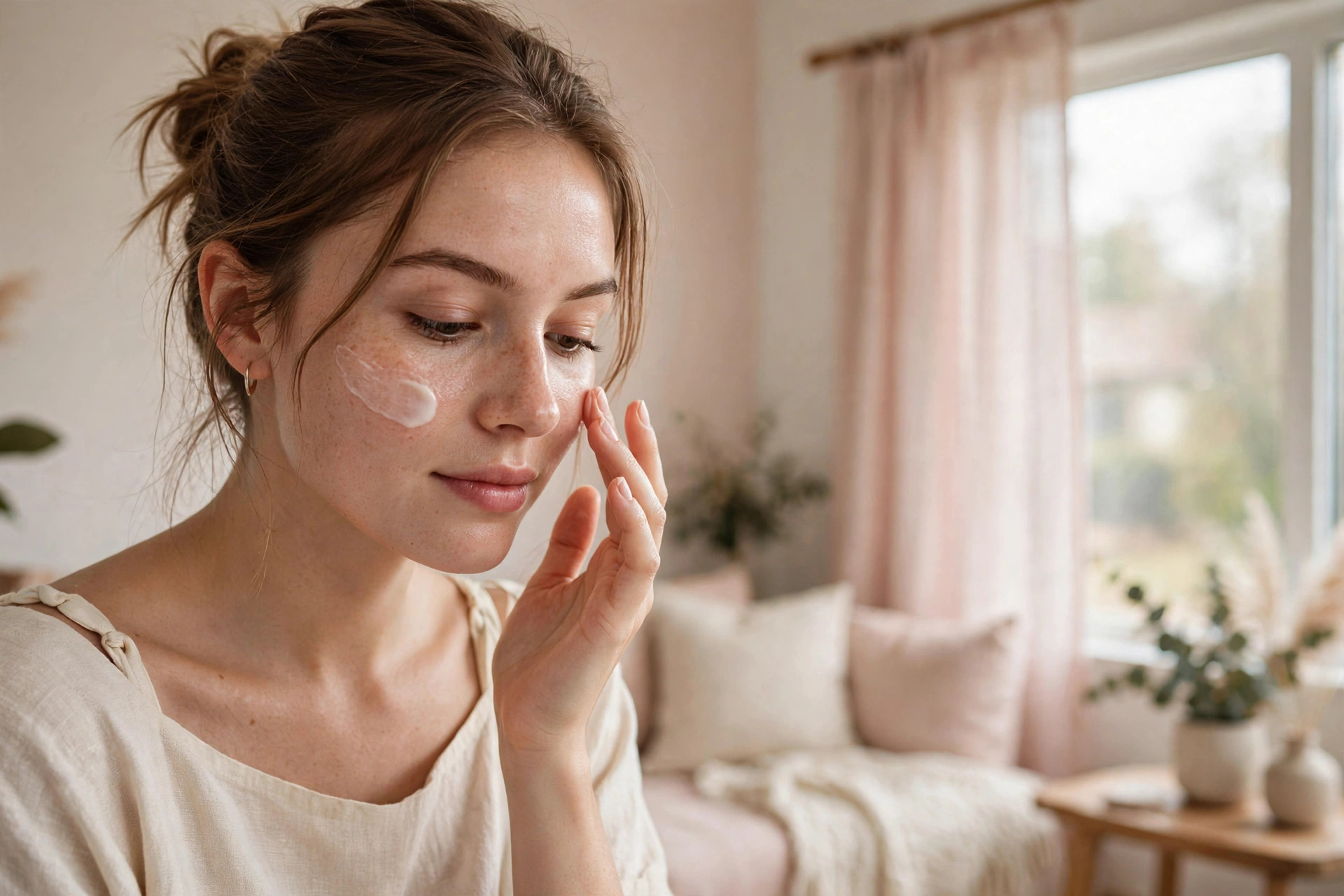
Quick answer: Start with clean, moisturized skin, warm a small amount between your fingertips, dot it on your forehead, cheeks, nose, and chin, then blend outward. Build coverage only where you need it, check your work in natural light, and stop while you can still see your skin.
The American Academy of Dermatology recommends washing your face twice a day — morning and night — and after sweating, so your base never sits on top of the day’s buildup (AAD face-washing guidance). Then follow these steps:
- Start with clean, moisturized skin. Wait a minute so your cream sinks in fully.
- Warm a small amount between your fingertips. Warmth helps it melt into the skin.
- Dot it on your forehead, cheeks, nose, and chin.
- Blend outward with your fingers or a damp sponge. Take extra care around the nose and jawline.
- Build up only where you need it. A little extra on red spots, never all over.
- Use even less under your eyes. This area is thin and shows product easily. A tiny dot, blended well, is plenty.
- Let each layer sit for a minute before deciding if you need more. Rushing leads to too much product.
- Step back and check in natural light. If you can still see your skin, you did it right.
If you use your fingers, make sure your hands are clean and warm. If you use a sponge, dampen it first and squeeze out all the extra water. A dry sponge will drink up your product instead of blending it.
How do I keep my base looking fresh all day?

Quick answer: Blot instead of adding more product, mist lightly to refresh tired makeup, and check your base in natural daylight. In fall, a richer moisturizer underneath prevents patchiness, and clean tools plus gentle nightly removal keep your skin happy.
- Blot once in the afternoon instead of adding more product.
- Keep a light face mist nearby. One spritz can refresh tired makeup in seconds.
- In fall, use a slightly richer moisturizer underneath so your base sits smoothly.
- Wash your sponge or brush once a week. Clean tools make everything look better.
- Keep blotting papers or a clean tissue in your bag. They are lighter than carrying extra makeup.
- Do a quick check in natural daylight, like near a window or in your car mirror. Indoor lighting can hide a lot.
- If you are heading outdoors, remember sun protection goes under makeup: the American Academy of Dermatology recommends a broad-spectrum, water-resistant sunscreen with SPF 30 or higher on all skin not covered by clothing, reapplied every two hours or after sweating (AAD sun-protection recommendations).
- Remove your makeup gently every night. Your morning skin will thank you.
What mistakes should I avoid with tinted moisturizer and foundation?
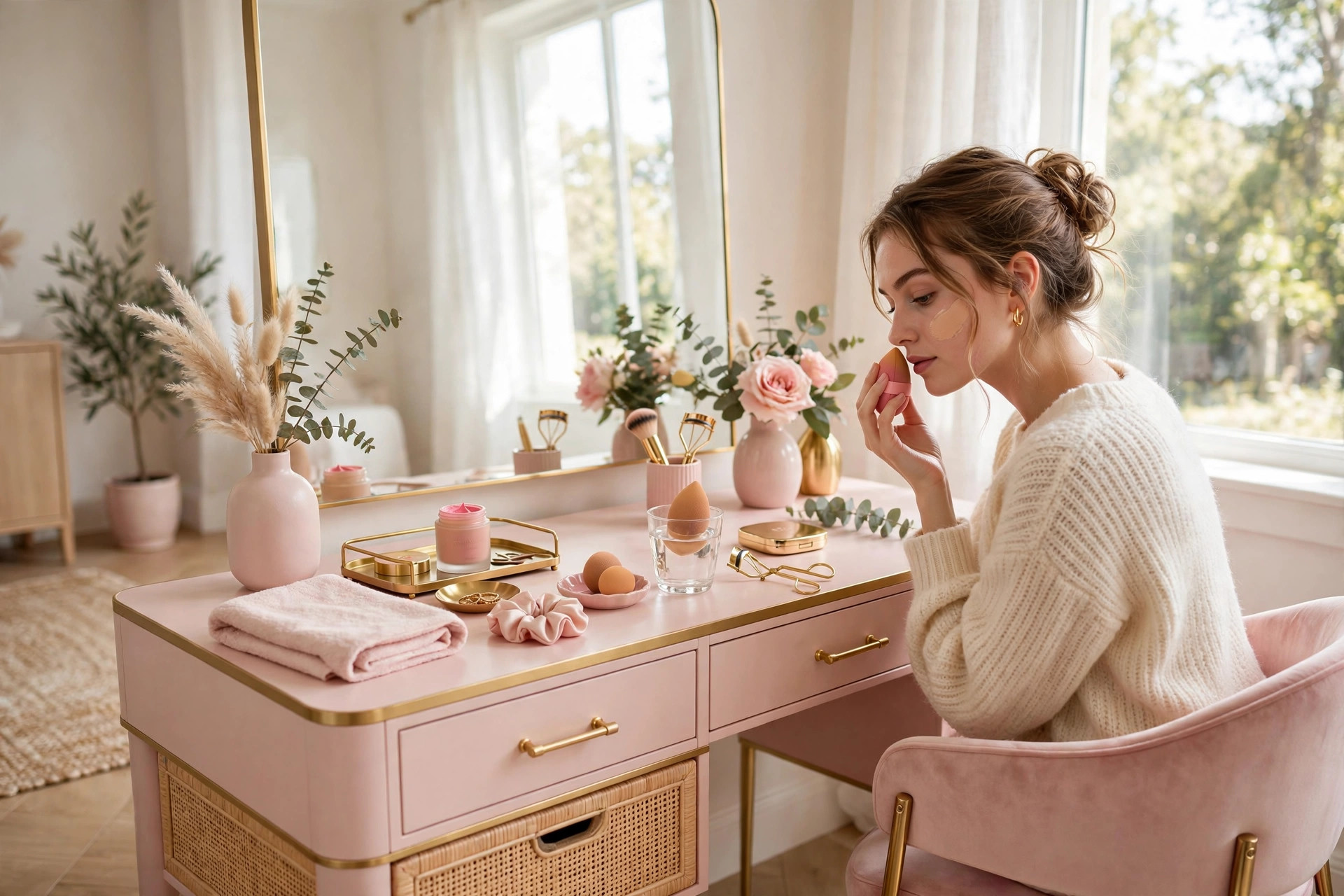
Quick answer: The most common mistakes are testing shades on your hand instead of your jawline, applying too much at once, skipping moisturizer, and forgetting to blend past the jawline. Start with less product than you think you need and build slowly.
- Testing the shade on your hand. Your hand is often a different color than your face. Always test on your jawline and check it in daylight.
- Applying too much at once. Start with less than you think you need. You can always add a little more where you need it.
- Skipping moisturizer underneath. In fall, dry skin makes any base look patchy. A good moisturizer first makes everything sit smoothly.
- Using your fingers for foundation. Fingers are perfect for tinted moisturizer, but foundation usually blends better with a damp sponge or brush.
- Forgetting the jawline and neck. Blend down past your jaw so there is no visible line where your makeup stops.
- Setting tinted moisturizer with heavy powder. A light dusting is fine, but too much powder ruins the dewy finish that makes tinted moisturizer pretty.
How do I remove my base gently at night?
Quick answer: Massage a cleansing oil or balm over dry skin to melt away makeup, add water to rinse, then follow with your regular gentle cleanser. Pat dry, moisturize while skin is still slightly damp, and never sleep in your base — pores clog overnight.
- Start with a cleansing oil or balm. Massage it over dry skin for about a minute. This melts away makeup gently without scrubbing.
- Add a little water and massage again. The oil will turn milky and lift everything off your skin.
- Rinse with lukewarm water. Hot water can dry out your skin, and cold water does not clean as well.
- Follow with your regular gentle cleanser. This second cleanse makes sure nothing is left behind.
- Pat your face dry with a clean towel. Never rub.
- Finish with your night moisturizer while your skin is still slightly damp. It will drink it right in.
Once a week, you can add a gentle exfoliating step to keep your skin smooth.
Tinted moisturizer vs foundation: your questions, answered
Quick answer: Here are quick answers to the questions we hear most about tinted moisturizer vs foundation, covering daily wear, mature skin, and whether you can mix the two products for your perfect finish.
Can I wear tinted moisturizer every day?
Yes, absolutely. Tinted moisturizer is light and gentle enough for daily wear. Many women use it as their everyday base and save foundation for evenings or events.
Does tinted moisturizer work for mature skin?
It often works beautifully. The light, hydrating formula does not settle into fine lines the way heavier bases sometimes do. The key is a good moisturizer underneath and a light hand.
Can I mix tinted moisturizer and foundation?
You can. Some women mix a drop of foundation into their tinted moisturizer for a little more coverage while keeping the light feel. Start with a tiny amount and add slowly.
At the end of the day, there is no wrong answer in the tinted moisturizer vs foundation debate. The best base is the one that makes you feel like yourself: soft, comfortable, and confident. Try both on different days and notice which one you reach for more. Your skin already knows. Save this guide for later, and enjoy your softest fall skin yet.
Leave a Reply