
Last updated: October 2026
Quick answer: A vagus nerve reset is a gentle five-minute ritual of slow breathing with long exhales, soft humming and cool water on the face. These small physical nudges encourage your body’s rest-and-digest response, and many people find the sequence calming and grounding.
There are days when your whole body feels like it is bracing for something. Your shoulders creep up toward your ears, your breathing gets shallow, your jaw tightens, and no amount of telling yourself to just relax seems to help. If that sounds familiar, you are not alone, and it is not a personal failing. Your nervous system is simply doing its job a little too enthusiastically.
This is where the idea of a vagus nerve reset comes in. While some of the claims made about it online are overblown, the underlying practice is beautifully simple: a short, gentle ritual of slow breathing, humming and cool water that many people find genuinely calming. It takes five minutes, needs no equipment, and you can do it anywhere, at your desk, in your bedroom, or in a quiet corner of a busy house.
Please note: this article is general information only, not medical advice. It does not diagnose or treat any condition. If you ever feel dizzy, uncomfortable or unwell during any breathing exercise, simply stop and breathe normally, and speak to a doctor if you are concerned.
What Does the Vagus Nerve Actually Do?
The vagus nerve is a long nerve running from the brainstem through the neck, chest and abdomen, and it plays a central role in the body’s rest-and-digest system, which slows the heart rate, deepens breathing and releases muscle tension.
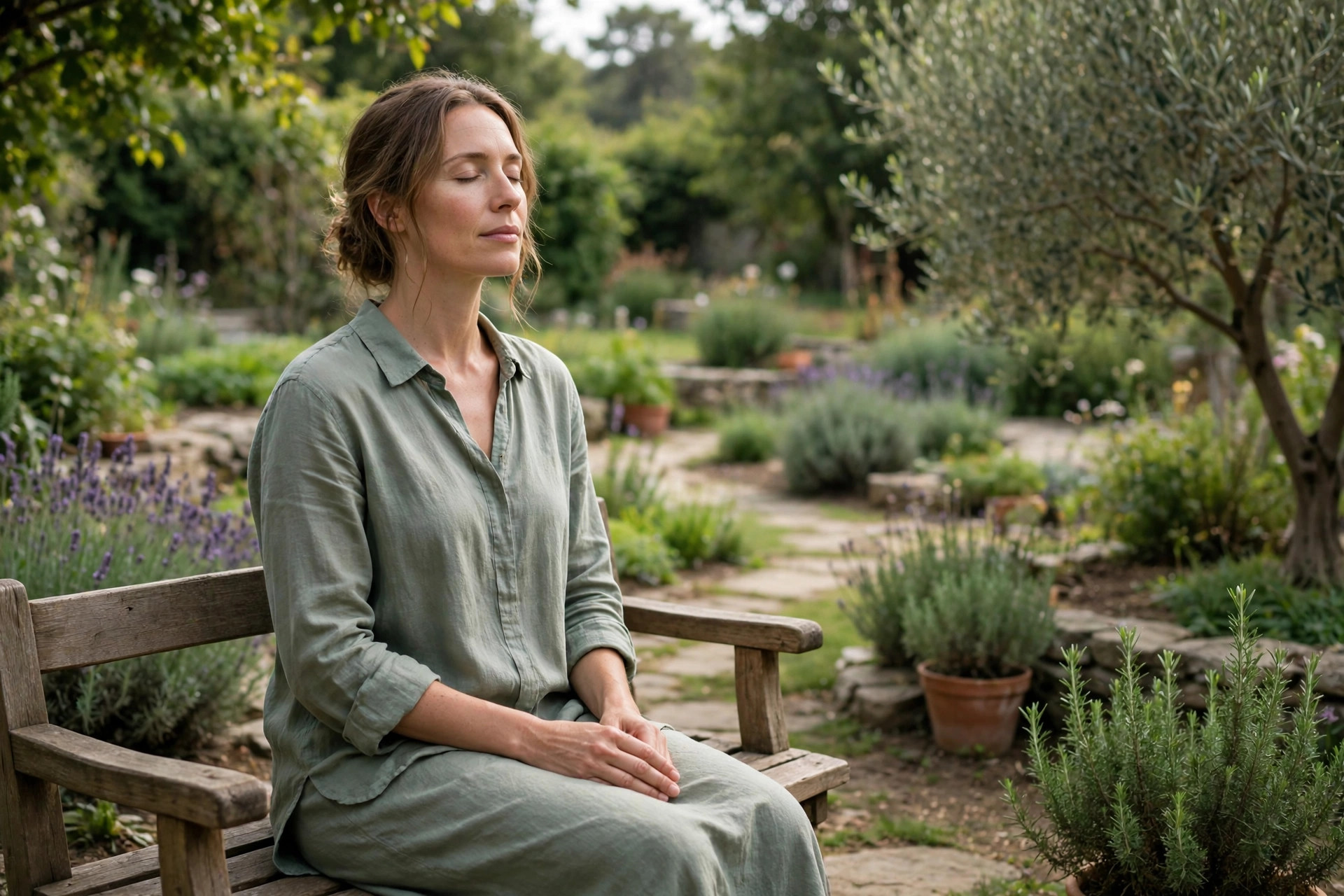
The vagus nerve is the longest cranial nerve in the body, running from the brainstem down through the neck, chest and abdomen, according to Britannica. It is a key part of the parasympathetic nervous system, the branch responsible for rest-and-digest mode, the opposite of the fight-or-flight response. When this system is active, your heart rate slows, your breathing deepens and your muscles release their tension.
You cannot reach in and press a button on the vagus nerve, but you can influence it indirectly through a few surprisingly ordinary actions:
- Slow, extended exhales: breathing out for longer than you breathe in is a classic calming signal.
- Humming, singing or gargling: the vagus nerve passes right by your vocal cords and throat, so gentle vibration in this area is part of the practice.
- Cool water on the face: this triggers what scientists call the dive reflex, which naturally slows the heart rate.
None of this is magic. These are small, physical nudges that tell your nervous system that the emergency is over and it can stand down. A five-minute ritual simply strings several of these nudges together into one calming sequence, which is why many people find the combination more effective than any single trick on its own. The Mayo Clinic describes deep breathing as one of the simplest relaxation techniques, and this ritual builds on exactly that idea.
Why Is Five Minutes Enough?
Five minutes is enough because your nervous system responds to clear, focused calming signals, and because a short ritual you actually repeat is far more useful than a long routine you attempt once and abandon.
One of the biggest barriers to self-care is the belief that it has to take a long time to count. An hour-long yoga class is lovely, but on a truly stressful day, finding an hour can feel impossible, and the guilt of not finding it only adds to the tension. Five minutes, though? Almost everyone can find five minutes.
There is also a practical reason short works well here. Your nervous system responds to signals, and a clear, focused burst of calming signals can be enough to shift how you feel. You do not need to meditate for forty minutes to notice your shoulders dropping or your breathing evening out. Many people report feeling a genuine difference after just the breathing portion of this ritual, which takes about two minutes.
The other advantage of a five-minute practice is that you will actually do it. A ritual you repeat three times a week beats a perfect routine you attempt once and abandon. Keep it short, keep it simple, and let consistency do the heavy lifting.
How Do You Set Up for the Ritual?
You need no special room, equipment or experience for this ritual: just a comfortable seat, loose clothing, a silenced phone, a glass of cool water and a gentle five-minute timer to keep you from clock-watching.
You do not need a special room, candles or an app. A tiny bit of preparation, though, makes the five minutes feel more like a treat and less like another task on your list. Here is your setup checklist:
- Find a comfortable seat: a chair, the edge of your bed, or a cushion on the floor, anywhere you can sit with your spine reasonably straight and your feet flat. You can also lie down if you prefer.
- Loosen anything tight: undo a top button, take off a tight hair tie, slip off your shoes. Physical constriction sends subtle tense signals to your body, and removing it helps.
- Quiet your phone: silence notifications for five minutes. The ritual will not work if you are half-listening for a ping.
- Get a glass of cool water: you will use a little of it on your face at the end, and you can sip the rest. Cool, not ice-cold, is perfect.
- Set a gentle timer: five minutes on your phone, on vibrate or with a soft chime, so you are not watching the clock.
That is genuinely all the preparation you need. No special clothes, no equipment, no experience with meditation. If you are at work, you can even do a discreet version at your desk: the breathing and humming, done quietly, work just fine without the water step.
What Is the 5-Minute Ritual, Step by Step?
The ritual has four parts over five minutes: one minute of arriving and noticing, two minutes of slow breathing with long exhales, one minute of humming, and one minute of cool water and closing.

Read through the sequence once, then put the instructions aside and just follow the flow. Each step lasts about a minute:
- Minute 1, arrive: sit comfortably and close your eyes if that feels good. Take three natural breaths, not trying to change anything, just noticing. Feel your feet on the floor and the weight of your body in the chair. Silently name what you notice, such as tight shoulders, busy mind or shallow breath. Naming it is not about judging it; it is about arriving in your body instead of fighting it.
- Minutes 2 to 3, slow breathing with long exhales: breathe in gently through your nose for a count of four, then breathe out slowly through your mouth for a count of six or eight. The exact numbers matter less than the ratio: make your exhale noticeably longer than your inhale. Rest one hand lightly on your belly if it helps you feel the breath moving. If your mind wanders, and it will, simply return to the counting without scolding yourself. Two minutes of this is the heart of the ritual.
- Minute 4, humming: on your next exhale, let it come out as a soft hum, lips gently closed. Feel the vibration in your throat, chest and even your face. Hum through three or four slow exhales, letting the sound be whatever comes naturally: low, high or wavering, it does not matter. If humming feels strange, hum a simple tune or simply sigh the breath out with sound. The gentle vibration is the point, and many people find this the most soothing minute of all.
- Minute 5, cool water and closing: open your eyes. Dip your fingers in your glass of cool water and press them gently against your cheeks and forehead, or splash a little water on your face. Take one final slow breath, in through the nose and a long sigh out through the mouth. Notice how you feel compared to five minutes ago. You do not need to feel like a different person; even a small softening around the shoulders counts as a win. Drink the rest of the water, and carry on with your day.
What Gentle Extras Can You Add When You Have More Time?
If you have ten or fifteen minutes, you can deepen the ritual with gargling, a cool finish to your shower, singing, gentle neck stretches or a slow walk, but pick just one or two rather than adopting them all.
The five-minute version stands perfectly well on its own. But if you ever have ten or fifteen minutes and want to deepen the experience, here are some natural extensions that work along the same lines:
- Gargling: vigorous gargling with water stimulates the throat muscles near the vagus nerve. Thirty seconds of hearty gargling after brushing your teeth is an easy daily add-on.
- Cool finish in the shower: ending your shower with 15 to 30 seconds of cool water is a classic nervous-system nudge. Start lukewarm-cool rather than ice-cold, and skip this if you have a heart condition or are pregnant; check with your doctor first.
- Singing: singing in the car or the shower vibrates the same throat area as humming, just with more joy. Loud, off-key and wholehearted is ideal.
- Gentle neck stretches: slowly tilt each ear toward its shoulder and hold for 20 seconds, breathing deeply. The vagus nerve runs through the neck, and releasing tension here often feels wonderful.
- A short walk: a slow ten-minute walk, especially somewhere green, pairs beautifully with the ritual. Rhythmic movement plus fresh air is calming in its own right.
Pick one or two that appeal to you rather than trying to adopt them all. The spirit of this whole practice is gentleness, and that applies to how you build the habit too.
When Should You Check In With a Professional?
A calming ritual suits everyday stress, but it is not a substitute for professional support, so speak to a doctor or mental health professional if stress is persistent, affects your sleep, work or relationships, or comes with physical symptoms.
A calming ritual is a wonderful tool for everyday stress, the frazzled-after-work kind, the too-many-tabs-open-in-your-brain kind. But it is not a substitute for professional support, and it is important to know the difference.
Consider speaking with your doctor or a mental health professional if stress or anxiety is persistent, if it is interfering with your sleep, work or relationships, or if you experience physical symptoms like chest pain, dizziness or numbness. These always deserve a medical check to rule out physical causes first. There is no shame in any of this; reaching out is one of the strongest forms of self-care there is.
Similarly, if you have a heart condition, low blood pressure, are pregnant, or have any condition affecting your breathing, check with your doctor before trying breathwork or cold-water practices. Most people can do gentle slow breathing safely, but personalised advice is always better than a blog article when health conditions are involved.
This ritual works best as one small part of a bigger picture: decent sleep, movement you enjoy, connection with people you like, and professional support when you need it. Five minutes of humming cannot fix an overloaded life, but it can give you a calmer five minutes inside it, and sometimes that is exactly what you need to take the next step.
So the next time you catch your shoulders up around your ears, try it. Four counts in, six counts out, a little hum, a splash of cool water. Five quiet minutes, just for you.
Leave a Reply