
There is a style that feels like golden hour bottled up and brought indoors — part African heritage, part bohemian wanderlust, entirely made for autumn. It is called Afrohemian, and this fall it is having a real moment: searches for Afrohemian home decor are up 220 percent as more of us look for rooms that feel personal, warm and full of story rather than showroom-perfect.
Afrohemian decor is exactly what the name promises: the marriage of African design traditions — mudcloth patterning, kente-inspired colour, carved wood, handwoven fibre — with the laid-back, layered spirit of bohemian style. It is vivid without being loud, cosy without being cluttered, and it happens to be made for fall, when shorter days and longer evenings make us all crave homes that feel richer and more enveloping.
The best part is that you do not need to redecorate a whole room to capture the feeling. Afrohemian style is built on layers — a throw here, a basket there, a cushion swap — so you can start small and let the look grow around you. This guide walks you through the colours, the textiles, the natural fibres and the finishing touches, room by room and on a real-world budget, so your home can carry that golden warmth all season long.
What Afrohemian Style Actually Means
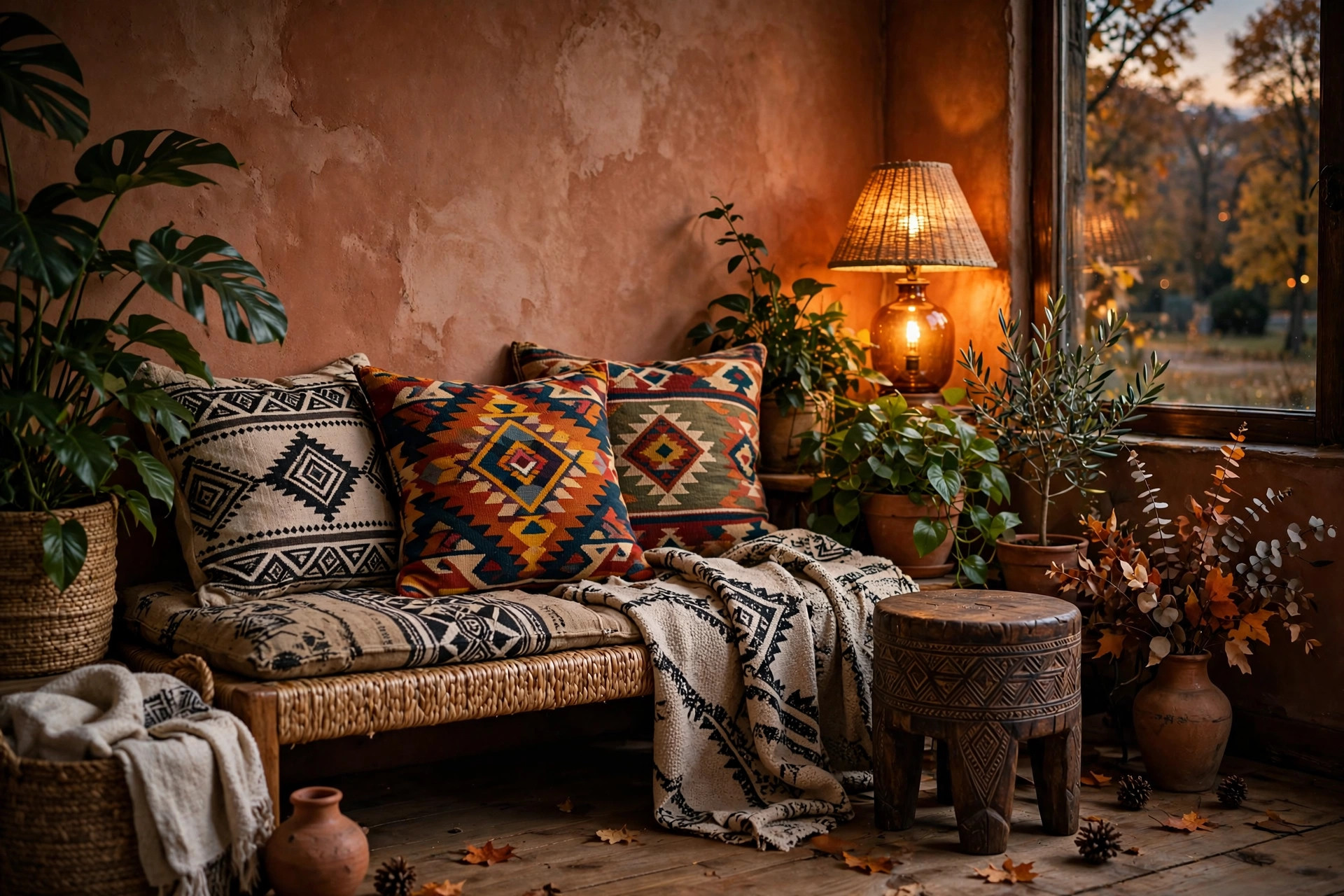
Afrohemian is a blend of two design languages that were always meant to meet. From African traditions it takes bold geometry, hand-crafted texture and a colour palette drawn from earth, sun and harvest. From bohemian style it takes the joyful layering, the mix of eras and origins, and the belief that a home should look collected over time rather than bought in one afternoon.
Some of the most beloved Afrohemian pieces have deep roots worth knowing. Mudcloth, or bogolanfini, comes from the Bamana people of Mali, where cotton cloth is hand-dyed with fermented mud to create striking graphic patterns in brown and black on natural cream. Kente cloth, woven by the Asante people of Ghana, is famous for its vivid woven stripes in gold, red, green and black. Adinkra symbols from Ghana carry whole proverbs in a single stamp. Knowing the stories behind the patterns makes styling them feel richer — and helps you choose pieces with respect rather than treating them as generic prints.
It is also worth understanding how Afrohemian differs from standard boho. Traditional bohemian interiors lean pale and airy — white walls, macramé, light woods. Afrohemian is warmer and more grounded: think terracotta instead of blush, deep ochre instead of beige, carved dark wood instead of bleached rattan. Both love texture, but Afrohemian leans into contrast — dark against light, rough against smooth — which is exactly why it sings in autumn, when the light itself turns golden and low.
For fall 2026, the trend is moving away from the all-neutral interiors of recent years and toward rooms with genuine personality. Afrohemian fits that shift perfectly because it rewards mixing rather than matching. A modern sofa can sit happily beside a hand-carved stool; a mass-market rug can be layered under a smaller kilim. The look works in rented flats and family homes alike, because it is built from pieces you add gradually rather than a scheme you install all at once.
Building Your Fall Colour Palette
Every Afrohemian room starts with colour, and fall gives you the ideal palette to work with. Anchor everything in warm neutrals — ivory, sand, warm cream — because these keep the vivid patterns from feeling overwhelming. Against that base, layer the earthy stars of the season: terracotta, burnt orange, ochre, goldenrod and warm clay brown. These are the colours of autumn leaves and harvest fields, and they make any room feel instantly cosier.
Then add your depth notes. Deep forest green, espresso brown, charcoal and aubergine keep the palette from tipping into sweetness. A single dark element — a charcoal cushion, a dark wooden bowl, an espresso throw at the foot of the bed — grounds the whole arrangement the way bass notes ground a song. If you love jewel tones, Afrohemian welcomes them: emerald, sapphire and ruby appear in many West African textiles and look magnificent against warm autumn light.
A simple way to keep your colours harmonious is the classic 60-30-10 rule. Let warm neutrals cover about 60 percent of the room (walls, sofa, larger rugs), earthy mid-tones take 30 percent (throws, cushions, curtains), and your boldest patterns and colours claim the final 10 percent (a mudcloth cushion, a kente-inspired runner, a piece of wall art). This ratio keeps the look layered but calm, vivid but liveable — the sweet spot for everyday life.
Lighting changes everything with this palette, so always test colours in your actual room. Terracotta that looks rusty-orange in a bright shop can glow like embers under warm evening lamps. If your room gets little natural light, lean toward the golden end of the palette — ochre, honey, warm cream — which hold their warmth even on grey days. North-facing rooms in particular benefit from warm-toned bulbs (2700K) to keep the whole scheme feeling like autumn rather than winter.
The Textiles That Do the Heavy Lifting
In Afrohemian interiors, textiles are the stars. They carry the pattern, the colour and the cultural story, and they are also the easiest, most affordable way to transform a room. Start with the single most impactful piece: a mudcloth throw. Draped over a sofa arm or folded at the foot of a bed, its graphic black-on-cream or brown-on-ivory pattern instantly signals the whole style. Genuine hand-dyed mudcloth is an investment, but excellent mudcloth-inspired throws are widely available at high-street prices and look convincing in a layered setting.
Cushions are your next move, and here mixing is the whole point. Combine a large mudcloth cushion with a smaller one in a kente-inspired stripe, then add a plain terracotta or ochre cushion to give the eye somewhere to rest. Odd numbers work best — three or five cushions on a sofa rather than two or four — because asymmetry feels collected rather than staged. Look for cushion covers with texture as well as pattern: nubby weaves, hand-loomed cotton and even repurposed fabric add the tactile richness the style demands.
Underfoot, rugs set the foundation. A flat-weave kilim or a Berber-style rug with a simple diamond pattern works beautifully, and layering is very much allowed: a large neutral jute rug with a smaller patterned kilim on top adds depth and lets you bring in pattern without committing to a huge expensive piece. In bedrooms, a runner in kente-inspired colours along one side of the bed gives you that vivid hit of pattern first thing in the morning.
Do not forget the textiles people overlook: table runners, window treatments and bed linen. A batik or adinkra-print table runner turns an ordinary dining table into a focal point for autumn gatherings. Swap lightweight summer curtains for something with more weight — linen in a warm tone, or even a pair of curtain panels in a bold African-inspired print if the room is otherwise neutral. On the bed, layer a patterned throw over plain warm-white bedding and add two patterned cushions against your sleeping pillows. Caring for these textiles is straightforward: most cotton and wool pieces do best with gentle cold washes and line drying, which also preserves their colours far longer than hot tumble drying.
Natural Fibres and Handmade Pieces
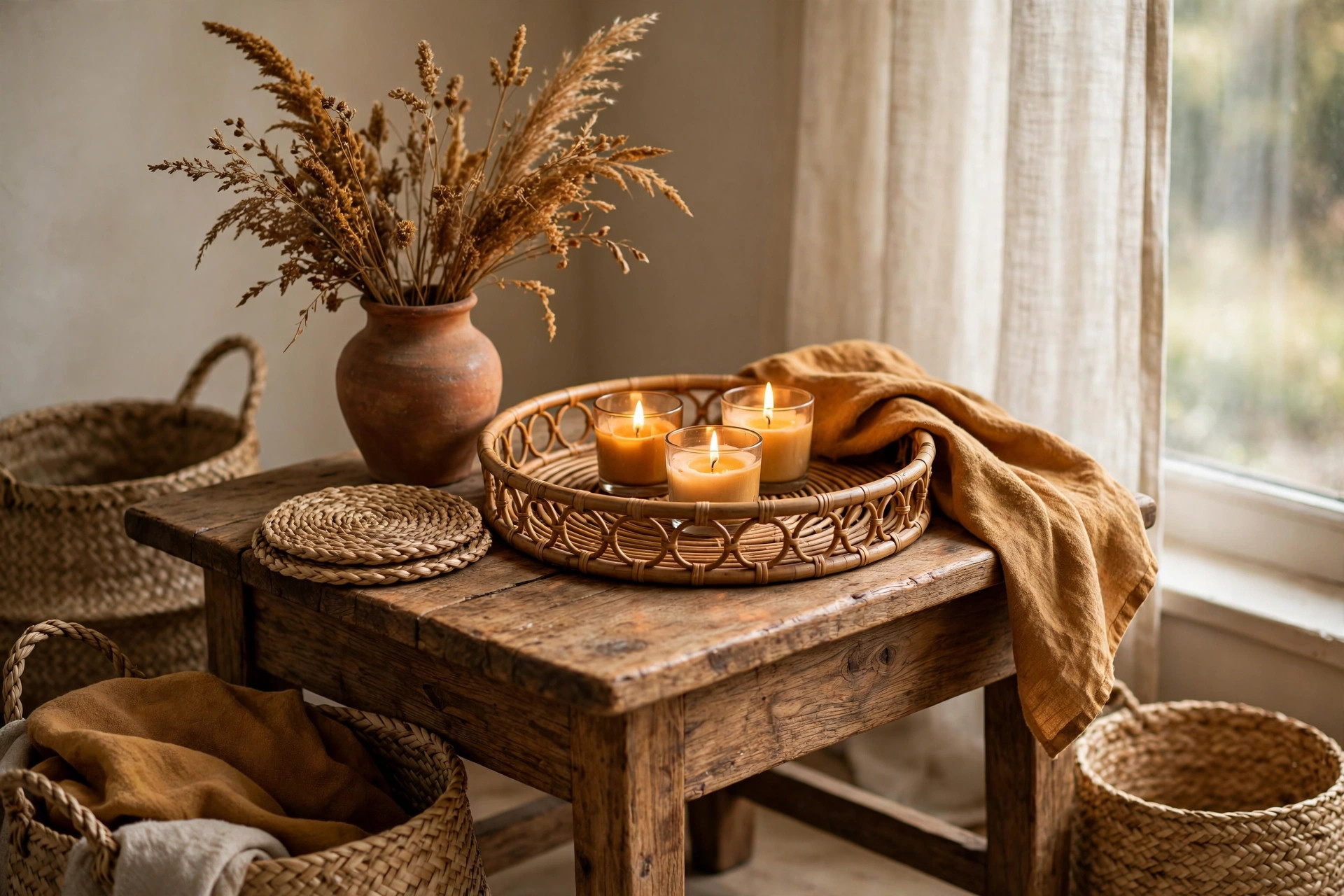
If textiles are the stars of Afrohemian style, natural fibres are the supporting cast that makes everything believable. Rattan, seagrass, jute, sisal and raffia bring an organic, hand-touched quality that balances the bold graphics of the textiles — and they are wonderfully affordable. A set of woven baskets in graduated sizes might be the single best-value purchase in this whole guide: they corral throws, firewood, magazines and toys while looking like deliberate decor.
Think about where fibre can replace something colder. A rattan pendant shade softens overhead light far more kindly than a metal or glass fitting, and it casts beautiful patterned shadows in the evening. Seagrass belly baskets make perfect plant pots. A jute runner in a hallway adds warmth underfoot the moment the weather turns. Even small swaps count: a woven tray on a coffee table, raffia place mats on the dining table, a sisal basket holding rolled towels in the bathroom.
Handmade pieces in wood and clay complete the picture. Look for hand-carved wooden bowls, stools and side tables — the slight irregularities of handmade work are the point, not a flaw. Terracotta pots and vases in warm clay tones tie the whole palette together and are perfect for autumn’s dried grasses, branches and seed heads. If you are buying new, seek out fair-trade and artisan-made pieces where your budget allows; the story behind a handmade basket from a weaving cooperative adds a layer of meaning no mass-produced copy can match.
Styling these pieces is about grouping rather than scattering. Three baskets of different sizes clustered in a corner read as intentional; one lone basket in each room reads as clutter. Group odd numbers together, vary the heights, and let the natural textures contrast with something smooth nearby — a woven basket beside a ceramic lamp, a rattan tray on a polished wooden table. This contrast of rough and smooth is one of the quiet secrets of the style, and it is what keeps a fibre-heavy corner from looking like a storage cupboard.
Styling It Room by Room on a Sensible Budget
You do not need a big budget to go Afrohemian — you need a plan. Start in the living room, where you spend your autumn evenings. Swap in two or three patterned cushions, drape a mudcloth throw over the sofa, add a woven basket for blankets and a tray with candles on the coffee table. Four moves, one afternoon, and the room already tells a different story. If your sofa is a cool grey or a patterned fabric that fights the palette, a simple throw in warm cream or terracotta laid across the seat cushions can visually reset it without reupholstery.
In the bedroom, focus on the bed as the canvas. Warm-white or cream bedding, a patterned throw folded across the foot, two or three cushions in mudcloth or kente-inspired prints, and a woven basket at the bedside holding books or a spare blanket. A pair of warm-toned lamps or even fairy lights in a glass jar adds the golden glow that makes the textiles look their richest at night. Bedrooms are also ideal for a small gallery wall — framed textile fragments, prints or photographs in simple wooden frames.
Entryways and dining corners are where Afrohemian style really earns its keep in autumn, because these are the spaces guests see. A jute runner, a basket for scarves and gloves, a bowl of seasonal fruit or pinecones on a console table, and one piece of bold textile — a runner, a wall hanging — set the tone immediately. In the dining area, a patterned table runner plus simple linen napkins in a warm tone makes even a weeknight supper feel like an occasion.
Stretching your budget is part of the fun. Charity shops and flea markets are goldmines for baskets, wooden bowls and terracotta pots. Fabric sold by the metre lets you make your own cushion covers and table runners for a fraction of finished prices — straight seams are all you need. Marketplace apps often list rattan and cane furniture at bargain prices from sellers redecorating in other styles. And remember the golden rule of layering: buy the best you can afford for the pieces you touch daily (throws, cushions) and save on the pieces that sit in corners.
Small Details That Make It Sing
Once the big layers are in place, the details lift an Afrohemian room from pleasant to unforgettable. Lighting comes first: swap cool white bulbs for warm ones, cluster candles in amber glass or brass holders, and consider a salt lamp or a paper lantern for that soft golden diffusion. Autumn evenings are long, and warm layered lighting is what makes terracotta glow and mudcloth patterns look their most dramatic.
Plants are practically mandatory. Large leafy plants — a fiddle-leaf fig, a bird of paradise, even a generous monstera — echo the lushness of the style’s roots, while dried grasses, pampas plumes and branches in terracotta vases carry the autumn note. If you are not green-fingered, dried arrangements are wonderfully forgiving and last the whole season. Group plants in woven baskets rather than plastic pots for an instant upgrade.
Art and objects with meaning give the room its soul. Look for prints by African and diaspora artists, photography of landscapes or textiles, or framed fabric offcuts that are beautiful in their own right. A stack of coffee-table books — on African art, textiles or travel — adds both colour and conversation. Scent matters too: candles or incense in amber, cedar, vetiver or spiced orange complete the sensory picture and make the room feel finished in a way the eye alone cannot explain.
Finally, give the look room to breathe. Afrohemian is layered, not crowded — every surface does not need an object. Leave some empty space on shelves and tables so the pieces you love can actually be seen. Step back, squint, and check the balance of pattern and plain, dark and light. When it feels warm, personal and a little bit joyful, you have arrived. That golden-hour feeling is now yours to keep all season long.
Afrohemian fall decor is really a philosophy as much as a style: choose pieces with stories, layer them with love, and let your home reflect the richness of the cultures that inspire it. Start with a single throw or a pair of cushions this weekend, and see how quickly the warmth spreads. Your autumn evenings are about to get a whole lot cosier.
Leave a Reply