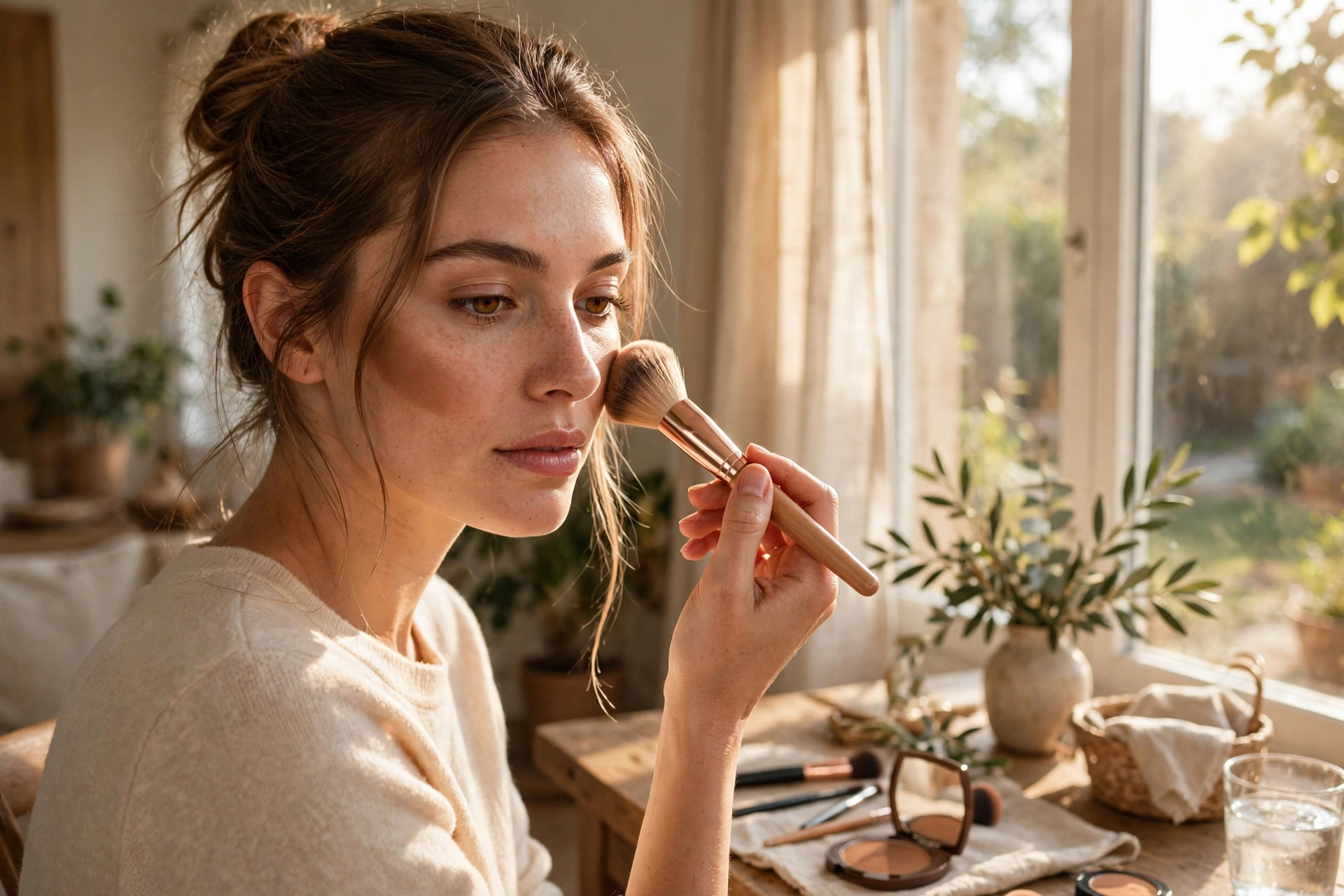
Every so often, a makeup product comes along that makes you wonder why nobody thought of it sooner. Blonzer is that product. Part blush, part bronzer, this clever hybrid delivers the warmth and dimension of a bronzer with the fresh, lively flush of a blush — in a single step. The result is the complexion trend defining 2026: skin that looks sun-kissed, healthy, and lit from within, as if you just returned from a week somewhere warm.
If your makeup bag is already groaning under the weight of separate blushes and bronzers, blonzer might be the simplification you did not know you needed. Instead of layering two products and blending the boundary between them, one shade does both jobs: warming the complexion like a bronzer while adding that fresh pop of colour like a blush. It is faster, it is more foolproof, and — when you pick the right shade — the finish looks more natural than either product worn alone.
This guide covers everything: what blonzer actually is and how it differs from its parents, why it has become everyone’s go-to, how to choose the perfect shade for your skin tone, the placement technique that flatters your face shape, a step-by-step application for a seamless finish, how to pair it with the rest of your makeup, and the common mistakes that separate a gorgeous glow from a muddy mess.
What Exactly Is Blonzer?
Blonzer is a cheek product that sits exactly between blush and bronzer in both colour and function. Traditional bronzers are brown-based and designed to add warmth and shadow — they sculpt and add a sun-touched depth, usually in matte or subtly shimmery brown tones. Traditional blushes are pink, peach, or red-based and designed to mimic a natural flush — they add life and colour to the cheeks. Blonzer fuses the two: warm, rosy-brown, terracotta, and burnt-peach shades that warm the face like a bronzer while flushing it like a blush.
The shades tell the story. Where a bronzer might be a flat chocolate brown and a blush a bright bubblegum pink, a blonzer lives in the middle: terracotta, warm rosewood, sunbaked peach, rosy bronze, brick rose. These are the colours of actual sun-kissed skin — think of the warm glow across your nose and cheeks after a day outdoors. That is precisely the effect blonzer recreates, which is why it looks so convincingly natural.
Blonzers come in the same formulas as other cheek products: pressed powders (the most common and easiest for beginners), creams and liquid formulas (beautiful for dry skin and that dewy, skin-like finish), and even sticks for on-the-go application. The formula you choose affects the finish more than the colour does — powders give a soft, diffused warmth, while creams melt into skin for a lit-from-within glow. Many enthusiasts own one of each for different days.
Why Everyone Has Switched to Blonzer
Blonzer’s rise makes perfect sense once you try it. The first reason is simplicity: one product, one application, one blending step. The old routine — bronzer to warm and contour, then blush on the apples, then careful blending where the two meet — took time and skill to get right. Blonzer collapses it into a single sweep. For busy mornings, travel, or minimal-makeup days, that simplicity is transformative.
The second reason is the finish. Layering bronzer and blush can sometimes look exactly like what it is: two products sitting on the skin. Blonzer, being a single colour, melts into one seamless wash of warmth. It avoids the common problem of blush sitting visibly on top of bronzer, and it eliminates the muddy line where the two shades meet. The result reads as skin, not makeup — which is exactly what modern beauty is chasing.
There is also a colour-theory advantage. Many people struggle to find a bronzer that does not look orange or muddy, or a blush that does not look garish. Blonzer shades — those warm rosy-browns — are inherently forgiving because they mimic the tones real skin takes on in sunlight. They flatter an unusually wide range of skin tones, which is why the trend has caught on across every demographic at once. When a product works for almost everyone, word travels fast.
Choosing Your Perfect Blonzer Shade

Shade selection is where blonzer succeeds or fails, so it is worth getting right. The principle is simple: your blonzer should look like your skin, only sunnier — as if you have just come in from warm weather. If it looks like obvious makeup in the pan, it will look like obvious makeup on your face.
For fair skin, choose light, warm shades: soft terracotta, warm peach-brown, light rosewood. Avoid anything too deep or too orange — on fair skin, heavy blonzers read muddy fast. Build colour gradually; you can always add more. For light-to-medium skin, classic terracotta and warm rose-brown shades are the sweet spot — they add visible warmth without overwhelming.
For medium to tan skin, richer shades shine: burnt peach, warm brick, deep rosewood. These skin tones can carry more pigment, and the warmth of blonzer looks particularly radiant against golden undertones. For deep skin, look for rich, saturated blonzers: deep terracotta, warm mahogany-rose, spiced bronze. The shade needs enough depth to show up beautifully — too light, and it disappears or looks ashy. Shimmer finishes can be gorgeous on deep skin, catching the light on the high planes of the face.
Undertone matters as well. If your skin is warm-toned, lean into peachy, golden-brown blonzers. If you are cool-toned, choose rosier blonzers with less orange — rosewood and mauve-brown shades flatter cool skin beautifully. And always test in natural daylight before committing: indoor lighting lies, and a shade that looked perfect under store lights can look entirely different by a window.
Where to Place Blonzer on Your Face
Placement is what separates blonzer from just wearing blush or bronzer — it borrows from both. The classic blonzer placement is a hybrid: sweep it where bronzer goes (along the cheekbones, temples, and jawline) and where blush goes (the apples and upper cheeks), blending the two zones into one continuous wash of warmth. Think of it as a “W” or a figure-three motion across the face.
Here is the face-shape guidance that makes placement flattering rather than random:
- Round faces: focus blonzer along the cheekbones and temples, sweeping slightly upward toward the hairline. This adds definition and gentle structure. Keep the apples of the cheeks lighter to avoid widening the face.
- Oval faces: the most versatile shape — sweep blonzer across the cheekbones and lightly over the apples for a balanced, all-over warmth.
- Square faces: apply along the cheekbones and soften the jawline and temples with light sweeps, which gently rounds strong angles.
- Heart-shaped faces: concentrate warmth on the cheeks and temples, keeping the forehead and chin lighter to balance a wider forehead and narrower chin.
- Long faces: apply blonzer more horizontally across the apples and cheekbones rather than sweeping upward, which visually shortens the face.
The unifying rule: blonzer should look like warmth blooming from within, not stripes of product. Every edge should be blended until it disappears. If you can see where the blonzer starts and stops, it needs more blending.
Step-by-Step: Applying Blonzer Seamlessly

With shade chosen and placement planned, here is the application technique for a flawless, skin-like finish. The whole routine takes about two minutes once you know it.
- Prep the canvas. Blonzer blends best over a smooth, hydrated base. Apply your usual foundation or tinted moisturiser and let it set for a minute. If you are wearing powder foundation, apply blonzer before any setting powder — cream and powder cheek products grip better on unset base.
- Choose the right brush. A medium, fluffy brush is ideal — large enough to diffuse colour, precise enough to place it. Dense, flat brushes deposit too much product and create harsh edges; wispy, fluffy brushes are your friend.
- Load lightly and tap off. Swirl the brush in the product, then tap off the excess on the back of your hand. You can always build up; you cannot easily take away. This is the single most important habit in cheek makeup.
- Sweep in the hybrid placement. Using the figure-three motion — temple, under cheekbone, jawline — sweep the blonzer on, then bring what remains on the brush over the apples of the cheeks. Use light, circular buffing motions rather than dragging strokes.
- Blend, blend, blend. With a clean fluffy brush (or the same brush with no new product), buff over every edge until the colour melts into the skin. Check in natural light — this is where harsh lines reveal themselves.
- Set if needed. If you have oily skin or a long day ahead, a whisper of translucent setting powder over the cheeks locks everything in without dulling the warmth. If you love glow, skip powder and add the tiniest touch of highlighter on the very tops of the cheekbones.
Cream blonzer follows the same principles with fingers or a damp sponge instead of a brush: warm the product on the back of your hand, press and bounce it onto the cheeks, and blend the edges until seamless. Creams are wonderfully forgiving and give the most natural finish of all.
Pairing Blonzer With the Rest of Your Makeup
Blonzer plays well with others, but balance matters. Because blonzer already warms the whole face, keep the rest of your makeup in the same warm family for the most harmonious result: warm nude or terracotta lips, soft bronze or copper eyes, a touch of warm-toned highlighter. The monochrome warm look — blonzer, warm eyeshadow, terracotta lip — is the signature 2026 combination, and it is stunning in its cohesion.
If you prefer contrast, blonzer still works — just keep it lighter. A bold red lip with a whisper of blonzer on the cheeks is classic and striking; the key is restraint on the cheeks so the lip remains the star. Similarly, a smoky eye pairs beautifully with soft blonzer warmth, which stops the overall look from turning too cool or harsh.
What to avoid: pairing heavy blonzer with heavy contour is usually too much warmth and shadow competing on the same face — choose one or the other as your main cheek story. And be cautious with very cool-toned lipsticks or eyeshadows alongside warm blonzer; the temperature clash can look disjointed. When in doubt, echo the warmth: if your cheeks are warm, let at least one other feature be warm too.
Common Blonzer Mistakes (and Easy Fixes)
Even a forgiving product has pitfalls. The most common blonzer mistake is using too much — the “I can definitely see the product” look. The fix is always the same: start with less than you think you need, build gradually, and blend thoroughly. A clean fluffy brush buffed over the top rescues almost every over-application.
Choosing the wrong undertone is the second culprit. An orange-leaning blonzer on cool skin, or a grey-mauve blonzer on warm skin, looks off in a way that is hard to pinpoint but easy to feel. If your blonzer never looks quite right, undertone mismatch is the likely cause — try shifting warmer or cooler and watch the difference.
Placement errors round out the list: blonzer dragged too low (which pulls the face down — keep it on the cheekbones and up), blonzer too close to the nose (which can look like sunburn rather than glow — leave a finger’s width of space), and visible edges from under-blending. All three are fixed in seconds with a clean brush and a mirror.
Finally, remember that blonzer is buildable colour, not a one-swipe product. Two light layers always look more natural than one heavy one. Patience in application is the difference between “she looks sun-kissed” and “she is wearing a lot of makeup” — and sun-kissed is the whole point.
Blonzer earns its hype by doing what great beauty products should: simplifying your routine while improving the result. One shade, two minutes, and a face that looks like it just got back from somewhere wonderful. Find your warm rosy-brown, blend it like you mean it, and wear 2026’s prettiest glow with confidence.
Leave a Reply