
Last updated: October 2026
Quick answer: The most relaxed Christmases are planned in autumn. Pick one colour palette first, shop big pieces like the tree and garlands on early-season sales, spread spending across September to November, decorate the weekend after Thanksgiving, and save DIY projects for the quieter autumn weekends.
It might feel early to think about Christmas while the fall leaves are still turning. But here is what experienced holiday lovers know: the most magical, most relaxed Christmases are planned in autumn. Starting now means better prices, first pick of the prettiest decor, and — best of all — actually enjoying December instead of panic-shopping on December 23rd.
This guide is your early-planning headquarters for Christmas 2026: the trends worth knowing, the timeless ideas that never fail, room-by-room inspiration, and a smart timeline that spreads the work (and the spending) across the next two months. By the time December arrives, you will be sipping cocoa and enjoying the glow instead of untangling lights in a frenzy.
Why Should I Plan Christmas Decor in Fall?
Planning early is not about rushing the season — it is about protecting it. You get better prices, first pick of the prettiest pieces, spending spread across months, time for handmade touches, and a calmer December. By Christmas you will be enjoying the glow instead of panic-shopping.
Planning early is not about rushing the season — it is about protecting it. When you plan ahead, you get to enjoy Christmas instead of surviving it. Here is what early planning gives you:
- Better prices: fall sales and pre-season discounts beat December prices comfortably. Ornaments, lights, and artificial trees are often at their best prices in October.
- Best selection: the prettiest items sell out first. Shopping early means you get the garland, the ornaments, and the tree topper you actually want.
- Spread-out spending: buying a little each month from September to November is far gentler on your budget than one giant December bill.
- Time to DIY: handmade touches — dried orange garlands, painted ornaments, a hand-tied wreath — need weekends you will not have in December.
- A calmer December: when the decor is planned and mostly done, December becomes what it should be: cosy, slow, and joyful.
What Are the Christmas 2026 Trends Worth Knowing?
This year’s defining mood is warm minimalism: fewer, better things instead of every surface covered. Natural handmade pieces, champagne and gold metallics, vintage nostalgia and one glorious maximalist corner complete the picture. Pick one or two trends and blend them with decorations you already love.
Trends come and go, but knowing what is current helps you make small updates that keep your decor feeling fresh. Here is what is defining Christmas 2026:
- Warm minimalism: the biggest overall shift — fewer, better things. A beautiful tree, one lush garland, and candlelight, instead of every surface covered. Calm and elegant.
- Natural and handmade: dried oranges, cinnamon sticks, wooden ornaments, paper stars, and real greenery. Crafty, textural, and wonderfully inexpensive.
- Champagne and gold: metallics are staying warm this year — champagne, brushed gold, and soft bronze rather than icy silver. The warm-neutral mood echoes Pantone’s Colour of the Year 2025, Mocha Mousse, a rich brown that has shaped interiors well into 2026.
- Vintage touches: grandmother’s ornaments, retro bottle-brush trees, old-fashioned glass baubles. Nostalgia is the mood of 2026.
- Cosy maximalist corners: while overall looks are calmer, one corner — the mantel, the tree area — gets the full abundant treatment. Pick your moment and make it glorious.
You do not need to follow every trend. Pick one or two that speak to you and blend them with the decorations you already love. Christmas should feel like your family, not a showroom.
How Do I Choose the Right Christmas Tree?
The tree is Christmas’s centrepiece, so decide it first. Shop in October for the best selection, measure your ceiling and floor space, and choose between natural-look, flocked, vintage or slim styles. Put lights on first, working from inside the branches outward, and always test strands before decorating day.
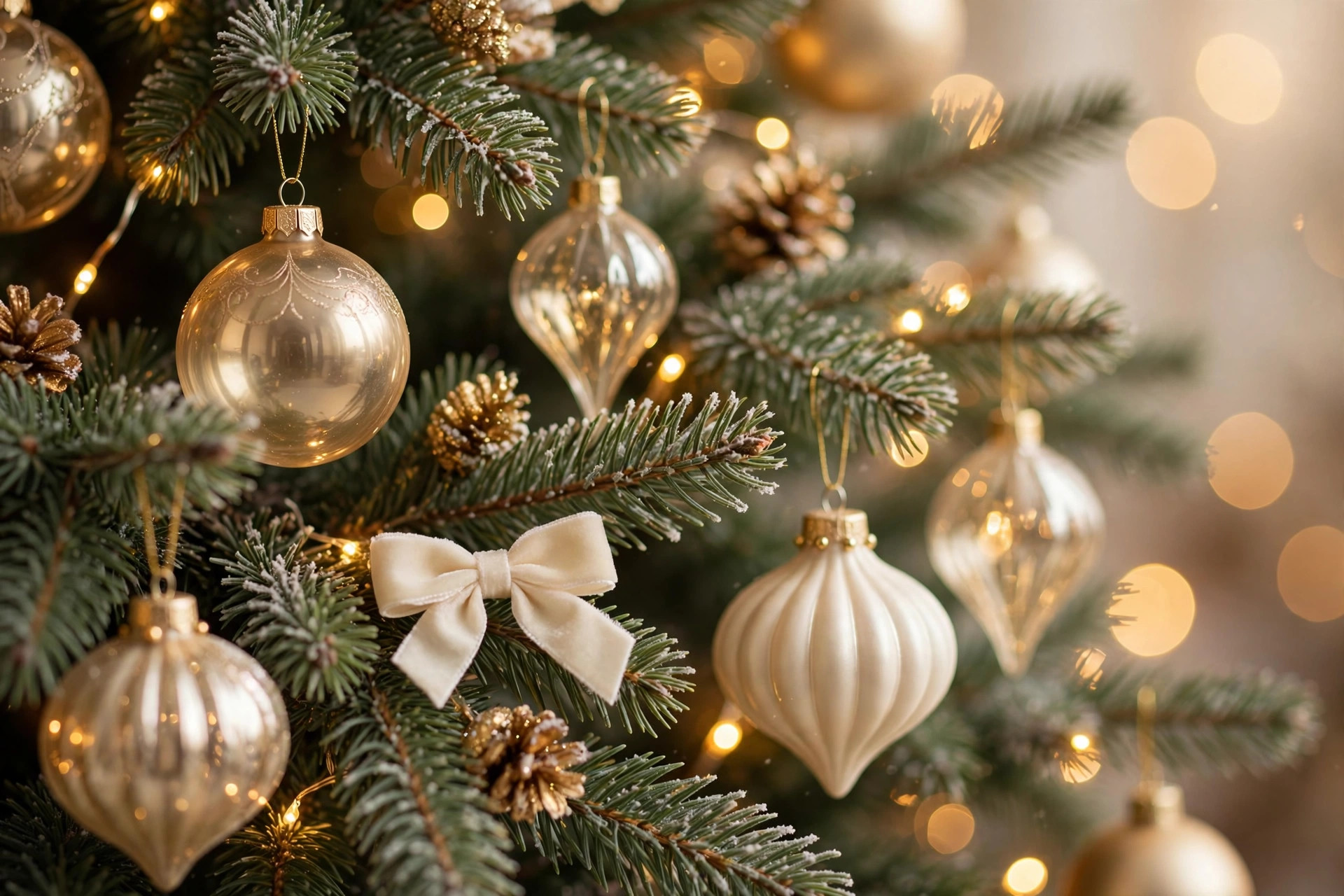
The tree is the centrepiece of Christmas, so it deserves first decision. If you are buying an artificial tree this year, shop in October for the best prices and selection. Measure your space first — ceiling height, floor width — and remember the tree looks smaller in the store than it will in your living room.
For 2026, the trending tree styles are:
- The natural look: sparse, realistic branches with space between them, decorated simply with warm lights and a few dozen ornaments. Scandinavian-inspired and very current.
- The full and flocked: snowy flocked trees are still going strong for that winter-wonderland feeling, especially with warm white lights.
- The vintage tree: colourful retro ornaments, tinsel, and a star on top — pure nostalgia, and incredibly charming.
- The slim tree: perfect for apartments and small spaces. All the height and presence with half the footprint.
Whatever tree you choose, lights go on first (before ornaments), working from the inside of the branches outward so the whole tree glows. A common rule of thumb is about 100 lights per foot of tree. And always test your light strands before decorating day — nothing sadder than a half-lit tree discovered at 9 p.m.
How Do I Mix Old and New Ornaments?
The prettiest trees tell a story. Anchor yours with a cohesive base of ornaments in your palette, add natural handmade texture, then layer the personal pieces — childhood favourites, souvenirs, handmade crafts — at eye level. Hang larger ornaments deep inside and smaller ones toward the tips.
The most beautiful trees tell a story, and ornaments are the storytellers. The 2026 approach: anchor your tree with a cohesive base, then layer in the personal pieces.
| Layer | Share | What to use |
|---|---|---|
| Your base | About 60% | 2–3 dozen ornaments in your chosen colour palette — champagne, gold, cream for the trending warm look; balls in mixed finishes (shiny, matte, glitter) give depth |
| Your texture | About 25% | Natural and handmade pieces — wooden ornaments, dried orange slices, cinnamon bundles, paper stars; cheap, on-trend, and wonderfully textural |
| Your story | About 15% | The ornaments that matter — childhood favourites, travel souvenirs, handmade kid crafts, the chipped one you cannot throw away; hang these at eye level |
Hang larger ornaments deeper inside the tree and smaller ones toward the branch tips — it creates depth and makes the tree look professionally styled. And buy ornament storage boxes now, while they are on sale; your future self will thank you every single January.
Where Does Greenery Work Hardest?
After the tree, greenery makes the biggest Christmas impact. One lush mantel garland, a full wreath on the door, swags along the staircase and surprises in unexpected corners can make the whole home feel like the holidays. Fluff faux branches well, and mix in a few real sprigs for scent.
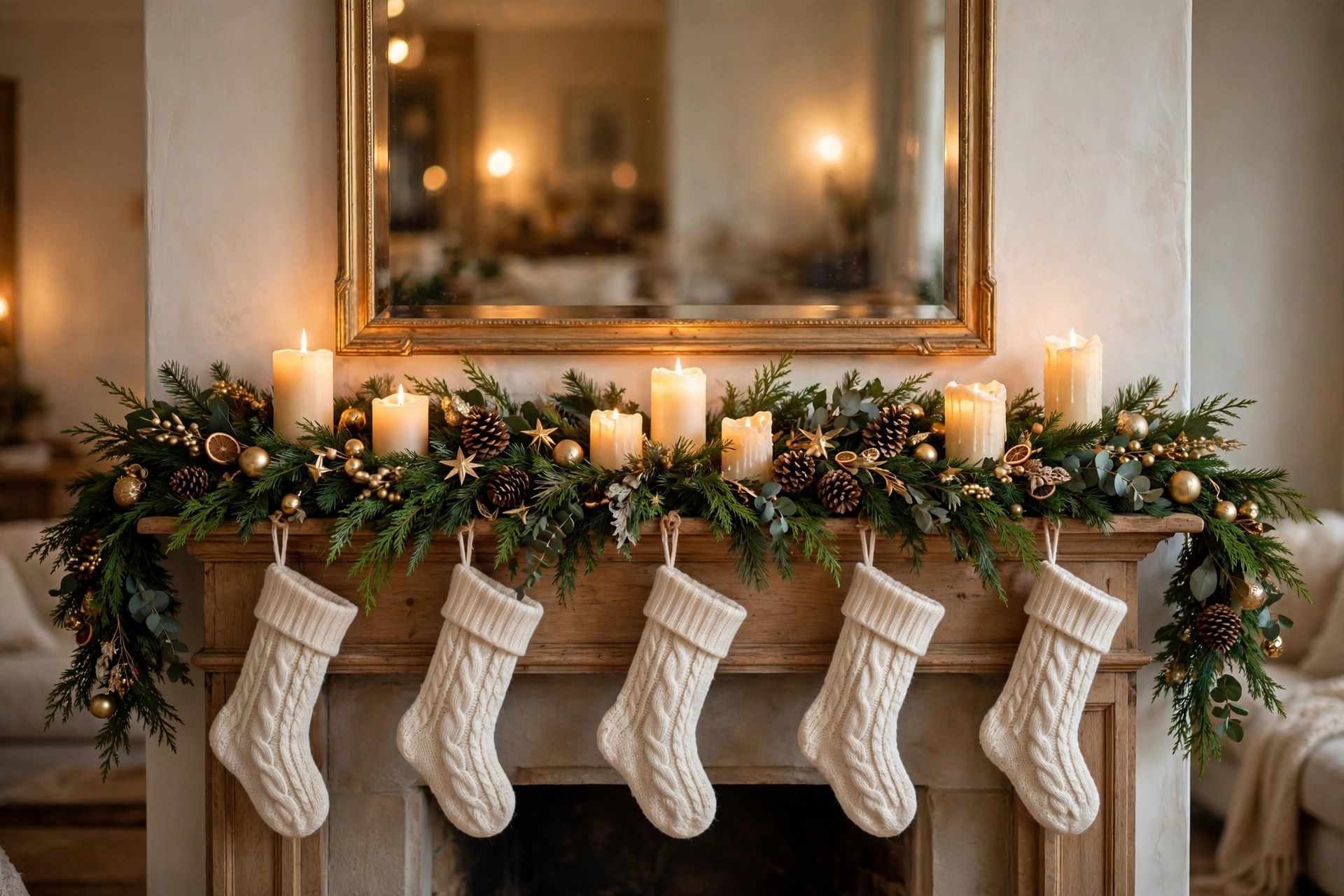
After the tree, greenery makes the biggest Christmas impact. A lush garland on the mantel, a wreath on the front door, and a few sprigs tucked around the house, and suddenly the whole home feels like the holidays.
Real vs. faux? Real greenery smells incredible and looks unmatched, but it dries out in two to three weeks — perfect for mid-December onward, less ideal for early decorating. Faux garlands have gotten remarkably realistic; the trick is to fluff every branch (it takes time but transforms the look) and mix in a few real sprigs of pine or eucalyptus for scent and authenticity.
Where greenery works hardest:
- The mantel: one thick garland, slightly asymmetrical, with lights woven through and a few ornaments tucked in.
- The front door: a full wreath, ideally with lights if your porch is covered. It is the first holiday hello.
- The staircase: garland swagged along the railing with ribbon at each newel post — the most photographed spot in many homes.
- Unexpected places: a small wreath on a mirror, greenery on top of kitchen cabinets, sprigs in the bathroom. Little surprises delight guests.
Which Colour Palette Should I Choose?
Choosing a palette before you shop keeps decor cohesive and stops clashing impulse buys. This year’s four prettiest stories: champagne and gold, softened red and green, winter woodland, and vintage pastel. Use one for main spaces and let secondary rooms echo it loosely.
Picking a colour palette before you shop keeps your decor cohesive and prevents impulse buys that clash. This year’s prettiest Christmas palettes:
What Is a Champagne Christmas?
Cream, champagne gold, and soft white with lots of warm light. Elegant, calm, and timeless — the defining palette of 2026.
How Do I Soften Classic Red and Green?
The traditional palette grown up: deep cranberry instead of bright red, forest green instead of kelly green, with natural wood and brass accents.
What Is the Winter Woodland Look?
Greens, browns, and creams with pinecones, wooden ornaments, and plaid. Cosy cabin vibes, perfect for rustic homes.
Should I Try Vintage Pastel?
Soft pink, mint, powder blue, and silver — the retro 1950s look that is charming its way back. Playful and sweet.
Choose one palette for your main spaces and let secondary rooms echo it loosely. Everything does not need to match perfectly — it needs to feel harmonious.
Which Rooms Should I Focus On?
You need not decorate every room. Put energy where it matters: the living room carries the season with tree, mantel and textiles; the entryway makes first impressions; the dining room shines on Christmas Day; the kitchen and bedrooms each deserve one small touch. One magical room beats five thin ones.
You do not need to decorate every room. Focus your energy where it matters:
- Living room: the tree, the mantel, and one cosy textile swap (holiday pillows, a festive throw). This room carries the season. Before washing any holiday textiles, check the care label — the FTC’s Care Labelling Rule makes the label the final word on washing.
- Entryway: the wreath, a small tree or arrangement, and a welcoming mat. First impressions count.
- Dining room: a simple holiday centrepiece — greenery, candles, and a few ornaments in a bowl. It can stay up all month and shine on Christmas Day, especially if you are hosting holiday dinners this year.
- Kitchen: a small wreath on a cabinet, a festive towel, a bowl of clementines. The kitchen deserves a little joy too.
- Bedrooms: one touch per room — fairy lights, a mini tree, or holiday pillow covers. Just enough to feel festive when you wake up.
If decorating the whole house feels overwhelming, decorate one room beautifully rather than five rooms thinly. One magical living room beats a house full of half-hearted touches.
What Is a Budget-Smart Decorating Timeline?
Spread decorating across fall so it never hurts. Plan your palette and take inventory in September and October, buy ornaments and candles in early November, decorate the weekend after Thanksgiving, enjoy December shopping-free, and grab next year’s supplies at the deep post-Christmas discounts.
Here is how to spread Christmas decorating across fall so it never hurts:
- September–October: plan your palette, take inventory of what you own, and buy the big pieces on pre-season sale (tree, garland, light strands). Start any DIY projects.
- Early November: buy ornaments, wrapping supplies, and candles. Thrift stores are full of holiday treasures right now.
- Late November: decorate the weekend after Thanksgiving (or whenever feels right to you). Put on music, make cocoa, make it an event.
- December: add fresh greenery and enjoy. No shopping, no stress — just the glow.
- Day after Christmas: the best sales of the year. Buy next year’s wrapping paper, replacement lights, and any decor you coveted — at deep discounts.
Set a total budget first, then divide it by month. Even a small set amount each month from September to November gives you a comfortable seasonal budget without a single painful bill. And the cheapest decorations — dried orange slices, popcorn garlands, paper snowflakes with kids — are often the most charming.
How Do I Make Outdoor Decor Glow?
Outdoor decor is what the neighbourhood sees, and a little goes a long way. Warm white lights are the standard: outline the roofline, wrap porch columns, or light the trees. Add a lit wreath, lanterns on the steps and a porch garland — solar options and timers handle the rest.
Outdoor decor is what the whole neighbourhood sees, and a little goes a long way. Warm white lights are the 2026 standard — outline the roofline, wrap the porch columns, or simply light the trees and bushes. One well-lit tree in the front yard beats a yard full of inflatables for pure elegance (though if inflatables make your kids happy, joy is the whole point).
A lit wreath on the door, lanterns with flameless candles on the steps, and a simple garland on the porch railing create a welcoming glow that says “the holidays live here.” Solar options and timers mean you never have to remember to turn anything on or off.
How Should I Store Decorations in January?
Be the person who actually organises in January. Donate what you did not use, wrap ornaments in tissue, coil lights around cardboard to stop tangles, and label every bin by room. A phone photo of each decorated room helps you recreate the magic next year.
Every January, people swear they will organise the decor “next year.” Be the person who actually does. As you decorate this year, note what you did not use — donate it. Wrap ornaments in tissue (or cheap paper plates between layers), coil lights around cardboard to prevent tangles, and label every bin by room. A phone photo of each decorated room helps you recreate the magic next year without reinventing it.
When the holidays wind down and you are ready to welcome people into all this beauty, our cosy holiday hosting guide has warm, realistic ideas for gatherings that feel as good as they look — because the best-decorated house is the one full of people you love. Start planning now, decorate with joy, and give yourself the gift of a calm, glowing December.
Leave a Reply