Last updated: October 2026
Quick answer: A cold plunge is a short immersion in cold water, usually for 30 seconds to a few minutes. Beginners should start gently with cool showers, never plunge alone, keep sessions brief, keep the head above water, and check with a doctor first if needed.
Scroll through wellness content for five minutes and you will meet someone climbing cheerfully into a barrel of ice water. Cold plunging has gone from extreme-athlete ritual to mainstream self-care trend, and fall is when interest peaks: the air is cooling, the idea of an energising cold dip feels timely, and everyone is looking for a new seasonal ritual.
But between the hype and the ice baths lies a sensible middle ground. You do not need an expensive tub, a chest freezer full of ice, or the pain tolerance of a polar explorer. You can explore cold water safely and gently at home, starting with nothing more than your own shower. This guide is for the curious-but-cautious: honest, beginner-friendly and firmly safety-first.
Please note: this article is general information only, not medical advice. Cold water immersion is a real physical stressor and it is not suitable for everyone, so if you have any health condition, talk to your doctor before trying it.
What Is a Cold Plunge, Exactly?
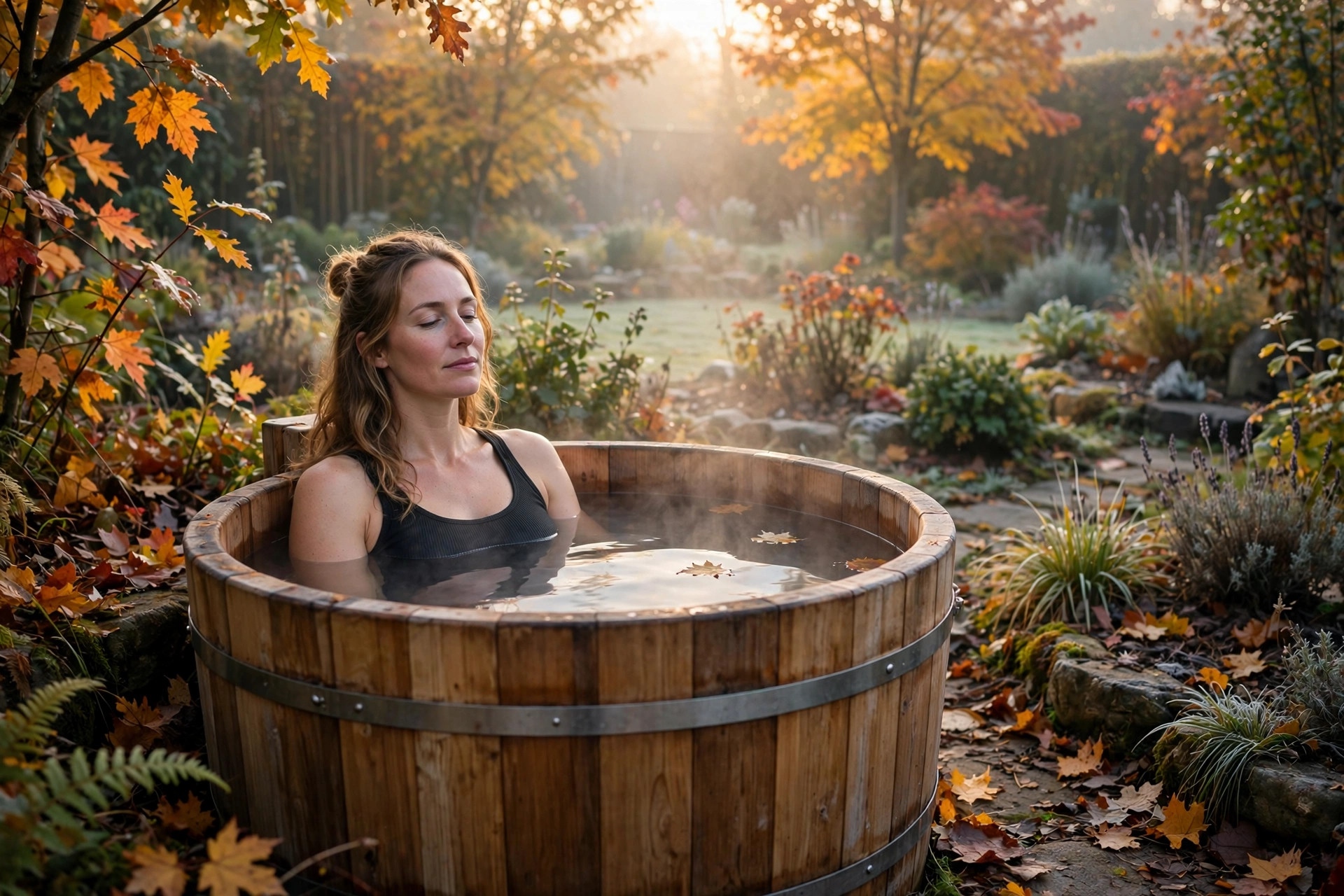
A cold plunge is simply immersing your body in cold water for a short time, typically 30 seconds to a few minutes, and fans often describe an energy lift and alert calm afterwards, though dramatic health claims should be treated with healthy scepticism.
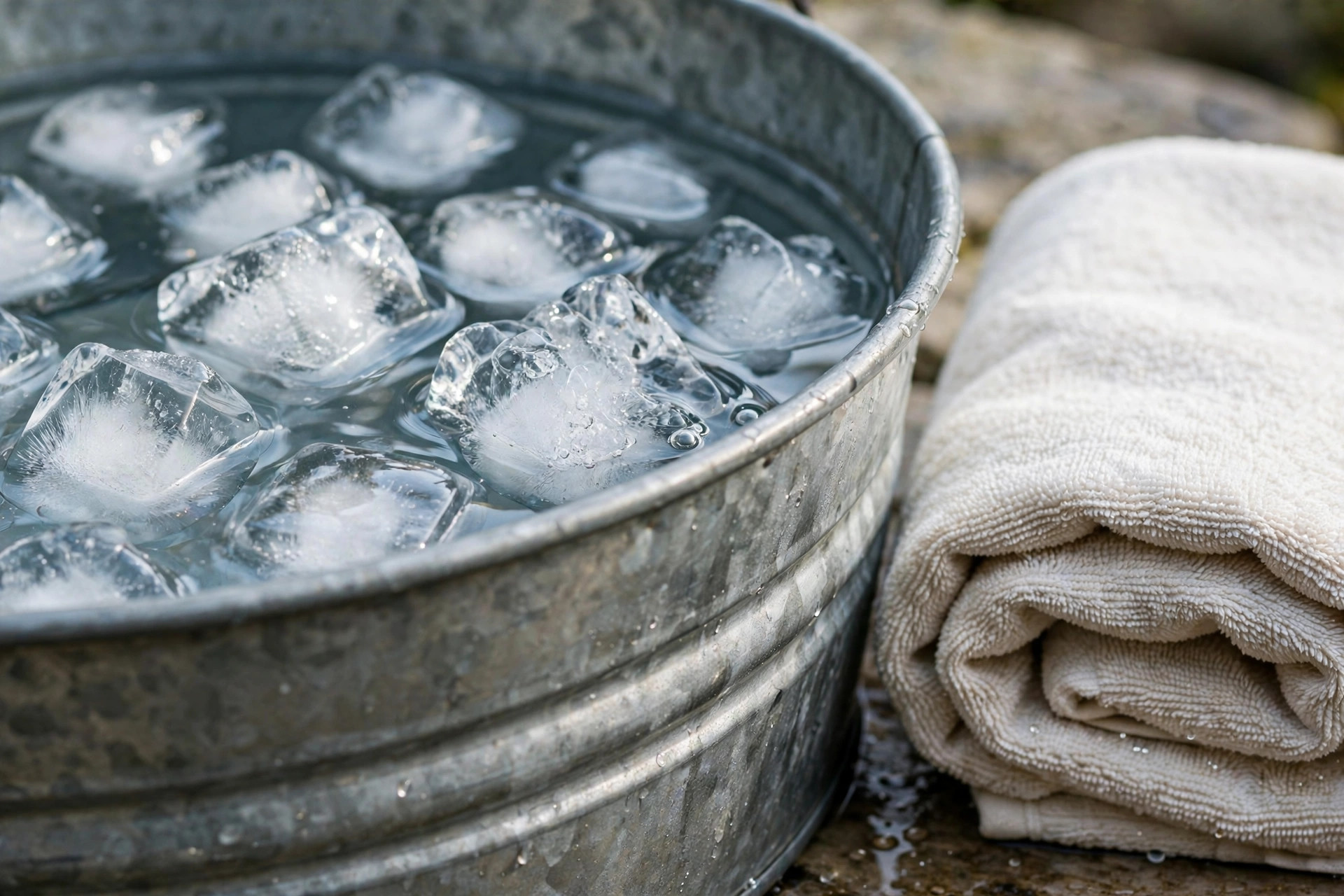
A cold plunge is exactly what it sounds like: immersing your body in cold water for a short time, typically between 30 seconds and a few minutes. The water is usually somewhere between 10 and 15 degrees Celsius for beginners: cold enough to feel bracing, not so cold that it is dangerous. Dedicated enthusiasts go colder, but there is no prize for suffering and no need to chase extreme temperatures.
People who enjoy cold plunging often describe an energy lift, a mood boost and a feeling of alert calm afterwards. Researchers are still studying exactly why, and you should treat dramatic claims about immunity, fat loss or mental health cures with healthy scepticism. What is well established is simpler: cold water triggers a strong physical response, including a gasp reflex, faster heart rate and adrenaline, and learning to stay calm through that response can feel empowering. Many fans say the real benefit is mental: you did something hard, voluntarily, and you feel capable afterwards.
Fall is a natural time to start because your body is already adapting to cooler weather, and outdoor setups stay cold without much ice. But natural does not mean rush in: the golden rule of cold plunging is start gently and build slowly.
What Safety Steps Should You Read Before Anything Else?
Before your first plunge, check with a doctor if you have a relevant health condition, never plunge alone, start mildly cold and brief, keep your head above water, warm up gradually afterwards, and skip it whenever you feel unwell.
This section is not optional. Cold water deserves respect, and a few minutes of caution here keeps the whole practice safe and enjoyable. The RNLI warns that sudden immersion in cold water can trigger cold water shock, including an involuntary gasp, which is why a calm, gradual entry and a companion nearby matter so much.
- Check with your doctor first if you have any heart condition, blood pressure issues, asthma, Raynaud’s, epilepsy, or are pregnant. Cold immersion causes blood vessels to constrict and the heart to work harder. For most healthy people this is fine, but with certain conditions it can be risky.
- Never plunge alone. Especially as a beginner, have someone nearby, in the house, in the garden, or within shouting distance. Cold water shock can cause an involuntary gasp, and you want a person around just in case.
- Start warm-ish and brief. Your first sessions should be mildly cold and very short. Discomfort is normal; pain, numbness, dizziness or feeling faint are signals to get out immediately.
- Keep your head above water. Beginners should immerse up to the neck at most. Full head dunking adds risk without adding beginner benefit.
- Warm up gradually afterwards. Get out, dry off, put on warm clothes and move around. A warm drink helps. Avoid jumping straight into a very hot shower, which can make you feel lightheaded.
- Skip it when unwell. If you have a cold, feel run down, or are exhausted, give the plunge a miss. Cold water is a stressor, and your body has enough to handle already.
If any of that sounds alarming, good: it means you will treat the practice with the care it deserves. Many people cold-water swim safely, and they do it by respecting the water, not by being fearless. Mayo Clinic explains that hypothermia occurs when the body loses heat faster than it can produce it, which is why gradual rewarming and warm, dry clothes after a plunge matter.
How Do You Start With Your Own Shower?
Your own shower is the easiest, gentlest start: shower warm first, then finish with 15 to 30 seconds of cool water while breathing slowly and steadily, and build up gradually over a week or two.
You do not need any equipment to begin. The humble cold shower is the perfect training ground, and it costs nothing. Here is a beginner protocol:
- Shower normally in warm water first.
- For the last 15 to 30 seconds, turn the temperature down to cool, not freezing, just clearly cold.
- Focus on slow, steady breathing. The instinct is to gasp and tense up, and the practice is to override that instinct calmly.
- Let the water hit your shoulders, chest and back, then turn it off, step out and notice how you feel. Most people report tingling skin, alertness and an odd little rush of good mood.
Do this for a week or two, gradually making the cold portion slightly colder or slightly longer. If you enjoy it and want more, you are ready to think about immersion. If you hate every second of it, that is also useful information: cold plunging is optional, and nobody is keeping score.
A middle step between shower and tub is the face plunge: fill a large bowl with cold water and ice cubes, take a breath, and immerse your face for 15 to 30 seconds. It triggers the dive reflex, a natural slowing of the heart rate, and gives you a real taste of cold immersion with minimal commitment.
What Are the Simplest At-Home Plunge Setups?
Once the shower has won you over, the simplest full-body options are your own bathtub, a large storage tub, an inflatable plunge tub, a converted chest freezer for the genuinely handy, or a dedicated plunge tub if the habit sticks.
If the shower has won you over, here are beginner-friendly ways to create a fuller plunge at home, roughly in order of commitment:
| Setup | What it involves | Best for |
|---|---|---|
| The bath | Your own bathtub filled with cold tap water; in autumn, cold tap water is often already plunge-worthy, and you can add ice if you want it colder. Sit in up to your neck for one to three minutes. | The simplest full-body start, with no new equipment |
| A large storage tub | A sturdy large plastic storage container or garden trough on a patio or in a garage, filled with cold water and covered between uses | A low-commitment DIY plunge pool |
| An inflatable plunge tub | A purpose-made inflatable tub that packs away when not in use | Renting or short on space |
| A chest-freezer conversion | An old chest freezer sealed and filled with water; involves electrical and waterproofing work, and must stay unplugged while in use | Only the genuinely handy |
| A dedicated plunge tub | A purpose-built tub with filtration and cooling that keeps water clean for weeks | Only if the habit sticks for months; entirely unnecessary for beginners |
Whatever you choose, keep hygiene in mind: rinse off before getting in, cover the water between sessions, and change it regularly, every few days for simple setups. A floating thermometer takes the guesswork out of temperature.
What Does a Sensible First Plunge Look Like, Step by Step?
A sensible first plunge lasts just one to two minutes in total: set everything up first, enter slowly to neck depth, breathe slowly throughout, then towel off, dress warmly and move around gently afterwards.
Here is how a sensible first immersion goes. Total time in the water: one to two minutes. That is plenty.
- Before: set everything up first: towel, warm clothes, a warm drink and your phone, for a timer and so someone knows you are plunging, all within reach. Enter the water slowly rather than jumping in, and give your body a few seconds to register what is happening. Have your companion nearby.
- During: lower yourself to neck depth and focus entirely on your breathing: slow in through the nose, long out through the mouth. The first 30 seconds feel the most intense, and most people find the sensation eases noticeably after that. Stay still, since moving around makes it feel colder. If you feel dizzy, panicky or unwell at any point, get out straight away. There is no minimum time you must achieve.
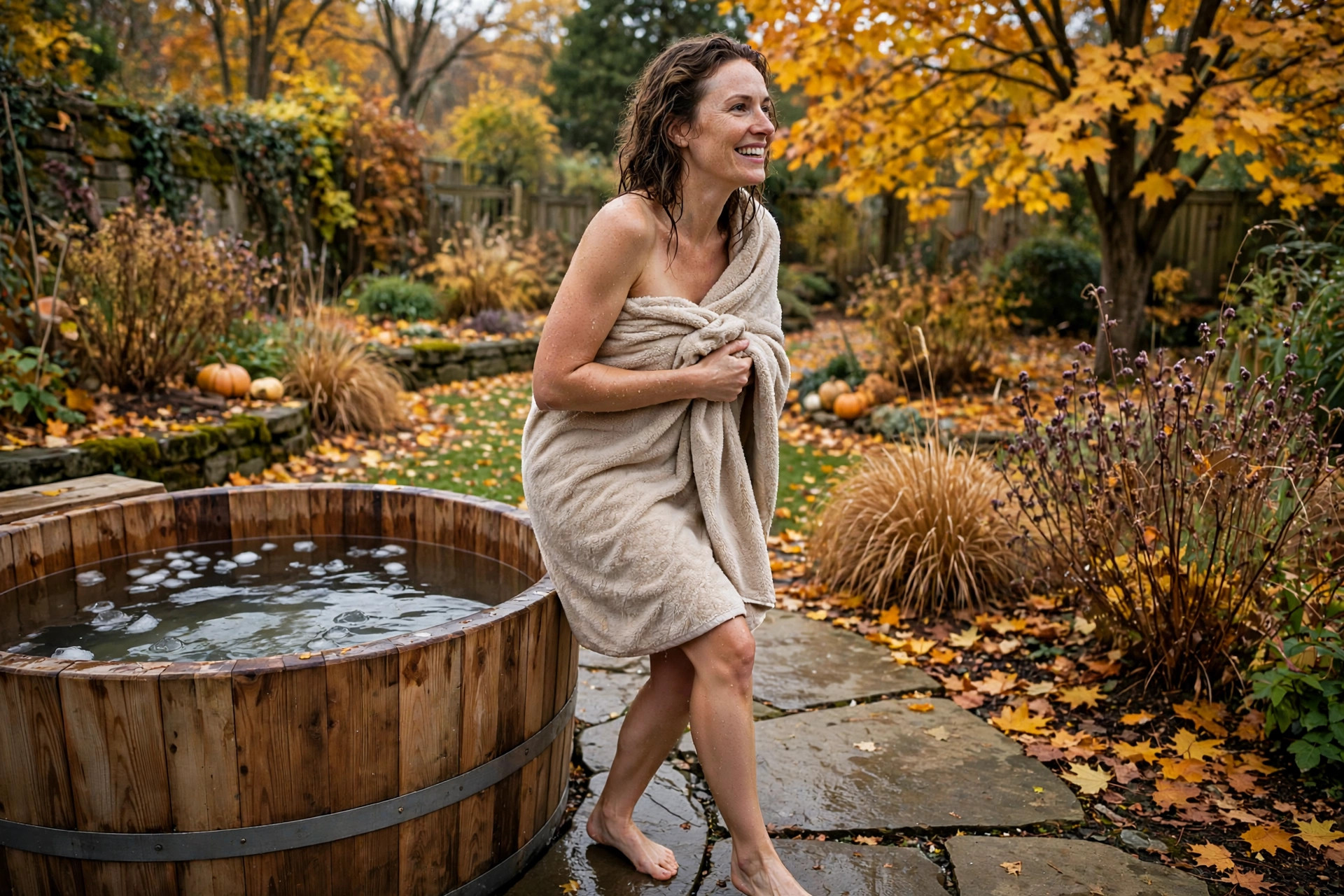
- After: step out, towel off briskly and get into warm, dry clothes immediately, including warm socks, which make a surprising difference. Move around gently: walk, stretch, make your warm drink. Expect some shivering; mild shivering is your body rewarming itself and is normal. It should pass within ten to fifteen minutes. Notice your mood over the next hour: many beginners are surprised by how upbeat and clear-headed they feel.
Two to three sessions a week is plenty for beginners. More is not better; your body needs recovery days just as it does with exercise.
How Do You Build the Habit Through Fall and Winter?
Habits stick when you anchor the plunge to an existing routine, track it simply, find a plunge buddy, adjust with the seasons, and keep it joyful rather than letting it become a grim obligation.
Like any wellness practice, cold plunging only works if you actually keep doing it, and the novelty wears off fast when it is dark and raining. A few ideas for making it stick:
- Anchor it to an existing routine: plunge right after your morning shower, or every Sunday before lunch. Habits attached to existing habits survive.
- Track simply: a note on your phone, with the date, water temperature and time in, turns vague effort into visible progress and is weirdly motivating.
- Find a plunge buddy: everything is easier and safer with company. A friend, a partner, or a local cold-water swimming group. Shared shivering builds fast friendships.
- Adjust with the seasons: as winter deepens, you may need less ice, or none, and shorter sessions. Listen to your body rather than chasing last month’s numbers.
- Keep it joyful: the moment it becomes a grim obligation, take a break. This is supposed to be an energising ritual, not a punishment.
And remember the honest framing: a cold plunge is a bracing, character-building few minutes that many people find genuinely uplifting. It is not a medical treatment, not a shortcut to health and not a test of toughness. Start gently, respect the water, check with your doctor if you have any doubts, and enjoy that remarkable warm glow that follows a cold dip on a crisp autumn morning.
Leave a Reply