
Last updated: November 2026
Quick answer: A cosy winter bath routine to relax at home means warm, not hot, water, soft light, a soak of about twenty minutes, and a slow wind down afterwards with warm pyjamas and a hot drink, so your body and mind both get the signal to rest.
There is something quietly wonderful about a warm bath on a cold winter evening. Outside, the dark comes early and the air feels sharp. Inside, the bathroom fills with steam, and for twenty minutes the whole world goes quiet. A cosy winter bath routine to relax at home does not need fancy products or a perfect bathroom. It needs a little preparation, a few gentle choices, and the decision to slow down properly.
What is a cosy winter bath routine to relax at home?
A cosy winter bath routine to relax at home is a short, repeatable ritual with three parts: a calm bathroom setup, a warm soak of around twenty minutes, and a gentle wind down afterwards. The warm water relaxes tense muscles while the quiet time lets your mind slow down.
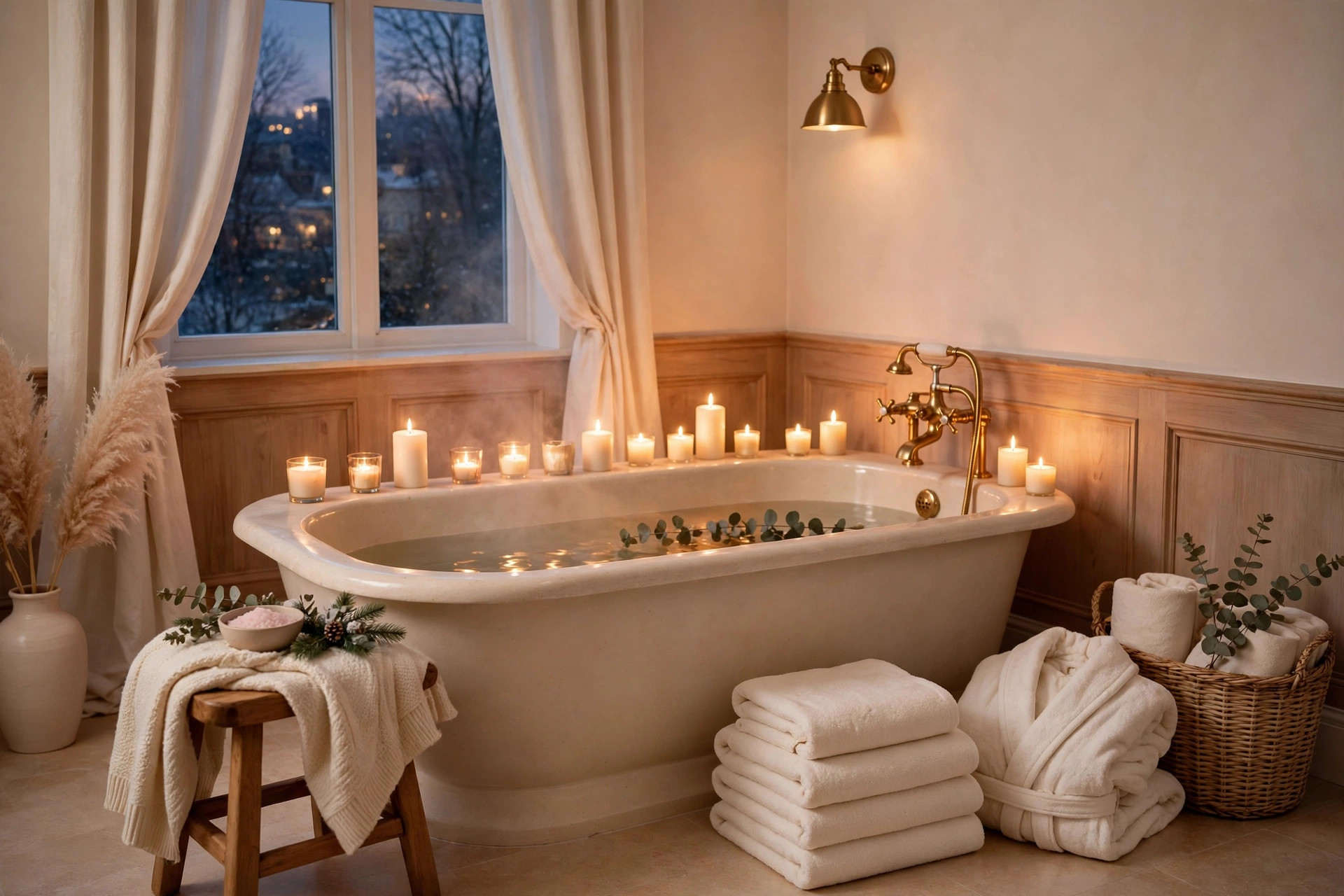
Think of it as a little ceremony, not a chore. The routine starts before you get into the water. You tidy the bathroom, lay out a warm towel, light a candle, and put your phone in another room. These small steps matter, because they tell your brain that this time is different from an ordinary wash.
The soak itself should feel easy. Warm water, not scalding hot, and nothing that demands your attention. Some women like to read. Others like to close their eyes and listen to soft music. The only rule is that the bath is yours. No scrolling, no planning tomorrow, no replying to messages.
How do I set up the bathroom for a relaxing bath?
Set the bathroom up like a tiny spa by warming the room first, dimming the overhead light, and laying out everything you need within reach. A warm towel, a candle, a glass of water, and a book or playlist are all you need for a calm, cosy soak.
Start with warmth. A cold bathroom ruins a warm bath, so run the hot tap for a minute with the door closed, or switch on a small heater a little while before. Lay a thick towel on a radiator so it is warm when you step out.
Next, soften the light. Switch off the bright overhead light and use a candle or a small lamp instead. The goal is a soft, golden glow that feels restful rather than clinical. Keep your phone out of the room. A bath with a phone beside it is not a rest, it is just a change of location for your scrolling.
Finally, gather everything before you get in. A glass of water, your towel, your moisturiser, and something to read or listen to. Getting out halfway through to fetch something breaks the spell, so take two minutes to prepare first.
What should I add to the water for a cosy soak?
The best bath additions are simple ones that suit your skin: a handful of bath salts, a few drops of bath oil, or a gentle bubble bath. Choose one, use a small amount, and skip anything heavily scented if your skin is sensitive in winter.

Winter skin is often drier and more sensitive than summer skin, so gentle is better. A warm bath with a little bath oil can leave skin feeling soft rather than tight. If you enjoy bubbles, choose a mild formula and use less than you think you need. A mountain of foam looks fun, but it can dry the skin out.
| Bath addition | Best for | How to use it |
|---|---|---|
| Bath salts | Tired muscles | A small handful in warm water |
| Bath oil | Dry winter skin | A few drops, swirled through |
| Bubble bath | A fun, soft soak | A small amount under the tap |
| Oat soak | Itchy, sensitive skin | A muslin bag in the water |
Whatever you choose, keep the water warm rather than very hot. The American Academy of Dermatology advises using lukewarm water rather than hot water in winter, because hot water can strip natural oils from your skin. It is a small change that makes a real difference, especially if your skin already feels dry and tight by December.
How long should a winter bath last?
A winter bath should last around fifteen to twenty minutes. That is long enough for your muscles to relax and your mind to slow down, but short enough to avoid dried out skin, dizziness, or the water going cold around you.
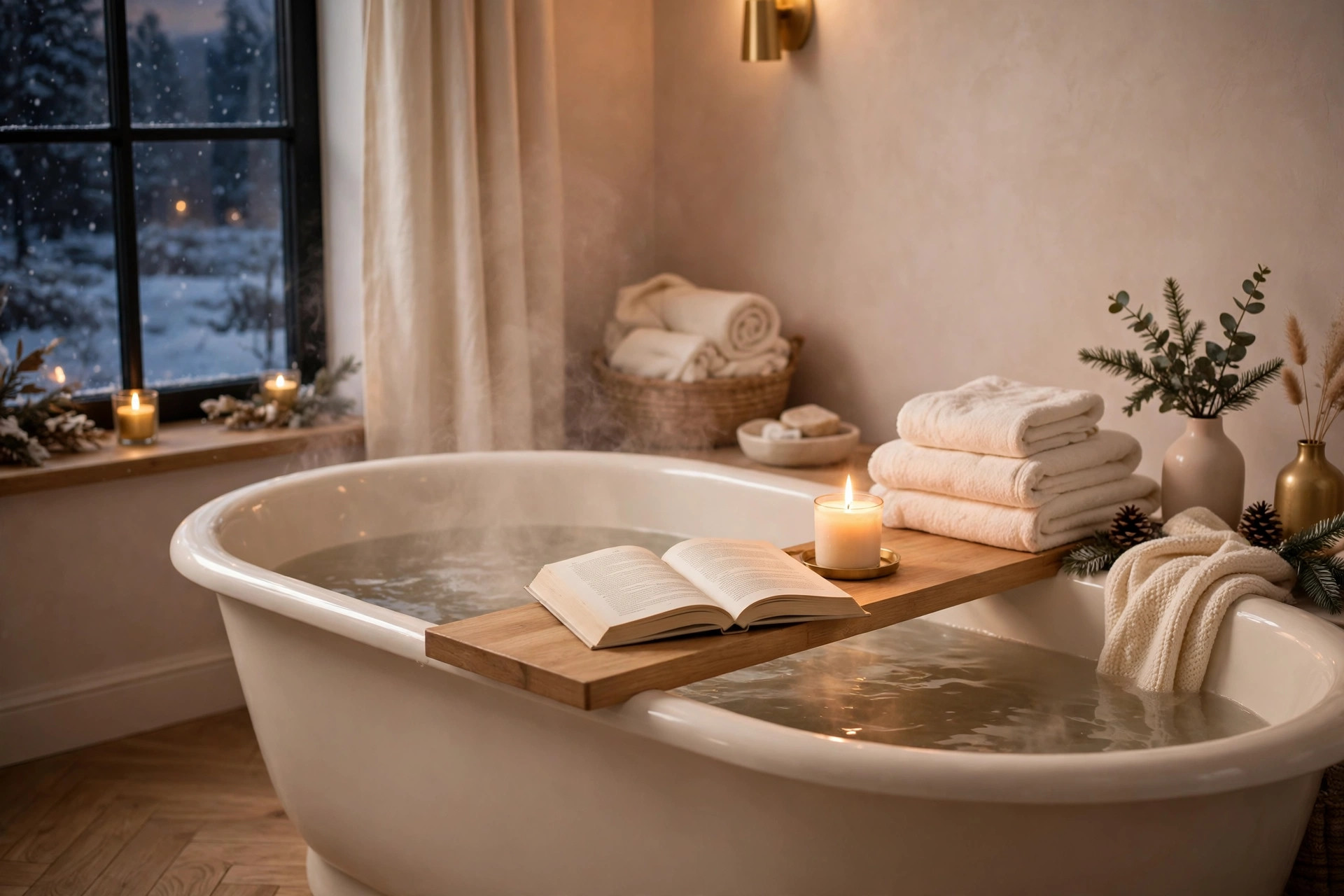
It is tempting to stay in until the water turns cold, but a shorter soak is kinder to your body. Twenty minutes is the sweet spot for most women. Set a gentle timer if you tend to lose track of time, or simply get out when the water starts to feel cool rather than warm.
Listen to your body too. If you feel light headed, sleepy, or too hot, get out straight away, no matter how little time has passed. Sit on the edge of the bath for a moment, drink some water, and let yourself cool down slowly. A bath should leave you feeling calm and warm, never dizzy or faint.
For the best night’s sleep, try taking your bath an hour or two before bed. The Sleep Foundation notes that a warm bath before bed can help you fall asleep, because your body cools down afterwards and that cooling signals sleepiness. It is one of the simplest sleep habits there is, and it costs nothing.
How do I make my cosy winter bath routine to relax at home feel like a spa?
You can make a cosy winter bath routine to relax at home feel like a spa with small, sensory touches: a warm towel, a soft robe, a candle, a cold drink of water, and ten quiet minutes afterwards with no phone and no chores.
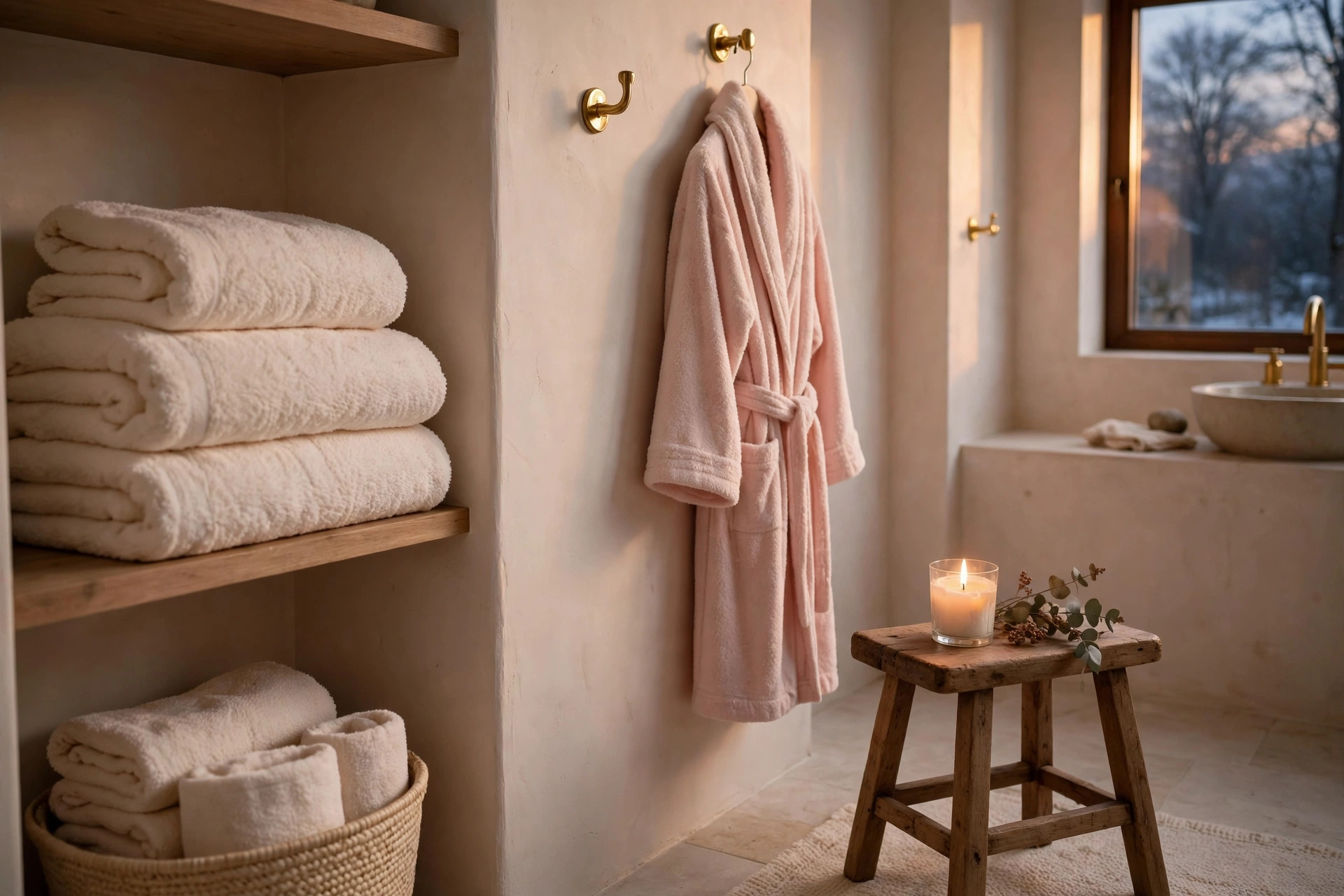
A spa feeling comes from the details, not from expensive products. A fluffy towel warmed on the radiator, a soft robe waiting on the hook, and a candle flickering on the windowsill change the whole mood. The luxury is the time, not the products.
Sound matters too. A quiet playlist of soft piano or gentle songs can turn an ordinary bathroom into a calm little retreat. Keep the volume low. Some women prefer silence, and that is lovely too. The point is to choose what soothes you.
Keep a glass of water beside the bath. Warm water can dehydrate you a little, and sipping water keeps you comfortable. In our experience, the ten minutes after the bath are part of the ritual, not an afterthought.
What should I avoid in a winter bath routine?
Avoid very hot water, long soaks, harsh soaps, and screens in the bath. Each one works against the calm you are trying to create, and very hot water in particular can dry out winter skin and leave you feeling dizzy.
Very hot water is the biggest mistake. It feels wonderful for the first minute, then it strips the natural oils from your skin and can make you feel faint. Warm water gives you the same comfort without the downside.
Skip harsh, heavily scented soaps in winter, and use a gentle wash instead. Avoid taking your phone into the bath, not only because of the risk to the phone, but because a notification can pull you straight back into the busy world you just escaped. And do not eat a heavy meal right before your bath. A light snack is fine, but a full stomach and a hot bath are an uncomfortable pair.
How do I fit a relaxing bath into a busy winter evening?
Fit a bath into a busy evening by treating it as a fixed appointment, not a reward for finishing everything. Choose two evenings a week, tell the family, and keep the bath short and simple, so it happens even on tired days.
The women who keep a bath routine are rarely the women with the most free time. They are the women who decided it matters. Pick your evenings in advance, perhaps Tuesday and Friday, and put them in your diary like any other appointment.
On the busiest nights, keep it simple. A ten minute soak with no extras still counts. You do not need candles, salts, and a playlist every time. Sometimes the routine is just warm water, a closed door, and a few deep breaths. That is enough.
If you share a bathroom, a little planning helps. Agree on a time, lay out your things in advance, and keep the routine short so nobody is waiting too long. A bath routine that respects everyone in the house is one you can keep all winter long.
Frequently asked questions
Is a hot bath good for you in winter?
A warm bath is wonderful in winter, but very hot water can dry out your skin and make you feel dizzy. Keep the water comfortably warm, soak for around twenty minutes, and moisturise afterwards while your skin is still slightly damp.
What time is best for a relaxing bath?
An hour or two before bed works best for most women, because the cooling down afterwards helps you feel sleepy. A bath after work can also help you switch off from the day. Choose the time that fits your evening, and keep it regular.
Can I take a bath every night in winter?
Yes, you can, as long as the water is warm rather than hot and you keep soaks short. Use a gentle wash, moisturise afterwards, and skip the bubble bath on some nights if your skin feels dry. Listen to your skin and adjust.
What should I do after my bath to stay relaxed?
Pat your skin dry gently, moisturise, and put on warm pyjamas and socks. Make a hot drink, dim the lights, and give yourself ten quiet minutes with a book or some soft music. Avoid your phone until morning if you can.
A cosy winter bath routine to relax at home is one of the simplest gifts you can give yourself in the cold months. It asks for so little: warm water, a quiet room, and twenty minutes of your evening. In return, it gives you warm skin, a slower mind, and a softer ending to the day. So tonight, run the tap, light the candle, and close the door.
Leave a Reply