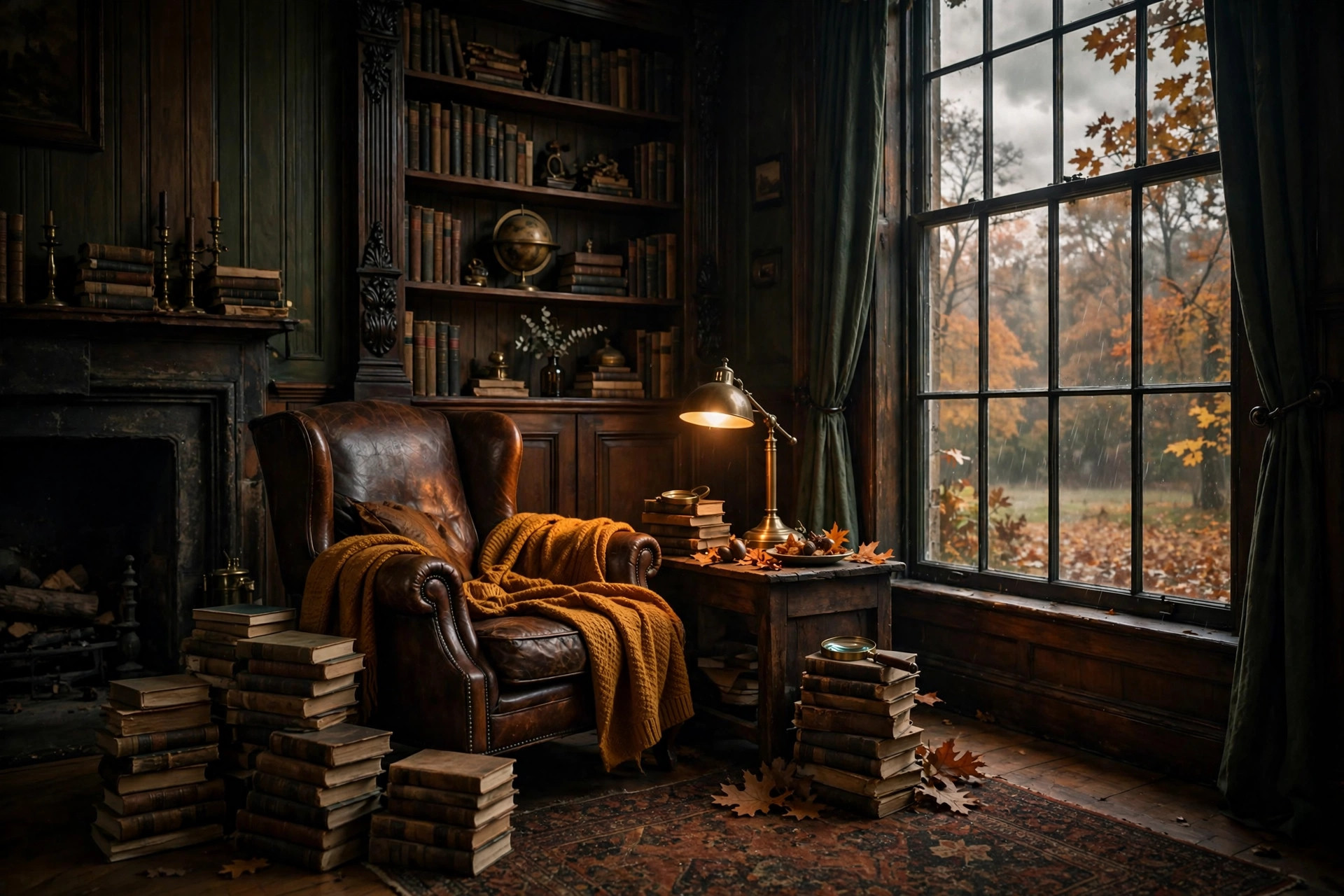
Last updated: November 2026
Quick answer: Dark academia decor brings an old-library mood home with deep muted colours, natural materials, books, and warm low lighting. Start with textiles and a reading corner, layer in brass and vintage finds, and keep the look collected and cosy rather than perfect or new.
Some decorating styles come and go with the seasons. Dark academia is not one of them, but it has never looked better than it does in fall. The moody colour palette, the love of old books and candlelight, the layers of wool and leather and wood: everything about the dark academia aesthetic feels like it was designed for crisp autumn evenings, rain on the windows, and long chapters read under a warm lamp.
If you are new to the look, dark academia is a style inspired by old universities, classical literature, and scholarly pursuits. Think Oxford libraries, tweed blazers, handwritten letters, and oil paintings in heavy frames. It is romantic, intellectual, and deeply cosy, and it translates beautifully into home decor. The best part? It is one of the most budget-friendly styles to achieve, because it celebrates aged, worn, and thrifted things rather than shiny new ones.
This guide will show you how to give your home a dark academia fall makeover: the colour palette that defines the look, how to layer textiles for maximum cosiness, using books and curiosities as decor, lighting that creates the perfect moody glow, seasonal fall touches that keep it fresh, and smart thrift-store strategies that keep the whole project affordable. Whether you are decorating a whole house or just a single reading corner, you will find ideas here that work.
What Is Dark Academia, Exactly?
Dark academia is an aesthetic inspired by old universities, classical literature, and scholarly life. In decor, it means muted colours, wood, leather, wool, brass, and paper, plenty of books on display, warm low lighting, and rooms that feel layered with history.
Dark academia is an aesthetic rooted in a love of learning, literature, and old-world atmosphere. Visually, it draws on the architecture and interiors of historic universities: dark wood panelling, leather-bound books, brass lamps, oil paintings, and tall windows. Emotionally, it is about romanticising the life of the mind: long study sessions, handwritten notes, rainy-day reading, and deep conversation over strong tea. Britannica describes the University of Oxford as one of the oldest universities in the English-speaking world, which helps explain why its libraries and quadrangles feel like the spiritual home of this look.
In home decor terms, that translates to a few clear signatures. Rich, muted colours rather than bright ones. Natural materials with visible age and texture: wood, leather, wool, brass, and paper. Plenty of books, displayed rather than hidden. Warm, low lighting instead of bright overheads. And a general feeling of layers and history. Nothing too minimal, nothing too perfect. A dark academia room should feel like it has stories to tell.
Fall is the natural season for this style because the outside world starts cooperating. The light turns golden and low, the evenings draw in, and suddenly candlelight and wool throws feel not just decorative but necessary. If you have ever wanted to try dark academia decor, autumn is the perfect moment to begin. The season does half the work for you.
Which Colours Make a Room Feel Moody and Warm?
The dark academia palette is deep, muted, and warm, with oxblood, forest green, mustard, burnt sienna, deep brown, and charcoal. You do not need to repaint: bring the colours in through throws, cushions, books, and warm brass accents.

Colour is the fastest way to shift a room toward dark academia. The palette is deep, muted, and warm: think oxblood, forest green, mustard, burnt sienna, deep brown, and charcoal. These are fall colours at their most sophisticated, the same family as autumn leaves, but richer and more subdued. Walls do not need repainting to join in. The palette can arrive entirely through textiles, books, and accessories.
| Where it goes | Try this |
|---|---|
| Sofa | A forest-green throw, oxblood cushions, a mustard wool blanket folded over an armchair. |
| Wood tones | Walnut, mahogany, and aged oak: a wooden side table or a vintage frame instantly belongs. |
| Warm accents | Brass or gold pieces, an ivory candle, the cream page of an open book. |
Start with what you have and add strategically. A forest-green throw over a neutral sofa, oxblood cushions, a mustard wool blanket folded over an armchair, each piece nudges the room toward the look without requiring a full overhaul. Dark wood tones are your best friend here: walnut, mahogany, and aged oak all fit the aesthetic, so a wooden side table or a vintage frame instantly belongs.
Balance the darkness with warmth. Dark academia should feel like a library at dusk, not a cave, so make sure your deep colours are paired with warm lighting, brass or gold accents, and creamy neutrals in small doses. An ivory candle, a brass lamp, a cream page of an open book: these small lights in the darkness are what keep the look inviting rather than gloomy. If a corner of the room feels too heavy, add one warm, glowing element and watch it transform.
How Do You Layer Textiles for Maximum Cosiness?
Layering is dark academia’s superpower, especially in fall. Mix wool, velvet, tweed, and cable knit on sofas and beds, add a rug for warmth, choose heavier curtains, and favour collected textures over perfectly matching sets.
If dark academia has a decorating superpower, it is layering, and fall is the season to layer without restraint. Start with the sofa: add a throw blanket in wool or a wool-like knit, then cushions in varying textures. Velvet, tweed, linen, and cable knit all belong. The key is mixing textures rather than matching colours exactly. A dark academia sofa should look collected over time, not purchased as a set.
| Layer | What works |
|---|---|
| Throws | Wool, plaid, or cable-knit in forest green, oxblood, mustard, or brown. |
| Cushions | Mix velvet, tweed, and linen. Vary sizes for a collected look. |
| Rugs | Persian or oriental styles, vintage or vintage-look, layered if possible. |
| Curtains | Heavier and darker than summer fabrics. Texture matters more than pattern. |
Do not forget the floor. A rug instantly warms a room and adds the layered, historic feeling the style needs. Persian and oriental-style rugs are the classic choice, and vintage or vintage-look versions are widely available secondhand. If a full rug is not practical, layer a smaller rug over existing carpet or flooring. The layered look is actually more authentically dark academia than a single perfect rug.
Windows deserve attention too. Heavy curtains in a deep colour, or even a dark, textured fabric hung simply, make a room feel instantly more scholarly and keep out the autumn chill. If new curtains are not practical, drape a large piece of fabric or a flat-woven throw over an existing curtain rod as a temporary seasonal layer. Bedrooms get the same treatment: add a quilt or coverlet in a moody tone over your usual bedding, pile on the cushions, and suddenly the whole room feels like an autumn retreat.
How Can Books and Curiosities Become Decor?
Books are the easiest dark academia decor, because they are beautiful and often inexpensive secondhand. Stack them, line shelves with them, group curiosities in odd numbers, vary heights, and leave breathing room so shelves look curated rather than cluttered.
In dark academia, books are not just for reading. They are the decor. And this is wonderful news, because books are among the cheapest decorating materials in existence. Stack them on coffee tables, line them on shelves, pile them on side tables, lean them against walls. Hardcovers with cloth bindings in deep colours look best. If your books are mostly modern paperbacks, group them by colour or turn some spine-in for a neutral, textured look.
Beyond books, the style loves curiosities, the kinds of objects a nineteenth-century scholar might have collected. Think brass candlesticks, magnifying glasses, globes, hourglasses, framed botanical prints, vintage cameras, fountain pens in a jar, and small busts or sculptures. You do not need many. Three or four well-chosen objects on a shelf or mantel create the effect. Thrift stores, flea markets, and even your own attic are the best sources.
- Group in odd numbers. Three or five objects usually look more natural than two or four.
- Vary heights. Stack two or three books horizontally and place a small object on top.
- Leave breathing room. A crowded shelf looks cluttered, while a curated shelf looks scholarly.
- Soften an edge. Lean framed prints against the wall behind, and let a trailing plant soften one end of a bookshelf.
The goal is a shelf that looks like it evolved over years, even if you arranged it last weekend.
How Do You Light a Room the Moody Way?
Warm, low, layered light makes or breaks this look, so switch off harsh overheads and build pools of light instead. Use brass lamps, candles, and one restrained string of warm-white lights, and dress an unlit fireplace with candles and foliage.
Lighting makes or breaks dark academia. The style demands warm, low, layered light, the kind that pools on a reading chair and leaves the corners of the room in soft shadow. Overhead ceiling lights are the enemy. Turn them off and build your lighting from lamps, candles, and fairy lights instead.
A brass or bronze table lamp with a warm-toned bulb is the single most transformative purchase for this look. Place one beside your reading chair, one on a sideboard, one on a desk. Each pool of warm light deepens the mood. Add candles generously: pillar candles on the mantel, tea lights on shelves, taper candles on the dining table. In fall, when darkness comes early, you will be lighting them every evening, so choose unscented or subtly scented ones for everyday use. The US Fire Administration advises never leaving burning candles unattended, so enjoy the glow and keep an eye on open flames.
Fairy lights have a place here too, if used with restraint. A single string of warm-white lights draped along a bookshelf or around a window frame adds a gentle glow that suits the aesthetic. Just avoid multicoloured or cool-white lights, which break the spell instantly. And do not overlook the fireplace if you have one: even an unlit fireplace dressed with candles and dried foliage becomes a beautiful focal point.
What Seasonal Touches Suit Fall Best?
Fall touches should fit the palette, not fight it. Choose white, green, or deep-toned pumpkins, dried stems, and a bowl of orchard fruit, dress the mantel in layers, and finish with a gentle seasonal scent from simmered spices or a candle.

Dark academia is timeless, but fall gives you permission to add seasonal touches that keep it feeling current. The trick is choosing autumn decor that fits the palette rather than fighting it. Small pumpkins in white, green, or deep orange work beautifully. Avoid bright orange plastic and anything glittery. Dried wheat stems, pampas grass, and eucalyptus in a tall vase add height and autumnal texture. A bowl of apples, pears, or pomegranates on the table is both decorative and practical.
The mantel is the natural showcase for fall in a dark academia home. Layer dried stems in a tall vase, add brass candlesticks at varying heights, lean a framed vintage print or an old mirror behind, and tuck in a few small gourds or pinecones. Garland made of dried leaves or eucalyptus draped along the mantel edge finishes the look. None of this needs to be expensive. Dried stems last for years and can be reused every autumn.
Scent completes the seasonal picture. Simmer a pot of water with orange slices, cinnamon sticks, cloves, and a splash of vanilla on the stove for an hour, and your whole home will smell like the best version of fall. Alternatively, choose candles in scents like smoked amber, cedarwood, fig, or spiced apple. Scent is invisible decor. In our experience, guests will feel the cosiness before they can name it.
How Do You Thrift Smart for a Dark Academia Home?
Thrift stores suit dark academia perfectly, because the style prefers aged and storied pieces. Shop with a short list, visit often, polish tarnished brass, accept worn covers, and check furniture joints and lamp cords carefully before buying.
Here is the open secret of dark academia decor: it is the thrift store’s aesthetic. The style actively prefers things that look aged, worn, and storied, which means secondhand shops, flea markets, charity shops, and estate sales are not just budget options, they are the best options. A brand-new bookshelf cannot compete with a battered wooden one that looks like it survived a century of students.
Shop with a short list to avoid overwhelm. The highest-impact thrift finds for this look are:
- Brass candlesticks and lamps
- Wooden frames, for prints or mirrors
- Hardcover books in good condition
- Wool throws and blankets
- Ceramic vases in dark or earthy tones
- Small decorative objects like globes, clocks, or bookends
Go regularly rather than once. The best pieces appear unpredictably, and frequent short visits beat rare long ones. When thrifting, look past surface flaws. Tarnished brass polishes up beautifully. A scratched wooden frame looks better with age, not worse. Books with worn covers are more authentic to the style than pristine ones. The only things to check carefully are structural: wobbly furniture joints, cracked ceramics, and electrical items like lamps, which should be tested and rewired if the cord looks worn. With a little patience, you can furnish an entire dark academia room for less than the cost of one new armchair.
How Does Dark Academia Work in Small Spaces and Rentals?
Small spaces and rentals suit dark academia well when you focus on one perfect corner. Use textiles, lighting, books, and freestanding furniture, lean prints instead of hanging them, and edit ruthlessly so every layer earns its place.
You do not need a wood-panelled study to enjoy dark academia. The style adapts beautifully to small apartments and rentals. In a small space, focus on one corner rather than the whole room: a reading nook with an armchair, a warm lamp, a small side table stacked with books, and a throw is all it takes to create the feeling. One perfect corner beats a diluted whole apartment.
Renters can lean on everything that does not touch the walls. Textiles, lighting, books, plants, and freestanding furniture do all the work, no paint, no nails, no landlord negotiations required. Lean framed prints on shelves and mantels instead of hanging them. Use plug-in wall sconces or picture lights rather than hardwired fixtures. A folding screen or a tall bookshelf can even create a sense of panelled separation in an open-plan space.
In tiny rooms, edit ruthlessly. Dark academia loves layers, but in a small space every layer must earn its place. Choose the textiles you actually use, the books you actually love, and the objects that genuinely delight you, and let the rest go. A small, intentional collection always looks more scholarly than a crowded one. Remember: the goal is a room that makes you want to curl up with a book, not a museum you are afraid to touch.
Dark academia fall decor is ultimately about romance, the romance of learning, of long evenings, of beauty in old and worn things. You do not need a castle or a trust fund to capture it. A warm lamp, a stack of books, a wool throw, and the smell of cinnamon in the air will do it. So this fall, let your home become the cosy, scholarly retreat you have always imagined: pour the tea, light the candles, and settle in for the season.
Leave a Reply