
Last updated: October 2026
Quick answer: The “do less” reset treats rest as the routine itself: protect your sleep, remove one draining commitment instead of adding a new habit, and keep one tiny soothing ritual you repeat daily. Doing less is not laziness — it is choosing what matters and letting the rest fade quietly away.
Somewhere along the way, self-care started to feel like a job. It became the 5 a.m. club, a twelve-step routine, a streak to keep up, a tracker to fill in. The thing that was supposed to make your life softer started grading it — and nobody signed up for that part. If your version of rest now comes with a checklist, you are not alone.
So it makes sense that 2026 is the year of the pushback. All over wellness culture, the boldest idea in the room is the simplest one: do less. Fewer steps, fewer rules, fewer shoulds. Rest is no longer the prize you earn after the routine. Rest is the routine.
This is not about giving up. It is about noticing that all that optimising was costing you more than it gave you, and choosing a gentler question: does this make my days feel calmer, or just fuller? If the answer is fuller, it can go. Here is what the shift looks like in practice:
| The old habit | The “do less” swap |
|---|---|
| A twelve-step routine you dread | One tiny ritual you actually look forward to |
| A 5 a.m. alarm that leaves you exhausted | A consistent, realistic bedtime you can keep |
| Habit trackers and streaks to maintain | No tracking — just notice how your days feel |
| Phone in bed, scrolling until midnight | Phone charges in another room |
| A calendar packed with “shoulds” | One honest “no” a month |
| A podcast on every single walk | One quiet walk a week, no goals attached |
Why Did Wellness Get So Exhausting?
The short answer: Self-care turned into a job — early alarms, twelve-step routines, streaks to keep — and the pressure started costing more than it gave. The “do less” movement is the pushback: deleting habit apps, unfollowing hustle culture, and asking what life looks like without constant self-improvement.
Think back to what self-care used to mean: a bath, just because you liked baths. A walk, just because the air was nice. Then every small pleasure got turned into a plan, and every plan got turned into content. We started treating our days like job reviews, and our bodies felt the stress of it.
The “do less” movement is the deep breath after all of that. It is women quietly deleting the habit apps, unfollowing the hustle of wellness itself, and asking a question that sounds almost brave now: what would my life look like if I stopped trying to improve it for a minute? The answer, for most of us, is surprisingly lovely — more sleep, more daylight, more dinners that are not rushed, a calendar with real breathing room in it.
Doing less is not laziness. Laziness is skipping the things that matter. Doing less is choosing what matters and letting the rest fade into the background. That one shift changes everything, because rest is no longer something you sneak in — it is a value you build your days around.
What Is the Three-Part Reset?
The short answer: You do not need a new system — the point is the lack of one. Three gentle promises help on busy days: rest by protecting your sleep, simplify by taking things away, and soothe with tiny repeatable comforts. Together they make calm the default, not the exception.
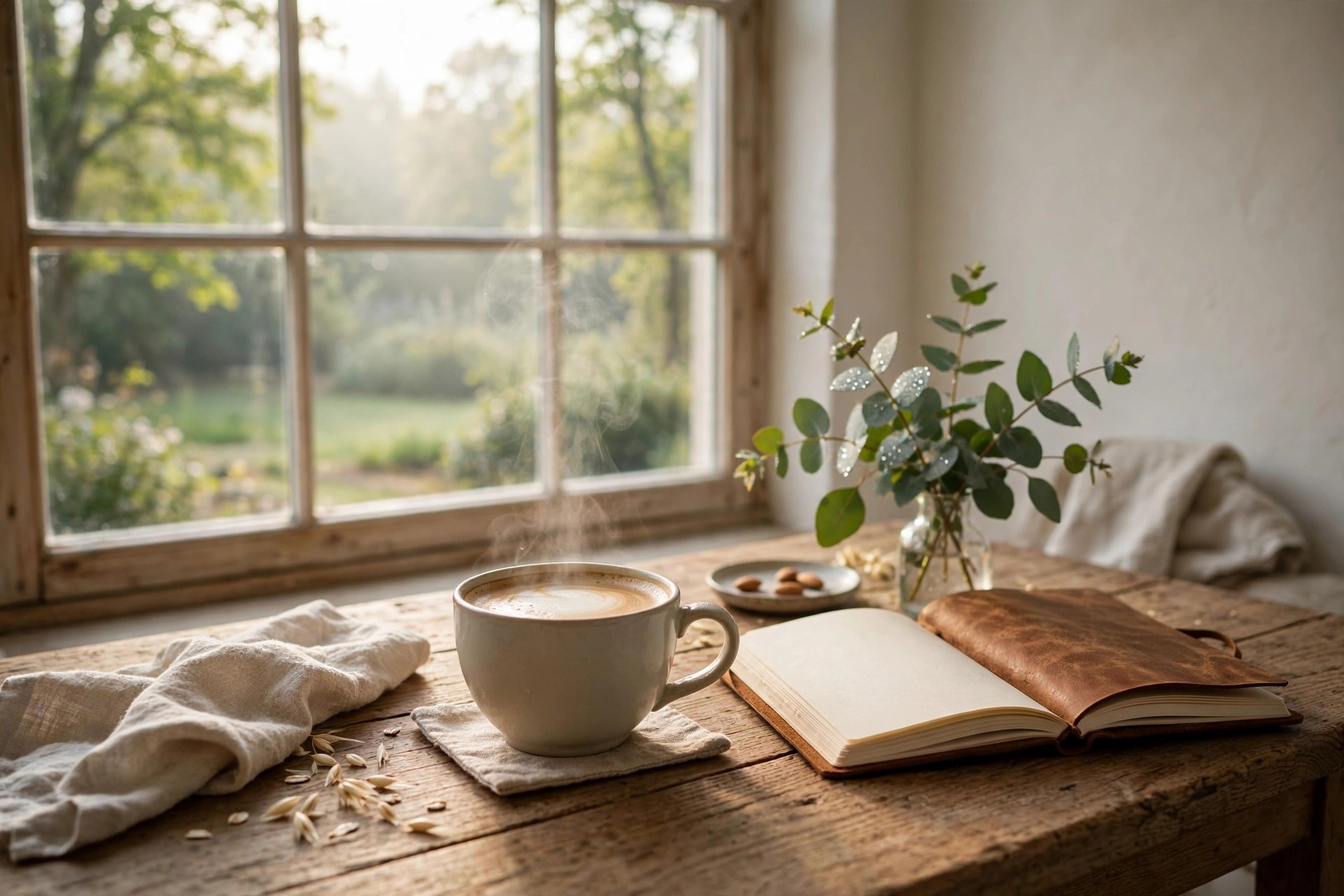
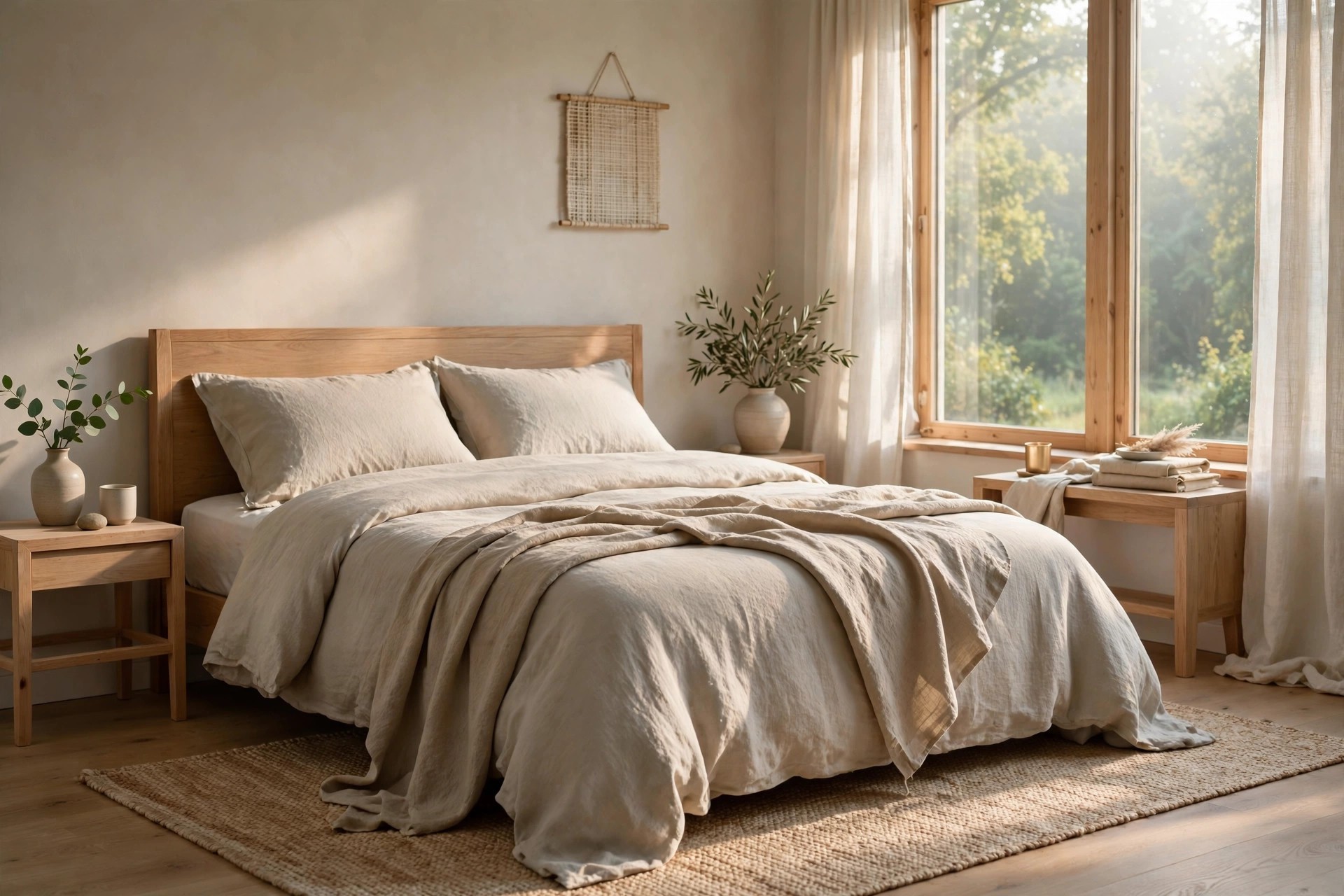
You do not need a new system to live like this. In fact, the whole point is the lack of a system. But a little structure helps, especially on the days your brain wants to fill every free minute. Think of it as three gentle promises that work together.
1. How Do You Protect Your Rest?
In brief: Nothing helps more than going to bed on time. Pick a realistic bedtime, dim the lights an hour before bed, and let your phone charge outside the bedroom. Then give yourself a slow morning — even twenty calm minutes sets a gentle tone for the day.
Nothing in this article will help you as much as going to bed on time. Sleep is the original self-care — the one your grandmother swore by long before it had a brand name — and it is the first thing over-planned wellness steals away, with early-morning routines and late-night scrolling. The Sleep Foundation’s guidance is that healthy adults generally need seven or more hours of sleep a night (see sleepfoundation.org).
Protecting your sleep can be wonderfully boring:
- Pick a bedtime you can actually stick to — consistency beats ambition.
- Dim the lights an hour before bed to tell your body the day is winding down.
- Let your phone charge somewhere other than your nightstand.
Then give yourself a slow morning routine without rushing, even if “slow” just means twenty calm minutes. Coffee by the window instead of coffee in traffic. A few lines in a journal instead of a few hundred headlines. When the day starts gently, it tends to stay gentle — and that calm carries further than any productivity trick.
2. Why Is Taking Away Self-Care Too?
In brief: Wellness is not only about what you add — it is about what you remove. Say no to one ongoing commitment this month, switch off notifications that are not from loved ones, and try a walk with no podcast and no step goal.
Here is the heart of the “do less” idea: wellness is not only about what you add, it is about what you take away. An overflowing calendar, a buzzing phone, a wardrobe full of “someday” projects, a friendship that always leaves you drained, that group chat that never stops — each one takes a little of your energy, and it adds up fast.
Start small so it sticks:
- Pick one ongoing commitment to say no to this month — and practise saying it without guilt. “That does not work for me” is a full sentence.
- Turn off the notifications that are not from people you love.
- Leave your phone in another room for one evening a week.
- Take a walk with no podcast and no step goal — a real treat in 2026.
Notice how much lighter your week feels when you stop piling optional things on top of the things you have to do. If you want a companion for this part of the journey, these slow living tips for a calmer life go perfectly with the whole do-less mindset.
3. What Does Soothing Look Like Day to Day?
In brief: Soothing rituals work best tiny and repeatable: the same tea, the same chair, the same ten minutes that tell your body the day is over. Candlelight, a soft blanket, fresh flowers — small pleasures, not homework, enjoyed again and again.
Rest and simplifying clear the space; soothing fills it with things that truly feel good. This is the cosy, sensory part of the reset, and it should feel like a pleasure, not homework. A warm drink in your favourite mug. A blanket soft enough to make you close your eyes. Music instead of noise. Candlelight in the evening instead of bright overhead lights.
The secret is that soothing little rituals work best when they are tiny and easy to repeat. You do not need a spa day — you need the evening self-care ritual you actually look forward to: the same tea, the same chair, the same ten minutes that tell your body the day is over. Doing it again and again is what turns a habit into a safe, cosy place.
And do not forget small beauty. Romanticising your life through daily rituals is really just this: treating ordinary moments like they are worth enjoying, because they are. Fresh flowers on the nightstand. Good butter on toast. These are not splurges — they are proof that your life is already worth paying attention to.
What Does “Doing Less” Look Like on a Normal Day?
The short answer: Picture a normal Tuesday: you wake without grabbing your phone, have coffee sitting down, walk untracked, say no to one thing, eat lunch away from a screen, read a little, and go to bed before you’re worn out. Nothing impressive — that is the whole point.
On a normal Tuesday, “do less” might look like this: you wake up without grabbing your phone. You make coffee and drink it sitting down. You go for a walk and leave the fitness tracker on the dresser, just this once. You say no to the thing you never wanted to do anyway. You eat lunch away from a screen. In the evening, you read a few pages, stretch for five minutes, and go to bed before you are worn out instead of after.
Nothing about that day is impressive. Nobody is posting it online. That is the whole point. The measure of a good day quietly shifts from how much did I get done to how did it feel to live it — and once that shift happens, it is hard to go back.
How Do You Make This Reset Actually Stick?
The short answer: Most resets fail because they ask for more — more time, gear, and willpower. This one asks for less, which is why it survives a real week. Guard your sleep, remove one thing monthly, keep one small ritual wonderful, and choose the slower option when in doubt.
Most wellness resets fail because they ask for more: more time, more gear, more willpower. This one asks for less, which is exactly why it survives a real week. If you want to try it, here is the whole plan:
- Guard your sleep, and guard your mornings.
- Take away one thing this month, instead of adding one.
- Make one small daily ritual feel wonderful.
- When in doubt, pick the slower, simpler option.
- Keep going until “doing less” just feels like your life.
The American Psychological Association notes that ongoing stress affects both physical and mental health, and lists rest, social connection, and switching off among the healthier ways to cope (see apa.org). You do not need to earn rest, plan it, or post about it. You just need to let it in. That is the wellness trend worth following: the one where less is truly more.
Leave a Reply