Last updated: October 2026
Quick answer: Dump-and-go crockpot dinners mean tipping simple ingredients into a slow cooker in the morning and coming home to a warm, finished meal. Soups, stews, pulled meats, and bean dishes work best, with food-safety basics — thawing, prompt chilling, and a food thermometer — keeping every dinner safe.
There is a particular kind of magic in the slow cooker. You spend ten minutes in the morning — chopping an onion here, opening a tin there, tipping everything into the pot — and then you go about your day while your dinner quietly builds flavour for hours. By the time the evening turns chilly and the light goes golden, your kitchen smells like something wonderful, and dinner is already done.
Fall is when the slow cooker earns its place on the counter full-time. The days get shorter, the evenings colder, and suddenly the idea of standing over a hot stove after a long day loses its charm. What you want instead is something warm, filling, and unfussy — the kind of meal that makes the whole house feel cosy before you have even sat down. This guide collects twelve of the very best dump-and-go crockpot dinners for cosy fall nights, along with the food-safety rules and timing know-how that keep every meal delicious and safe.
Why Does the Slow Cooker Win Autumn?
Low, steady heat over several hours turns tough cuts tender, melts aromatics into sauces, and lets flavours mingle in a way quick cooking never achieves. On a busy weeknight, it also frees your stove, forgives a late finish, and fills the house with comfort.
A stew that would taste rushed after forty minutes on the stove tastes deep and developed after six hours in the crockpot. The difference is real, and you can taste it in the first spoonful. But the practical benefits matter even more on a busy weeknight:
- It is forgiving. The low temperature and sealed lid mean it is almost impossible to burn dinner in the way a hob can burn it.
- It frees up the kitchen. No burners needed, no watching the pot — ideal for parents juggling school runs, anyone working late, or students in small kitchens.
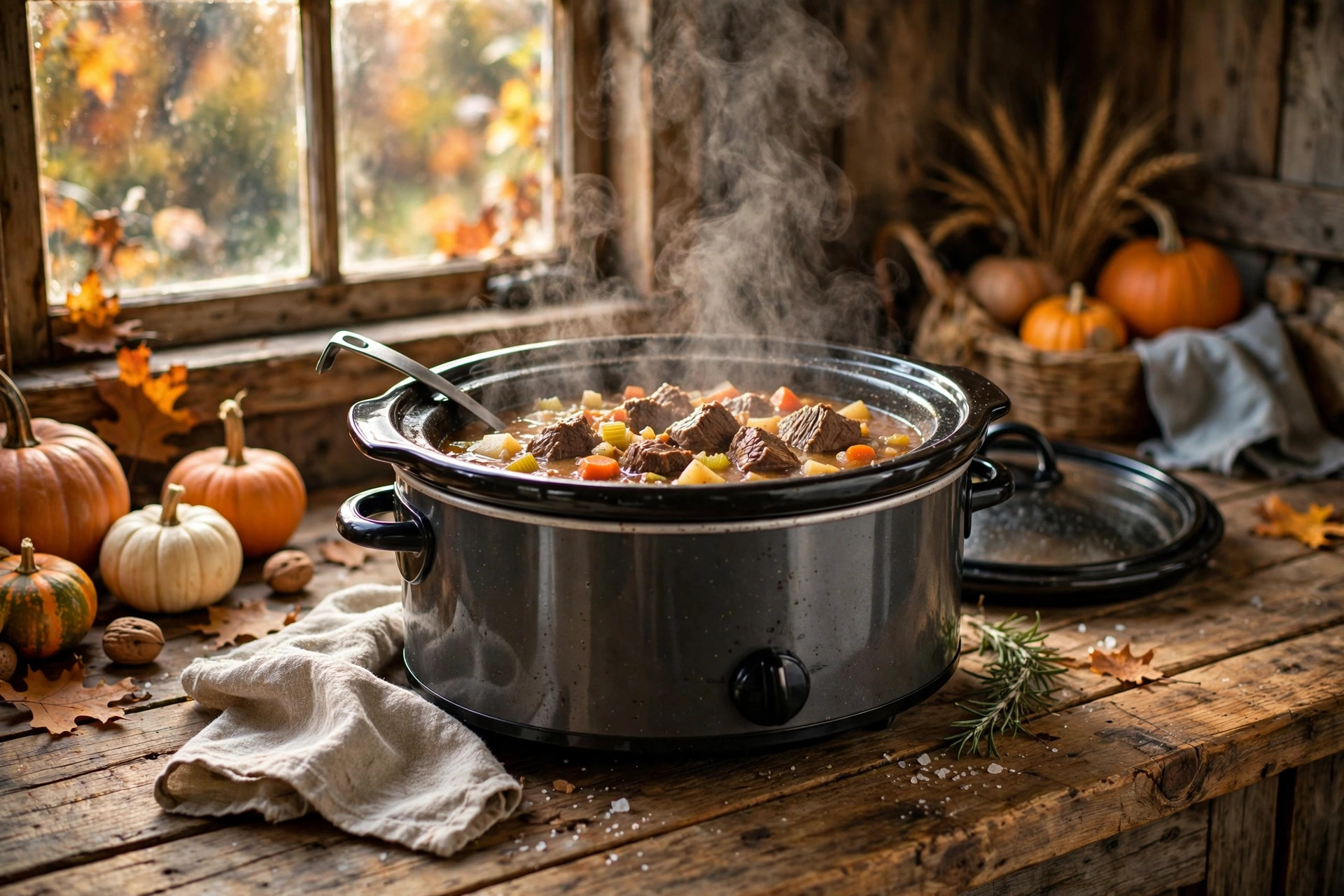
- It delivers the cosy factor on autopilot. On a dark October evening, coming home to a house that smells of rosemary, garlic, and slow-cooked beef is genuinely one of life’s great small comforts. Ask any slow-cooker devotee and they will tell you: the smell greeting you at the door is half the recipe.
What Are the Dump-and-Go Food Safety Rules That Matter?
Keep food moving through the danger zone quickly, thaw meat in the fridge, check doneness with a food thermometer, and chill leftovers promptly within two hours. Those few habits cover most slow-cooker safety.
The US Department of Agriculture’s Food Safety and Inspection Service (FSIS) advises that perishable food should not sit in the danger zone — between 40°F and 140°F (about 5°C to 60°C) — for more than two hours, and that leftovers should be refrigerated promptly. Its slow-cooker guidance also covers thawing, cooking, and storing food safely. (Source: USDA FSIS — Slow cookers and food safety)
| Rule | What to do |
|---|---|
| Thaw first | Never put a frozen solid lump of meat straight in, as the centre may stay in the danger zone too long. Thaw meat in the fridge overnight first. |
| Check with a thermometer | As a general guide, check poultry, minced meats, and whole cuts with a food thermometer rather than guessing by colour. USDA’s safe-temperature chart is the reference to check before cooking. (Source: USDA FSIS — Safe minimum internal temperature chart) |
| Chill leftovers fast | Refrigerate leftovers promptly — within two hours of the cooker switching off — in shallow containers so they cool quickly. Leftovers keep for three to four days in the fridge. |
| Reheat thoroughly | Reheated food should be steaming hot all the way through before serving. |
| Fill it right | Fill the crockpot between half and two-thirds full for the most even cooking. |
| Keep the lid on | Resist lifting the lid, because every peek can add fifteen to twenty minutes to the cooking time. |
| Save dairy and herbs for last | Keep dairy and delicate herbs for the end of cooking, since long hours of heat can curdle cream and turn fresh herbs bitter. |
In our experience, a simple food thermometer removes all guesswork and costs less than a takeaway. Follow these basics and your dump-and-go dinners will be as safe as they are delicious.
Which Creamy Soups and Stews Are Best for Autumn?
Soups and stews are the slow cooker’s natural habitat: vegetables on the bottom, meat in the middle, liquid and seasonings over the top, lid on, walk away. These four cover family nights, meat-free nights, and the simplest supper of all.
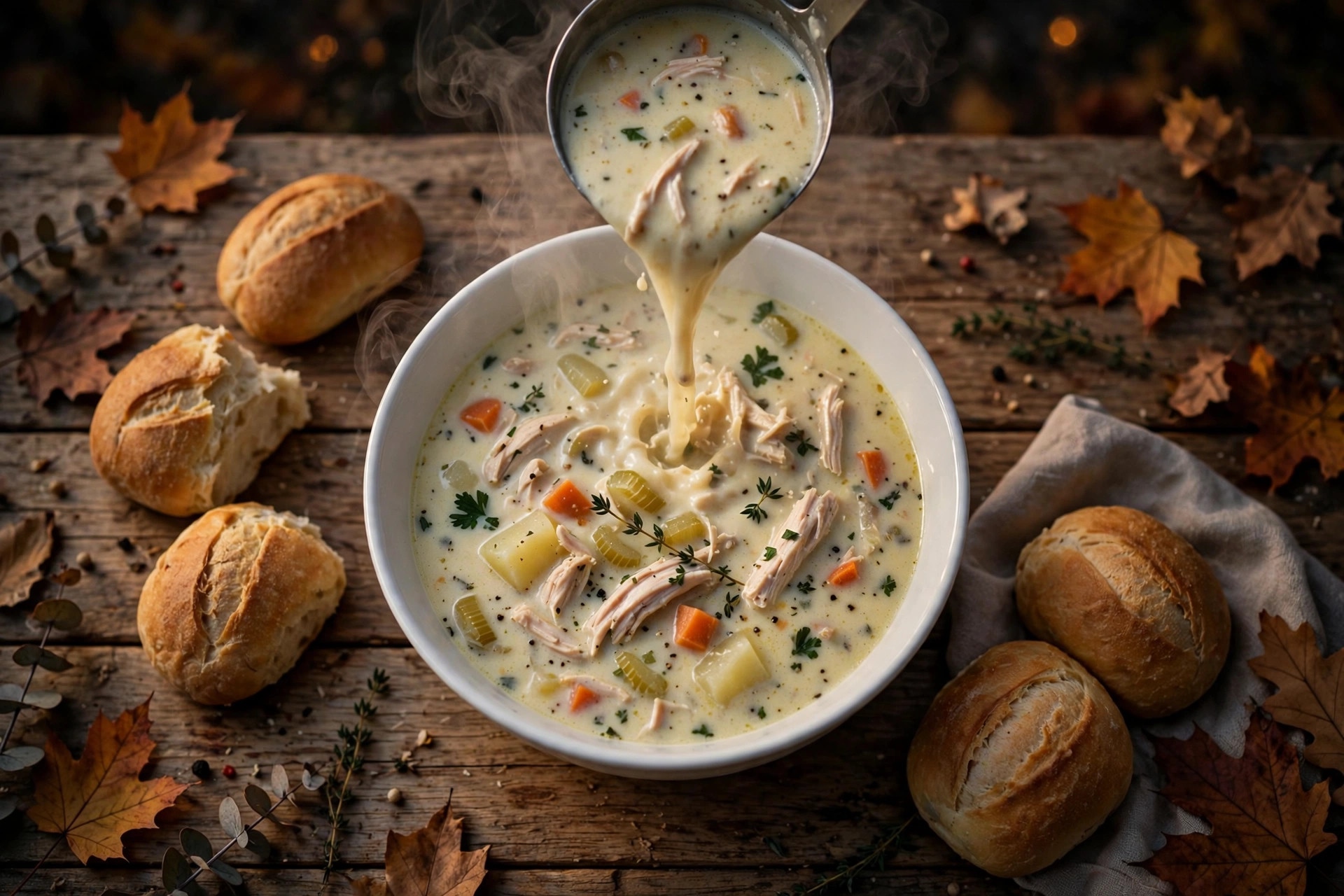
- Creamy chicken and wild rice soup. Dump in chicken thighs, a diced onion, sliced carrots and celery, a cup of wild rice blend, garlic, thyme, and chicken stock. Six hours on low later, shred the chicken, stir in a splash of cream and a handful of spinach, and you have a soup that is creamy, hearty, and deeply comforting. The wild rice goes chewy and nutty, the chicken falls apart, and one pot feeds a family with leftovers for lunch.
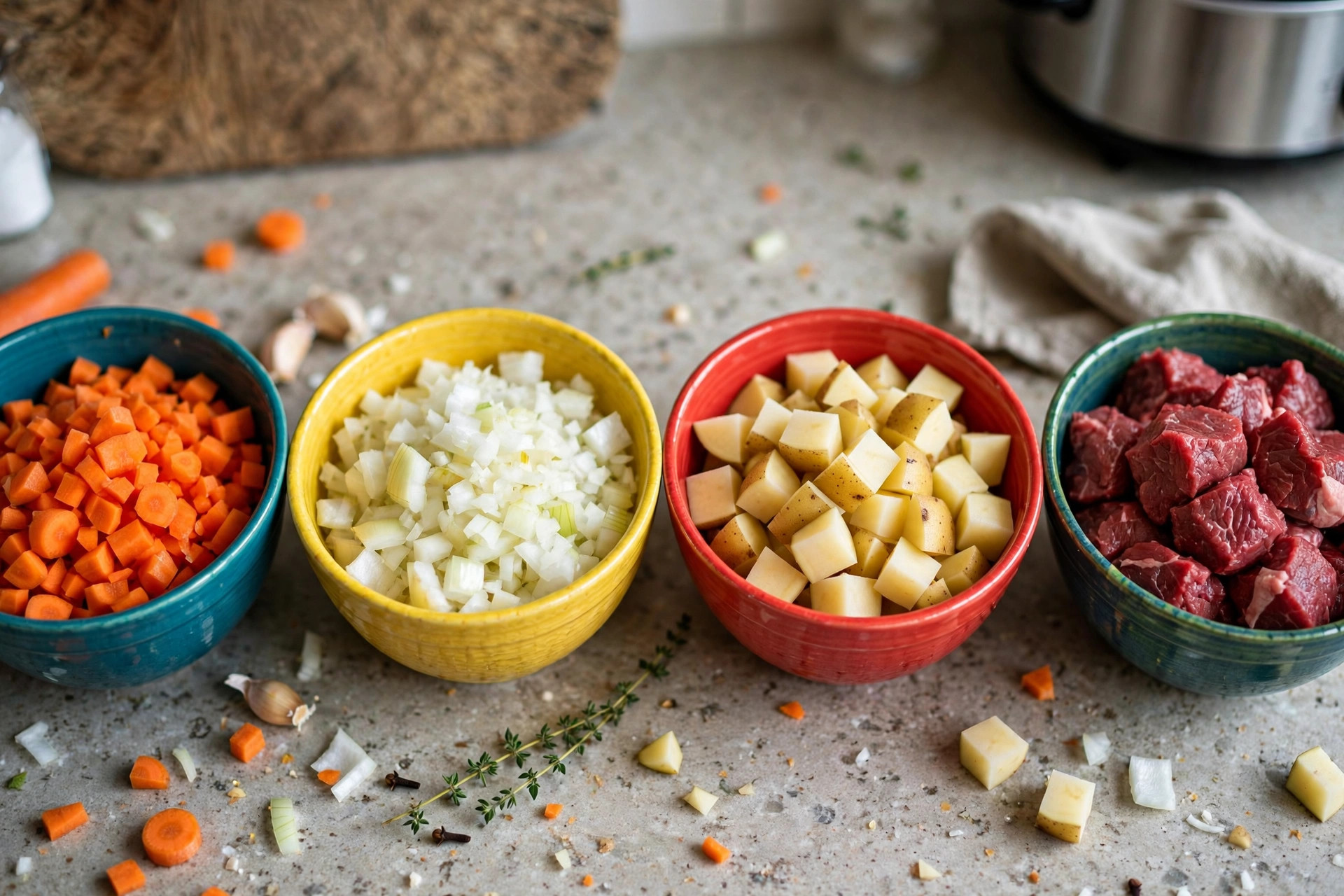
- Classic beef and root vegetable stew. Cubed stewing beef goes in with quartered potatoes, chunky carrots, parsnips, onion, tomato paste, Worcestershire sauce, bay leaves, and beef stock. The beef turns spoon-tender, the root vegetables sweeten, and the gravy thickens all by itself. Serve it in deep bowls with crusty bread for mopping, and dinner is a whole event.
- Butternut squash and red lentil soup. Cubed butternut squash, red lentils, onion, garlic, ginger, curry powder, and vegetable stock cook down into a thick, golden soup that you blend smooth at the end. Red lentils dissolve into the soup and give it body without any cream. A swirl of coconut milk and a sprinkle of toasted seeds on top, and it looks as good as it tastes.
- Potato and leek soup. Sliced leeks, diced potatoes, garlic, and vegetable stock, cooked low and slow, then blended silky and finished with cream and chives. It is the soup equivalent of a soft blanket — mild, creamy, and universally loved, including by picky eaters who usually reject anything green.
Which Hearty Meat Mains Cook Themselves?
Choose cheap, tough cuts — chuck roast, pork shoulder, chicken thighs, stewing beef — because their connective tissue melts into gelatin over long, gentle cooking. Lean, expensive cuts actually do worse in the slow cooker; they dry out. Buy the cheap cut and let time do the luxury work.
- Honey garlic chicken thighs. Chicken thighs, a sauce of honey, soy sauce, garlic, and a splash of rice vinegar, dumped together and cooked on low for four to five hours. The thighs come out glossy and falling apart, and the sauce reduces into something you will want to pour over rice. It is sweet, savoury, and completely foolproof — a brilliant weeknight standby.
- Pulled pork shoulder. A pork shoulder rubbed with smoked paprika, brown sugar, garlic powder, salt, and pepper, sitting on a bed of sliced onions with a cup of apple juice or stock, cooks low for eight to ten hours until it shreds with a fork. Pile it onto buns with coleslaw, or serve it over rice, or tuck it into tacos. One shoulder makes a mountain of food, and the leftovers reheat beautifully for days.
- Beef chilli. Minced beef, two kinds of beans, chopped tomatoes, onion, peppers, garlic, chilli powder, cumin, and smoked paprika — everything in the pot, six hours on low. The flavours meld into something far greater than the sum of its parts. Set out toppings — grated cheese, sour cream, spring onions, tortilla chips — and let everyone build their own bowl.
- Sausage and white bean casserole. Good sausages, tinned cannellini beans, chopped tomatoes, onion, garlic, rosemary, and a glug of stock. The sausages plump up, the beans go creamy, and the whole thing tastes like a cottage in the countryside. It is also one of the cheapest dinners here, which never hurts.
What Are the Best Cosy Vegetarian and Lighter Options?
Beans, lentils, and chickpeas are slow-cooker naturals: they need long, gentle cooking anyway, absorb flavour beautifully, and tend to be the most budget-friendly meals of all. A bag of dried lentils costs almost nothing and becomes a week’s worth of dinners.
- Three-bean vegetarian chilli. Black beans, kidney beans, and chickpeas with tomatoes, corn, onion, peppers, and the same smoky spice blend as the beef version make a chilli so hearty that nobody misses the beef. It is also packed with fibre and protein, which makes it a genuinely nourishing weeknight choice.
- Coconut chickpea curry. Chickpeas, diced sweet potato, onion, garlic, ginger, curry powder or paste, and coconut milk cook together into a fragrant, golden curry. The sweet potato goes meltingly soft and thickens the sauce. Serve over basmati rice with a squeeze of lime and fresh coriander.
- Ratatouille-style vegetable stew. Courgettes, aubergine, peppers, tomatoes, onion, garlic, and herbs de Provence become a silky, rich vegetable stew after a long slow cook. It is wonderful over polenta or couscous, folded through pasta, or simply eaten with bread — and it tastes even better the next day, so make a big batch.
- Split pea soup. Split peas, diced carrot, celery, onion, and stock cook down into a thick, golden soup that is deeply savoury and warming, with or without ham. It is the kind of soup that makes you feel looked after, which is really the whole point of this list.
What Prep-Ahead Tricks and Timing Rules Help Most?
The freezer dump bag is the single best trick: assemble raw ingredients in a labelled freezer bag, freeze flat, thaw in the fridge overnight, then tip the whole bag into the crockpot. Ten recipes prepped in one Sunday afternoon means ten effortless dinners waiting.
| Timing question | General guide |
|---|---|
| High vs low | As a general rule, one hour on high equals roughly two to two and a half hours on low. |
| Typical dinner window | Most dump-and-go dinners want four to five hours on high or seven to eight on low. |
| Forgiving dishes | Stews, pulled meats, and bean dishes happily sit an extra hour or two on the warm setting. |
| Less forgiving dishes | Chicken breasts and dairy-heavy dishes are less forgiving. When in doubt, thighs over breasts: dark meat stays juicy far longer. |
- Add dairy in the last thirty minutes so it does not curdle.
- Stir in fresh herbs, spinach, and peas at the very end so they stay bright.
- Cook pasta and rice separately and add at serving, unless the recipe was specifically developed for cooking them in the pot.
- Thicken at the end if needed: a slurry of cornflour and cold water stirred in during the last half hour, with the lid off, turns a thin broth into a proper gravy.
- Plan the supporting cast. The crockpot handles the main event, but a great fall dinner needs crusty bread, fluffy rice, buttered noodles, or a simple green salad for contrast. Keep a few of these staples on hand and every dump-and-go dinner feels complete.
How Do You Start Your Cosy Fall Dinner Plan?
Start with one recipe this week and let the habit build — by the fifth time, you will be improvising with what is in the fridge. The slow cooker rewards relaxed, intuitive cooking, and autumn is the perfect season to develop it.
The creamy chicken and wild rice soup is a gentle first project; the beef chilli is the crowd-pleaser; the pulled pork is the one that will make you feel like a genius. Whichever you choose, the method is the same: ten minutes in the morning, a whole day of your kitchen smelling wonderful, and a dinner that tastes like you tried far harder than you did.
That is the real gift of the crockpot on a cold fall night. Not just the food — though the food is wonderful — but the feeling that dinner is handled, that the evening is yours, that something warm is waiting. So dust off the slow cooker, pick a recipe, and let autumn do what it does best: slow everything down, including dinner.
Leave a Reply