Last updated: November 2026
Quick answer: Easy winter eyeshadow looks for hooded eyes start with a matte shade placed just above the crease, soft blending upwards, and a light shimmer only on the centre of the lid. Keep the shape open and the edges soft.
Hooded eyes are beautiful, and they are also very common. The fold of skin above your eye simply covers part of the lid when your eyes are open. That is all it means. If you are looking for easy winter eyeshadow looks for hooded eyes beginners can actually do, you are in the right place. You do not need fancy tools, expensive palettes, or years of practice.
In our experience, the secret is placement. Most eyeshadow advice assumes you can see the whole lid. With hooded eyes, you need to place colour where it will still show when your eyes are open. Once you learn that one idea, everything else becomes much easier. This guide shows you how, step by step, with soft winter colours that suit cold weather and cosy outfits.
What are hooded eyes, and how do I know if I have them?
Hooded eyes have a fold of skin that covers part or all of the eyelid crease when the eyes are open. Look straight into a mirror: if your crease is partly hidden and your lid space looks small, you likely have hooded eyes.
Look straight ahead into a mirror with a relaxed face. Can you see your crease clearly, or does the skin above it fold down over the lid? If the fold covers the crease, you have hooded eyes. It can affect one eye more than the other, and it can become more noticeable with age. That is completely normal.
How do I do easy winter eyeshadow looks for hooded eyes beginners?
Easy winter eyeshadow looks for hooded eyes beginners start with primer, a matte transition shade above the crease, soft blending, and a light lid colour. Work with your eyes open so you can see where the colour lands.
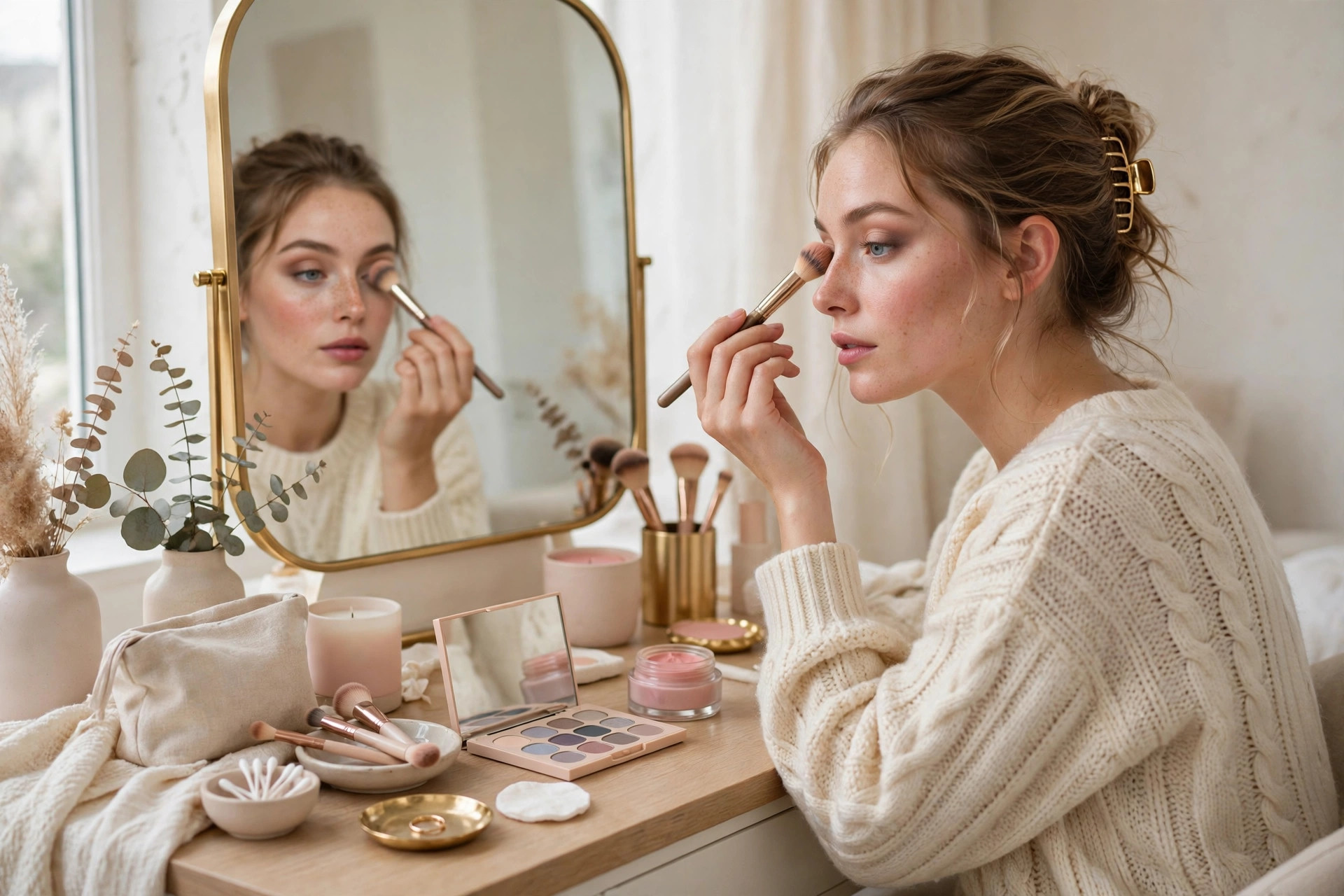
Start with a clean, dry lid. A little eyeshadow primer, or a dab of concealer set with powder, gives the shadow something to grip. This matters in winter, when you move between cold air outside and warm rooms inside. Primer helps stop creasing and fading through the day.
Now the most important step: with your eyes open, look straight ahead and place a soft matte shade just above your natural crease. Use a fluffy brush and small, gentle circles. This shade is your transition colour. Warm taupe, soft brown, or muted mauve all work well in winter. Blend it upwards and outwards until the edge looks soft, not sharp.
Next, add a slightly deeper shade to the outer corner, still with your eyes open. Keep it small and blend well. Then press a light, satin shade onto the centre of the lid with your finger or a flat brush. That light centre opens the eye up. Finish with mascara, and you are done. The whole look takes about five minutes once you have practised it twice.
Which winter colours suit hooded eyes best?
The best winter colours for hooded eyes are soft mattes in warm taupe, cocoa, plum, and muted rose, with a light satin shade for the lid centre. These shades add depth without closing the eye or looking harsh.
Winter is the season for warm, cosy colours. Soft browns and warm taupes are the easiest place to start, because they blend forgivingly and suit almost everyone. A muted plum or soft burgundy adds a festive touch without feeling dramatic. These shades look lovely with a cream jumper or a camel coat.
Here are some easy winter combinations to try:
- Warm taupe in the crease, soft cream on the lid, brown mascara.
- Cocoa in the outer corner, muted rose on the lid, plum liner smudged softly.
- Soft plum above the crease, champagne shimmer in the centre, black-brown mascara.
- Muted mauve blended high, pale satin on the lid, for a soft evening look.
What tools do I actually need for hooded eyes?
You need only three tools for hooded eyes: a fluffy blending brush, a smaller brush for the outer corner, and a flat brush or clean finger for the lid. Soft brushes blend better than stiff ones and are kinder to the delicate eye area.
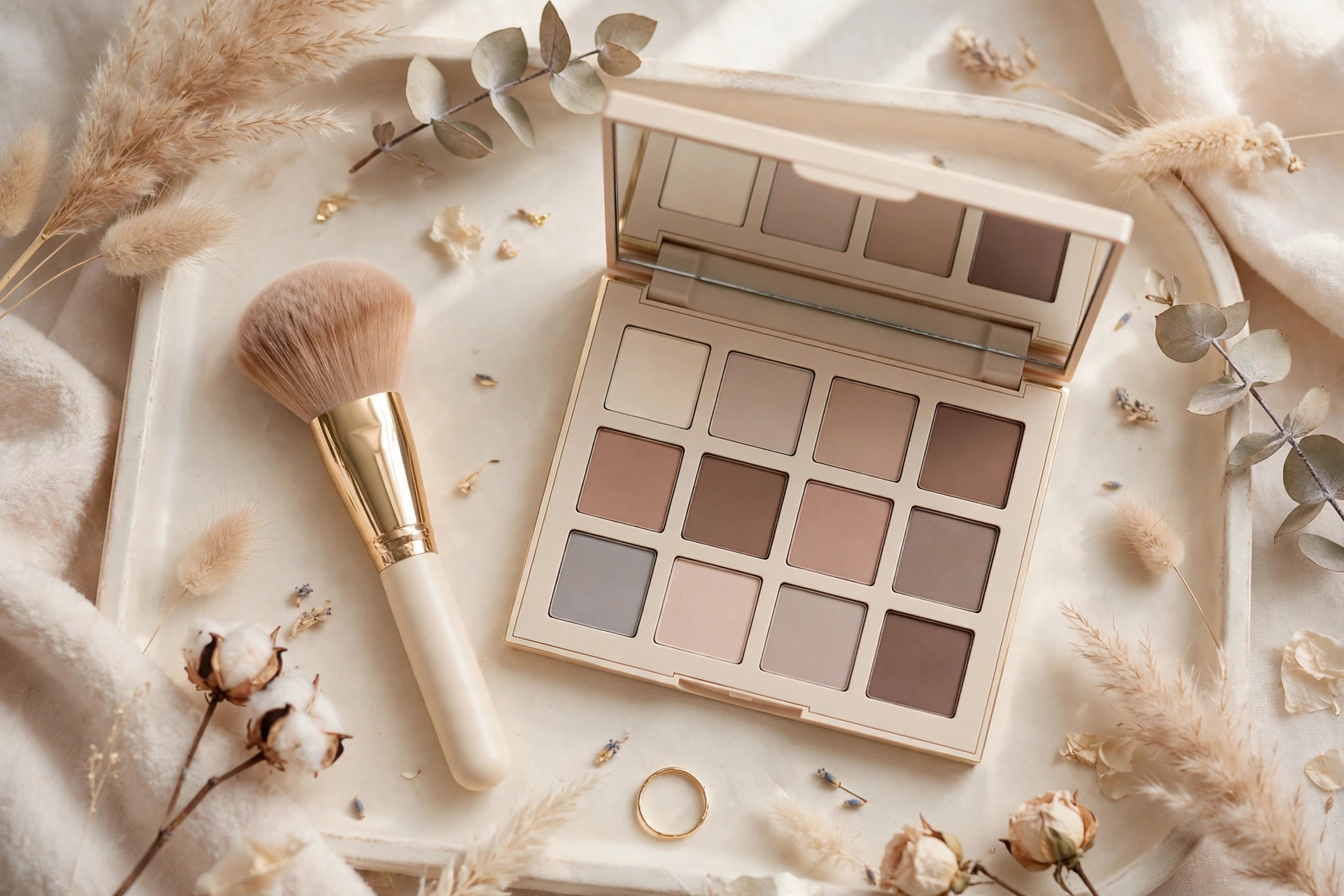
A fluffy blending brush is your best friend. It spreads colour softly and helps you avoid harsh lines, which show up more on hooded eyes. Choose one that feels soft when you brush it against the back of your hand. If it feels scratchy, it is too stiff for this job.
A smaller, slightly denser brush helps you place a deeper shade exactly in the outer corner. You do not need to press hard. Light, short strokes give you control. A flat brush, or simply a clean fingertip, is perfect for pressing a light shade onto the lid centre. Fingers warm the product slightly and help it sit smoothly.
How can I stop eyeshadow from creasing on hooded eyes?
To stop eyeshadow creasing on hooded eyes, use primer, apply thin layers, set creamy products with powder, and keep shimmer off the fold. Thin, set layers last far longer than one thick layer.
Creasing happens because the fold of skin touches the lid and moves the product around. Primer is the first line of defence. Apply a thin layer over the whole lid and up to the brow bone, then let it dry for a few seconds before you add shadow. If you use concealer as a base, set it with a little translucent powder first, so it does not stay sticky.
The American Academy of Ophthalmology advises replacing eye makeup regularly and discarding eye products after an eye infection. Read their eye makeup safety guidance.
Thin layers are the second secret. Two light layers of shadow last longer than one heavy layer. Press the first layer on, blend it, and then add a little more only where you need depth. Avoid creamy shadows on the fold itself, because they move more easily. Matte powder shadows stay put best in that area.
Which mistakes should beginners with hooded eyes avoid?
Beginners with hooded eyes should avoid placing dark shadow only on the hidden lid, drawing a harsh crease line, and using heavy glitter on the fold. Keep colour visible above the crease and blend every edge.
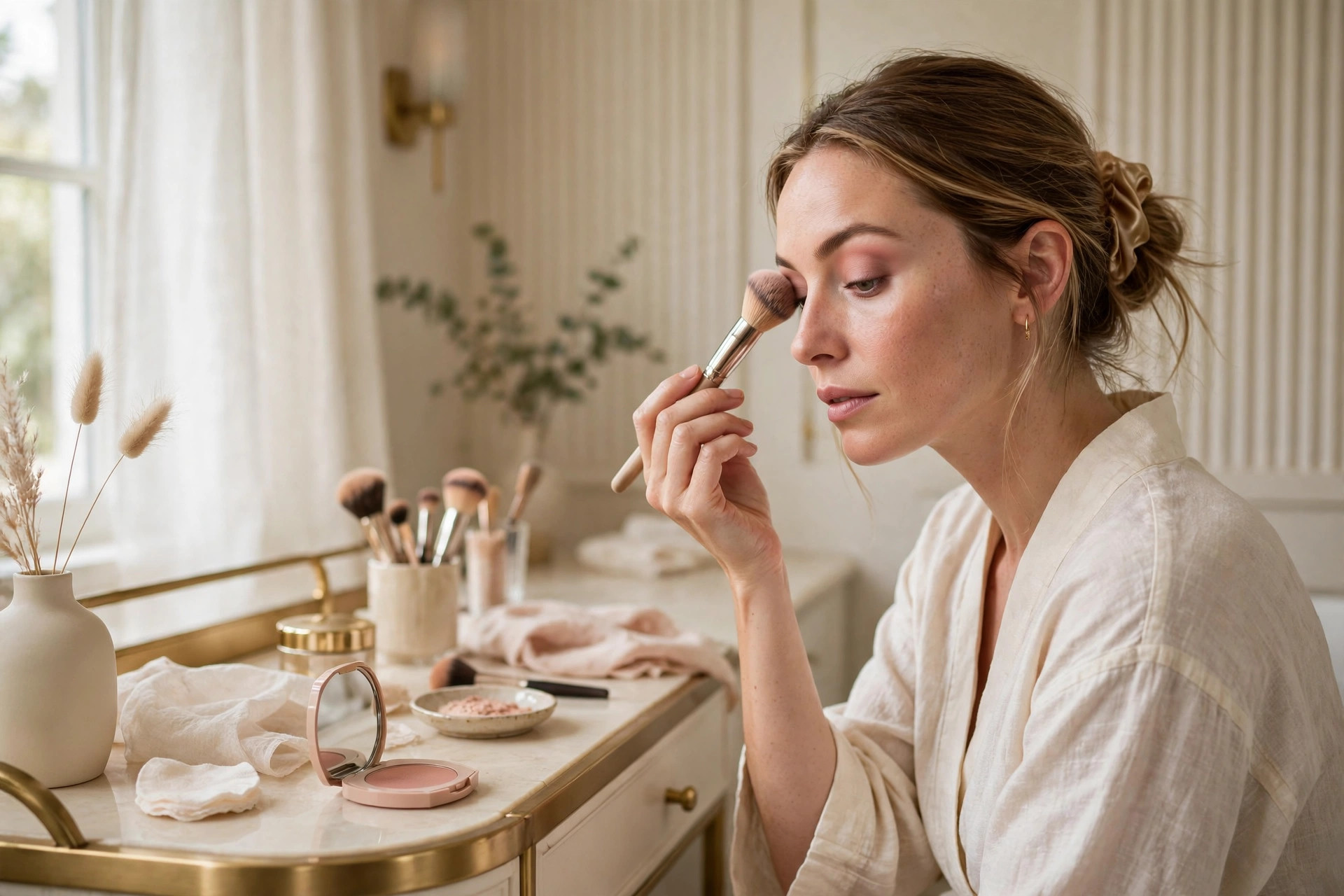
The most common mistake is doing beautiful work on the lid with your eyes closed, then opening them to find it has vanished under the fold. Always check your work with your eyes open.
Good eye hygiene matters as much as technique. The American Academy of Dermatology advises removing eye makeup before bed and never sharing eye makeup with others, to help protect the delicate eye area. You can read their advice on removing makeup safely.
Always check your work with your eyes open. Place your transition shade high enough that you can still see it when you look straight ahead.
Harsh lines are the second mistake. A sharp, dark crease line can look heavy on hooded eyes. Blend until the edge fades softly into the skin. If you have gone too dark, do not start again. Take a clean fluffy brush and blend over the edge, or add a little of your transition shade on top to soften it.
| Mistake | Why it happens | Easy fix |
|---|---|---|
| Colour disappears when eyes open | Placed only on the hidden lid | Blend the shade above the crease, eyes open |
| Harsh dark lines | Too much product, too little blending | Blend with a clean fluffy brush |
| Glitter transfers to the fold | Shimmer placed too high | Keep shimmer on the lid centre only |
| Shadow fades by lunchtime | No primer, layers too thick | Prime, use thin layers, set with powder |
How do I turn easy winter eyeshadow looks for hooded eyes beginners into an evening look?
To turn a daytime hooded-eye look into an evening look, deepen the outer corner, add a soft smudged liner, and press a little shimmer onto the lid centre. You do not need to start again from scratch.

Start with the daytime look you already have. Add a little more of your deepest shade to the outer corner, blending it up and out in a soft wing shape. Keep the wing short and soft. A long, sharp wing can look heavy on hooded eyes, while a short, blended one lifts the eye gently.
Next, smudge a dark brown or plum liner along the upper lash line. Use a small brush or a cotton bud to soften the line so it looks smoky rather than sharp. A soft line is far more forgiving than a perfect liquid line, especially when you are learning. Add a little of the same liner under the outer third of the lower lash line, and blend it well.
Frequently asked questions about winter eyeshadow for hooded eyes
Should I apply eyeshadow with my eyes open or closed?
Do both. Apply the first layer with your eyes closed for ease, then open your eyes and check where the colour shows. Blend and adjust with your eyes open, looking straight ahead, so the finished shape is visible when you are wearing it.
Can I wear eyeliner if I have hooded eyes?
Yes, soft liner suits hooded eyes very well. A smudged pencil or shadow liner along the lash line adds definition without taking up lid space. Keep the line thin and close to the lashes, and avoid a thick line that disappears under the fold.
What is the best eyeshadow finish for hooded eyes in winter?
Matte and satin finishes work best. Matte shades blend softly above the crease, and a satin shade on the lid centre adds light without heavy glitter. Save strong glitter for a small touch in the centre of the lid, where it catches the light.
How do I make my eyes look bigger with hooded eyes?
Place a light shade on the lid centre, keep the crease shade soft and blended high, curl your lashes, and add mascara to the top and bottom lashes. A tiny touch of light shade in the inner corner also helps. Avoid dark shadow all over the lid, which can make eyes look smaller.
Hooded eyes are not hard to work with once you know where to place your colour. Keep it soft, keep it above the crease, blend well, and let the light shade in the centre do the opening up. Practise the daytime look twice this week, and by the weekend it will feel easy. Then try the evening version, and enjoy how lovely your eyes can look in winter light.
Leave a Reply