Last updated: October 2026
Quick answer: Elegant work outfits come from a few repeatable formulas: a cream suit, a silk blouse with tailored trousers, a shirt-dress with a self belt, and texture-rich neutrals. Build a 5-day rotation from about twelve pieces, prep outfits on Sunday, and let grooming carry the simplest looks.
For years, my work wardrobe was a row of black trousers and white shirts that made me feel like a very tired extra in someone else’s corporate drama. Everything matched, nothing delighted me. Getting dressed felt like a chore I resented a little more each Monday.
The fix wasn’t a shopping spree. It was learning a handful of elegant formulas — silhouettes, textures, and colour combinations that look polished without looking flat. Here’s what actually works, five days a week, without a dry-clean-only lifestyle.
Why Is a Cream Suit Your Secret Weapon?
Quick answer: A well-cut suit in cream, ivory, or warm beige looks authoritative and approachable at the same time — something a black suit can’t quite do. Keep the fit clean, wear simple layers underneath, and choose machine-washable crepe over pure silk so the elegance survives real life.
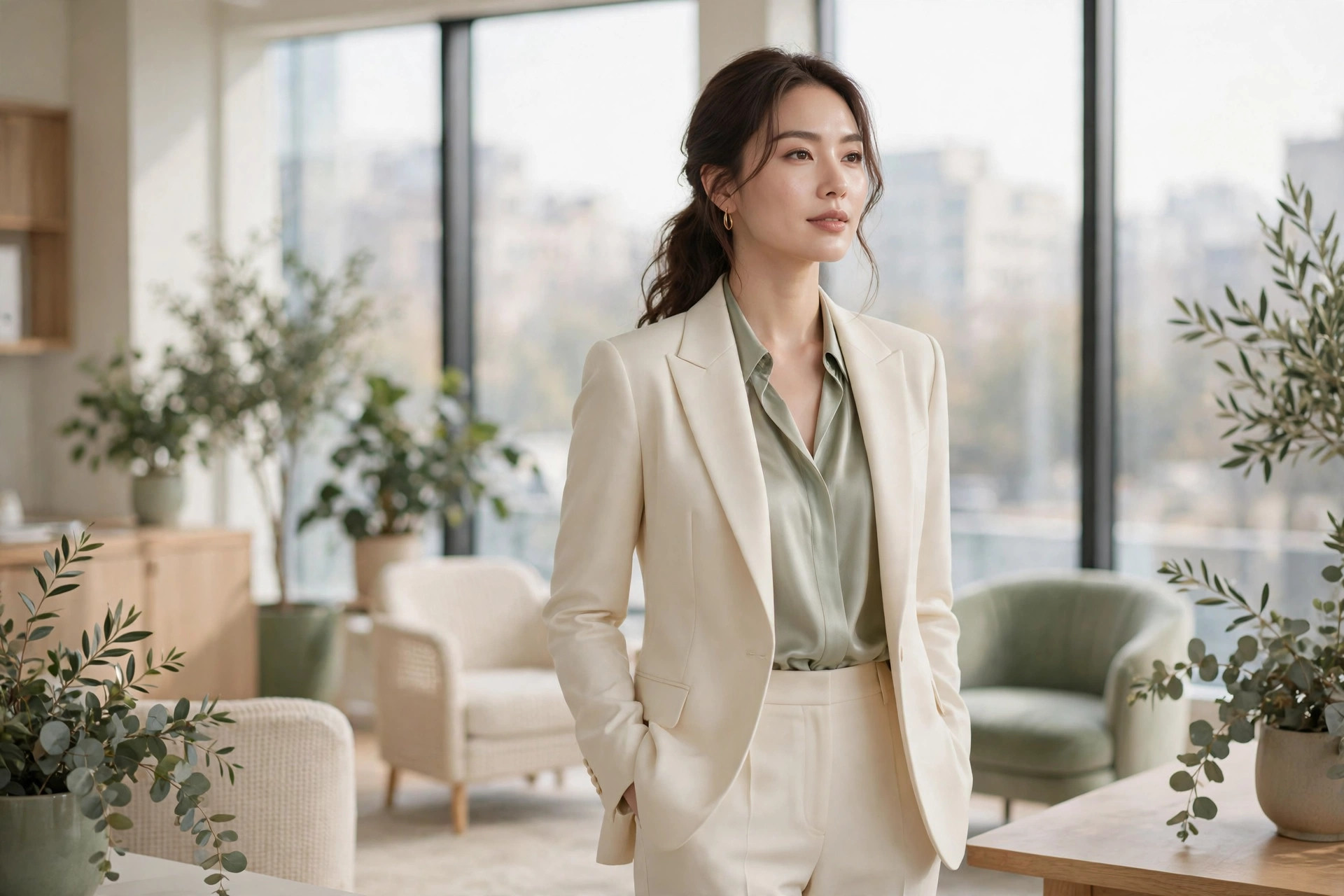
A well-cut suit in cream, ivory, or warm beige does something a black suit can’t: it looks authoritative and approachable at the same time. I wore a cream double-breasted blazer with matching wide-leg trousers to a client presentation last year, and three people asked where it was from. It was four years old.
Fit is everything here. The blazer should close without pulling, the trouser hem should just graze your shoe, and the shoulder seam should sit where your shoulder actually ends. Underneath, keep it simple — a silk camisole, a fine-gauge knit, or nothing but the blazer with a delicate necklace for after-work events.
Practical note: yes, cream shows everything. Keep a stain-removal pen in your desk drawer and choose machine-washable crepe or a poly-viscose blend over pure silk if your commute involves coffee. Elegance that can’t survive real life isn’t elegance — it’s a costume.
How Does Texture Replace Colour in Workwear?
Quick answer: When your office palette runs neutral, texture keeps outfits interesting — pair one textured piece with one smooth piece, like a nubby knit with sleek trousers or tweed over a silk shell. Three neutral pieces in different textures always look more considered than one flat colour.
When your office palette runs neutral — and most do — texture is what keeps outfits interesting. A charcoal ribbed knit with charcoal tailored trousers looks rich and deliberate. A tweed blazer over a plain silk shell reads expensive without a single logo. Bouclé, cable knit, raw silk, suede: these are the quiet luxury of workwear.
My favourite winter combination is a camel turtleneck in a chunky cable knit with dark brown tailored trousers and loafers. Three neutral pieces, zero pattern, and it looks considered because every surface is doing something different. Try pairing one textured piece with one smooth piece as a starting rule — a nubby knit with sleek trousers, or a smooth satin blouse with wool pants.
What’s the Silk Blouse Formula That Always Works?
Quick answer: Tuck a silk or silk-feel blouse in ivory, blush, or pale blue into high-rise tailored trousers, and finish with pointed flats or a low block heel. French-tuck the blouse, pick an interesting neckline and a proper pressed crease, and you have a four-minute outfit for nearly every office.
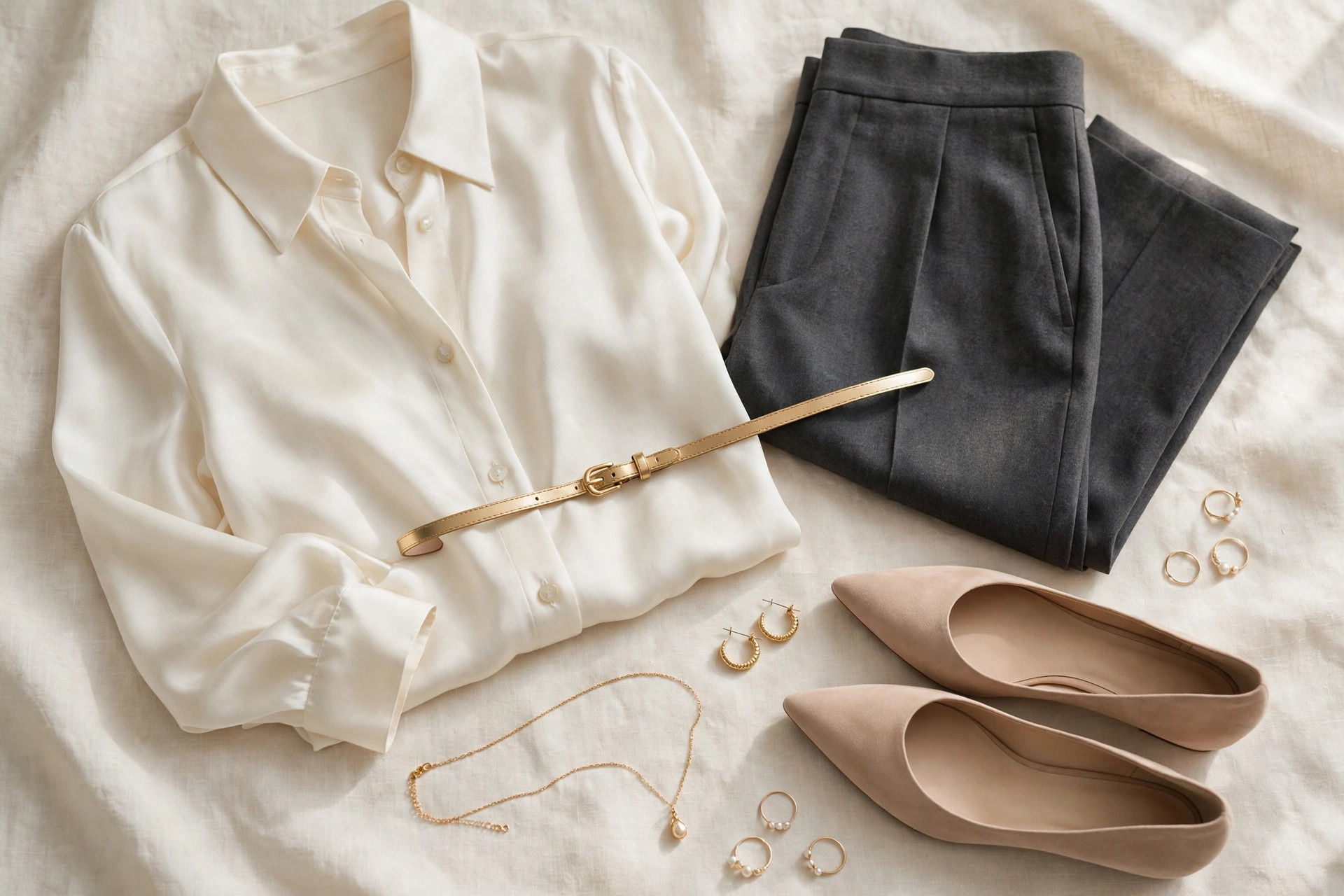
This is the workhorse. A silk or silk-feel blouse in ivory, blush, or pale blue, tucked into high-rise tailored trousers in navy, charcoal, or camel. It takes four minutes, works in nearly every office, and photographs beautifully for those LinkedIn headshots nobody warns you about.
The details that keep it from boring:
- An interesting neckline. A soft bow, a hidden placket, or a slightly raised collar lifts the whole outfit.
- Proper trousers. A pressed crease and the right hem make separates look tailored rather than thrown together.
- Shoes with intention. Pointed flats, a low block heel, or polished loafers — never the afterthought pair.
French-tuck the blouse — front tucked, back loose — for a relaxed polish that looks styled rather than stuffed-in. Buy the blouse in a washable silk or a good polyester-satin if you’re honest with yourself about laundry. A blouse you actually wear beats a “perfect” one that lives at the dry cleaner.
Which Dress Does the Work For You?
Quick answer: A shirt-dress with a self belt is the most versatile work dress — the collar keeps it professional, the belt defines the waist, and it works with flats, heels, or boots across three seasons. Look for knee-length or midi cuts with enough ease to sit comfortably all afternoon.
Some mornings you don’t want to think in separates. That’s what the work dress is for: a sheath, a shirt-dress, or a knit midi in a solid colour or subtle texture. One piece, add shoes and a bag, done.
The most versatile cut I’ve found is a shirt-dress with a self belt — the collar keeps it professional, the belt defines the waist, and it works with flats, heels, or boots across three seasons. A sleeveless sheath with a blazer over it gives you two outfits in one (blazer on for meetings, off for desk work). Look for knee-length or midi, necklines that don’t require adjusting, and enough ease to sit comfortably through a long afternoon.
How Do Accessories Make Work Outfits Interesting?
Quick answer: When the clothes are simple, one focal accessory — a silk scarf, a sculptural cuff, or a belt with an interesting buckle — carries the outfit’s personality. Keep everything else quiet, and don’t forget polished shoes: a scuffed heel undermines a beautiful outfit faster than anything else.
When the clothes are simple, accessories carry the personality. This is where I have the most fun: a silk scarf knotted at the neck or on a bag handle, a sculptural cuff, earrings with a little movement, a belt with an interesting buckle over a dress or blazer.
Keep it to one focal point. A statement earring plus a statement necklace plus a bold bag reads busy; pick one and let the rest be quiet. My everyday formula is simple studs, one interesting piece (a cuff, a scarf, a watch with character), and a structured bag. It takes thirty seconds and it’s the difference between “dressed” and “styled.”
Shoes deserve their own mention: keep work shoes polished and heeled at a height you can actually walk in. A scuffed heel undermines a beautiful outfit faster than anything else. I keep shoe cream and a brush in my desk — two minutes on a Friday afternoon, and Monday starts better.
What Does a Repeatable 5-Day Work Rotation Look Like?
Quick answer: Build your week from about twelve pieces in five different formulas — cream suit, textured knits, shirt-dress, silk blouse with trousers, and a relaxed Friday look. Varying the silhouettes and textures means nobody notices the repetition; they only notice you always look pulled together.
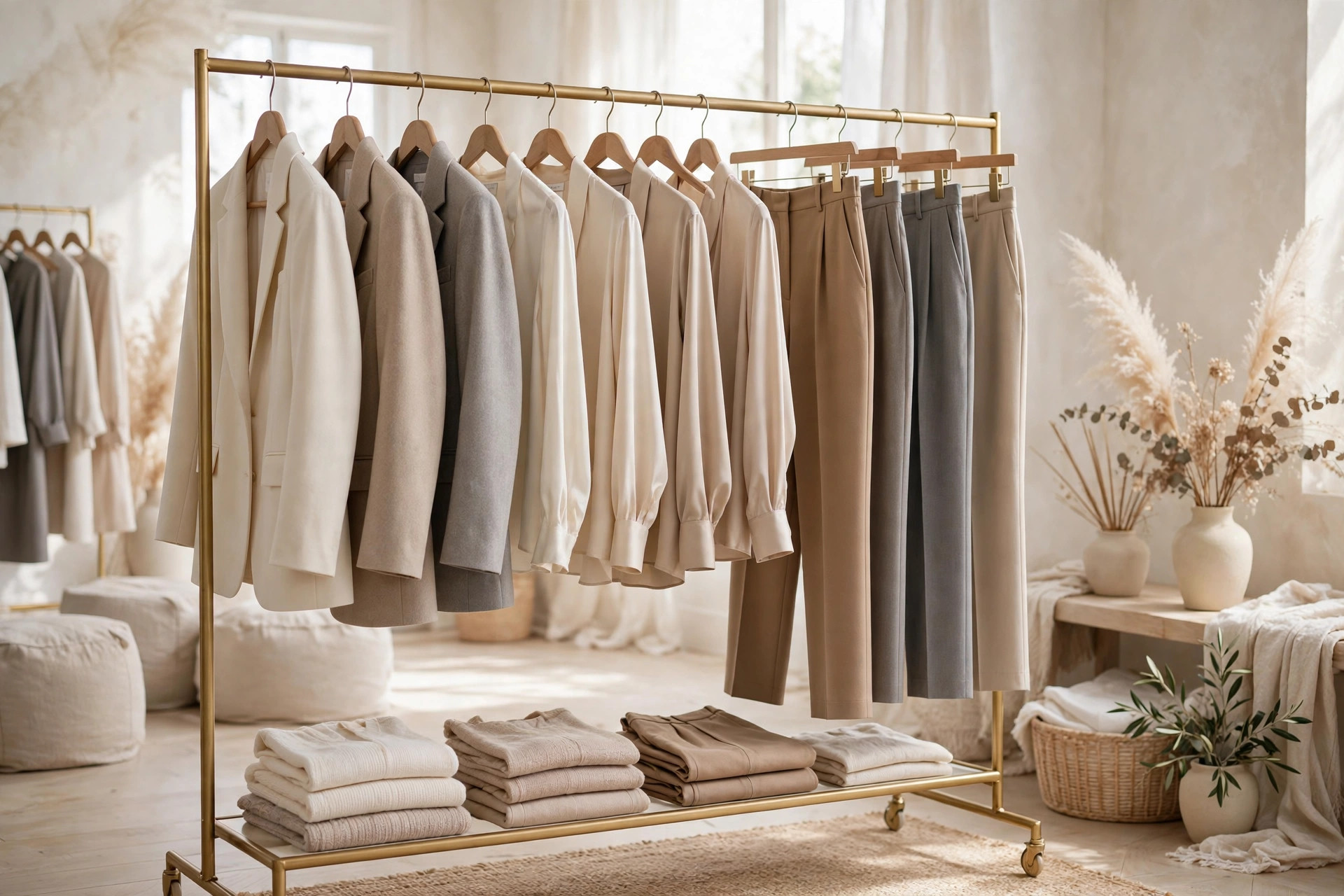
Here’s a real week from my closet, built on about twelve pieces total:
- Monday: Cream blazer + matching trousers + silk camisole + pointed flats
- Tuesday: Charcoal ribbed knit + black tailored trousers + loafers + scarf
- Wednesday: Shirt-dress with self belt + block heels + structured tote
- Thursday: Ivory silk blouse + navy wide-leg trousers + low heels
- Friday: Tweed blazer + dark jeans (if allowed) + knit top + boots
| Day | The formula | Why it works |
|---|---|---|
| Monday | Cream suit + silk camisole | Authoritative but approachable for a fresh start |
| Tuesday | Ribbed knit + tailored trousers + scarf | Texture does the talking; scarf adds personality |
| Wednesday | Shirt-dress with self belt | One-piece dressing on the week’s busiest-feeling day |
| Thursday | Silk blouse + wide-leg trousers | The classic workhorse, elevated by a good crease |
| Friday | Tweed blazer + dark jeans + boots | Relaxed but intentional for the end of the week |
Nobody notices the repetition because the silhouettes and textures vary. What they notice is that you always look pulled together. A small, well-chosen work wardrobe beats a bursting closet of almost-right pieces — and building it doesn’t have to cost much if you focus on elegant pieces on a budget and good tailoring over labels.
How Do You Prep Work Outfits in 10 Minutes on Sunday?
Quick answer: Spend ten minutes on Sunday checking the week’s calendar and hanging five complete outfits — clothes, shoes, and bag — together as single units. This kills decision fatigue and the “cleanest thing available” compromise, and you spot ironing or repairs before a rushed morning.
The women who always look polished at work aren’t deciding at 7 a.m. — they’re deciding on Sunday night. Spend ten minutes checking the week’s calendar and hanging five outfits together, shoes and bag included. Hang each day’s look as one unit on a single hanger or valet hook.
This tiny ritual eliminates the two things that make work outfits boring: decision fatigue and the “cleanest thing available” compromise. You’ll also spot problems early — the blouse that needs ironing, the trousers with a loose button — instead of discovering them in a rush. It sounds almost too simple to matter, but it’s the single highest-impact habit in this whole article.
Why Does Grooming Complete the Look?
Quick answer: Neat hair, clean nails, pressed fabric, and polished shoes elevate even the simplest outfit — the most elegant work look I’ve seen was a plain navy dress made stunning by its details. Pick one formula, try it next week, and build from the one that makes you stand straighter.
I’d be dishonest if I ended without this: the most elegant work outfit I’ve ever seen was a simple navy dress, and what made it stunning was everything around it — neat hair, clean nails, pressed fabric, polished shoes. You can wear the simplest formula on this page and look remarkable if the details are cared for.
Pick one formula and try it next week. Notice which one makes you stand a little straighter in the elevator. That’s your formula — build from there, one thoughtful piece at a time. Professional doesn’t have to mean personality-free. It just means intentional.
Leave a Reply