Last updated: October 2026
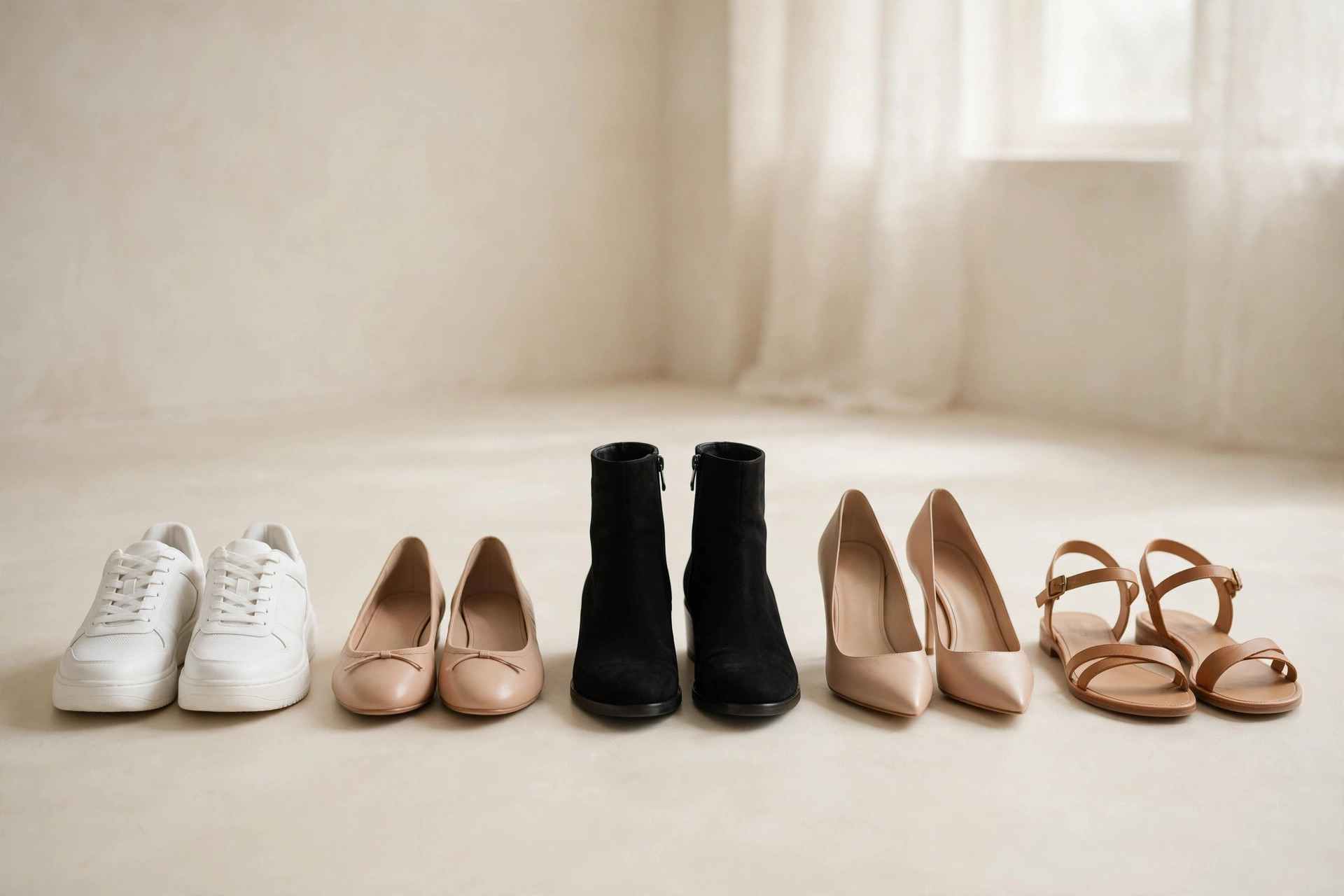
Quick answer: You only need five pairs of shoes: a clean white sneaker, a nude flat, a black ankle boot, a nude heel, and an everyday sandal. Chosen well and cared for, these five cover work, weekends, evenings, and travel — everything beyond them is optional.
I once counted my shoes and got to forty-three pairs. Forty-three. And on any given morning, I reached for the same five. The rest were aspirational, uncomfortable, or bought for a version of my life that didn’t exist. Sound familiar?
Here’s the liberating truth: five well-chosen pairs cover essentially every occasion — work, weekends, evenings, travel, and everything between. Everything beyond that is decoration, which is fine if you love shoes, but you should never feel like you need more than these.
| Pair | What it covers | What to look for |
|---|---|---|
| Clean white sneaker | Weekends, casual Fridays, travel | Minimal white leather, clean silhouette |
| Nude flat | Everyday polish, office, errands | Tone close to your skin, pointed or almond toe |
| Black ankle boot | October to March, day to evening | Smooth leather, block heel, ankle-bone shaft |
| Nude heel | Weddings, dinners, interviews | Your skin tone, a height you can manage for hours |
| Everyday sandal | Warm weather, holidays, weekends | Leather slide or strappy, proper sole and footbed |
Why is the clean white sneaker the hardest-working shoe you’ll own?
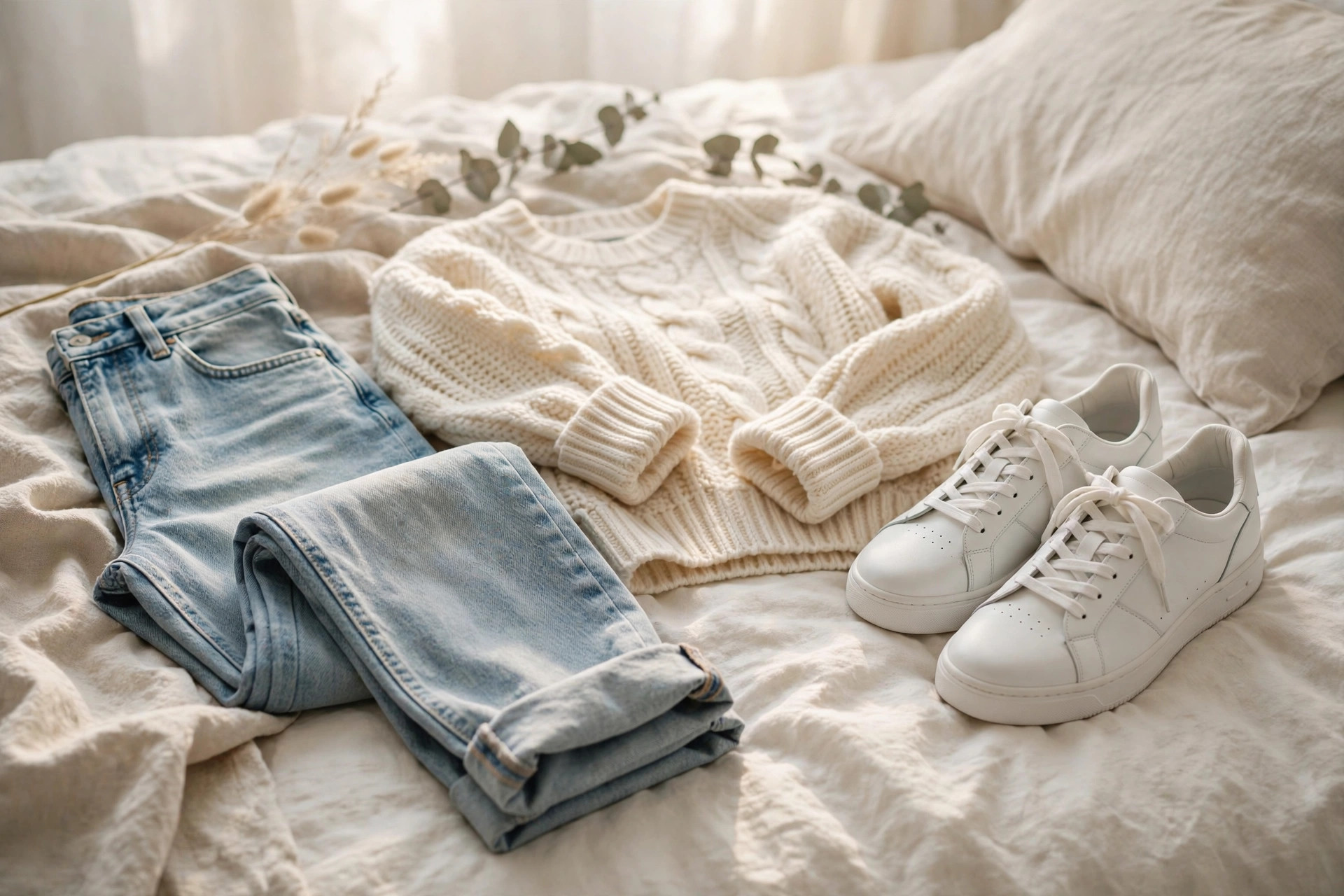
A minimal white leather sneaker works with nearly everything in your wardrobe — jeans, midi skirts, dresses, and tailored trousers. The secret is keeping them truly clean: wipe them down weekly, and replace them once the soles grey and the creasing can’t be rescued.
Not a running shoe, not a fashion sneaker with neon accents — a simple, minimal white leather (or leather-look) sneaker with a clean silhouette. It goes with jeans, midi skirts, summer dresses, tailored trousers, and even a blazer on casual Fridays.
The key word is clean. White sneakers only work their magic when they’re actually white, so wipe them down weekly and keep a magic eraser or sneaker cleaner by the door. Once the soles are grey and the leather is creased beyond rescue, replace them — a tired white sneaker drags down every outfit it touches. In our experience, a well-kept pair lasts about a year of heavy rotation, and it’s worth every penny.
What makes the nude flat your most versatile shoe?
A nude flat in a tone close to your skin disappears on your foot and pairs with literally everything. Pointed or almond toes look more polished and lengthen the leg line — just choose a pair you can genuinely walk in all day.
Every wardrobe needs a shoe that disappears on your foot and goes with literally everything. For most women, that’s a nude flat in a tone close to your skin — a pointed ballet flat, a sleek loafer, or a refined mule. Nude extends the leg line the way no other colour does, which makes it the perfect partner for skirts and cropped trousers.
Choose pointed or almond toes over round ones; they read more polished and elongate the foot. A loafer in nude or tan leather leans classic and works beautifully for the office, while a pointed flat skews more feminine. Whichever you pick, make sure you can walk a full day in them — a flat you can’t walk in is just a decoration.
How do I choose a black ankle boot that lasts for years?
The right black ankle boot — leather, block heel, shaft sitting at the ankle bone — carries you from October to March. Fit matters most: no gaping at the ankle, a side zip for a sleek fit, and water-repellent spray if you walk in the rain.
From October through March, this is the shoe I wear most. A black leather ankle boot with a comfortable heel — block or stacked, two to three inches — handles jeans, dresses with tights, skirts, and trousers with equal ease.
Fit details that matter: the boot shaft should sit at or just above the ankle bone (higher shafts cut the leg awkwardly with skirts), and there should be no gaping at the ankle when you walk. A side zip beats a pull-on for a sleek fit. Suede looks gorgeous but suffers in rain; smooth leather with a water-repellent spray is the practical choice if you walk to work.
This is the pair worth spending the most on. A well-made boot resoles, re-heels, and looks better with age, while a cheap one looks tired by February. Cost per wear on a great black boot is pennies.
What should I look for in the perfect nude heel?
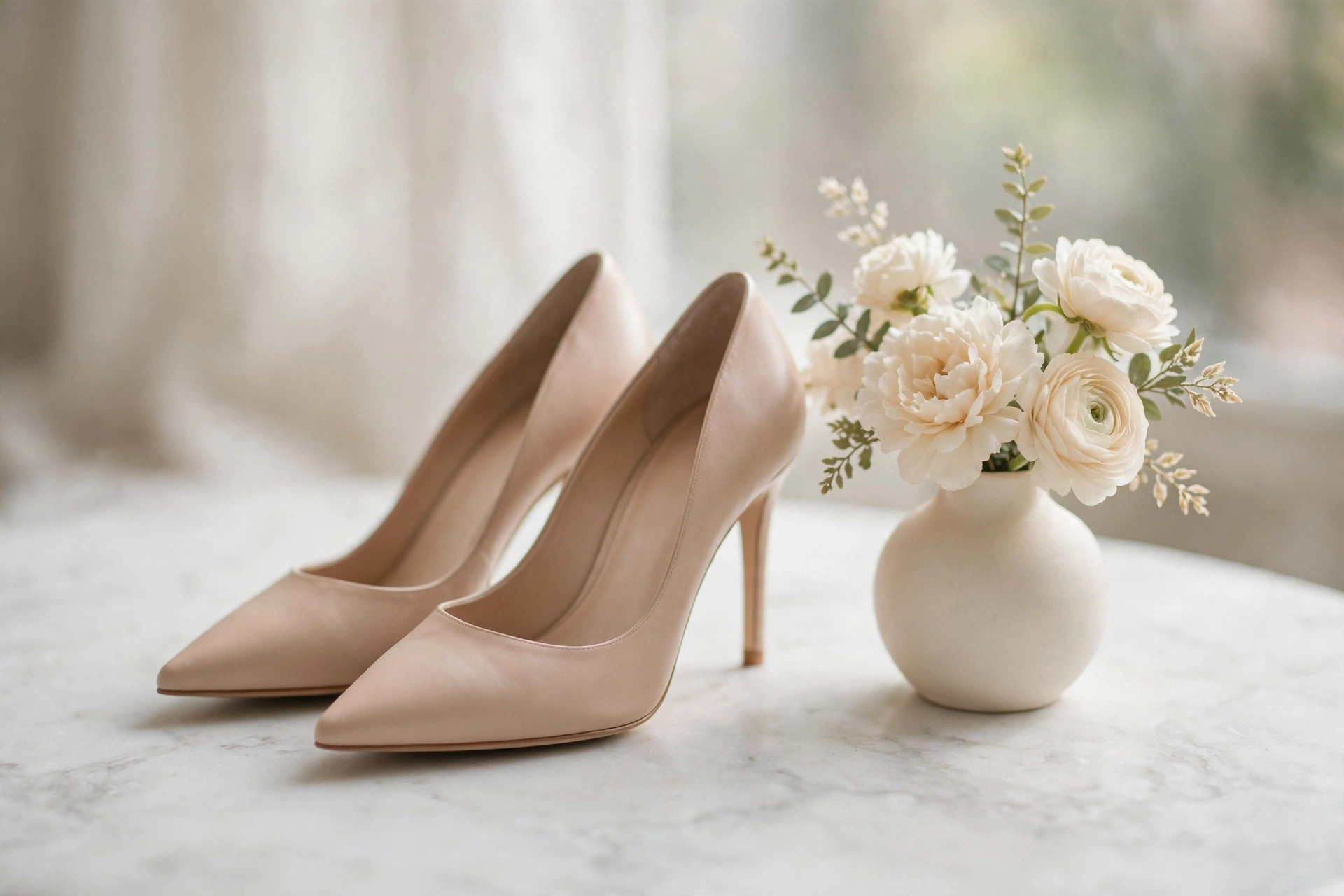
For weddings, dinners, and interviews, choose a nude pump matched to your own skin tone in a heel height you can manage for hours. A mid-height block heel gives elegance without agony — and get worn heel caps replaced promptly.
For weddings, dinners, job interviews, and any moment you want to feel powerful: a nude pointed-toe pump with a heel height you can genuinely manage. Not the highest heel you can stand in for ten minutes — the height you can walk, stand, and enjoy yourself in for hours.
“Nude” means close to your skin tone, not one generic beige. The right nude makes your legs look endless and matches everything from a little black dress to a floral midi. A mid-height heel (around two to three inches) with a slightly thicker shape or a block heel gives you elegance without agony. Keep heel caps replaced — the click of a worn heel tip on tile floors is the opposite of polished.
Which everyday sandal is worth investing in?
Warm weather needs its own workhorse: a simple, well-made sandal in tan, gold, or metallic with a comfortable footbed. Skip flimsy flip-flops — a leather slide or strappy sandal with a proper sole looks intentional and feels far better.
Warm weather needs its own workhorse: a simple, well-made sandal in tan, gold, or metallic. Flat or with a tiny wedge, minimal straps, comfortable footbed. This is your vacation shoe, your weekend-errands shoe, your sundress companion.
Avoid the flimsy flip-flop trap — a sandal with no support slaps when you walk and looks cheap no matter the outfit. A leather slide or a simple strappy sandal with a proper sole looks intentional and feels infinitely better. If your summers are long, consider this your white-sneaker equivalent and invest accordingly.
What about knee-high boots, statement heels and the rest?
Knee-high boots, statement heels, and colourful flats are wonderful when your life genuinely calls for them. Let each extra pair earn its place: if you haven’t worn it in a full season, it goes to donation — closet space is too precious for guilt.
Knee-high boots, statement heels, colourful flats, hiking shoes — these are wonderful if your life calls for them regularly. The five above are the foundation; anything else should earn its place by being worn at least monthly. My rule: if I haven’t worn a pair in a full season, it goes to donation. Closet space is too precious for guilt.
If you live somewhere with real winter, swap the sandal’s slot for a proper winter boot and let sandals be seasonal visitors. If you never wear heels, swap the nude pump for a dressy flat. The principle stays the same: five pairs, each covering a distinct job, no overlap.
How do I make my five pairs last?
Constantly worn shoes need care: rotate pairs so insoles dry, use shoe trees in leather shoes, polish monthly, and re-heel at the cobbler before tips wear through. A small, well-kept collection always looks more luxurious than a sprawling neglected one.
Five pairs worn constantly need care. Rotate them — never wear the same pair two days running, so the insoles dry and the shape recovers. Use shoe trees in leather shoes; they’re the cheapest longevity trick in existence. Polish leather monthly, spray suede before first wear, and take heels to the cobbler for new tips before they wear to the nail.
A small, well-kept shoe collection always looks more luxurious than a sprawling neglected one. These five pairs, cared for and chosen well, will take you everywhere worth going — and as part of a minimalist capsule wardrobe, they keep your whole closet working harder. Start by identifying which of the five you’re missing. That’s your next purchase — and possibly your last one for a long while.
One final thought: try everything on at the end of the day, when your feet are slightly swollen, and walk the store — not just to the mirror and back, but a proper lap. This isn’t just a tip: the American Podiatric Medical Association recommends shopping for shoes later in the day, when your feet are at their largest, having both feet measured, and fitting to the larger foot — shoes that fit properly help you avoid blisters and foot pain. Shoes that feel “almost” comfortable in the shop will feel unwearable by dinner. The right pair should feel good immediately; leather will mould to you, but it will never fix a shoe that’s fundamentally the wrong shape.
Leave a Reply