Last updated: October 2026
Quick answer: Food cannot cure low mood, but regular, nourishing autumn meals may support steadier energy: whole grains, orchard fruits, root vegetables, nuts, seeds and warm spices. This guide lists 20 seasonal foods with simple ideas, a sample day of eating, and gentle habits that help food work better.
There is a reason we crave warm, hearty food when autumn arrives. As daylight shortens and temperatures drop, many of us notice our energy dipping, our motivation wavering, and our mood becoming a little greyer along with the sky. Food won’t fix everything — but what you eat genuinely can influence how steady, energised, and balanced you feel day to day.
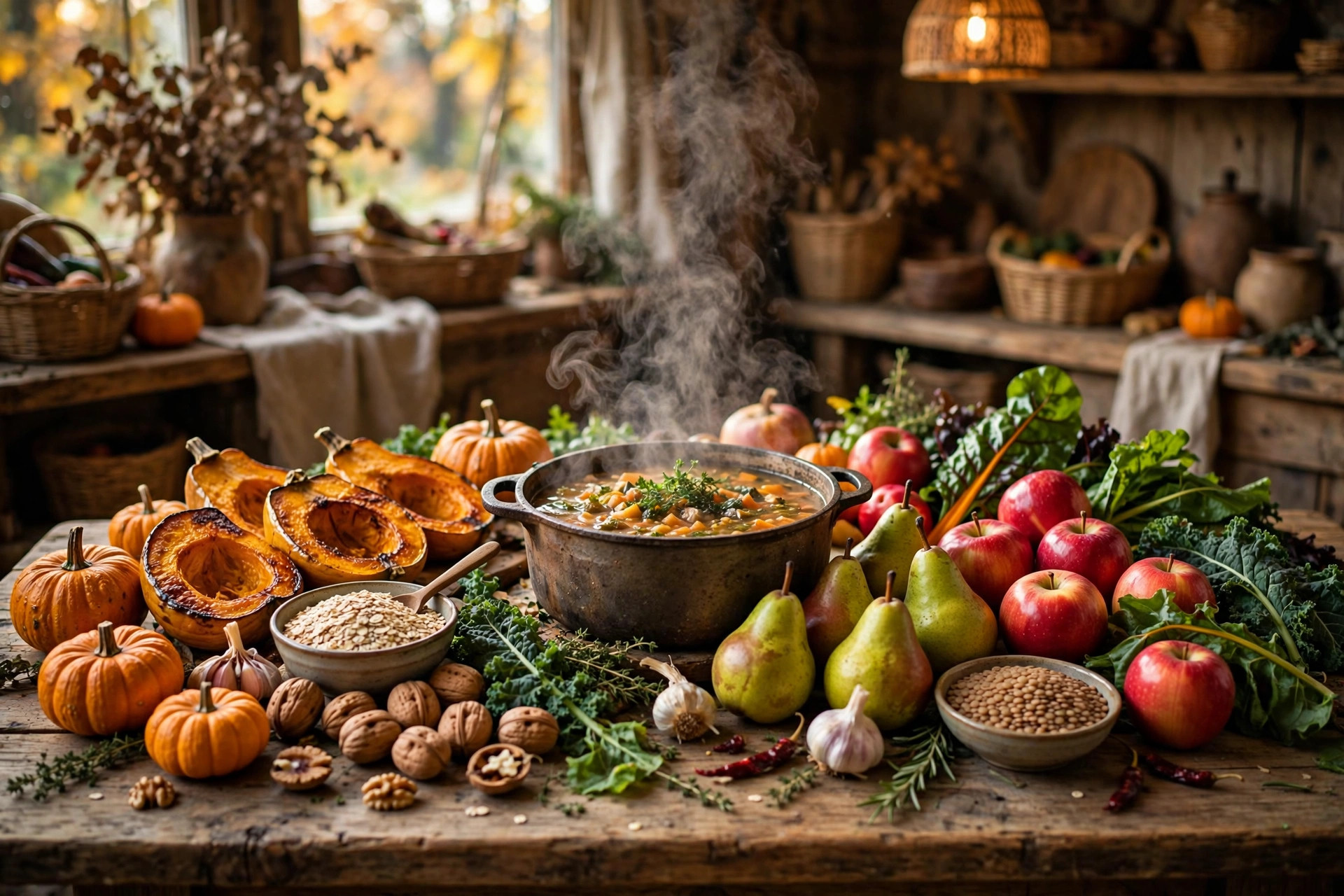
This isn’t about strict diets or “superfoods” with magical powers. It’s about leaning into the season’s natural harvest and choosing foods that may support a better mood: ingredients that release energy slowly, that nourish your body generously, and that bring a little warmth and colour to darker days. Think of it as eating with autumn rather than against it.
Below you’ll find twenty fall foods worth welcoming into your kitchen, organised into easy groups, plus a gentle sample day of eating and a few warming spices to round things out. No complicated recipes required — just good, honest seasonal food.
One Honest Note Before We Begin
This guide offers gentle, general information for everyday wellbeing — not medical advice. Food is one piece of the wellbeing puzzle, not a treatment: no food can cure depression, anxiety or any mental health condition, and nutrition is never a substitute for professional care.
If you’re experiencing persistent low mood, loss of interest in things you used to enjoy, changes in sleep or appetite, or feelings of hopelessness that don’t lift, please speak to your GP or a qualified mental health professional. Reaching out is a sign of strength, and support is available.
Why Can Autumn Eating Affect How You Feel?
Your brain is an energy-hungry organ that runs best on a steady supply of fuel. Meals built around whole, minimally processed foods release energy gradually, which some people find helps them avoid the sharp spikes and crashes and the foggy feelings that follow very sugary or highly processed meals.
There’s also the simple psychology of seasonal eating. Cooking a warm, colourful meal, sitting down to eat it properly, and nourishing yourself with care are acts of self-kindness — and self-kindness reliably supports wellbeing. Autumn gives us a particularly generous pantry for this: the harvest season is rich in the very foods — whole grains, root vegetables, nuts, seeds, and orchard fruits — that dietitians most often recommend for balanced everyday eating.
With that in mind, here are twenty autumn stars, each with a simple idea for enjoying it.
Which Whole Grains Give You Steady Energy?
Whole grains provide slow-release energy thanks to their fibre, which may help you feel fuller and more even-tempered through the day. They are also wonderfully cosy — the backbone of autumn breakfasts and suppers. The NHS Eatwell Guide recommends basing meals on fibre-rich starchy carbohydrates such as oats and wholegrains.
- 1. Oats — The classic autumn breakfast. A warm bowl of porridge with sliced apple and cinnamon is comfort in edible form, and the fibre may help keep your energy steady until lunch.
- 2. Brown rice — A gentle, versatile base for grain bowls topped with roasted autumn vegetables. Batch-cook a pot on Sunday for easy weekday lunches.
- 3. Quinoa — Cooks in fifteen minutes and pairs beautifully with roasted squash, chickpeas, and a lemon-tahini dressing for a satisfying supper.
- 4. Wholemeal bread — A thick slice of toasted wholemeal sourdough with mashed avocado or nut butter makes a grounding breakfast or afternoon pick-me-up.
- 5. Barley — Wonderfully chewy in soups and stews. A barley and mushroom soup on a grey evening is pure nourishment.
Which Autumn Fruits Are Worth Reaching For?
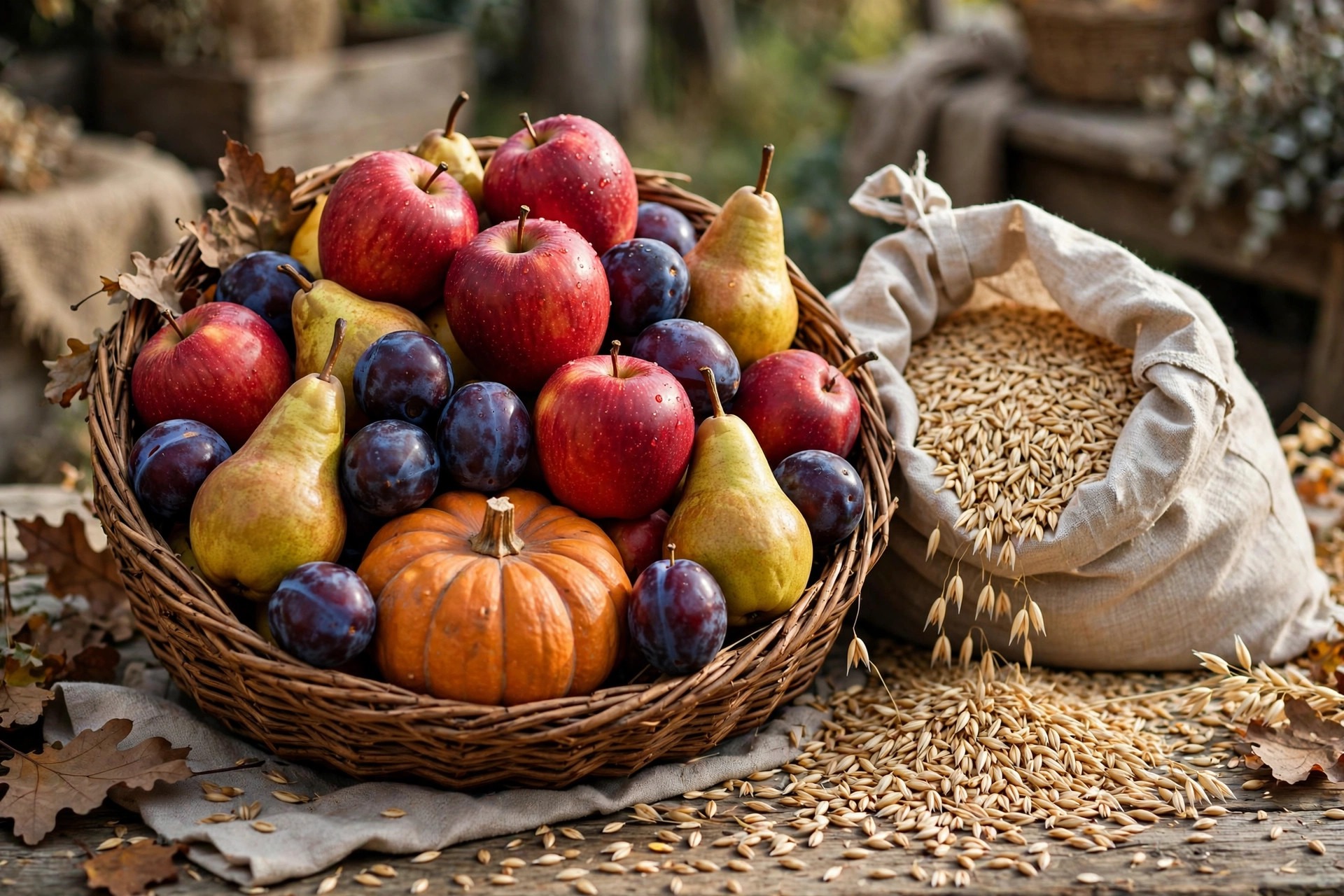
Autumn orchard fruits bring natural sweetness, fibre, and vibrant colour to your plate — and eating the rainbow is one of the simplest ways to broaden the nutrients in your diet.
- 6. Apples — Crisp, portable, and endlessly versatile. Slice one with a spoonful of peanut butter for an afternoon snack that actually satisfies.
- 7. Pears — Soft, juicy, and lovely poached with a little honey and cinnamon as a light dessert.
- 8. Plums — Their deep purple skins are rich in plant compounds called anthocyanins. Enjoy fresh, or roast them to spoon over porridge.
- 9. Pomegranates — Jewels of the autumn fruit bowl. Scatter the seeds over salads, grain bowls, or yoghurt for colour and crunch.
- 10. Dried figs and dates — Nature’s sweets. A couple of figs with a few walnuts make a deeply satisfying treat when you crave something sweet.
Which Vegetables Are Best in the Cold Months?
Autumn vegetables are built for comfort cooking — roasting, soups, and stews that fill the kitchen with wonderful smells. Many are rich in the vitamins and minerals your body uses every day.

- 11. Butternut squash — Sweet, golden, and endlessly adaptable. Roast it, blend it into soup, or toss cubes through a warm salad.
- 12. Sweet potatoes — Baked whole and split open with a knob of butter, or cubed into curries. Their natural sweetness satisfies comfort-food cravings.
- 13. Kale and dark leafy greens — Massage shredded kale with olive oil and lemon for a tender salad, or wilt greens into soups and pasta.
- 14. Beetroot — Earthy and vivid. Roast whole, then slice into salads with goat cheese and walnuts.
- 15. Carrots — Sweet when roasted, crunchy raw. A carrot and ginger soup is autumn sunshine in a bowl.
Which Proteins, Nuts and Seeds Keep You Going?
Protein and healthy fats help meals feel satisfying and may support steadier energy between meals. Nuts and seeds also add that essential autumn crunch — in our experience, a small handful mid-afternoon is one of the easiest upgrades you can make.
- 16. Walnuts — A classic brain-shaped nut that provides plant-based omega-3 fats. Scatter over porridge or salads, or eat a small handful as a snack.
- 17. Almonds — Keep a small bag in your coat pocket for steady afternoon energy on busy days.
- 18. Lentils — Cheap, quick, and deeply comforting. A red lentil dahl with coconut milk and turmeric is ready in twenty minutes.
- 19. Chickpeas — Roast with smoked paprika for a crunchy snack, or blend into hummus for easy lunches.
- 20. Eggs — A simple, affordable protein. A vegetable-packed omelette or a soft-boiled egg on wholemeal toast starts the day well.
What Does a Feel-Good Day of Autumn Eating Look Like?
Putting it together doesn’t need to be complicated. Here’s what a simple, nourishing autumn day might look like — adapt freely to what you enjoy and what your body needs.
| Meal | Simple idea |
|---|---|
| Breakfast | Warm porridge made with oats, topped with sliced pear, walnuts, and a swirl of honey |
| Mid-morning | An apple and a small handful of almonds, plus a glass of water or herbal tea |
| Lunch | A grain bowl of brown rice or quinoa with roasted butternut squash, chickpeas, massaged kale, and pomegranate seeds |
| Afternoon | Wholemeal toast with peanut butter, or a couple of dried figs with a cup of spiced tea |
| Supper | Red lentil and carrot soup with a chunk of wholemeal sourdough, followed by poached plums with yoghurt |
Notice what’s missing: no rigid rules, no forbidden foods, no counting. Just regular, colourful, satisfying meals eaten with some care. If your eating patterns feel difficult or distressing in any way, that’s also worth mentioning to your GP — you deserve support, not shame.
Which Warm Spices and Small Comforts Help?
Warming spices like cinnamon, ginger, turmeric, and nutmeg make autumn food taste like autumn — and the ritual of making a spiced drink can be a comfort in itself. A mug of warm milk (dairy or oat) with cinnamon and honey before bed is a lovely wind-down ritual.
And remember hydration: we tend to drink less water when it’s cold, but even mild dehydration can leave you feeling sluggish, as the British Nutrition Foundation explains in its hydration guidance. Herbal teas — chamomile, peppermint, ginger — count, and a big pot of soup does too.
What Gentle Habits Help Food Work Better?
What you eat matters, but how you eat matters too — especially in autumn, when low light and busy schedules can push meals to the margins of the day. A few small habits can help you get more steadiness and enjoyment from the foods above.
- Eat regularly: going too long without food often leads to an energy crash that feels like low mood but is really just hunger. Three meals a day, roughly at the same times, gives your body a rhythm it can rely on. If you struggle with appetite in the mornings, even something small — a banana, a glass of milk, a slice of toast — is better than nothing.
- Sit down when you eat, even for ten minutes. Eating at your desk or scrolling on your phone through lunch often means barely tasting your food and barely registering that you’ve eaten. A proper pause — plate on the table, phone elsewhere — helps you notice fullness and actually enjoy what you’ve made.
- Cook one thing from scratch each week: a pot of soup, a tray of roasted vegetables, a batch of overnight oats. The rhythm of chopping and stirring is calming in itself, and having something homemade waiting in the fridge makes nourishing choices easier all week long.
- Be flexible and kind with yourself: some days will be toast-and-tea days, and that’s perfectly fine. Food supports wellbeing best when it comes without guilt attached.
Eating for a better mood isn’t about perfection or willpower. It’s about treating yourself the way you’d treat someone you love: regularly, warmly, and with plenty of colour on the plate. Start with one or two of these foods this week — perhaps a bowl of porridge tomorrow morning, or a tray of roasted vegetables on Sunday — and notice how the small act of nourishing yourself shifts the tone of your days. Autumn is generous; let it feed you well.
Leave a Reply