
Walk into a home that smells like autumn and something happens before you have even taken off your coat: your shoulders drop, your breathing slows, and you feel — unmistakably — that you are somewhere cared for. Scent is the most powerful and the most overlooked layer of home styling. We agonise over cushion colours and never think twice about what the air itself is doing.
Here is the mistake most of us make: we buy a pumpkin-spice candle for the living room, an apple-cinnamon plug-in for the hallway, a pine diffuser for the bathroom, and a vanilla spray for the bedroom. Each one smells fine on its own. Together, they collide into a confused fog that smells like a candle shop exploded — not like autumn, and not like a home.
The fix is beautifully simple: choose one signature fall scent and carry it through the whole house. Hotels do this. Lovely boutiques do this. It is why their spaces feel so cohesive — the air itself is part of the design. This guide will help you find your one autumn scent, then layer it room by room so your whole home smells like the season, seamlessly, from the front door to the bedroom.
Why One Scent Works Better Than Five
Our noses are not designed to process five competing fragrances at once. When different scents meet in a hallway, the brain does not blend them into something richer — it registers confusion, and confusion is the opposite of cosy. A single scent family flowing through the house, on the other hand, reads as calm, intentional, and luxurious.
There is also a practical benefit: one signature scent is cheaper and simpler. Instead of maintaining a small army of candles and diffusers in different fragrances, you buy into one scent story and repeat it. When the living room candle, the hallway diffuser, and the bedroom linen spray all share the same notes, the house feels designed rather than decorated.
Think of it the way you think about a colour palette. You would not paint each room a clashing colour and expect the house to feel cohesive. Scent works the same way — pick your palette, then vary the intensity and the format from room to room.
This does not mean every room must smell identical. It means every room should smell like it belongs to the same family: the hallway might carry the crisp top notes, the living room the warm heart, the bedroom the soft base. Same story, different chapters.
The Five Great Autumn Scent Families
Almost every fall fragrance you will ever meet belongs to one of five families. Knowing which family speaks to you makes choosing a signature scent enormously easier — you are picking a direction, not a single product.
- Orchard spice: apple, cinnamon, clove, nutmeg. The classic autumn scent — warm, sweet, nostalgic. If autumn to you means baking and harvest festivals, start here.
- Wood and smoke: cedarwood, sandalwood, birch, bonfire, tobacco. Deeper, drier, more grown-up. If your ideal October evening involves a fireplace and a wool blanket, this is your family.
- Amber and vanilla: amber, vanilla bean, tonka, warm musk. Soft, enveloping, comforting — the scent equivalent of candlelight. Wonderful for cosiness, but choose carefully: cheap versions can smell cloying.
- Herbal green: eucalyptus, rosemary, sage, fig leaf, cut stems. Fresher and less sweet — autumn as a walk through damp woods rather than a bakery. Lovely if heavy spice scents give you a headache.
- Citrus and clove: blood orange, bergamot, dried orange, clove bud. Bright on top, warm underneath — the scent of a simmer pot on the stove. Cheerful and welcoming without being heavy.
To find yours, think about the autumn memories that feel most like home to you — not the candles you think you should like, but the smells that actually make your chest feel warm. Bonfire night? Go wood and smoke. Your grandmother’s kitchen? Orchard spice. A crisp walk before the rain? Herbal green.
If you genuinely cannot choose, the citrus-and-clove family is the safest crowd-pleaser: bright enough to feel fresh, warm enough to feel autumnal, and unlikely to offend anyone who walks through your door.
The Simmer Pot: Autumn in a Saucepan
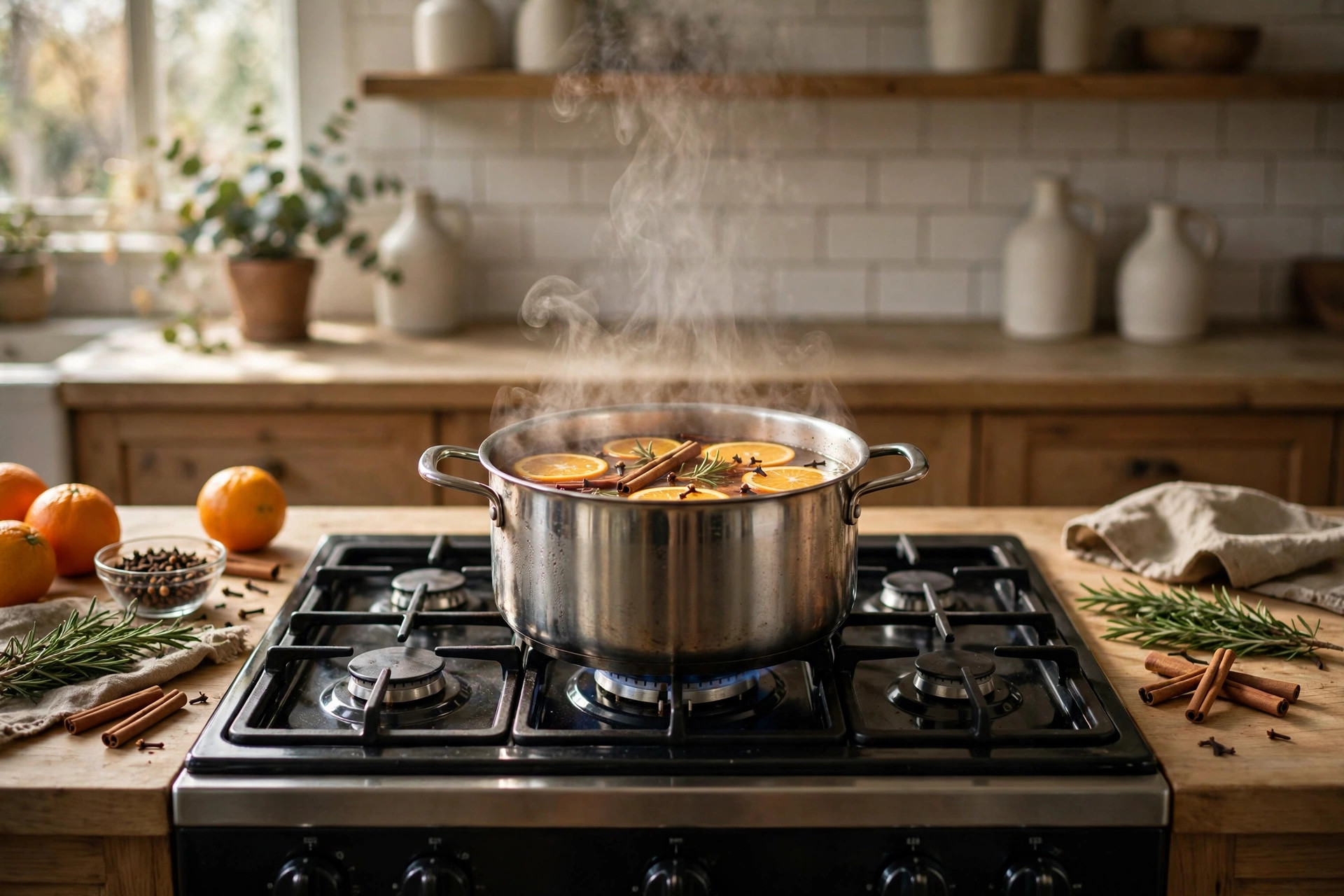
Before you spend a penny on fragrance products, try the oldest trick in the book: the simmer pot. A saucepan of water with fruit, spices, and herbs, kept at the barest simmer on the hob, will scent your whole ground floor with real, natural autumn fragrance for pennies.
A classic autumn simmer pot looks like this: one sliced orange, a handful of cloves, two or three cinnamon sticks, a sprig of rosemary, and a splash of vanilla extract, covered with water. Bring it to the gentlest simmer — never a rolling boil — and let it murmur away. Top up the water every hour or so.
The beauty of the simmer pot is that it is endlessly customisable to your scent family. Wood-and-smoke lovers can add cedar sprigs and a few drops of pine oil. Herbal-green fans can load up on eucalyptus and sage. Orchard-spice devotees can add sliced apple and star anise.
A few practical notes: never leave a simmer pot unattended, and never let it boil dry — set a timer to check the water level every hour. You can refrigerate the mixture and reuse it for two or three days, adding fresh water each time. After that, compost the solids and start fresh.
Use the simmer pot on days when you are home — a slow Sunday, an evening when friends are coming over. It is not an everyday background solution, but for atmosphere per hour, nothing beats it.
Candles: Choosing Well and Burning Safely
Candles are the heart of most home fragrance, and autumn is their high season. But not all candles are equal, and a little knowledge goes a long way.
First, the wax matters. Soy and beeswax candles generally burn cleaner and throw scent more evenly than cheap paraffin, and they are less likely to leave soot marks on your walls and ceilings. You do not need the most expensive candle in the shop, but the very cheapest ones are cheap for a reason.
Second, match the candle’s strength to the room. A large, powerful candle in a small bedroom will be overwhelming; a dainty tealight-scented candle in an open-plan living room will vanish. As a rough guide: one medium candle scents a small room, two or a large three-wick candle suits a living room, and hallways need a constant low-level source like a diffuser rather than a candle you keep forgetting to light.
Third, burn candles properly. Trim the wick to about half a centimetre before every burn — this prevents soot and gives a cleaner scent. On the first burn, let the wax melt all the way to the edge of the container; this prevents tunnelling, where the candle burns down the middle and wastes the outer wax. And never burn a candle for more than about four hours at a stretch.
Safety is non-negotiable: never leave a burning candle unattended, keep them away from curtains and dried foliage (which is everywhere in autumn styling), and keep them out of reach of pets and children. If you love the glow but not the vigilance, good-quality LED candles in your bedroom and hallway give the look with none of the risk.
Diffusers, Sprays, and the Background Layer
Candles and simmer pots are wonderful, but they need you to light them. For the constant, low-level background scent that makes a house feel like itself even on a Tuesday morning, you need the set-and-forget formats.
Reed diffusers are the workhorse of background fragrance. Place one in the hallway — the first scent anyone meets — and one in the bathroom. Choose a diffuser in your signature scent family, flip the reeds weekly, and replace the oil every couple of months. In small spaces, use fewer reeds than the package suggests; you want a whisper, not a shout.
Linen and room sprays handle the soft furnishings that candles cannot reach: curtains, sofas, bedding, and the inside of wardrobes where autumn coats wait. A light mist over the sofa cushions once a week keeps the fabric smelling fresh and seasonal. You can even make your own by adding essential oils in your scent family to distilled water with a splash of witch hazel — just patch-test fabrics first.
Wax melts in an electric warmer are a good flameless alternative to candles for the living room, especially in homes with pets or small children. And a few drops of essential oil on dried pinecones or in a bowl of potpourri gives you a decorative scent object that works for weeks.
Room by Room: Layering Your Signature Scent
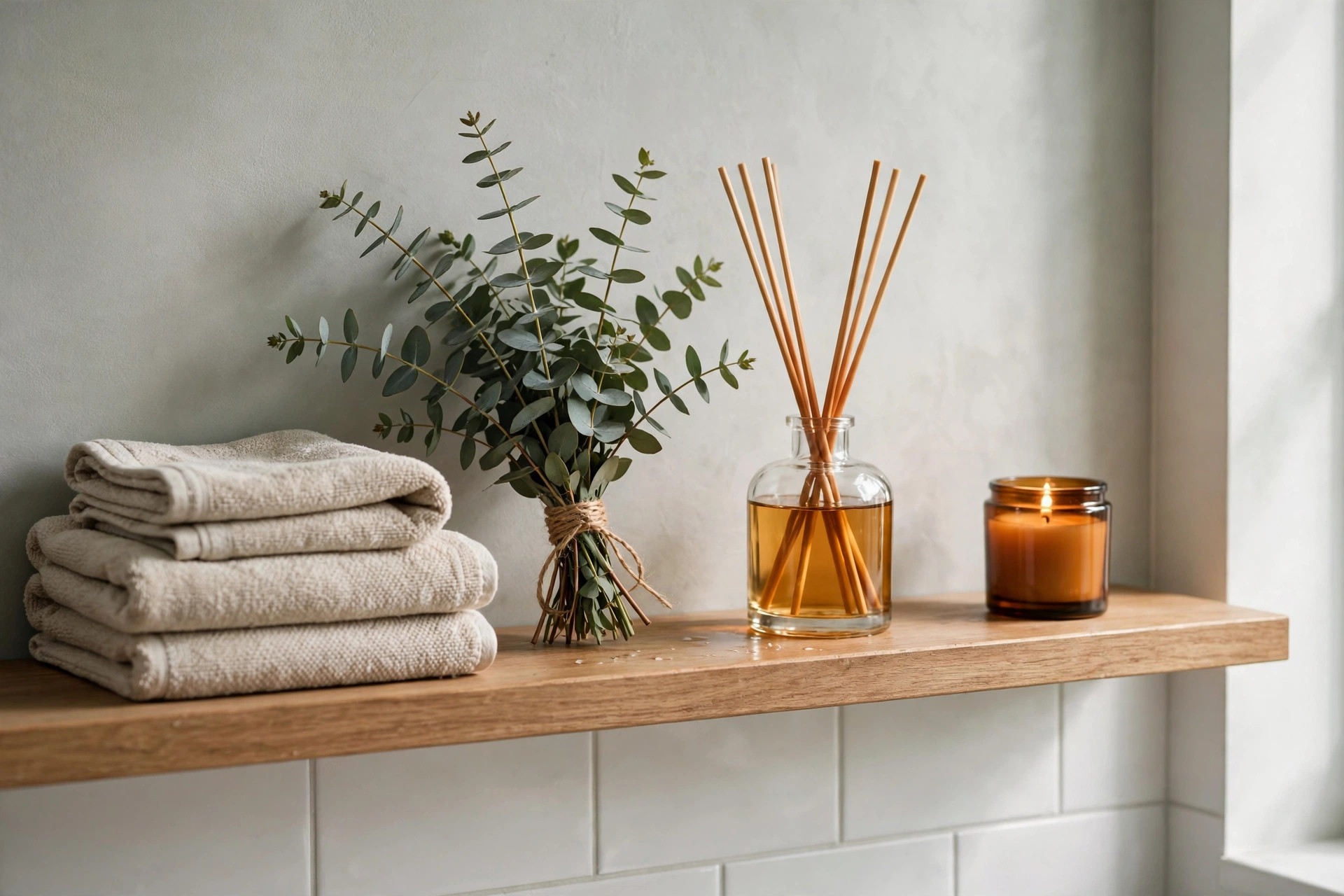
Here is how the one-scent philosophy plays out across a real house. The scent family stays constant; only the format and intensity change.
The hallway: first impressions. A reed diffuser in your signature scent, kept subtle. This is the handshake — welcoming but not overwhelming.
The living room: the heart of the scent story. Your best candle here, plus a simmer pot on cosy days. This room can carry the fullest expression of the fragrance.
The kitchen: keep it light. Cooking smells dominate here anyway, so a small candle or a bowl of scented pinecones is plenty. Avoid competing with dinner — nobody wants last night’s curry fighting with cinnamon.
The bathroom: fresh within the family. If your signature is orchard spice, choose the greener or citrus edge of it for the bathroom — eucalyptus and clove rather than heavy cinnamon. A diffuser and a small candle for baths.
The bedroom: the softest version. Linen spray on the bedding, perhaps a gentle candle for an hour before sleep (blown out, never left burning). Bedrooms should smell like rest, so keep the intensity low and the notes on the softer side of your family — vanilla and amber rather than full spice.
Scent memory is the strongest memory we have. Years from now, one breath of cedar and clove will take you straight back to this autumn — make it a good one.
Keeping It Fresh All Season
Nose blindness is real: after a couple of weeks, you will stop noticing your own signature scent while guests still smell it the moment they walk in. This is normal and actually a sign the scent has become part of your home. Resist the urge to keep adding more — if visitors comment on how lovely it smells, it is working.
Rotate within your family to keep things interesting. If your signature is wood and smoke, you might lean cedar-heavy in October and add more amber and vanilla as December approaches. Same family, seasonal shift — your home’s scent story gets chapters.
Finally, remember that the best home fragrance is a clean house. No candle can cover a musty carpet or a full bin. Air the rooms regularly even in autumn — ten minutes of fresh air makes every scent in the house perform better. Then let your one signature fall scent do what it does best: turn a house into the feeling of autumn itself.
Leave a Reply