Last updated: October 2026
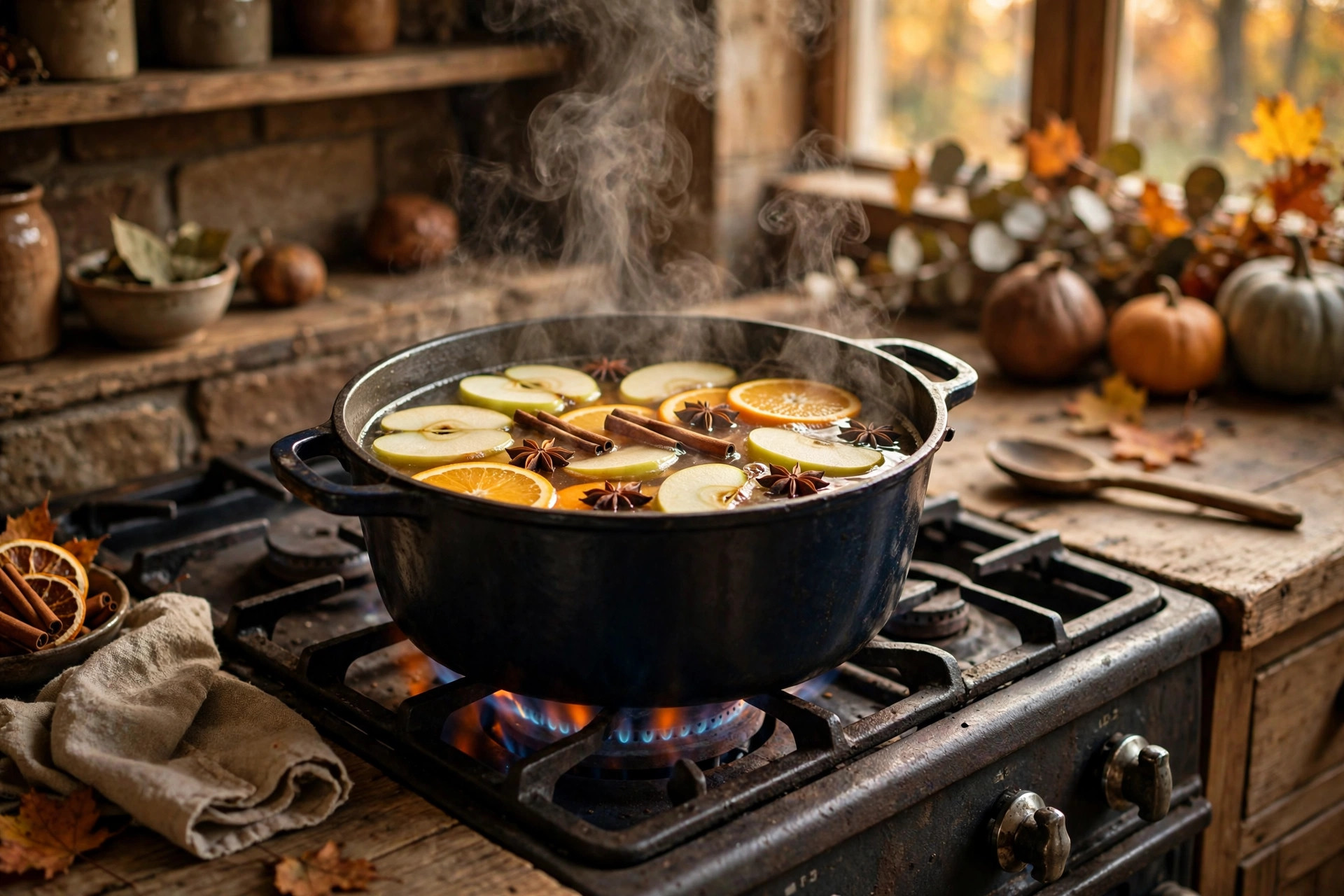
Quick answer: A simmer pot is a pot of water with fruit, herbs and spices, simmered on the stove so the steam carries fragrance through your home. Fill two-thirds with water, add ingredients, keep at a low simmer, and never leave unattended — within twenty minutes the house smells wonderful.
Walk into a home that smells like cinnamon, orange, and cloves, and you instantly feel more relaxed. That is not an accident — scent is the fastest way to make a house feel like a home, especially in fall when everyone is spending more time indoors. And right now, this simple trick is having a moment, as thousands of people discover that the cosiest home fragrance costs almost nothing and takes five minutes to start.
A simmer pot is exactly what it sounds like: a pot of water on the stove, filled with fruit, herbs, and spices, left to simmer gently so the steam carries fragrance through the whole house. No expensive candles, no plug-in air fresheners, no chemicals — just real ingredients doing what they have done for centuries. It is the kind of old-fashioned homemaking trick that feels new again, and it is perfect for slow autumn weekends, for making the house smell wonderful before guests arrive, or just for making an ordinary Tuesday feel a little more special.
This guide gives you ten fall simmer pot recipes for every mood, from classic spiced cider to a crisp evergreen blend that smells like a mountain cabin. You will also learn the simple rules that keep simmer pots safe, how long each blend lasts, and clever ways to reuse your ingredients. By the end, your kitchen will never smell like last night’s dinner again.
How does a simmer pot work — and what are the safety rules?
Quick answer: Fill a saucepan two-thirds with water, add fruit, herbs and spices, bring to a gentle boil, then reduce to a low simmer, uncovered. Stay home while it is on, top up the water hourly, keep it on a back burner away from children and pets, and never drink the blend.
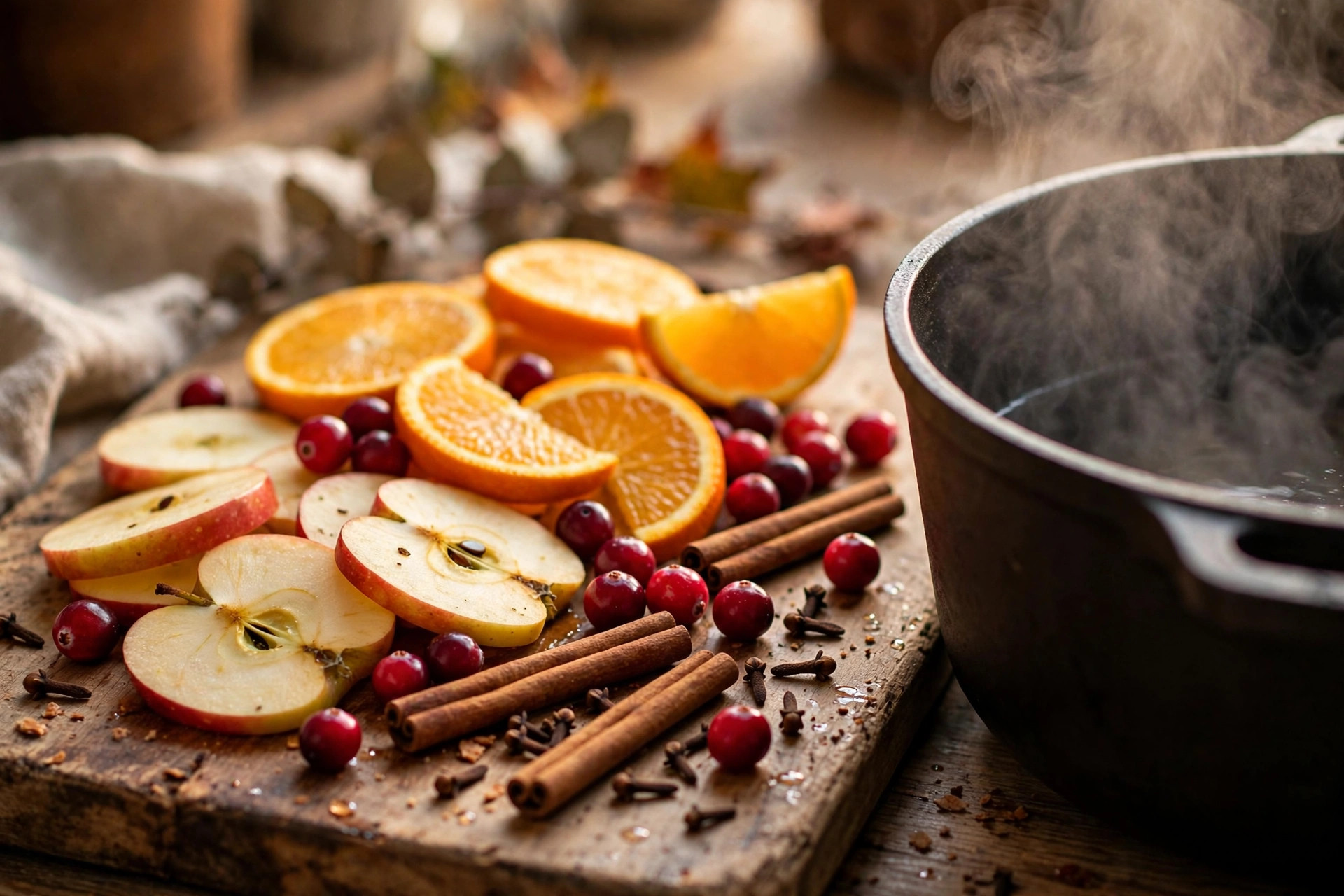
The method is the same for every recipe in this guide. Fill a medium saucepan or small stockpot about two-thirds full with water. Add your ingredients, bring it to a gentle boil, then reduce the heat to low so it barely simmers. Leave the pot uncovered so the steam can escape and carry the scent.
Before you start, know the safety rules, because a simmer pot is an open pot on a hot stove and it deserves respect:
- Never leave it unattended. Stay home while the pot is on. If you leave the house, turn the stove off.
- Top up the water. Check the water level every hour or so and add more whenever it gets low. A pot that boils dry will scorch, smoke, and ruin both the pot and your afternoon.
- Keep it at a low simmer. You want lazy bubbles, not a rolling boil. A vigorous boil burns through the water faster and can make the scent harsh instead of soft.
- Keep children and pets in mind. The pot and its contents are hot. Keep the pot on a back burner, handles turned inward, where little hands and curious paws cannot reach it.
- Do not drink it. Simmer pot blends are for scent, not for sipping. Some ingredients are fine in tea, but once they have been simmering for hours in a fragrance blend, the pot is not food.
With those basics handled, you can simmer a pot for two to four hours easily, refilling the water as needed. Most blends can be simmered a second day too — just store the pot in the fridge overnight and start again the next morning.
One more tip: the EPA recommends ventilating your kitchen while cooking to reduce indoor air pollutants, so crack a window or run your extractor fan while the pot bubbles away — fresh air in, lovely scent circulating.
Which classic fall simmer pot recipes should I try first?
Quick answer: Start with the three blends everyone loves: classic spiced cider with apple, cinnamon, cloves and vanilla; bright cranberry-orange with rosemary; and warm vanilla chai with ginger and cardamom. They are the easiest first pots and the most universally loved.
Start with the blends everyone loves. These three are the reason simmer pots went viral in the first place, and they are the perfect first pot if you have never made one.
- The Classic Spiced Cider Pot. This is the one that smells like every good memory of autumn at once. Slice one apple thinly (or use the peels you were going to throw away), add three cinnamon sticks, a tablespoon of whole cloves, a teaspoon of vanilla extract, and one star anise pod. Cover with water and simmer. It smells like a cider mill, a bakery, and a crisp orchard afternoon rolled into one. This is the blend to start before guests arrive — it is universally loved and instantly says fall.
- Cranberry Orange Cabin. For something a little brighter, combine one sliced orange, half a cup of fresh or frozen cranberries, three sprigs of fresh rosemary, two star anise pods, and one cinnamon stick. The cranberries turn the water deep red, the orange keeps it fresh and lively, and the rosemary adds a woodsy note that smells like a cabin weekend. This one is especially lovely in the weeks leading up to the holidays.
- Warm Vanilla Chai. If you love the smell of a coffee shop in October, this is your blend. Add a thick slice of fresh ginger, six gently crushed cardamom pods, two cinnamon sticks, a teaspoon of whole black peppercorns, and a splash of vanilla. The ginger and cardamom give it spicy chai depth, the vanilla rounds it out, and the whole house smells like your favourite café — rich and warming on a grey, rainy day.
What are the best orchard and garden simmer pot blends?
Quick answer: For fresher, greener, less spicy fragrance, try apple harvest with just apple, cinnamon and cloves; pear and thyme with lemon for a quietly luxurious scent; or an autumn garden blend of sage, rosemary, thyme and apple.
These three lean into the fruit-and-garden side of fall fragrance — fresher, greener, and a little less spicy than the classics.
- Apple Harvest. The simplest recipe here, and one of the prettiest. Slice two apples, add two cinnamon sticks and a handful of whole cloves, and that is it. It smells like the inside of an apple barn — sweet, clean, unmistakably autumn. Use apples past their prime for eating; simmer pots are perfect for fruit too soft for the fruit bowl.
- Pear and Thyme. A slightly unexpected combination that smells quietly luxurious. Slice one ripe pear, add four or five sprigs of fresh thyme, one sliced lemon, and two cinnamon sticks. The pear gives soft, honeyed sweetness, the thyme an herbal green note, and the lemon keeps everything bright. Guests will ask what the smell is — and be surprised when you tell them.
- Autumn Garden. For the herbal apothecary mood that is trending everywhere this fall, combine fresh sage, rosemary, and thyme — three or four sprigs of each — with one sliced apple and two cinnamon sticks. It smells like a herb garden after rain with a whisper of orchard — the blend for slow Sunday afternoons, reading by the window, days when you want the house to smell peaceful.
Which woodsy and evergreen blends smell like a cabin?
Quick answer: As October deepens, reach for rustic alpine evergreen — pine or cedar twigs with lemon, cinnamon and cloves — or campfire cabin, with cinnamon, cloves, orange, vanilla and dried apple. Both smell like forests and the first cold snap.
As October deepens, the woodsy blends come into their own. These smell like forests, cabins, and the first cold snap — perfect for the weeks when the leaves are turning.
- Rustic Alpine Evergreen. Rinse two small pine or cedar twigs thoroughly, add them to the pot with one sliced lemon, two cinnamon sticks, and a teaspoon of whole cloves. The evergreen gives a crisp forest scent, the lemon brightens it, and the spices warm it up so it does not smell like cleaning products. A note on foraging: only use greenery from your own garden or land where you have permission, rinse everything well, and skip anything sprayed with pesticides.
- Campfire Cabin. This one is for the cosiest evenings. Combine two cinnamon sticks, a tablespoon of whole cloves, one sliced orange, a few drops of vanilla, and a small handful of dried apple slices or apple peels. As it simmers, it smells like woodsmoke, spice and dried fruit — the world’s most comfortable cabin. Light the fireplace (or a few candles) and the effect is complete.
Are there simmer pot recipes for the holidays?
Quick answer: Yes — start these in November. Cranberry spice holiday with cranberries, orange, cinnamon, cloves and star anise is festive and bright, while gingerbread house with ginger, cinnamon, cloves, vanilla and orange smells unmistakably like December.
The last two blends look ahead to the holiday season. Start simmering these in November and your home will smell like the holidays weeks before the decorations come out.
- Cranberry Spice Holiday. One cup of cranberries, one sliced orange, three cinnamon sticks, a teaspoon of whole cloves, and two star anise. Festive, bright, a little bit glamorous — the simmer pot equivalent of holiday music. Start it on the morning of a holiday gathering, two hours before anyone arrives. If you are starting to plan your seasonal hosting, our cozy fall bucket list has plenty of ideas for making the most of the season.
- Gingerbread House. The sweetest blend in this guide. Add a thick slice of fresh ginger, two cinnamon sticks, a teaspoon of whole cloves, a teaspoon of vanilla extract, and one sliced orange. It smells unmistakably like gingerbread baking — warm, sweet, deeply nostalgic. Children love this one, and it makes the whole house feel like December in November.
Here is all ten at a glance, so you can pick by mood:
| # | Blend | The mood |
|---|---|---|
| 1 | Classic Spiced Cider | The quintessential autumn afternoon |
| 2 | Cranberry Orange Cabin | Bright and woodsy, pre-holiday glow |
| 3 | Warm Vanilla Chai | Coffee-shop cosy on a grey day |
| 4 | Apple Harvest | Sweet, clean, apple-barn simple |
| 5 | Pear and Thyme | Quietly luxurious, guests will ask |
| 6 | Autumn Garden | Herb garden after rain, slow Sundays |
| 7 | Rustic Alpine Evergreen | Crisp forest, first cold snap |
| 8 | Campfire Cabin | Woodsmoke and spice, cosiest evenings |
| 9 | Cranberry Spice Holiday | Festive and bright, holiday mornings |
| 10 | Gingerbread House | Sweet nostalgia, December in November |
Pleasant scents can shift how a room feels: the Mayo Clinic notes that aromatherapy may help some people feel more relaxed, though the evidence is limited — which matches our experience exactly. A house smelling of cinnamon simply feels calmer.
How do you make simmer pot blends last longer?
Quick answer: Simmer most blends for two days by refrigerating the pot overnight, build pots from kitchen scraps like peels and wilting herbs, buy whole spices in bulk, and try a slow cooker on low as a gentler hands-off vessel.
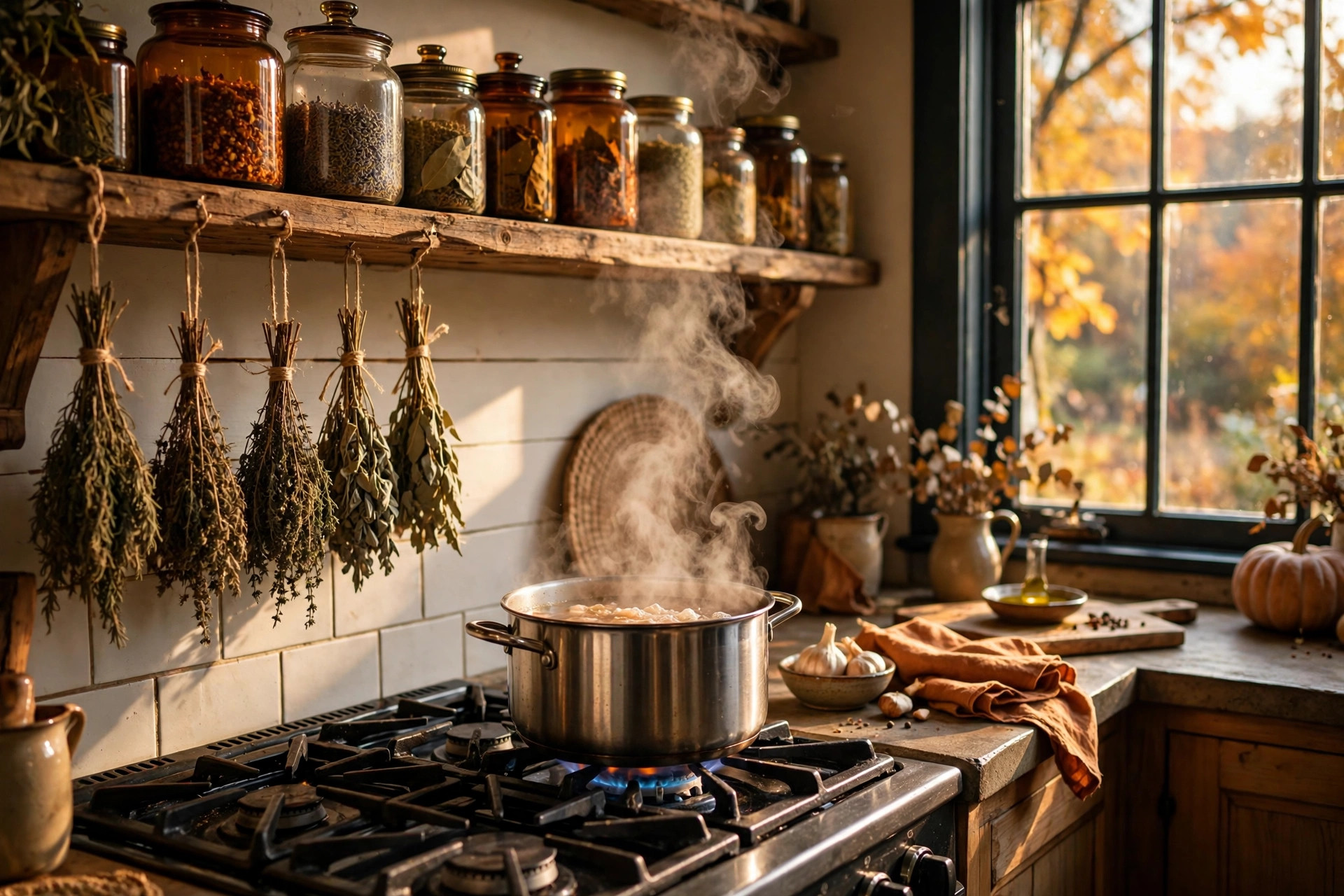
A simmer pot is wonderfully economical if you know a few tricks.
- Simmer for two days. You can simmer most blends twice: let the pot cool, store it covered in the fridge overnight, and start it again the next morning with fresh water. The scent will be a little softer on day two, but still lovely.
- Use scraps. Apple peels, orange peels, the ends of cinnamon sticks, herbs that are wilting in the fridge — all of it works beautifully in a simmer pot. Keep a bag in the freezer for citrus peels and apple cores throughout the week, and you will always have the makings of a pot.
- Buy spices in bulk. Whole cinnamon sticks, cloves, and star anise from the bulk aisle or an international grocery shop cost a fraction of the little supermarket jars.
- Think beyond the stove. A small slow cooker on its lowest setting works as a hands-off simmer pot for open-plan spaces, and it is safer around children because there is no open flame. Whatever vessel you use, the rules are the same: water topped up, never unattended.
When should you skip the simmer pot?
Quick answer: Skip it if anyone in the house has asthma or strong fragrance sensitivities — natural does not mean irritation-free — take extra care around pet birds, and remember a simmer pot masks odours rather than removing them, so deal with the source first.
Simmer pots are safe when the rules are followed, but there are a few situations to skip them. If anyone in the house has asthma or strong fragrance sensitivities, check with them first — natural does not mean irritation-free, and cinnamon and clove oils in the steam may bother sensitive airways. When in doubt, talk to your doctor. If you have birds as pets, be extra careful: birds have famously sensitive respiratory systems, and strong spice steam can harm them. Simmer in a closed-off room or skip it while the birds are nearby.
Also, remember that a simmer pot masks odours rather than removing them. If the kitchen smells of last night’s fish, open a window and deal with the source first — the simmer pot is the finishing touch, not the cleaning crew. Used well, it is one of the simplest, most delightful rituals of the season: five minutes of slicing, a few hours of the loveliest smell in the world, and a home that feels like a hug.
Leave a Reply