
Every autumn, there is a haircut that captures the season’s mood — and for fall 2026, it is the feminine pixie. Not the severe, boyish crop of decades past, but a softer, more romantic interpretation: textured layers, a whisper of length on top, a fringe that sweeps rather than slashes. It is the kind of cut that makes cheekbones look sculpted, eyes look bigger, and mornings feel wonderfully simple. And despite its reputation as a “brave” choice, it is honestly one of the lowest-maintenance styles you can wear.
What makes this trend so appealing right now is the balance it strikes. It feels fresh and modern without demanding hours in front of the mirror. It works with your natural texture instead of fighting it. And it has a quiet confidence to it — the look of someone who knows exactly what suits her. If you have been growing out the same long layers for years and feeling invisible inside them, a pixie might be the reset you did not know you needed.
This guide covers everything: what makes a pixie read as feminine rather than edgy, the prettiest variations trending this fall, how to match the cut to your face shape, exactly what to tell your stylist, a genuinely five-minute styling routine, and — because everyone asks — how to survive the grow-out phase with your dignity intact. By the end, you will know whether the chop is right for you, and how to get it right the first time.
Why the Feminine Pixie Is Having a Moment This Fall
Trends rarely arrive out of nowhere, and the feminine pixie’s rise makes perfect sense for this moment. After several years of high-maintenance beauty — elaborate blowouts, endless extensions, forty-step routines — there is a collective craving for simplicity. The pixie answers it. It is wash-and-go in the truest sense, and it looks intentional even on the days you do absolutely nothing to it.
There is also the seasonal logic. Autumn is when we reach for structure: tailored coats, boots with presence, richer colours. A pixie cut is the hair equivalent — clean lines, defined shape, nothing wispy or indecisive. It frames a turtleneck beautifully. It shows off earrings, which suddenly matter again when your hair is not hiding them. And in the crisp autumn air, short hair simply behaves better than long hair, which frizzes, tangles, and gets flattened under scarves.
Perhaps most importantly, the modern pixie has shed its old rules. It no longer belongs to one age group, one face shape, or one aesthetic. Women in their twenties wear it with streetwear; women in their fifties wear it with tailored blazers; women everywhere wear it with everything. The cut has become democratic, and that is when a trend turns into a classic.
What “Feminine” Actually Means in a Pixie Cut

The word “feminine” here is not about gender rules — it is about softness. A feminine pixie differs from an edgy or androgynous crop in a few specific, observable ways. The edges are textured rather than razor-sharp. There is more length on top, which allows for movement and versatility. The fringe is longer and piece-y instead of blunt or micro. And the overall silhouette is rounded and touchable rather than angular and severe.
Think of it as the difference between a tailored suit and a cashmere jumper — both are sharp in their way, but one invites you to run your fingers through it. The feminine pixie has that same inviting quality. Layers are cut to encourage natural movement, the nape is soft rather than shaved to the skin (though a gentle taper is lovely), and the styling leans tousled rather than sculpted.
This softness is also what makes the cut so wearable day to day. An edgy pixie can look undone if you skip styling; a feminine pixie looks deliberately effortless even air-dried. The texture does the work for you. If you are nervous about going short, asking your stylist specifically for the “soft, feminine version” is the single most useful phrase you can use — it immediately steers the cut away from severity.
The Prettiest Pixie Variations for Fall 2026
Not all pixies are created equal, and this season’s variations offer something for every texture and temperament. Here are the standouts worth discussing with your stylist:
- The soft textured pixie. The classic of the moment — piece-y layers throughout, a longer sweeping fringe, and a finish that looks artfully undone. Works beautifully on straight, wavy, and loosely curly hair. This is the safest entry point if it is your first chop.
- The grown-out pixie (the “bixie” cousin). Slightly longer all over, sitting between a pixie and a bob, with soft layers that tuck behind the ears. Ideal if you want short hair with a safety net, or if you are growing out a shorter cut.
- The curly pixie. For naturally curly and coily hair, a pixie with shape — volume on top, tapered sides — is stunning and genuinely wash-and-go. The key is a stylist experienced with curls who cuts dry or stretches the curl to judge length.
- The pixie with a long fringe. Short at the back and sides, with a fringe long enough to sweep across the forehead or tuck behind one ear. This is the most versatile option: the long fringe can be styled a dozen ways, from sleek to tousled to pinned back.
- The soft undercut pixie. A whisper of an undercut at the nape — not shaved harsh, just closely tapered — with soft length everywhere else. It keeps the neckline neat as it grows and adds a modern edge without sacrificing femininity.
- The feathered pixie. A nod to the seventies, with feathered layers that flick outward at the ends. Gorgeous on fine hair because the layering creates the illusion of fullness, and it grows out more gracefully than blunter cuts.
When choosing, think about your morning reality, not your fantasy self. If you never heat-style, do not choose the variation that needs daily straightening. The best pixie is the one that works with the hair you actually have and the effort you will actually give.
Matching the Cut to Your Face Shape
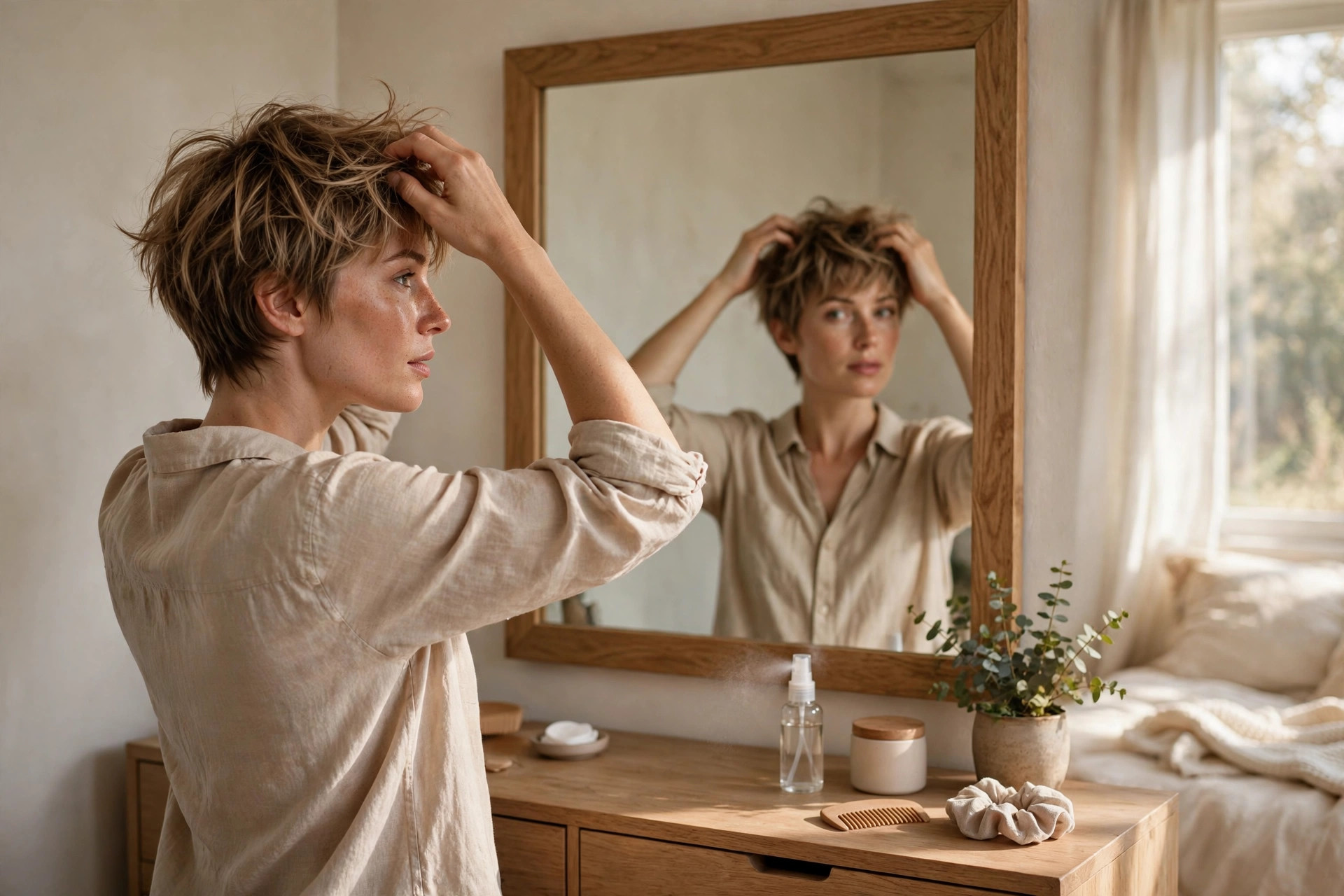
Here is the reassuring truth: there is a pixie for every face shape. The myth that short hair only suits oval faces is long overdue for retirement. What matters is not whether you go short, but how the cut is customised around your features. A skilled stylist adjusts the same basic pixie — where the volume sits, how long the fringe runs, how the sides are shaped — to flatter your particular face.
For round faces, height on top is your friend. Volume at the crown visually lengthens the face, while a side-swept fringe breaks up width across the forehead. Keeping the sides close rather than full avoids adding width where you do not want it. An asymmetrical fringe is particularly flattering here, drawing the eye diagonally.
For square faces, softness is everything. Wispy, textured ends around the hairline soften a strong jawline, and a longer fringe that hits at or below the cheekbones creates a lovely diagonal line. Avoid cuts that end in a blunt horizontal line at jaw level, which can emphasise squareness — layers that graduate past the jaw are far more flattering.
For heart-shaped faces, the goal is balance: the pixie naturally complements a narrower chin, so focus on keeping some softness around the forehead. A full-ish sweeping fringe or piece-y bangs reduce the appearance of a wider forehead, and a little fullness at the sides around the ears balances the narrower lower face.
For long or oblong faces, you want to avoid adding height on top. Instead, choose a pixie with width — fuller sides, a fringe that sits across the forehead to visually shorten the face. A deep side part with a sweeping fringe is one of the most flattering choices for longer faces.
Oval faces, as ever, can wear nearly anything — which makes the consultation about personal style rather than camouflage. Lucky you; spend the appointment talking about vibe instead of geometry.
What to Tell Your Stylist (So You Get What You Asked For)
The consultation is where pixies succeed or fail, and preparation makes all the difference. Bring photographs — several, from different angles, of pixies you love on people with similar hair texture to yours. “Feminine pixie” means different things to different stylists, but a photo means exactly one thing. Save them to your phone and be ready to point at specifics: this fringe length, that texture, this nape shape.
Use concrete language alongside the pictures. Say “soft and textured, not sharp or severe.” Mention how much daily styling you will honestly do — a good stylist will steer you toward a cut that survives your real routine. Talk about your cowlicks and growth patterns; every head has them, and a pixie needs to be cut with them in mind, not against them. If you have one at the front hairline, say so upfront.
Ask questions too. How will this grow out? Where will I need trims, and how often? (Most pixies need a tidy-up every four to six weeks to keep their shape — budget for this before you commit.) What products will I need, and can you show me the styling routine before I leave? A stylist who walks you through the blow-dry is worth their weight in gold.
And be honest about your nerves. Telling your stylist “this is my first big chop and I am slightly terrified” is not weakness — it is useful information that will make them cut more conservatively at first. You can always go shorter at the next appointment. You cannot glue it back on.
The Five-Minute Morning Styling Routine
This is the part that converts the sceptics. A feminine pixie, cut well, genuinely takes about five minutes — and on many days, less. Here is the routine that works for most textures.
Start with damp hair. If you washed it the night before, a light mist from a spray bottle is enough to reactivate yesterday’s product. Work a pea-sized amount of styling cream or lightweight paste through the hair, focusing on the mid-lengths and ends rather than the roots — too much product at the roots looks greasy by lunchtime. For fine hair, a volumising mousse at the roots before drying gives lasting lift.
Now dry. You can rough-dry with your fingers and a hairdryer in about two minutes — no brush needed for the tousled look. Direct the airflow to encourage your natural texture: scrunch curls upward, push straight hair in the direction you want it to sit. If your fringe needs taming, a quick pass with a small round brush or a mini straightener takes thirty seconds and makes the whole cut look deliberate.
Finish by defining a few pieces. Take a tiny amount of texturising paste or wax, rub it between your palms, and pinch the ends of a few strands around your face and at the crown. This piece-y definition is what separates “bedhead” from “effortless.” A light mist of flexible-hold hairspray keeps everything in place without stiffness — and in autumn wind, you will be glad of it.
Second-day hair is a pixie’s secret superpower. Short hair rarely looks greasy the way long hair does, and a little dry shampoo at the roots plus a re-tousle is often all you need. Many pixie wearers wash every two to three days and spend even less time styling on the in-between days.
Surviving the Grow-Out Phase
Let us be honest: every pixie eventually grows, and the in-between stage — too long to be a pixie, too short to be a bob — tests everyone’s patience. It usually hits around the three-to-four-month mark. Knowing it is coming, and having a plan, makes it dramatically less painful.
The single best strategy is regular shaping trims with a grow-out plan. Tell your stylist you are growing it out, and they will trim strategically — keeping the back neat while letting the top and fringe gain length, gradually morphing the pixie into a short bob rather than letting everything grow wild at once. These “grow-out cuts” every six to eight weeks are the difference between an awkward phase and a series of intentional-looking short styles.
Accessories become your best friends during the transition. Headbands, claw clips, bobby pins, and scarves can tame the stages where nothing sits right. A deep side part can disguise uneven growth, and a little extra texture product hides a multitude of sins. This is also the phase where experimenting is fun — the awkward length that frustrates you might become someone else’s favourite style with the right pin or twist.
And give yourself grace. Hair grows roughly half an inch a month; the phase is temporary, and every long-haired person you admire survived it. Take photos along the way — you will be amazed how quickly “too short” becomes “just right” and then “time for a trim again.”
Keeping It Healthy Through Autumn
Short hair is not exempt from seasonal damage — in some ways it shows it faster, since there is nowhere for dryness to hide. Autumn’s combination of cold air, indoor heating, and wool scarves can leave a pixie feeling straw-like and staticky if you neglect it.
Moisture is the priority. A hydrating shampoo and a good conditioner are the foundation; even short hair benefits from a weekly deep-conditioning mask, which takes all of five minutes in the shower. If your ends feel rough, a drop of hair oil smoothed over them after styling adds shine and tames flyaways instantly. Look for lightweight oils — a heavy oil on short hair goes greasy fast.
Protect the hairline and nape from friction. Scarves and high collars rub against short hair constantly in autumn, which can cause breakage at the nape and frizz around the face. A silk or satin scarf lining, or simply choosing smoother fabrics where they touch your hair, makes a real difference over the season.
Finally, do not skip trims just because you are busy. A pixie’s shape is its entire personality — six weeks of growth can turn a sharp cut into a shapeless one. Book your next trim before you leave the salon; future you, staring at an overgrown nape in December, will be grateful.
The feminine pixie is more than a haircut — it is a small daily luxury. Less time, less product, less fuss, and a mirror reflection that looks like the most polished version of you. If you have been thinking about it, fall is the perfect season to take the leap: the scarves are out, the light is flattering, and the grow-out timeline means you will have lovely short layers by spring. Book the consultation. Bring the photos. You might just wonder why you waited so long.
Leave a Reply