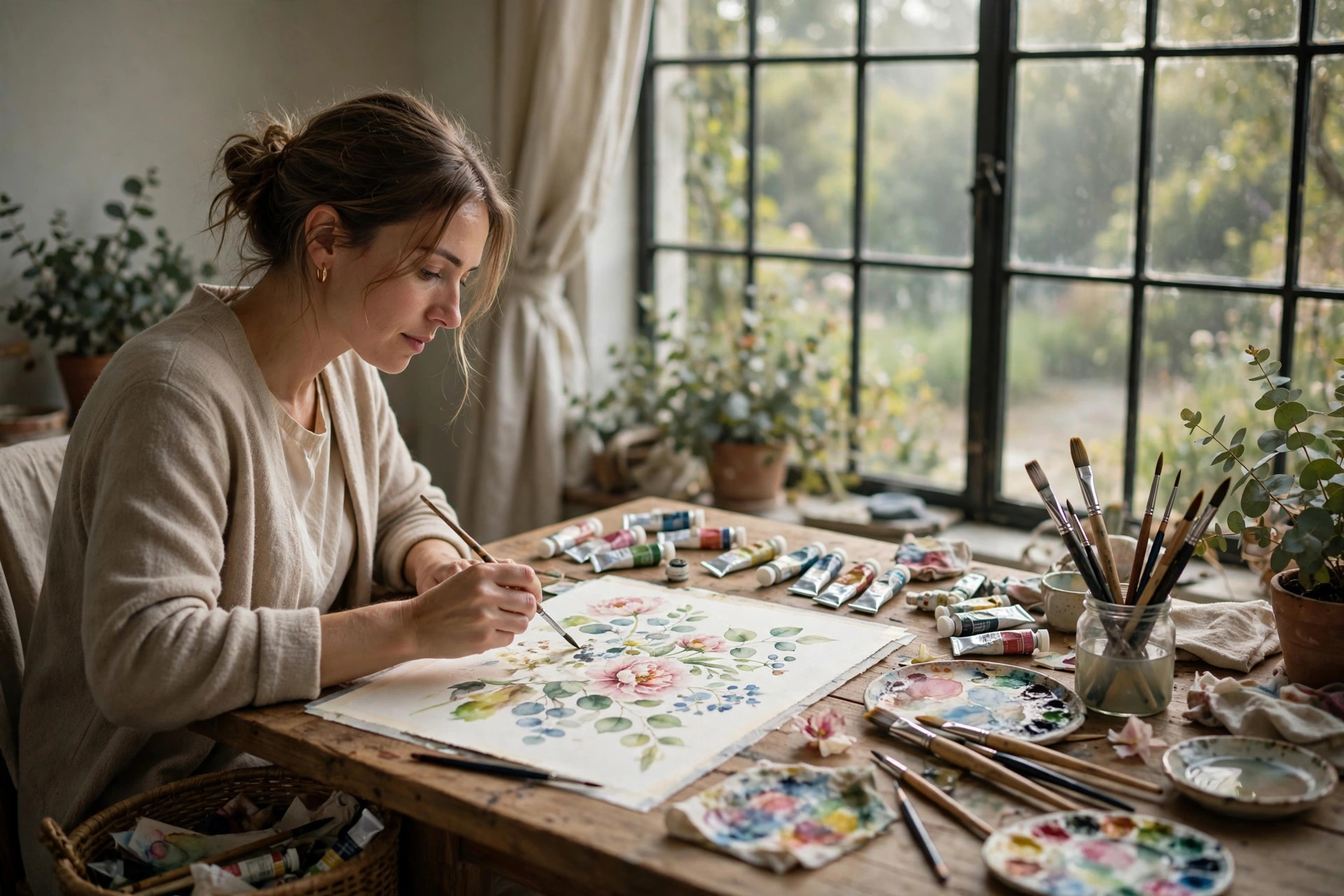
You know the feeling: you’re cooking, or writing, or gardening, and suddenly an hour has passed in what felt like minutes. You weren’t bored, you weren’t stressed — you were completely, happily absorbed. Psychologists call this flow state, and it’s widely considered one of the most satisfying experiences humans can have. Searches for it are up 23%, as more of us actively chase that feeling of effortless engagement in our ordinary days.
Here’s the encouraging part: flow isn’t a rare gift bestowed on artists and athletes. It’s a predictable psychological state with known triggers, which means you can deliberately create the conditions for it — in your work, your hobbies, your cooking, even your cleaning. You don’t need a silent retreat or a dramatic life overhaul. You just need to understand how flow works and make a few small adjustments to how you spend your time. This guide shows you how.
What Flow State Actually Feels Like
The concept comes from psychologist Mihaly Csikszentmihalyi, who spent decades interviewing people about their most fulfilling moments — from rock climbers to surgeons to chess players — and found they all described the same experience. In flow, your attention narrows completely onto what you’re doing. Self-consciousness drops away; you’re not worrying about how you look or whether you’re doing it “right.” Time distorts — it either flies or seems to stand still. And the activity feels rewarding in itself, not just for its outcome.
Crucially, flow sits in a sweet spot between boredom and anxiety. If a task is too easy for your skill level, you get bored and your mind wanders. If it’s far too hard, you get anxious and want to quit. Flow lives in the channel between: challenging enough to demand your full attention, but matched closely enough to your abilities that progress feels possible. Think of the last time you were absorbed in a recipe slightly beyond your comfort zone, a puzzle at just the right difficulty, or a work task that stretched you without overwhelming you — that was probably flow.
It’s worth noting what flow isn’t: it’s not relaxation (it’s active and engaged), it’s not multitasking (it requires single-pointed focus), and it’s not something you can force by sheer willpower. You can’t command flow to arrive — but you can arrange the conditions so it shows up far more often. That’s what the rest of this guide is about.
The Challenge-Skill Balance: Flow’s Golden Rule
The single most important flow trigger is matching challenge to skill. Too little challenge, and you’ll need to deliberately make things harder: set a timer and try to beat your own record, add a constraint (cook the meal using only what’s in the fridge), or take on the trickier version of something you find easy. Gamifying the ordinary is one of the fastest routes to flow — which is why people get absorbed in everything from speed-cleaning challenges to Duolingo streaks.
Too much challenge, and the move is the opposite: break the task down until the next step feels doable. Overwhelmed by a work project? Shrink your focus to just the next 25 minutes and just the first section. Intimidated by a new hobby? Learn one small technique rather than the whole craft. Flow doesn’t require the overall task to be easy — it requires the current step to feel within reach. Rock climbers find flow on terrifying walls precisely because they’ve trained for years; the challenge is enormous, but so is their skill.
A practical weekly exercise: list three activities where you regularly lose track of time, and three where you feel either bored or stressed. For the boring ones, ask how you could raise the challenge; for the stressful ones, how you could lower it or build skill gradually. You’re essentially tuning your life toward the flow channel, one small adjustment at a time.
Design Your Environment for Deep Focus

Flow requires unbroken concentration, which means your environment matters enormously. The research is unambiguous: even the mere presence of a phone — face down, on silent — measurably reduces cognitive capacity. So the first and highest-impact step is physical separation: phone in another room, notifications off, door closed if you can. This alone can transform a scattered hour into a flowing one.
Next, engineer your space for the task at hand. Clear the desk before deep work; lay out all your ingredients before cooking; set up your craft supplies before you begin. Every small friction — hunting for the scissors, realising you’re missing an ingredient — is a potential flow-breaker. Having everything within reach lets you sink in without surfacing. Many people also find a consistent “flow cue” helps: the same playlist, the same candle, the same cup of tea, signalling to the brain that it’s focus time.
Consider your energy rhythms too. Most people have one or two daily peaks of natural focus — often mid-morning — and flow comes far more easily then than in the post-lunch slump. Protect your peak hours for your most engaging tasks and relegate admin, emails and errands to your lower-energy windows. Working with your biology rather than against it makes flow dramatically more likely.
Everyday Flow: Finding It in Cooking, Crafting and Chores
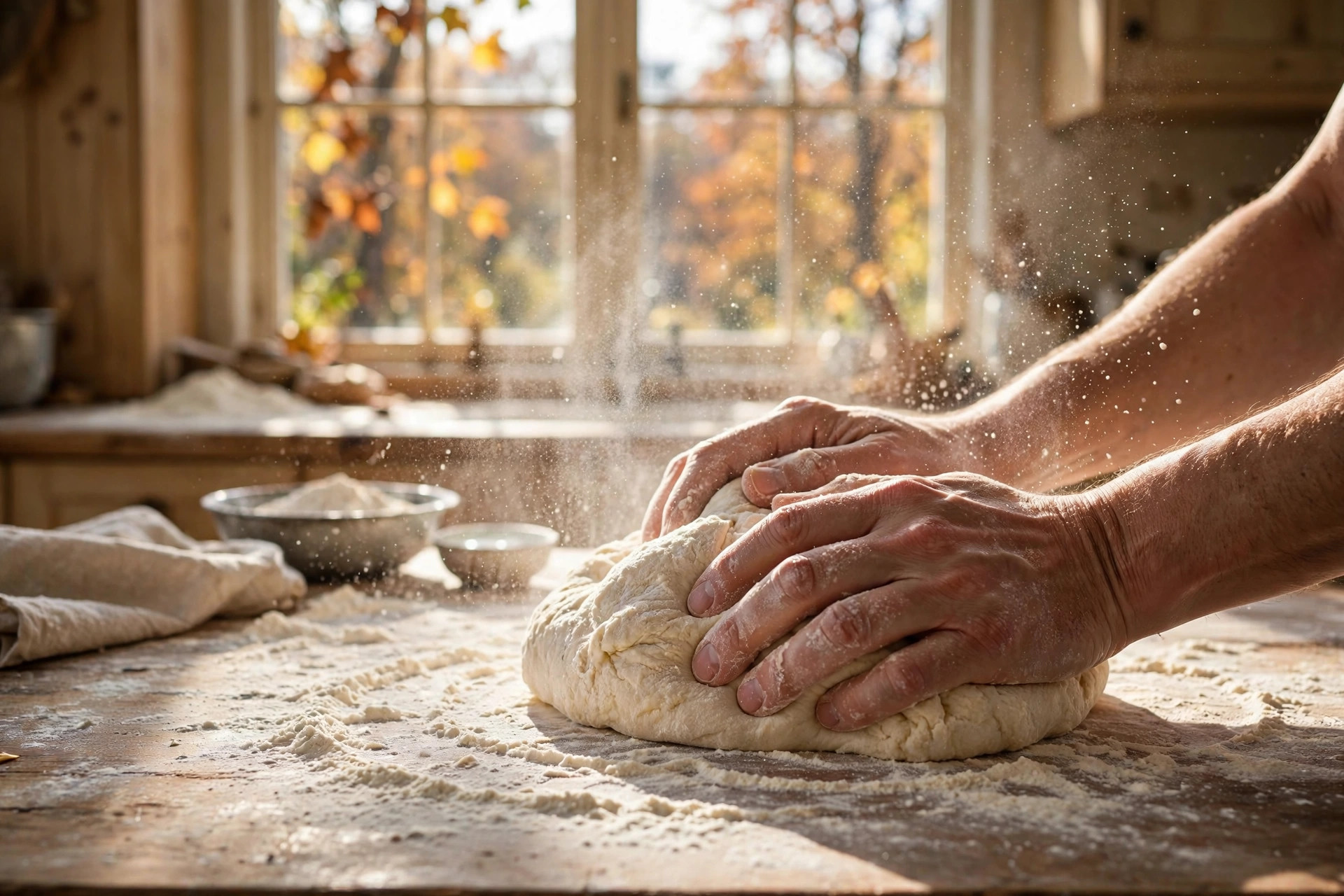
You don’t need an extraordinary life to experience flow daily — ordinary activities are some of the richest sources. Cooking is a classic: it has clear goals, immediate feedback (you can taste your progress), and endless room to calibrate difficulty. Try a new cuisine, attempt homemade pasta, or challenge yourself to a meal in under 30 minutes. The sensory richness — smells, textures, colours — keeps attention anchored in the present.
Crafting and making are practically flow machines: knitting, gardening, woodworking, baking, playing an instrument. They combine handwork (which quiets mental chatter), visible progress and just-right challenge. Even chores can flow: many people report losing themselves in gardening, deep-cleaning a room to music, or organising a cupboard — the key is treating it as a project with a clear end point rather than an obligation to resent.
Movement counts too. Running, swimming, yoga, dancing in your kitchen — rhythmic physical activities with a slight challenge are among the most reliable flow triggers known. The combination of breath, rhythm and mild exertion narrows attention beautifully. A regular walk on a slightly challenging route, where you push your pace just a little, can become a daily flow ritual.
Flow at Work: Turning Your Job Into a Source of Engagement
Given how many hours we spend working, making work more flow-friendly pays enormous dividends. Start by identifying your most engaging tasks — the ones where you naturally get absorbed — and batch them into protected focus blocks of 60 to 90 minutes. Turn off everything interruptible during these blocks; constant context-switching is flow’s mortal enemy, and it can take over 20 minutes to sink back in after a single interruption.
Set clear micro-goals for each block: not “work on the report” but “draft the introduction and first two sections.” Clear goals are a core flow condition — your brain needs to know what “done” looks like to fully commit. Build in immediate feedback where you can: a checklist to tick off, a word count to watch climb, a colleague to show a draft to. Feedback closes the loop that keeps attention engaged.
If your work feels chronically boring, the answer usually isn’t a new job — it’s more challenge. Volunteer for the stretch project, learn the new system before anyone asks, or set yourself a quality bar higher than required. And if it feels chronically overwhelming, break it down, ask for training, or negotiate the scope. Both adjustments move you toward the channel where flow lives.
Flow Blockers — and How to Fix Them
Even with the right conditions, certain habits quietly sabotage flow. The biggest is fragmented attention: checking messages “just quickly” shatters the deep focus flow needs. Fix it with hard boundaries — app timers, focus modes, or simply leaving the phone elsewhere. Perfectionism is another blocker: if you’re constantly judging your performance mid-task, self-consciousness crowds out absorption. Give yourself explicit permission to produce a rough first version; you can refine later, outside of flow.
Vague goals block flow too — “sort out my life” can’t absorb anyone, but “organise the spice cupboard” absolutely can. When a task feels too big and blurry to engage with, shrink it until the next step is concrete. And don’t overlook the physical basics: tiredness, hunger and dehydration all make deep focus much harder. Flow favours the rested — another good reason to protect your sleep.
A final, important note: while flow is wonderful for everyday wellbeing and engagement, it’s not a treatment for anything. If you’re experiencing persistent low mood, anxiety, burnout or an inability to concentrate that affects your daily life, please speak to your GP or a qualified professional. Flow practices are a lovely complement to a healthy routine — good sleep, movement, connection — not a substitute for proper support when you need it.
Start small this week: pick one activity you already enjoy, remove the phone, set a clear little goal, and give it your full attention for half an hour. Notice what happens to time. That disappearing hour isn’t laziness or distraction — it’s your brain doing what it does best, fully engaged with the world. The more often you visit, the easier flow becomes to find. Your everyday life is already full of doorways to it; you just have to walk through.
Leave a Reply