
Last updated: October 2026
Quick answer: To find your personal style in your 20s, audit what you wear for two weeks, build a mood board and name three style words from it, learn your best silhouettes and colours, experiment at thrift stores, then define two or three outfit uniforms and edit your closet ruthlessly every season.
Your twenties are a strange, wonderful decade for style. You are old enough to know that the trends of your teens do not quite fit anymore, but young enough that “your style” still feels like something other people have and you do not. If you have ever wondered how to find your personal style — the real one, not the one an algorithm picked for you — this guide is your roadmap.
Here is the truth most fashion advice skips: personal style is not found, it is built. It comes from paying attention to what you actually love wearing, understanding why, and then choosing more of that on purpose. It is a process of self-knowledge disguised as shopping, and your twenties are the ideal time for it — you are experimenting anyway, so experiment with intention.
Below is a practical seven-step process, the most common mistakes women make in their twenties, and how to turn your discoveries into a signature look that feels unmistakably you.
How do I find my personal style in my 20s? The 7-step process
Quick answer: Personal style is built, not found. This seven-step process — audit your closet, build a mood board, name three style words, learn your body and colours, experiment on purpose, define your uniforms, and edit ruthlessly — turns vague taste into a clear, repeatable style that feels unmistakably you.
Step 1: What am I actually wearing every day?
Before buying anything, observe yourself for two weeks. Each morning, snap a quick photo of your outfit; each evening, rate how you felt in it from 1 to 5. At the end of two weeks, look for patterns. Which outfits scored 4s and 5s? What do they have in common — colours, silhouettes, fabrics, level of polish? Your actual favourites are already in your closet; most women are surprised to find they keep reaching for the same 20% of their wardrobe.
Track it simply:
| Day | Morning photo | Evening rating (1–5) | Notes |
|---|---|---|---|
| Each day | One quick mirror snap | How you felt in it | Colour, fit, comfort |
| After 14 days | — | Your 4s and 5s | Look for repeating patterns |
Step 2: What does my mood board reveal?
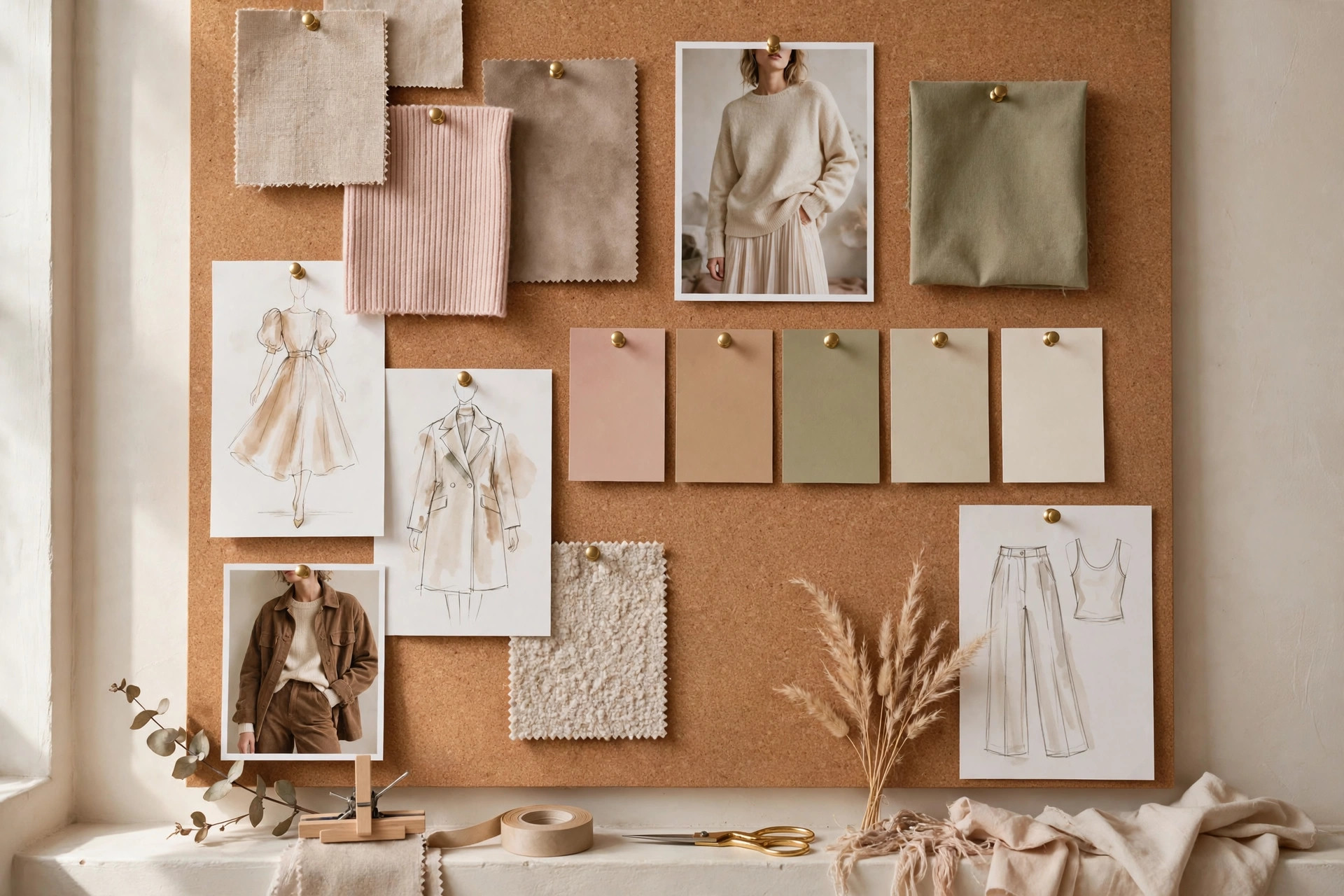
Collect 30–50 images of outfits you love — from Pinterest, Instagram, old films, street-style photos, anywhere. Then do the real work: look at the board as a whole and ask why. Is it the colour palette? The relaxed silhouettes? The feminine details? The minimalism? Write down the five recurring themes. Your mood board is not a shopping list; it is a mirror showing you what you are drawn to before trends and opinions get in the way.
Step 3: What are my three style words?
Distil your board into three adjectives. Classic choices include: minimal, romantic, edgy, classic, bohemian, polished, sporty, artsy, feminine, androgynous. Your three words become a filter for every future purchase: does this piece feel like all three? If not, it stays in the store. This single habit prevents more bad purchases than any other trick in this guide.
Step 4: Which silhouettes and colours suit me?
Style is easier when you stop fighting your own reflection. Learn which silhouettes flatter your shape — where you like definition, what lengths work, which necklines you love. Equally important: figure out your best colours. Hold fabrics up to your face in natural light and notice which ones make your skin glow and which ones wash you out. You do not need a professional colour analysis; honest observation works.
Step 5: How do I experiment without wasting money?
Now — and only now — start trying new things, but treat it as research. Thrift stores are perfect for this: cheap, varied, and low-stakes. Try the wide-leg trousers, the midi skirt, the blazer. Wear each experiment at least twice before judging; the first wear of anything unfamiliar feels strange. Keep what earns a 4 or 5 in your two-week audit, donate what does not.
Thrifting also keeps wearable clothes in circulation. The U.S. Environmental Protection Agency reports that in 2018, landfills received 11.3 million tons of textiles — every experiment you buy secondhand is one less garment heading for waste.
Step 6: What are my outfit uniforms?
Most stylish women have 2–3 “uniforms” — reliable formulas they return to. Yours might be: dark jeans + white tee + blazer; midi dress + ankle boots; trousers + knit + loafers. A uniform is not boring; it is the foundation that makes getting dressed effortless and makes your style recognisable. Build your daily outfits around your uniforms, and save experimentation for weekends.
Step 7: How do I edit my closet?
Style is as much about what you remove as what you keep. Every season, pull everything out and ask of each piece: does this fit my three style words? Does it fit my body today? Would I buy it again? Pieces that fail all three go. An edited closet makes your personal style visible — to you and to everyone else.
How do I build a signature look?
Quick answer: A signature look is not one outfit on repeat — it is one or two recognisable elements, like a red lip, a midi skirt, or layered gold jewellery, plus a consistent grooming signature. Choose elements that fit your three style words, then let them evolve slowly year by year.
Once you know your direction, a signature look is what makes your answer to how to find your personal style memorable. This does not mean wearing the same thing every day — it means having recognisable elements that feel like you.
- Pick one signature element. It could be a red lip, a particular silhouette (always a midi skirt), a colour you wear constantly, layered gold jewellery, or perfectly tailored blazers. One consistent element is enough to make your style identifiable.
- Develop a grooming signature too. Your hair, your go-to makeup look, your fragrance — these are part of personal style, not separate from it. The woman who always wears a sleek low bun and a natural makeup look has a signature even in sweatpants.
- Let it evolve slowly. Your signature at 23 will not be your signature at 29, and that is correct. Review your style words once a year. Keep what still feels true, release what belonged to a younger you. Evolution is not inconsistency — it is growth.
There is even research behind dressing with intention: psychologists Hajo Adam and Adam Galinsky found that wearing clothing with symbolic meaning changes how we think and perform — a phenomenon they called “enclothed cognition.” In our experience, a deliberate signature does exactly that: it changes how you carry yourself.
If you want your closet to reflect this new clarity, building a capsule wardrobe around your three style words is the natural next step. And keeping it all visible and organised matters more than you think — see these closet organization tips to make your style easy to actually wear.
What mistakes should I avoid in my 20s?
Quick answer: The five traps that derail style in your twenties are chasing every trend, dressing for an imaginary life, confusing expensive with stylish, ignoring comfort, and seeking permission. Avoid these and your closet stays full of clothes that feel like you — and actually get worn.
- Chasing every trend. Trends are rented; style is owned. It is fine to borrow a trend that fits your three words, but buying every viral item guarantees a closet full of clothes that feel like someone else.
- Dressing for an imaginary life. The wardrobe for the gala-attending, yacht-weekending version of you is fantasy shopping. Dress beautifully for the life you actually live — the office, the café, the weekend — and you will wear everything you own.
- Confusing expensive with stylish. Some of the most stylish women in their twenties thrift nearly everything. Fit, coordination, and confidence create style; price tags do not. Our guide on how to dress elegantly on a budget proves this point outfit by outfit.
- Ignoring comfort. If you are tugging, adjusting, or counting the minutes until you can change, the outfit is wrong no matter how good it looks in the mirror. Style you cannot live in is a costume.
- Seeking permission. You do not need anyone’s approval to wear what you love — not friends, not comment sections, not the trend cycle. The moment your style needs a committee vote, it stops being yours.
| Chasing trends | Building style | |
|---|---|---|
| Buys | Every viral item | Pieces matching your three style words |
| Closet feels like | Someone else | You |
| Cost per wear | High — worn twice | Low — worn for years |
| Result | Dated by next season | Recognisable for years |
Is my style already emerging?
Quick answer: You do not find personal style the way you find your keys — you grow into it through attention, experimentation, and the courage to keep what you love. Start today with the two-week photo audit: thirty seconds a day, zero cost, and more insight than any quiz.
Here is what I wish someone had told me at 22: you do not find your personal style the way you find your keys. You grow into it the way you grow into yourself — through attention, experimentation, and the courage to keep what you love and release what you do not. The women you admire for their style were not born with it; they built it exactly the way this guide describes.
Start today with the two-week photo audit. It costs nothing, takes thirty seconds a day, and by the end of it you will know more about how to find your personal style than any quiz could tell you. Your twenties are not too early to be stylish on purpose — they are exactly on time.
Leave a Reply