
Last updated: November 2026
Quick answer: Winter dandruff is usually caused by a dry scalp, cold air and indoor heating, and it responds best to gentle care. Wash with a mild anti-dandruff shampoo, moisturise your scalp, avoid very hot water, and give flakes time to settle. Most people see real improvement within two to four weeks.
If your scalp starts flaking the moment the cold weather arrives, you are not alone. Every winter, thousands of women notice white flakes on dark jumpers and an itchy scalp. The good news is that learning how to get rid of winter dandruff naturally is mostly about small, gentle changes rather than harsh treatments. In our experience, the women who get the best results are the ones who slow down, treat their scalp kindly and stay consistent for a few weeks.
Why does dandruff get worse in winter?
Cold air holds less moisture than warm air, and central heating dries the air inside your home even further. That dry air pulls moisture from your scalp, leaving it tight, flaky and itchy, while hotter showers and hats trap sweat and oil against the skin.
According to the American Academy of Dermatology, dandruff is linked to a yeast called Malassezia that lives naturally on everyone’s scalp, and dry, irritated skin can make flaking worse. You can read more about dandruff causes and care on the AAD website. Winter dandruff is also easy to confuse with a simply dry scalp, and the two need different care. A dry scalp usually means small, dry flakes and tight skin. True dandruff tends to produce larger, slightly oily flakes and more itching. Knowing which one you are dealing with helps you pick the right routine, so take a close look before you change anything. If your flakes are yellowish, your scalp is red or sore, or the itching is severe, speak to a pharmacist or your doctor rather than trying home remedies alone.
How to get rid of winter dandruff naturally: start with a gentler wash routine
The single most helpful change is washing your hair more gently. Use lukewarm water instead of hot water, choose a mild anti-dandruff shampoo, and massage it in with your fingertips, not your nails. Leave it on for two to three minutes, then rinse well.

How often should you wash? In winter, most people do well washing two to three times a week. Washing every day can dry the scalp out further, while washing too rarely lets oil and dead skin build up. Find your own balance and stick with it for at least three weeks before judging the result. The NHS notes that dandruff is a common condition that is not caused by poor hygiene and is not contagious, and that regular use of an anti-dandruff shampoo is one of the simplest ways to keep it under control. You can read the NHS advice on dandruff for a clear, calm overview.
- Use lukewarm water, never hot, for washing and rinsing.
- Massage shampoo in with soft fingertips for a full minute.
- Let anti-dandruff shampoo sit for two to three minutes before rinsing.
- Rinse thoroughly so no product is left sitting on the scalp.
- Pat hair dry with a soft towel instead of rubbing hard.
How to get rid of winter dandruff naturally with scalp oiling
A light scalp oil treatment once or twice a week can make a real difference in winter. Warm a little coconut or sweet almond oil between your palms, massage it into your scalp, and leave it for thirty minutes. The oil softens flakes so they lift away easily.

A few honest notes here. First, less is more: a teaspoon or two is enough for the whole scalp, and too much oil is hard to wash out. Second, if your dandruff is the oily, yellowish kind, heavy oiling can make it worse, so try it once and watch how your scalp responds. Third, always patch-test a new oil on a small area first. In our experience, women with a genuinely dry winter scalp love this step, while women with oily dandruff do better skipping it and focusing on the wash routine instead.
You can also add a drop of tea tree oil to your carrier oil if you like, but keep it very diluted — one drop per tablespoon of carrier oil is plenty — and skip it entirely if your skin is sensitive. Never put undiluted essential oil directly on your scalp.
Should you exfoliate your scalp in winter?
Gentle scalp exfoliation can help, but only if you do it kindly. Use a soft silicone scalp brush once a week on wet hair with shampoo, moving in light circles. If your scalp is red, sore or broken, skip exfoliation completely until it has calmed down.
Avoid harsh scrubs with rough particles, and never pick or scratch at flakes with your nails. Scratching feels satisfying for a second, but it damages the skin and can make flaking worse the next day.
What should you change about your hair products in winter?
Winter is the right time to simplify your shelf. Heavy styling products and daily dry shampoo can build up on the scalp and trap flakes. Switch to a lighter conditioner, applied from mid-length to ends only, and keep it away from your roots.
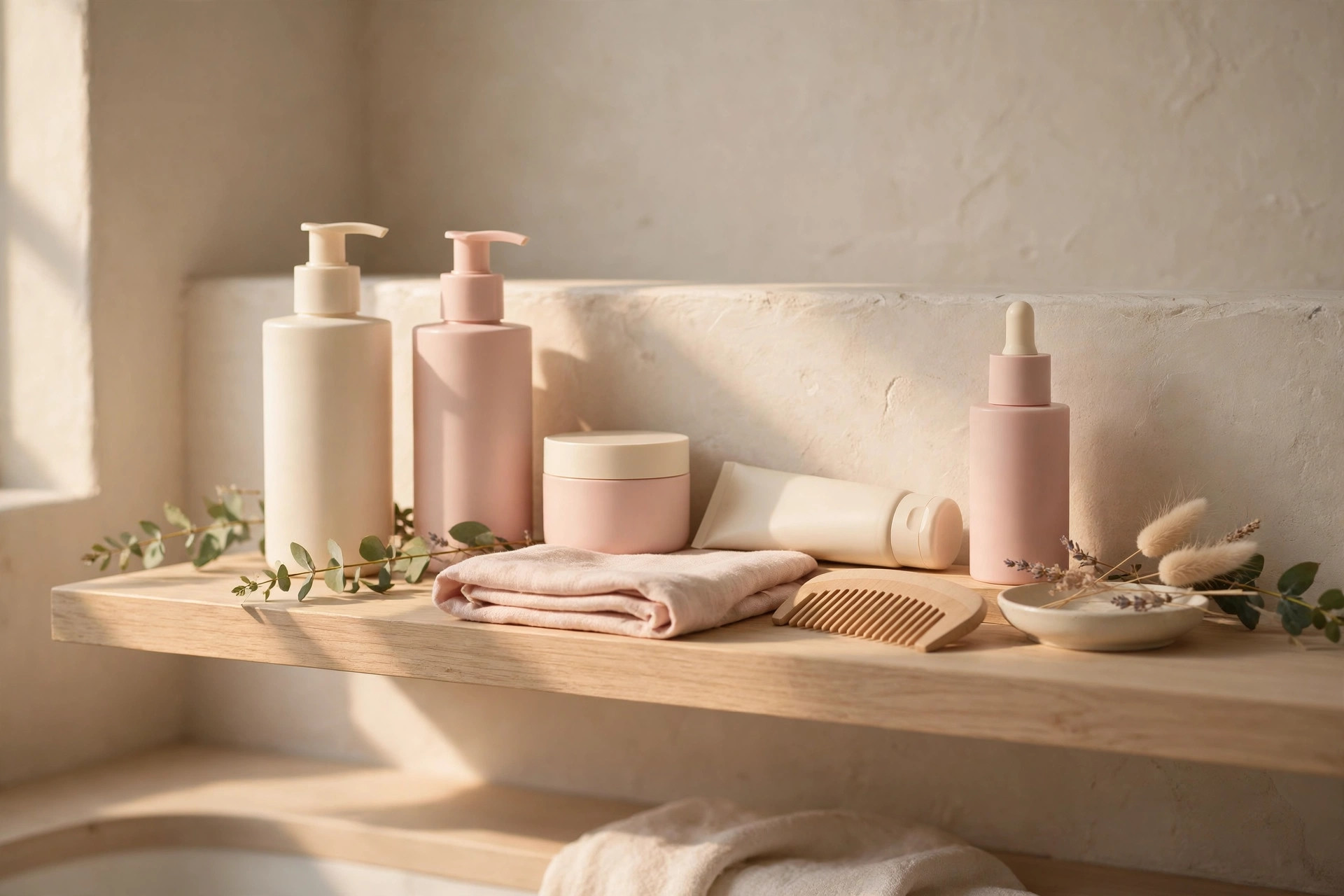
Fragrance and strong alcohols in styling products can irritate a sensitive winter scalp, so look for gentler formulas while your scalp recovers. You do not need to throw everything away at once. Change one product at a time, give it two weeks, and notice what your scalp tells you. The goal is a short, calm routine you can actually keep up, not a shelf full of half-used bottles.
| Winter habit | What to do instead |
|---|---|
| Very hot showers | Lukewarm water for hair washing |
| Daily dry shampoo | Use only between washes, brush out well |
| Conditioner on the scalp | Apply from mid-length to ends only |
| Heavy styling products | Light, gentle formulas while scalp recovers |
| Scratching flakes | Soft silicone brush, once a week, wet hair only |
Can food and hydration help your scalp?
Your scalp is skin, and skin reflects how you look after yourself overall. Drinking enough water helps your skin stay hydrated from the inside, which matters more in winter when the air is dry. Foods rich in healthy fats, like oily fish, nuts and olive oil, support the skin barrier.
None of this is a quick fix, and no single food will cure dandruff on its own. Think of it as background support for everything else you are doing. A balanced diet, enough sleep and a little less stress all help your skin behave better, and your scalp is no exception.
How can you stop flakes showing on dark clothes?
While your scalp is recovering, a few practical tricks keep flakes from ruining your outfit. Brush your hair gently before getting dressed so loose flakes fall away, and give your shoulders a quick once-over with a lint roller before you leave the house.

These tricks are a confidence bridge, not a cure, and that is completely fine. You deserve to feel good in your clothes while the real work happens underneath. Most women notice fewer visible flakes within two weeks of a gentler routine, even before the scalp feels fully calm.
When should you see a doctor about dandruff?
Most winter dandruff settles with gentle care, but some situations need professional advice. See your doctor if your scalp is very red, swollen or painful, if you have thick crusty patches, or if nothing has improved after a month of consistent gentle care.
Frequently asked questions
How long does it take to get rid of winter dandruff naturally?
Most people notice less itching and fewer flakes within two to three weeks of a gentler routine, with bigger improvement by four to six weeks. Stay consistent, because stopping too early often brings the flakes straight back.
Does washing your hair more often make dandruff worse?
It depends on your scalp. Over-washing with harsh shampoo dries the scalp out, but washing too rarely lets oil and dead skin build up. Two to three gentle washes a week suits most people in winter.
Can coconut oil help with winter dandruff?
For a dry scalp, yes — a light coconut oil massage softens flakes and adds moisture. If your dandruff is oily or yellowish, oil can make it worse, so try it once and watch how your scalp responds.
Is winter dandruff contagious?
No. Dandruff is not contagious and it is not caused by poor hygiene. It is linked to the natural yeast on everyone’s scalp and to dry, irritated skin, and it cannot be passed from person to person.
Winter dandruff is annoying, but it is also very manageable. Start with lukewarm water and a gentle wash routine, add a light scalp oil if your scalp is dry, keep your products simple, and give it a few steady weeks. Your scalp will thank you, and so will your favourite dark jumper. If this guide helped, save it for next winter, and share it with a friend who is quietly dealing with the same flakes. You have got this, and your hair will feel like yours again soon.
Leave a Reply