Last updated: November 2026
Quick answer: To host a Christmas afternoon tea at home, choose a simple menu of sandwiches, scones and small cakes, set the table the night before, and serve tea in rounds. Keep the guest list small, prepare what you can ahead, and let the festive touches do the rest.
There is something quietly magical about a Christmas afternoon tea at home. The kettle hums, the room smells of cinnamon and warm scones, and nobody is rushing to the next thing. If you are wondering how to host christmas afternoon tea at home without turning your kitchen into a whirlwind, you are in the right place. This guide keeps everything gentle and doable.
In our experience, the loveliest teas are not the grandest ones. They are the ones where the host is relaxed enough to sit down, pour a cup, and actually enjoy the conversation. You do not need a tiered stand, a matching tea set, or a long list of recipes. You need a clear plan, a few good flavours, and a table that feels festive.
How to Host Christmas Afternoon Tea at Home Without Stress
Quick answer: Start with the guest list and the time, then build a short menu around three courses: savoury bites, scones, and small sweets. Set the table early, keep drinks simple, and prepare most food before guests arrive.
Begin by deciding who is coming and when. Afternoon tea usually works best between two and four in the afternoon, when lunch has settled and dinner still feels far away. A small group of four to eight guests is ideal. It keeps the table cosy, the conversation easy, and the cooking manageable.
Next, write a short plan on one page. Note the menu, the shopping list, and what can be made the day before. Keep the menu short on purpose. Three or four choices in each course are plenty. Guests remember a warm scone and a kind welcome far longer than they remember a crowded table.
What Should Be on a Christmas Afternoon Tea Menu?
Quick answer: A classic menu has three parts: small sandwiches, warm scones with jam and cream, and a few bite-size cakes. Add one festive flavour, such as cranberry or ginger, to each part for a Christmas feel.
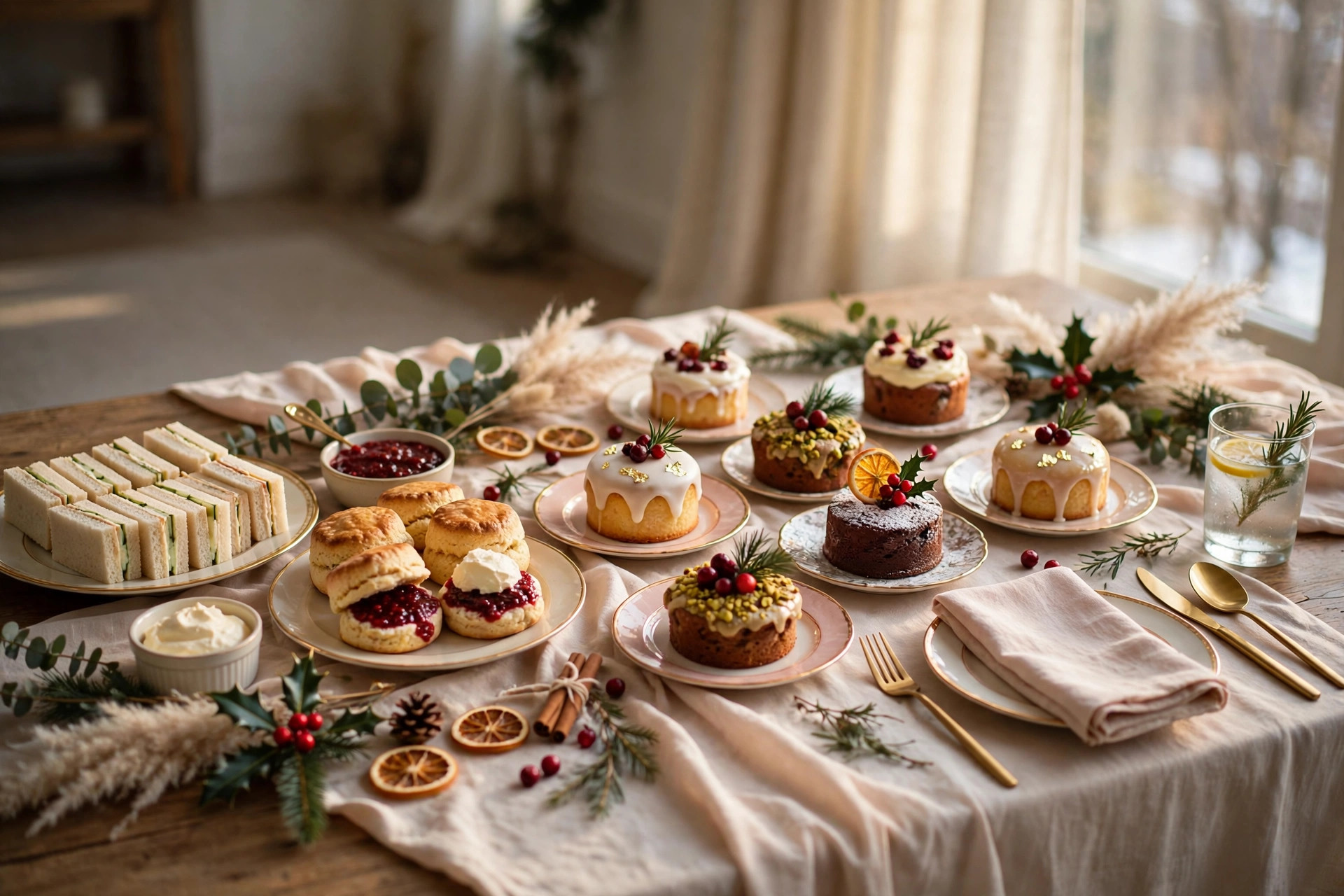
Start with sandwiches, cut small and crusts removed if you like. Good choices include cucumber and cream cheese, smoked salmon with lemon, egg and cress, and turkey with cranberry sauce. Offer two or three fillings, and make a few extra of the most popular one. Small fingers of bread are easier to hold and eat than large rounds.
Then come the scones, warm from the oven if you can manage it. Plain scones with jam and clotted cream are a classic, while fruit scones with dried cranberries feel festive. Serve them with softened butter, jam, and cream in small bowls, so guests can help themselves. A warm scone is often the moment everyone remembers.
Finish with small cakes and biscuits. Mini mince pies, gingerbread stars, chocolate truffles, and slices of fruit cake all work well. Keep portions tiny, because guests will want to try a little of everything. If you are short on time, choose one homemade bake and buy the rest from a bakery you trust.
| Course | Easy choice | Festive twist |
|---|---|---|
| Savoury | Cucumber and cream cheese sandwiches | Turkey and cranberry sandwiches |
| Scones | Plain scones with jam | Cranberry scones with orange zest |
| Sweet | Shortbread biscuits | Mini mince pies and gingerbread stars |
How Do I Set a Festive Table Without Buying Much?
Quick answer: Use what you already own, then add one or two festive touches. A plain tablecloth, a few candles, sprigs of greenery, and mismatched pretty plates can look warm and elegant without a big shop.
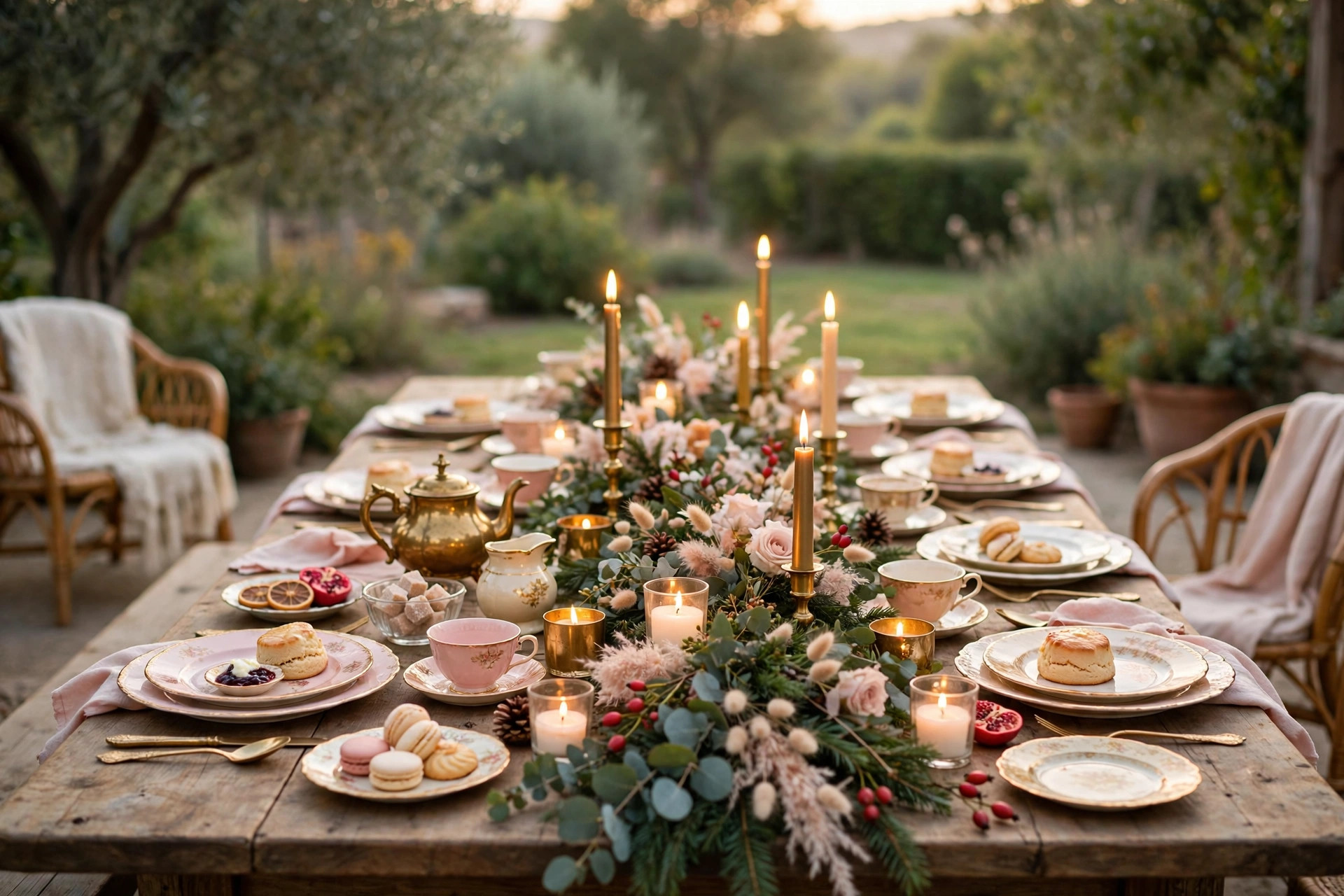
Start with a clean, calm base. A white or cream tablecloth, or even a plain linen runner, lets the food and decorations shine. If you do not own a tablecloth, a large piece of fabric or a pale throw can work just as well. Iron out the creases the night before, so the morning feels calm.
Add greenery from the garden or a local market. Sprigs of rosemary, pine, eucalyptus, or holly laid along the centre of the table look lovely and cost very little. A few tea lights in glass holders add a soft glow, and a small bowl of clementines or cranberries brings in colour. Keep the centrepiece low, so guests can see each other across the table.
What Drinks Work Best With Afternoon Tea?
Quick answer: Offer a classic black tea, a herbal option, and one festive drink. Keep the choice small, serve drinks in rounds, and always have hot water and milk nearby for refills.
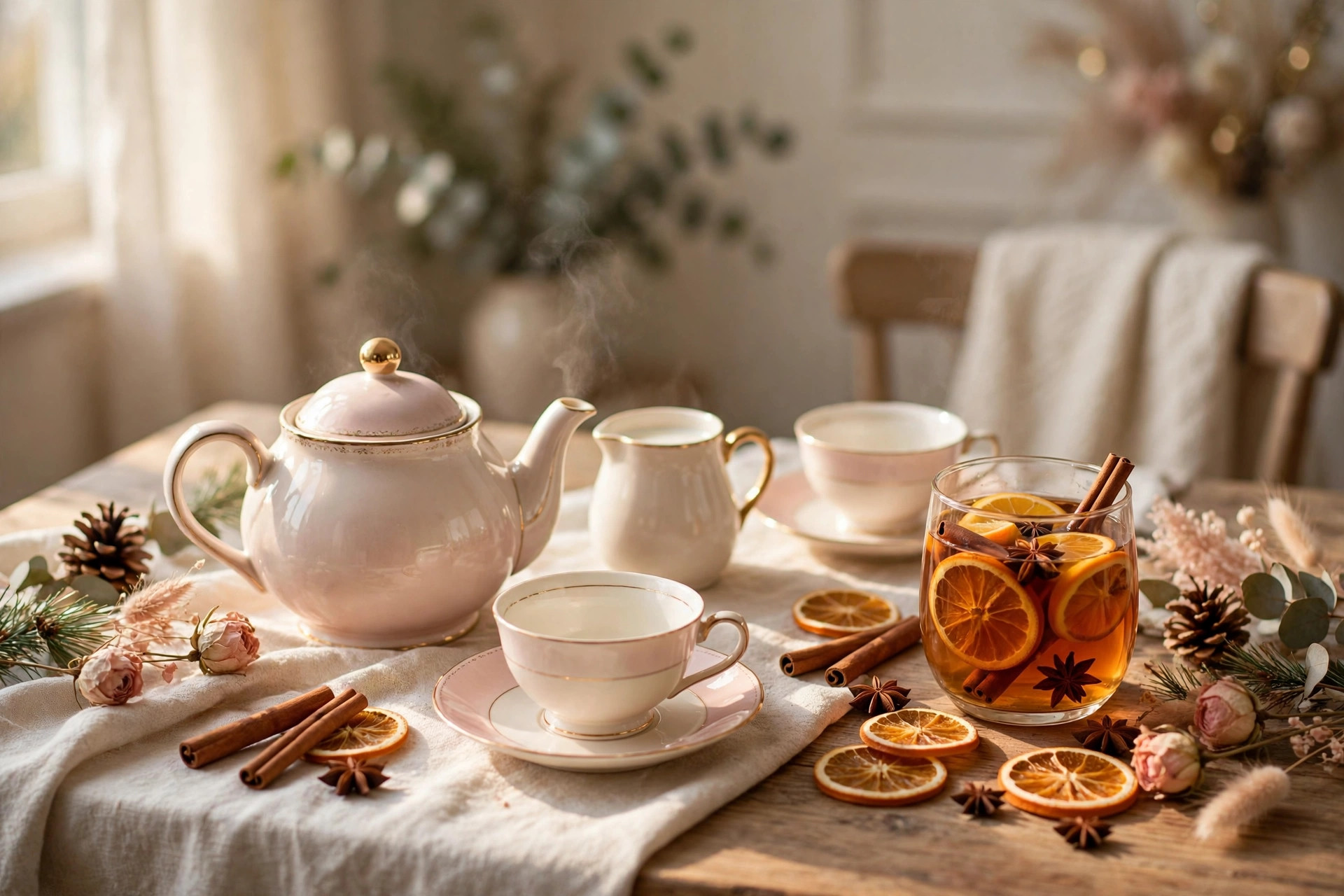
A good black tea, such as English breakfast or Earl Grey, suits most guests and pairs well with sandwiches and scones. Brew it fresh in a teapot, and keep a second pot of hot water ready for refills. Offer milk and lemon on the side, and let guests choose what they like. A small jug of honey is a kind extra.
For guests who prefer something lighter, add a herbal tea, such as chamomile or peppermint. A festive spiced tea with cinnamon, orange, and clove also feels special at Christmas, and it fills the room with a warm scent. If children are joining, a jug of warm spiced apple juice or hot chocolate is a thoughtful touch.
How to Host Christmas Afternoon Tea at Home for a Small Group
Quick answer: Keep the menu short, the seating close, and the pace slow. Serve food in small rounds, refill tea often, and plan one gentle activity, such as a simple quiz or a shared story, to keep conversation flowing.
A small group is a gift. You can talk properly, notice who needs a refill, and serve food while it is still warm. Seat guests close together, even if the table could hold more people. A cosy table feels warmer than a wide, empty one, and it helps shy guests join in.
Serve the food in rounds rather than all at once. Start with sandwiches, clear the plates, then bring out the scones, and finish with the cakes. This slow rhythm gives the afternoon a gentle shape and stops the table from feeling crowded. It also means you can enjoy each course with your guests.
Plan one light moment to bring everyone together. A short Christmas quiz, a round of sharing a favourite festive memory, or a simple game of guessing the flavour in a biscuit can break the ice. Keep it optional and relaxed. The best afternoons leave room for quiet chats as well as laughter.
How Far Ahead Can I Prepare Everything?
Quick answer: Most of the work can be done the day before. Bake cakes and biscuits ahead, prepare fillings in the morning, and make sandwiches a few hours before guests arrive. Bake scones last, close to serving time.
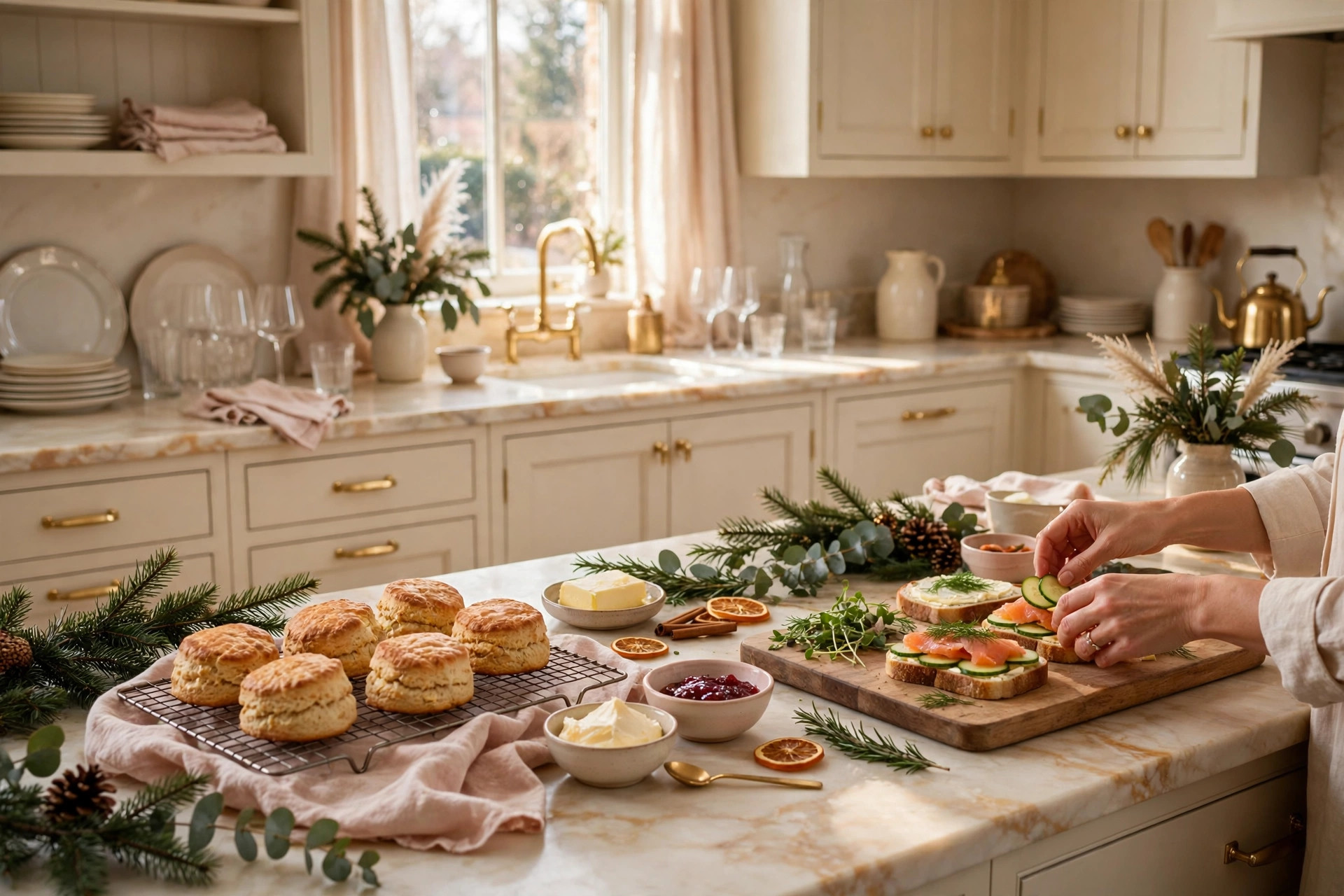
The day before, bake any cakes and biscuits, and store them in airtight tins. Set the table, lay out plates and cups, and write a short list of what still needs doing. This quiet preparation makes the day itself feel much calmer, and it leaves you free to enjoy the morning.
On the day, prepare sandwich fillings in the morning and keep them covered in the fridge. Make the sandwiches a few hours before guests arrive, and cover them with a clean, damp cloth or cling film so they stay fresh. Bake the scones last, so they are still warm when they reach the table.
Food safety matters too, especially with chilled fillings. As a general guide, FoodSafety.gov advises keeping cold food chilled and not leaving perishable food out for long periods. Keep chilled food cold until serving, and put leftovers back in the fridge promptly. It is a simple habit that keeps everyone comfortable.
What If Guests Arrive at Different Times?
Quick answer: Do not wait for everyone before you start. Welcome early guests with tea and a small bite, keep the main food covered and warm, and bring out each course when most guests have arrived.
Staggered arrivals are normal, especially in December. Greet early guests warmly, offer them a cup of tea, and invite them to sit down. A small plate of biscuits or a few warm scones will keep them happy while you wait for the rest of the group.
Keep the sandwiches covered until most guests have arrived, so they stay fresh. If someone is running late, save them a small plate of each course, and warm a scone for them when they arrive. A thoughtful host makes late guests feel welcomed, not rushed.
Christmas Afternoon Tea Questions, Answered
Quick answer: Most questions about Christmas afternoon tea come down to timing, menu size, and preparation. Keep the menu short, prepare ahead, and serve in rounds, and the afternoon will feel calm and festive.
How long should a Christmas afternoon tea last?
Plan for about two hours. That gives guests time to enjoy three courses, refill their tea, and chat without feeling rushed. If the conversation is flowing, let it run a little longer. A relaxed ending is better than a hurried one.
How many sandwiches should I make per person?
Allow three to four small sandwich fingers per person, across two or three fillings. It is better to make a few extra of the most popular filling than to offer too many choices. Guests often take a second helping of the one they love most.
Can I host a Christmas afternoon tea without a tiered stand?
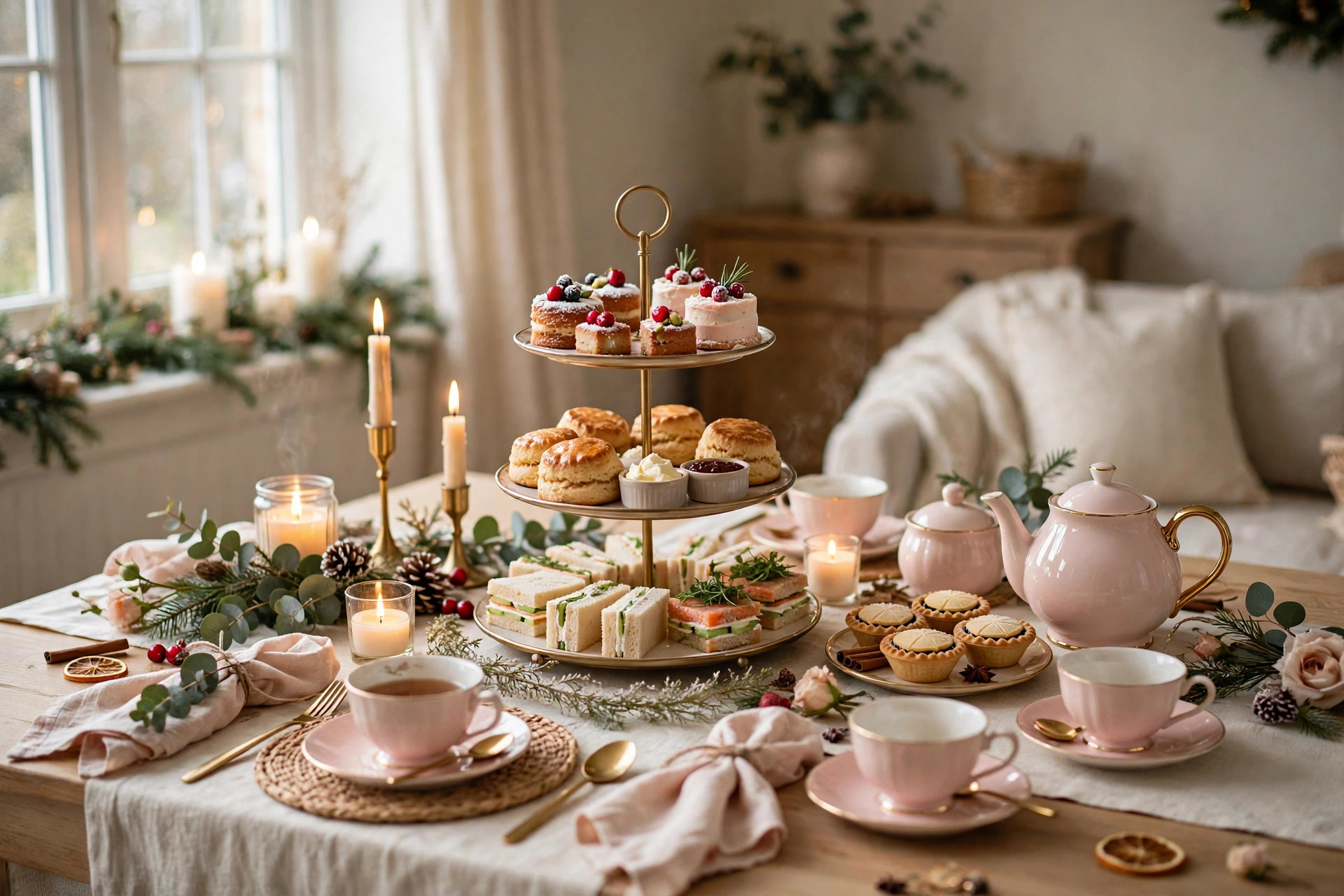
Yes, absolutely. Use cake stands, large plates, and small bowls instead. Place the sandwiches on one plate, the scones on another, and the cakes on a third. The food will look just as lovely, and guests can reach everything easily.
What is the easiest festive touch to add?
A sprig of rosemary on each plate, a bowl of clementines in the centre of the table, and a pot of spiced tea are all simple and effective. Afternoon tea itself dates back to the nineteenth century, when a light meal in the late afternoon became a social occasion in Britain, and that gentle, sociable spirit is still at its heart. You can read more about the history of afternoon tea on Britannica.
A Christmas afternoon tea at home does not need to be perfect. It needs warmth, good food, and time to sit together. Choose a simple menu, set the table with care, and let the afternoon unfold slowly. Your guests will leave feeling cosy, cared for, and already looking forward to next year. Why not pick a date, invite your favourite people, and start planning your own festive tea?
Leave a Reply