
Last updated: November 2026
Quick answer: To keep your lips soft in winter naturally, protect them from cold wind, drink enough water, exfoliate very gently once a week, and seal in moisture with a simple balm. Small daily habits matter more than expensive products.
Winter is not kind to lips. The air turns cold and dry, indoor heating dries it out even more, and before long your lips feel tight, rough, and sore. If you are wondering how to keep lips soft in winter naturally, the good news is that you do not need a drawer full of expensive balms. A few gentle habits, used every day, will do far more than any single miracle product.
In our experience, soft winter lips come from protection and consistency. You protect your lips from wind and dry air, you add moisture back in, and then you seal it in so it stays put. That is the whole secret, and the rest of this guide walks you through each step in a simple, realistic way.
Why do lips get so dry in winter?
Lips dry out in winter because cold air holds less moisture, wind strips away natural oils, and heated rooms dry the air indoors. Lips have very thin skin and no oil glands of their own, so they lose moisture faster than the rest of your face.
The American Academy of Dermatology explains that lips have thinner skin than the rest of the face, which is one reason they chap so easily in cold, dry weather. You can read their guidance on chapped lips for a clear explanation of why this happens.
Several winter habits make the problem worse. Licking your lips feels soothing for a moment, but saliva evaporates quickly and leaves lips drier than before. Breathing through your mouth on a cold walk does the same thing. Drinking less water in winter, because you feel less thirsty, also plays a part. None of these habits mean you have done anything wrong. They are simply worth noticing, because changing them is free and it helps straight away.
How to keep lips soft in winter naturally with a simple daily routine
Keeping your lips soft in winter naturally starts with a short routine you can repeat morning and night. Cleanse gently, add a little moisture, then seal it in with balm. Keep the routine short so you will actually do it every day.
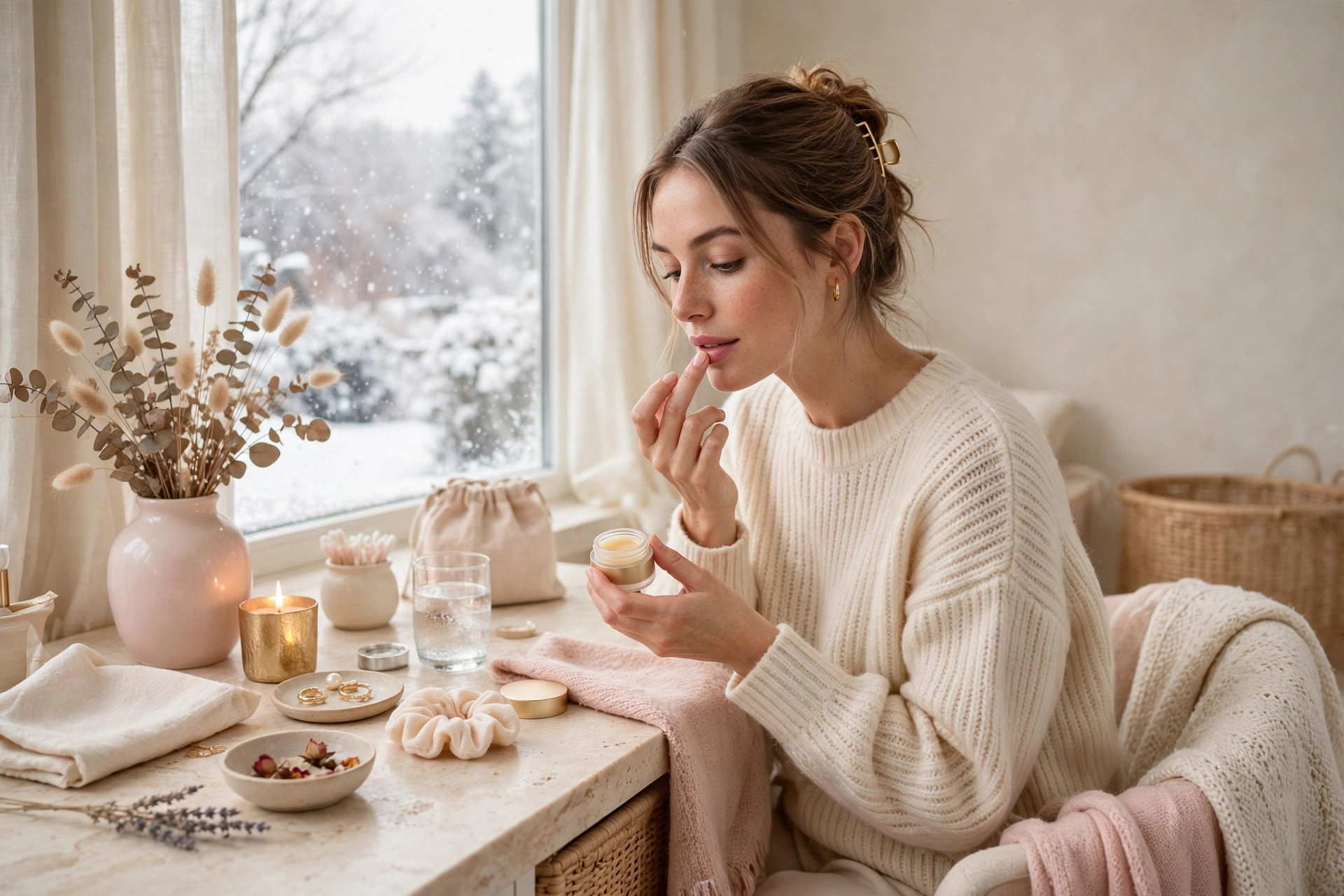
Your morning routine can take less than a minute. After you wash your face, pat your lips dry gently instead of rubbing them. Then apply a plain lip balm before you leave the house. Think of it as a coat for your lips. It creates a barrier between your skin and the cold air, and it stops moisture escaping during the day.
- Morning: gentle cleanse, then a plain balm before going outside.
- Daytime: reapply balm after eating, drinking, or being outside in the wind.
- Evening: a thicker layer of balm or oil before bed.
- Weekly: one very gentle exfoliation, only if your lips are not cracked or sore.
What is the gentlest way to exfoliate winter lips?
The gentlest way to exfoliate winter lips is to soften them first, then buff very lightly with a soft cloth or a homemade sugar scrub, once a week at most. Stop straight away if your lips feel sore, and always follow with balm.
Exfoliation simply means removing the loose, flaky skin that sits on the surface. When that layer is gone, your balm can reach the softer skin underneath. The key word is gentle. Your lips are not the place for a harsh scrub or a rough brush.
Start by softening your lips with a warm, damp cloth held against them for a minute. Then, if you like, mix a tiny amount of fine sugar with a drop of honey or a plain oil. Rub it over your lips in small, slow circles for a few seconds only. Rinse with warm water, pat dry, and apply balm straight away.
If your lips are cracked, bleeding, or very sore, skip exfoliation completely and wait until they have healed. Exfoliating broken skin will only make it worse. Once a week is plenty for most people. If your lips feel tight or raw afterwards, you are doing it too often or too firmly. Less is more here.
Which natural ingredients actually help dry lips?
The most helpful natural ingredients for dry lips are simple moisturisers and barriers such as shea butter, beeswax, coconut oil, and olive oil. They soften the skin and lock in moisture without fragrance or harsh active ingredients.
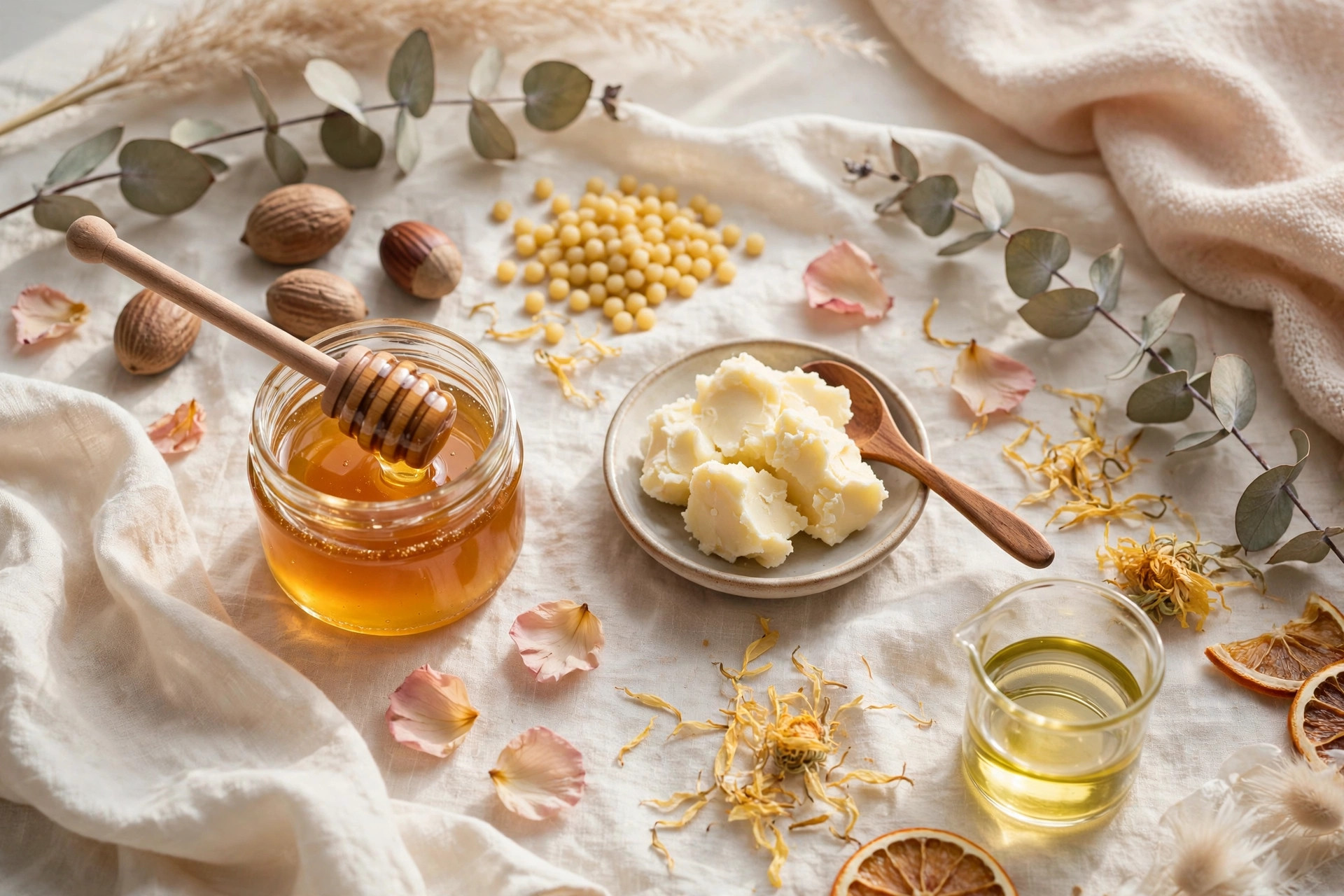
Shea butter is a favourite for a reason. It feels rich and creamy, it sinks in slowly, and it leaves a soft, protective layer behind. A plain shea butter balm, with no added fragrance, is a lovely everyday choice. Beeswax works in a similar way. It helps a balm stay on your lips for longer, which is exactly what you want on a windy day.
| Ingredient | Best for | How to use it |
|---|---|---|
| Shea butter | Daily softness and protection | Apply as a plain balm, morning and night |
| Beeswax | Staying power in wind and cold | Look for it in a simple balm stick |
| Coconut or olive oil | A light layer of moisture | Apply thinly, then seal with balm |
| Honey | Soothing very dry lips | Thin layer in the evening, under balm |
When you shop for a balm, read the ingredient list. Shorter is usually better. Look for a few recognisable ingredients and no added fragrance. A balm with petroleum jelly as its base is also a good choice. The American Academy of Dermatology recommends plain petroleum jelly for chapped lips, because it seals in moisture and protects healing skin. You can find their advice in their guide to healing chapped lips.
How can I stop my lips from chapping before it starts?
You can stop lips from chapping by protecting them before you go outside, avoiding licking them, and reapplying balm through the day. Prevention is easier than healing, and it takes only a few seconds.
Think of lip care like wearing a coat. You put the coat on before you step into the cold, not after you are already freezing. Your balm works the same way. Apply it before your walk, before your school run, or before you wait for the bus. That thin layer makes a real difference.
Inside the house, dry air is the quiet culprit. Central heating warms the room but dries the air, and that dry air pulls moisture from your lips all evening. If your home feels very dry, a small humidifier in your bedroom can help. Drinking water matters as well. You may not feel as thirsty in winter, but your body still needs fluids, so keep a bottle or a mug nearby and sip through the day.
What should I avoid putting on my lips in winter?
Avoid lip products with strong fragrance, menthol, camphor, eucalyptus, or drying matte formulas in winter. They can irritate sore lips and make dryness worse, even when they feel cooling at first.
Matte lipsticks look beautiful, but many of them are very drying. If you love a matte lip, apply balm first, let it sink in for a few minutes, blot away the excess, and then apply your lipstick. A creamy or satin finish is usually kinder in winter than a long-wear matte.
Lip plumpers are best left alone until spring. They often work by mildly irritating the lips, which is the opposite of what dry winter lips need. The same goes for lip scrubs with large, rough grains or strong acids. Gentle is the rule all winter long.
How to keep lips soft in winter naturally when lips are already cracked
To heal cracked, sore lips, keep them clean and protected, apply a plain healing balm often, avoid irritating products, and let them rest. Most mild cracking improves within a few days with gentle, consistent care.

When your lips are cracked, simplicity is everything. Use a plain balm with as few ingredients as possible, and apply it often. Every hour or two is fine while they are healing. A thin layer, reapplied regularly, protects the cracks from air and helps them close.
Most cracked lips heal with this kind of care in a few days. If your lips stay cracked for more than two or three weeks, if they bleed often, or if the corners of your mouth keep splitting, it is worth speaking to your doctor or pharmacist. The NHS advises seeking medical advice for lips that do not heal or keep cracking, as there can be an underlying cause worth checking. You can read more on the NHS page about chapped lips.
Frequently asked questions about soft winter lips
How often should I apply lip balm in winter?
Apply lip balm whenever your lips feel dry, and always before going outside. For most people, that means three to five times a day. Reapply after eating or drinking, and use a thicker layer before bed.
Can I use Vaseline on my lips in winter?
Yes, plain petroleum jelly is a good choice for winter lips. It forms a protective barrier that seals in moisture and helps cracked skin heal. Choose the plain, fragrance-free version, and apply it with clean hands or a clean cotton bud.
Is it okay to exfoliate my lips every day?
No, daily exfoliation is too much for lips. Once a week is enough for most people. Exfoliating every day can leave lips raw, sore, and more likely to crack. If your lips feel smooth and comfortable, you may not need to exfoliate at all.
Why do my lips feel worse after using a flavoured balm?
Flavoured and fragranced balms often contain ingredients that irritate dry lips, such as fragrance, menthol, or camphor. They can also make you lick your lips more, which dries them out further. If a balm stings, switch to a plain, fragrance-free balm for a few weeks.
Soft winter lips do not need expensive products or a complicated routine. They need protection before you go out, a little moisture, a gentle balm to seal it in, and the patience to repeat those steps every day. Start tonight with a thick layer of plain balm before bed, and tomorrow morning, put it on before you step outside. Your lips will feel the difference within days, and by the time the coldest weeks arrive, your routine will already be second nature.
Leave a Reply