
Last updated: November 2026
Quick answer: To learn how to make nail polish last longer in cold weather, start with clean, dry nails, use a base coat, apply thin coats, seal the free edge, and finish with a top coat. Wear gloves outdoors and reapply top coat every two days.
There is nothing more annoying than painting your nails beautifully, only to find chips by the next morning. Cold weather makes it worse. Low temperatures, dry air, hot water, and thick winter jumpers all work against your manicure. The good news is that a few small changes can help your polish last much longer.
Learning how to make nail polish last longer in cold weather is not about buying the most expensive polish. It is about preparation, thin layers, and protecting your nails from the things that cause chips. In this guide, we will walk through each step, from prep to top coat, plus the everyday habits that keep a winter manicure looking fresh.
Why Does Nail Polish Chip Faster in Cold Weather?
Nail polish chips faster in cold weather because cold air dries out nails and polish, making both more brittle. Frequent moves between cold outdoors and warm indoors also cause polish to expand and contract, which can lead to cracks and chips.
Winter is hard on nails. Cold air pulls moisture from your nails and cuticles. Dry nails are more likely to bend and peel, and polish does not stick well to a dry surface. Indoor heating makes it worse, because it dries the air inside your home too.
Hot water is another winter culprit. Long, hot showers and washing up without gloves can soften polish and lift its edges. Once an edge lifts, water gets underneath, and a chip follows soon after. Thick jumpers and coats can also catch the free edge of a nail and pull polish away.
How to Make Nail Polish Last Longer in Cold Weather: Start With Good Prep
To make nail polish last longer in cold weather, start with clean, dry, oil-free nails. Remove old polish fully, shape gently, push cuticles back, and wipe each nail with polish remover before your base coat.
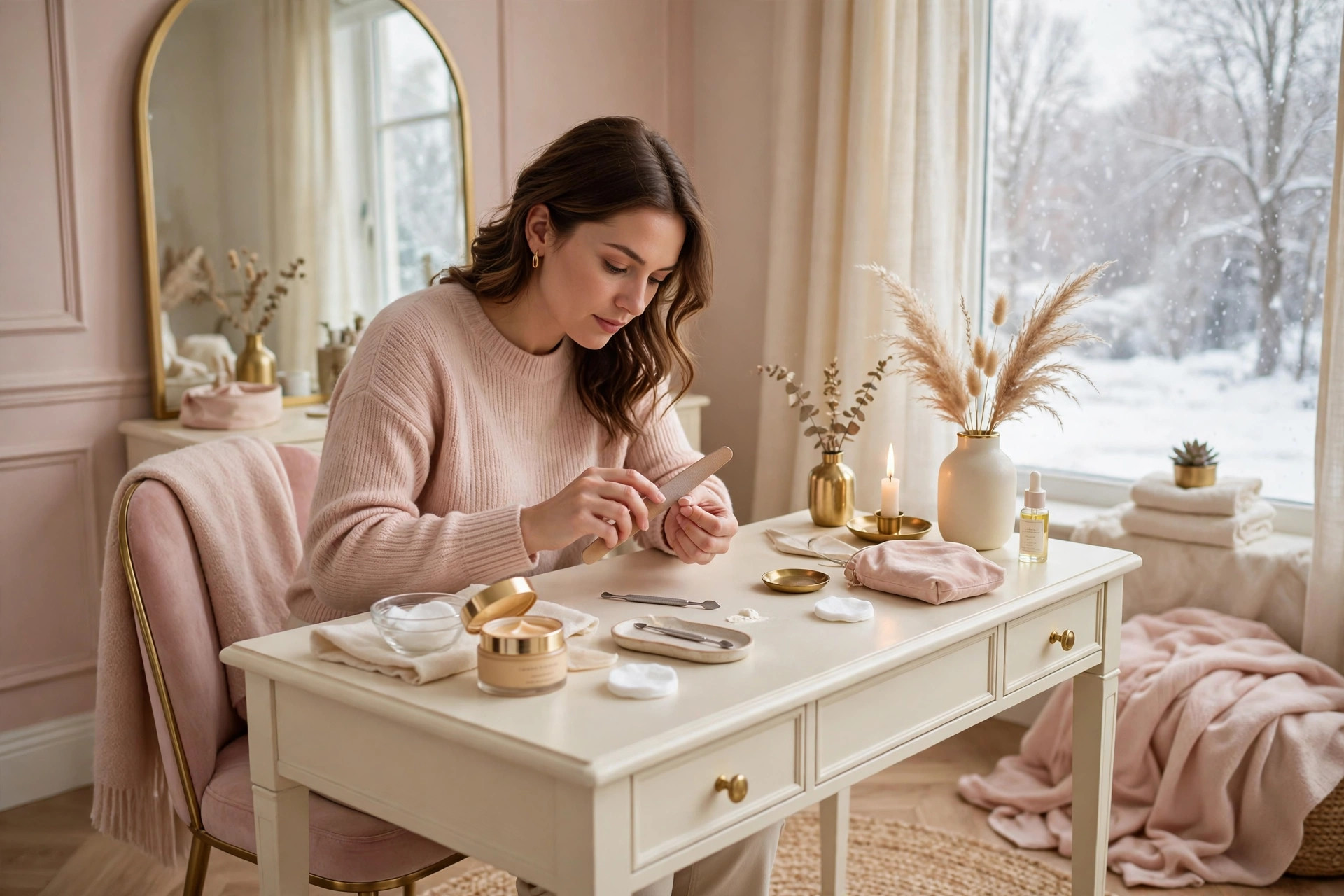
Good prep is the secret to a long-lasting manicure. Start by removing every trace of old polish, even around the edges. Then shape your nails with a gentle file, moving in one direction rather than sawing back and forth. Shorter, rounded shapes tend to chip less in winter, because there is less free edge to catch on jumpers and coat pockets.
Push your cuticles back gently after a shower, when they are soft. Do not cut them, because cuticles protect the nail from infection. Next, wash your hands with soap and water, dry them fully, and wipe each nail with a little polish remover on a cotton pad. This removes natural oils and any hand cream, giving the base coat a clean surface to grip. Wait until your nails feel completely dry before you start painting. Even a little dampness can stop polish from sticking properly.
Which Base Coat Works Best in Winter?
A good base coat helps polish grip the nail and protects it from staining. In winter, choose a base coat that mentions strength, grip, or ridge filling, and let it dry fully before adding colour.
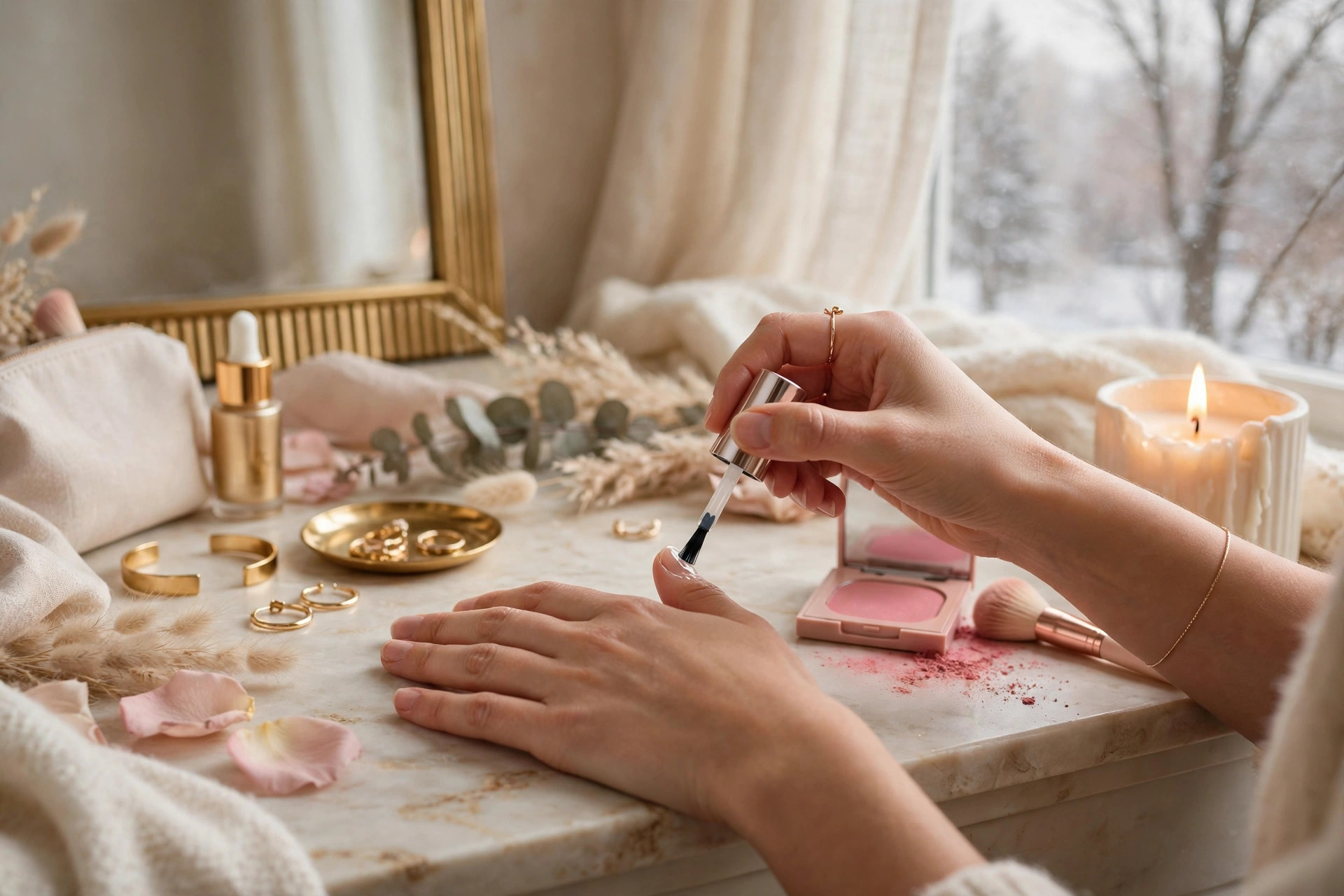
A base coat is not an optional extra in cold weather. It gives colour something to hold on to, and it stops dark shades from staining your nails. In winter, look for a base coat that talks about grip, strength, or filling ridges. These formulas help smooth the nail surface, so colour goes on evenly and stays put.
Apply one thin layer of base coat over the whole nail, including the free edge. Let it dry fully before you add colour. This takes a few minutes, and it is worth the wait. If you rush, the layers can slide and bubble, and your manicure will chip sooner. In our experience, a fully dry base coat is one of the biggest differences between a manicure that lasts two days and one that lasts a week.
How Many Coats Should You Apply, and How Thin?
Apply two thin coats of colour rather than one thick coat. Thin coats dry fully, grip better, and chip less, while thick coats stay soft underneath and peel away easily in cold weather.
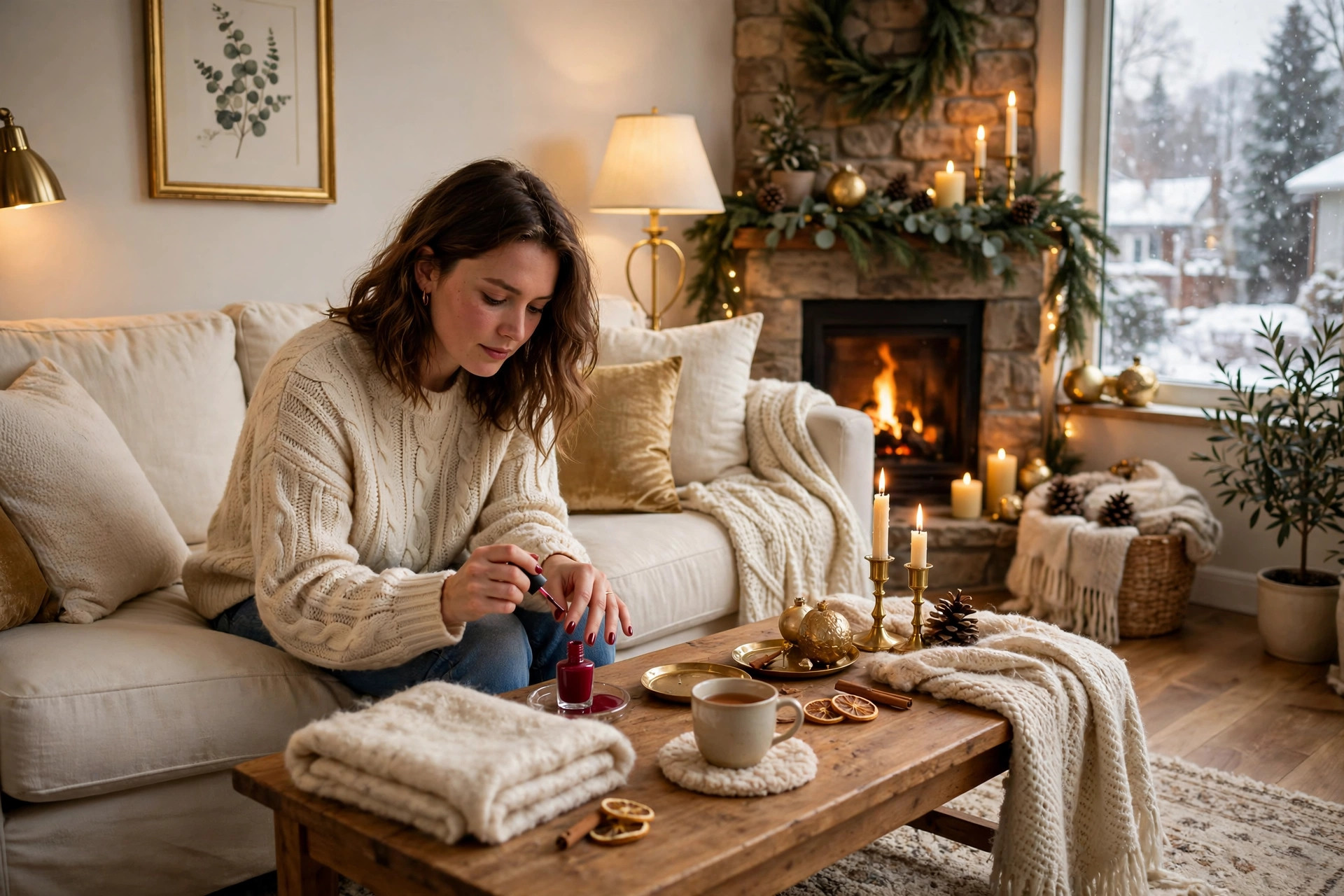
Thin coats are the golden rule of a lasting manicure. Wipe most of the polish off the brush before you start, so only a small amount reaches the nail. Paint in three smooth strokes: one down the middle, then one on each side. Keep the layer light and even. Wait at least two minutes before the second coat, so the first one can set.
A second thin coat gives you full, even colour without the problems of a thick layer. Thick polish may look dry on top while it is still soft underneath. That soft layer shifts and peels, especially when your hands move between cold air and warm rooms. If your colour still looks patchy after two coats, a third very thin coat is better than one heavy one. Let each coat dry before the next, and keep your hands still while you wait.
What Is Capping the Free Edge, and Why Does It Help?
Capping the free edge means brushing polish across the very tip of the nail. It seals the edge where chips usually start, and it is one of the simplest ways to make a winter manicure last longer.

Most chips start at the tip of the nail, where polish is thinnest and most exposed. Capping the free edge seals that tip. After each coat, including base coat, colour, and top coat, run the brush lightly across the very edge of the nail, from one side to the other. Use only a tiny amount of polish, so it does not pool underneath.
This small step takes seconds, and it makes a real difference in winter. It is especially helpful if you type a lot, open parcels, or reach into coat pockets, because all of those habits wear the tip first. If you notice a tip starting to wear after a few days, you can touch it up with a little top coat, capped over the edge again. Think of it as sealing an envelope: once the edge is closed, the rest stays in place.
How Do You Choose a Top Coat for Winter?
Choose a top coat that adds shine and a protective layer, and reapply a thin layer every two days. A fresh top coat reseals the free edge and keeps colour looking new, even in cold, dry air.
A good top coat does two jobs. It protects your colour from knocks and water, and it adds a smooth, glossy finish. In winter, a top coat that mentions long wear or extra shine is a good choice. Apply one thin layer over the whole nail, and cap the free edge again. Let it dry fully before you put on gloves or reach for your coat.
The trick most people miss is reapplying top coat during the week. Every two days, add one thin layer of top coat over your existing manicure. It takes a minute, and it reseals the tips and refreshes the shine. Keep the bottle somewhere you will see it, like beside your moisturiser, so it becomes part of your evening routine. If you use a quick-dry top coat, wait a little longer in cold weather, because polish dries more slowly when the room is cool.
How to Make Nail Polish Last Longer in Cold Weather With Everyday Habits
Everyday habits protect your manicure when you wear gloves outdoors, wear rubber gloves for washing up, moisturise hands and cuticles daily, and use your fingertips rather than your nails to open things.
Gloves are your manicure’s best friend in winter. Wear warm gloves every time you go outside, not only to keep your hands warm, but to protect polish from cold, dry air. For washing up and cleaning, wear rubber gloves. Hot water and cleaning products are two of the fastest ways to lift polish, and gloves stop them reaching your nails at all.
Moisturise your hands and cuticles every day. Dry cuticles can pull and lift polish at the edges, so a little cuticle oil or hand cream goes a long way. Apply it at night, and let it sink in while you sleep. The American Academy of Dermatology Association recommends moisturising nails and cuticles, and keeping nails trimmed and clean, which also helps polish last. Finally, use the pads of your fingers, not your nails, to open tins, peel labels, and tap screens. Your nails will thank you.
| Step | What to do | Why it helps in winter |
|---|---|---|
| Prep | Clean, dry, oil-free nails | Polish grips a clean surface |
| Base coat | One thin coat, fully dry | Stops staining and adds grip |
| Colour | Two thin coats | Dries fully and chips less |
| Top coat | Thin coat, reapply every two days | Seals and protects colour |
| Daily care | Gloves and moisturiser | Stops drying and lifting |
Frequently Asked Questions
Why does my nail polish peel off in sheets in winter?
Peeling in sheets usually means polish was applied too thickly, or over oily or damp nails. Try thinner coats, wipe each nail with remover before your base coat, and let every layer dry fully. A base coat also helps colour grip much better.
Should I use a quick-dry top coat in cold weather?
Quick-dry top coats can work well, but they may need a little longer to set in a cool room. Apply a thin layer, cap the free edge, and wait patiently before putting on gloves. Reapplying every two days matters more than the type of top coat.
Does hand cream ruin nail polish?
Hand cream is good for your nails, but it can stop polish sticking if it is on the nail before you paint. Moisturise after your manicure is fully dry, and try to keep cream off the polish itself. Cuticle oil at night is ideal.
How long should a winter manicure last?
With good prep, thin coats, a top coat, and gloves for chores, a winter manicure can look lovely for five to seven days. Some wear at the tips is normal by day five. A fresh layer of top coat can extend it by a day or two.
Cold weather does not have to mean chipped nails all winter. With clean prep, thin coats, a sealed free edge, and a little daily care, your manicure can stay smooth and glossy for days. Try the method this week, keep your gloves by the door, and enjoy nails that look freshly painted for far longer.
Leave a Reply