
Last updated: November 2026
Quick answer: Plan a slow New Year’s Day with a lie-in, a simple brunch, one gentle activity, and an early night. Keep the day free of chores and big decisions, prepare a few small comforts the night before, and let rest be the whole plan.
After the sparkle of Christmas and the countdown of New Year’s Eve, the first morning of January can feel strangely flat. Learning how to plan a quiet New Years Day at home is one of the kindest gifts you can give yourself, because a slow start sets a gentle tone for everything that follows. The decorations are still up, the fridge is full of leftovers, and the whole world seems to be shouting about new goals and fresh starts. But you do not have to begin the year with a rush.
In our experience, the best New Year’s Days are the simple ones. A warm drink in your favourite mug. A walk in the cold, bright air. A film you have seen a dozen times. Nobody is keeping score, and nobody needs you to be productive. This guide will help you shape a day that feels restful, cosy and quietly special, without spending much or doing very much at all.
What does a quiet New Year’s Day at home actually look like?
A quiet New Year’s Day is a day with no big plans and no pressure. It is slow on purpose. You wake when you wake, you eat what you fancy, and you do only the things that feel restful. Slow on purpose, and all the better for it.

It does not need to look a certain way. For some people, quiet means a whole day in soft clothes with a good book. For others, it means a gentle walk and a simple lunch with family. The shape does not matter. What matters is that the day belongs to you, not to a list of things you should be doing.
It helps to decide in advance what “quiet” means for you. Is it no visitors? No housework? No phone scrolling? Choose one or two things you will not do, and the day will feel restful almost by itself. A boundary around the day is what makes it feel like a treat rather than just another day off.
How do I plan a quiet New Year’s Day at home step by step?
Planning a quiet day takes very little planning, which is good news. A few small choices made the night before are enough. The aim is to wake up to a day that is already gentle, with nothing urgent waiting for you.

Start on New Year’s Eve, before the evening begins. Lay out comfortable clothes, set out your favourite mug, and decide what you will eat for breakfast. Small preparations like these remove the tiny decisions that can nibble away at a restful morning. If you live with others, agree the plan together, so everyone wakes up expecting the same slow pace.
Next, clear one small space. You do not need to clean the whole house. Just tidy the spot where you will spend the morning, whether that is the sofa, the kitchen table, or your favourite chair by the window. A calm corner makes the whole day feel calmer.
- Choose your wake-up time: decide to sleep in, and set no alarm unless you must.
- Plan one meal: a simple brunch you enjoy, using food you already have.
- Pick one gentle activity: a walk, a film, a puzzle, or a long bath.
- Set a phone limit: check messages once, then put the phone in another room.
- Plan your evening: a warm drink, soft lights, and an early night.
How to plan a quiet New Year’s Day at home with a slow morning
The morning sets the tone for the whole day, so protect it. A slow morning means no rushing, no chores, and no difficult conversations before you have properly woken up. Give yourself at least an hour that belongs to nobody but you.

Begin with something warm and simple. Tea, coffee, or hot chocolate, taken slowly, can feel like a small ceremony. Sit by the window and watch the winter light. If you like, write a few lines in a notebook about the year just gone, or about one small hope for the year ahead. There is no need to make a list of goals. One gentle thought is enough.
If you stayed up late, be kind to your body. The NHS advises that adults need seven to nine hours of sleep a night, and a lie-in after a late night is simply your body catching up (nhs.uk). Drink water, eat something gentle, and step outside for a few minutes of daylight when you can. Fresh air and morning light help your body feel awake, even on a slow day.
What should I eat and drink on a slow New Year’s Day?
Food on New Year’s Day should be comforting and easy, not a project. You have cooked enough over Christmas. Today, the kitchen can take a rest too. The best meals are the ones that ask very little of you and still feel special.
Start with a brunch that uses leftovers well. Cold cuts, cheese, bread, and fruit make a lovely grazing board. Warm soup from the freezer, or a simple tray of roasted vegetables, can be lunch without any fuss. If you fancy something sweet, bake a small batch of biscuits or warm a slice of Christmas cake with a cup of tea.
| Meal | A slow, simple idea |
|---|---|
| Breakfast | Toast, eggs and fruit, eaten slowly by the window |
| Brunch | A grazing board of cheese, bread and leftovers |
| Lunch | Warm soup with crusty bread, or a simple tray bake |
| Afternoon treat | Biscuits or Christmas cake with tea or hot chocolate |
| Supper | Something light, like scrambled eggs or a small salad bowl |
What are gentle ways to spend the afternoon?
The afternoon is the heart of a quiet New Year’s Day. By now you are rested, fed, and ready for something pleasant but undemanding. Choose one thing, not five. A day with one lovely activity feels richer than a day packed with plans.
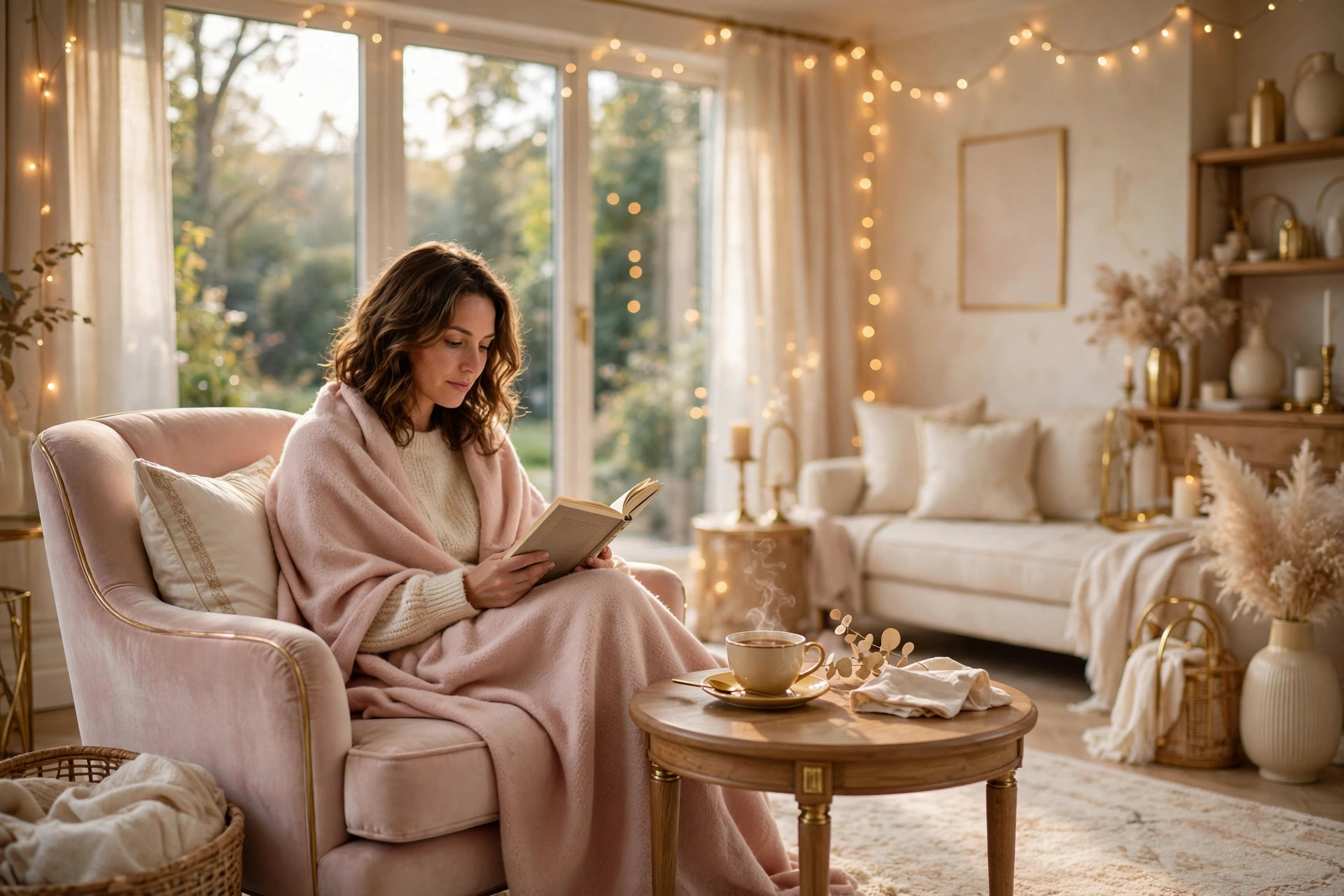
A walk is one of the simplest choices. The NHS recommends that adults aim for at least 150 minutes of moderate activity a week, and a gentle New Year’s Day walk is a lovely way to begin (nhs.uk). Wrap up warm, choose a familiar route, and notice the winter light. Even twenty minutes outside can lift your mood and help you sleep well that night.
If the weather keeps you indoors, there are plenty of soft options. A favourite film, a jigsaw puzzle, a long bath, or an hour with a book all count. The Sleep Foundation notes that a consistent wind-down routine in the evening can support better sleep, so ending the day calmly is a gift to tomorrow as well (sleepfoundation.org).
- A winter walk: fresh air, gentle movement, and time to think.
- A favourite film: something comforting you have seen before.
- A good book: an hour in a warm chair, phone in another room.
- A simple craft: knitting, colouring, or a jigsaw puzzle.
- A long bath: warm water, soft light, and nowhere to be.
How can I make the evening feel special without a party?
A quiet evening can still feel special. In fact, it often feels more special than a party, because it is shaped around what you truly enjoy. The trick is to add a few small touches that mark the day as different from an ordinary evening at home.
Light candles, or switch on the fairy lights that are still up from Christmas. Put on soft music. Make a warm drink you love, whether that is cocoa, spiced tea, or a simple honey and lemon. Small rituals like these tell your mind that the evening matters, even though the house is quiet.
How to plan a quiet New Year’s Day at home when you live with others
A quiet day is still possible when you share your home. It simply takes a little more talking beforehand. The aim is not for everyone to do the same thing all day, but for everyone to agree that the day will be slow and unhurried.
Talk about it on New Year’s Eve, when everyone is together. Agree on the shape of the day: a late breakfast, no big chores, and one shared activity if everyone wants one. Then let each person have some time alone as well. Quiet togetherness works best when everyone also gets a little space.
Is it okay to do nothing on New Year’s Day?
Yes, it is completely okay. Rest is not wasted time. A day of doing very little can be exactly what your body and mind need after a busy festive season. You do not have to earn rest by being productive first.
Should I set New Year’s resolutions on 1 January?
You do not have to. The first day of the year is a lovely time for one gentle hope or intention, but big resolutions can wait. If you like, jot down a single kind thought for the year ahead, and leave the detailed plans for later in January.
What if I feel low or lonely on New Year’s Day?
That feeling is more common than it looks, especially after the noise of Christmas fades. Be gentle with yourself, and reach out if you need to. A short call to a friend, a walk outside, or a warm drink can help. If the low feeling lingers, your GP can offer support and a listening ear.
How early should I go to bed on New Year’s Day?
As early as you like. An early night is one of the best parts of a quiet New Year’s Day. Aim for your usual bedtime or a little earlier, with a calm wind-down first: dim lights, a book, and no scrolling in bed. You will wake feeling rested and ready.
The new year does not need a grand entrance. It only needs you, rested and well, ready to meet it in your own time. So keep the day slow, keep the food simple, and keep the evening soft. Light the candles, pour something warm, and let 1 January be what it is: a quiet, gentle beginning. When the morning comes, you will be glad you started the year this way.
Leave a Reply