
Last updated: November 2026
Quick answer: Resting properly between Christmas and New Year means slowing down on purpose, sleeping well, getting gentle daylight and fresh air, and letting go of chores and obligations for a few days. Small, calm routines help you recover before January begins.
The days between Christmas and New Year have a strange, soft quality. The big meal is over, the presents are opened, and the house is quieter, yet many of us spend this in-between week rushing from one visit to the next, answering messages, and quietly worrying about January. If you want to know how to rest between Christmas and New Year, the honest answer is simpler than you might think. You rest by choosing to slow down, and by protecting that choice gently.
This is not about doing nothing at all. It is about giving your body and mind the breathing space they have been asking for all December. A gentle reset does not need a new routine, a big purchase, or a perfect plan. It needs a few kind habits, repeated over a handful of quiet days, until you start to feel like yourself again.
How to Rest Between Christmas and New Year Properly
Proper rest is unhurried and undemanding. It looks like slow mornings, simple meals, a walk in daylight, and an evening without a long list of jobs. It is rest you can feel in your shoulders, not just rest you have scheduled.
Many of us confuse rest with collapse. We push through December, then spend the days after Christmas slumped on the sofa, scrolling, feeling tired but never quite rested. Real rest is different. It is active in a gentle way. You move a little, you eat well, you sleep at regular times, and you give your mind something calm to do.
How Can I Sleep Better After Christmas?
Sleep is the foundation of any real reset, and the days after Christmas are a good time to repair it. Go to bed and wake up at roughly the same times each day, keep your bedroom cool and dark, and give yourself a calm hour before bed without bright screens.

December often disrupts sleep. Late nights, rich food, alcohol, and excitement all make it harder to fall asleep and stay asleep. The week after Christmas is your chance to gently bring your rhythm back. Choose a bedtime you can keep, even if it is later than your usual one, and stick to it for a few nights in a row.
A simple wind-down routine helps more than any gadget. Dim the lights, make a warm drink, read a few pages of a book, or have a warm bath. Avoid bright screens in the last hour before bed, since the light can make your brain feel wide awake when your body is tired. The Sleep Foundation recommends keeping a consistent sleep schedule and creating a relaxing bedtime routine, and both are easy to practise in this quiet week.
Why Does Gentle Daylight and Fresh Air Help So Much?
Daylight helps your body clock stay steady, lifts your mood, and makes sleep easier at night. A short walk outside each morning, even on a grey day, gives you more natural light than a whole day indoors.
In winter, we spend most of our time inside, and our bodies notice the lack of light. Getting outside in the morning tells your body that the day has begun, which helps you feel alert during the day and sleepy at the right time at night. You do not need a long hike. Ten or twenty minutes around the block is enough to make a difference.
Fresh air helps in its own quiet way. A walk after lunch eases the heavy, sleepy feeling that often follows a big meal. A slow wander through a park or along a quiet street gives your mind space to settle. Leave your headphones at home sometimes and listen to the world instead. The crunch of frost, the sound of birds, the cold air on your face — these small sensations bring you back to the present.
How to Rest Between Christmas and New Year When Everyone Wants to Visit
Saying no in this week is an act of care, not rudeness. A warm, honest reply such as “Thank you, but we are keeping things quiet this week” is enough, and most people understand completely.
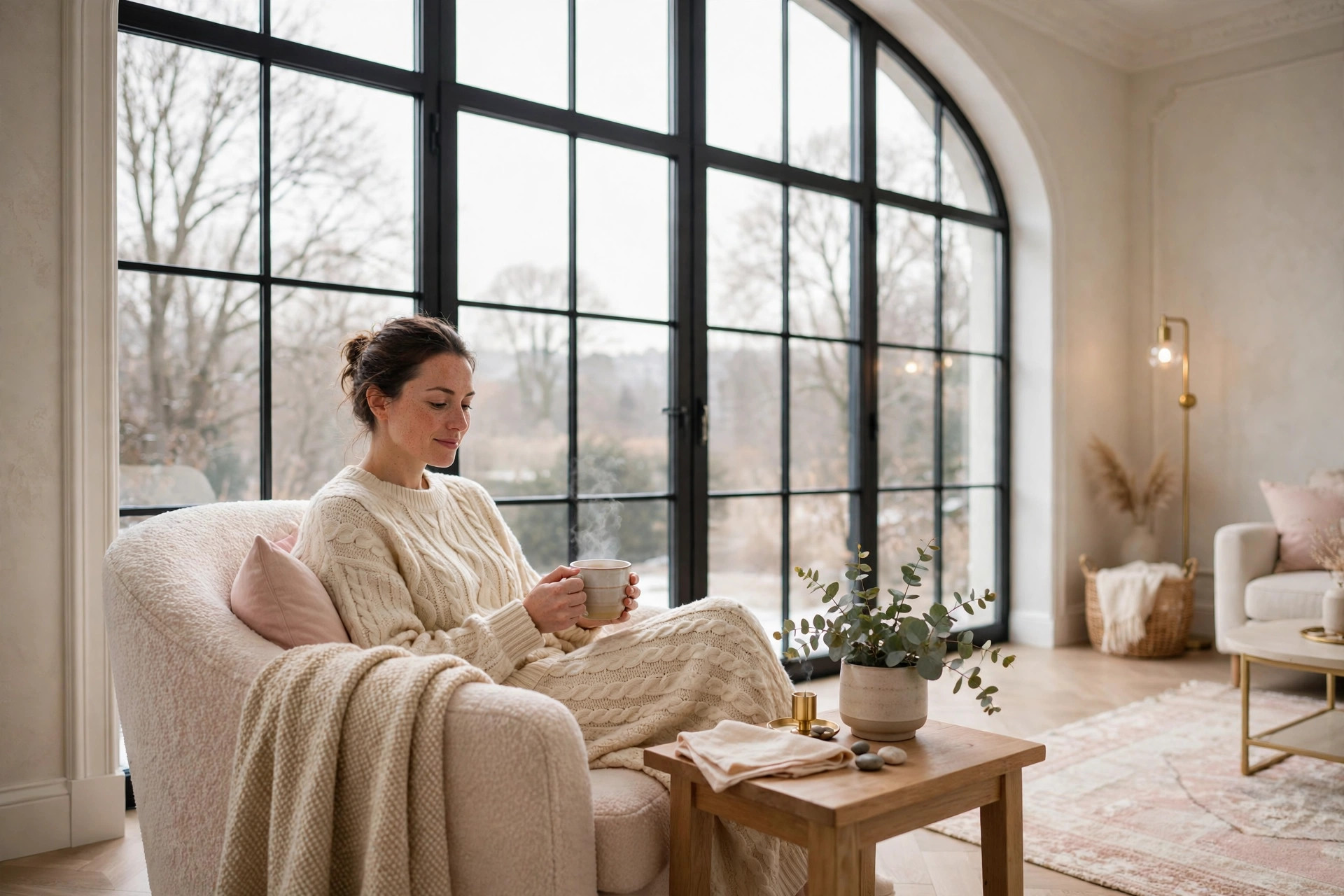
The days after Christmas often fill up with good intentions. Another visit, another meal out, another person you meant to catch up with. Each invitation sounds lovely on its own, but together they can leave you more tired than before Christmas. You are allowed to choose rest.
Keep your replies short and kind. You do not owe anyone a long explanation. “We would love to see you in the new year” is a complete sentence. Suggest a date in January instead, and mean it. People are often relieved to postpone too, because they are tired as well.
Protect at least one full day with nothing planned. Mark it on the calendar as clearly as you would a party. A day with no visitors, no errands, and no obligations is a gift you give yourself, and it is often the day you remember most fondly when January arrives.
What Should I Eat and Drink to Feel Better This Week?
Eat simply and kindly this week. Choose warm, light meals, plenty of water, and fresh fruit and vegetables alongside the leftover treats, so your body gets the balance it has been missing.
After days of rich food, your body often craves something plain. A bowl of soup, some toast with eggs, a simple salad with warm bread — these gentle meals are easy to make and easy to digest. You do not need a strict plan or a detox. You just need food that makes you feel steady rather than sluggish.
Drink water regularly through the day. Keep a glass or a bottle where you can see it, and sip often. Herbal tea, warm water with lemon, and simple infusions are comforting in cold weather. If you drank alcohol over Christmas, a few alcohol-free days will help your sleep and your energy more than almost anything else.
How Do I Gently Reset My Home Without a Big Clean?
A gentle home reset means small, satisfying jobs, not a deep clean. Clear one surface, put the Christmas wrapping away, open a window for fresh air, and let the rest wait until January.

A tidy space helps a tired mind, but a full deep clean in this week defeats the purpose of resting. Choose three small jobs and no more. Clear the kitchen table. Take the recycling out. Put the presents and wrapping paper away. Each one takes ten minutes and leaves you feeling lighter.
Change the bedsheets, light a candle, and put a clean blanket on the sofa. These tiny refreshes make the house feel cared for without any hard work. In our experience, the feeling of a fresh pillowcase after a week of late nights is one of the simplest pleasures of this season.
How Can I Use This Quiet Week to Feel Ready for January?
Use this week for gentle preparation, not hard planning. Jot down one or two hopes for January, clear a small corner of your diary, and choose one simple habit to carry forward.

January feels less daunting when you have already thought about it a little. Take a notebook and a quiet half hour, and write down what you would like more of in the new year, and what you would like less of. Keep it to a few lines. This is not a resolutions list. It is a gentle note to yourself.
Look at the first week of January and block out one evening just for you. Knowing that a quiet evening is already protected makes the return to normal life feel softer. You might also choose one small habit to begin, such as a morning walk or a regular bedtime, and start it now while the days are slow.
Finally, take a moment to notice what went well this Christmas. A kind conversation, a meal that worked, a walk in the snow, a moment of laughter — these are the memories worth carrying forward. Write one down if you like. Gratitude is not a chore. It is simply paying attention to the good that was already there.
| Reset habit | How long it takes | How it helps |
|---|---|---|
| Same bedtime each night | No extra time | Steadier sleep and energy |
| Morning walk outside | 10 to 20 minutes | Daylight, fresh air, clearer mind |
| One tidy surface a day | 10 minutes | Calmer home, lighter feeling |
| One plan-free day | A full day | Real rest and recovery |
| Simple warm meals | As usual | Steady energy, easier digestion |
Frequently Asked Questions
Is it okay to do nothing at all between Christmas and New Year?
Yes, it is completely okay. A day with no plans, no errands, and no obligations is a healthy choice, not a wasted one. Your body and mind need fallow time after a busy season, and a quiet day is often the most restorative thing you can do.
How do I rest when I have children at home?
Rest with children looks different, but it is still possible. Build quiet pockets into the day, such as a film afternoon, a colouring session, or a slow walk together. Lower your standards for the house and the meals, and let the children have a gentle, unstructured day too.
What if I feel low or flat after Christmas?
A low mood after the excitement of Christmas is very common. Daylight, gentle movement, regular sleep, and a kind conversation can all help. If the low feeling lasts or feels heavy, speak to your doctor or contact the NHS mental health pages for guidance and support options. You do not have to carry it alone.
Should I start my January plans now?
Only lightly. A few notes and one protected evening are enough. Save the detailed planning for January itself, when you are rested and clear-headed. This week is for recovery, not for starting a new routine at full speed.
This quiet week is a small gift hidden inside the festive season. Take it slowly. Sleep a little longer, walk a little further, eat a little more gently, and let the year end softly. January will come soon enough, and you will meet it far better for having rested well. Will you protect one quiet day for yourself this week?
Leave a Reply