Last updated: November 2026
Quick answer: To sleep better on cold winter nights, keep your bedroom cool but your bed warm, layer breathable bedding, warm your feet, and wind down with a calm routine. A cool room and a warm, cosy bed together help your body relax and drift off more easily.
There is nothing quite like climbing into a cold bed on a winter night and waiting, shivering, for the sheets to warm up. If that sounds familiar, you are not alone. Learning how to sleep better on cold winter nights is mostly about small, gentle changes — the right bedding, a warm pair of feet, and a calm evening routine — rather than one big fix.
In our experience, the nights that feel hardest are the ones where the room is freezing but the bed is too hot, or the other way round. Getting that balance right makes all the difference. This guide walks you through temperature, bedding, bedtime clothes, and a simple routine that helps you fall asleep faster and wake up feeling rested.
Why do cold nights make sleep harder?
Cold nights make sleep harder because your body needs to cool down slightly to fall asleep, yet shivering and cold feet keep you alert. When your hands and feet feel icy, your body stays tense, and drifting off takes much longer.
Your body temperature naturally dips in the evening as part of your sleep cycle. That gentle cooling is a signal to your brain that it is time to rest. A cold bedroom can support that signal, but only up to a point. If you are shivering under thin covers, your body works hard to stay warm instead of relaxing, and sleep stays out of reach.
Cold feet are a common culprit. Warming your feet — with socks or a warm water bottle — helps your body release heat and relax. Many people find that warm feet are the quickest way to feel sleepy on a cold night.
How to sleep better on cold winter nights?
Quick answer: Warm your bed before you get in, wear soft socks and warm sleepwear, and keep the room cool. Layer your bedding so you can add or remove a layer easily, and give yourself thirty calm minutes before bed without screens.

The simplest way to sleep better on a cold winter night is to warm the bed first. A hot water bottle tucked under the covers ten minutes before bed takes the chill off the sheets. An electric blanket on a low setting for a short while does the same job — just switch it off before you fall asleep and follow the safety instructions that come with it.
Next, think about layers. Rather than one very heavy duvet, try a medium duvet with a light blanket on top. That way, if you get too warm in the night, you can push the blanket aside without waking up fully. If you get cold, pull it back. Layers give you control, and control helps you stay asleep.
- Warm the bed for ten minutes before you get in.
- Wear clean, soft bed socks to keep your feet warm.
- Layer a blanket over your duvet so you can adjust it.
- Keep a glass of water by the bed for dry winter nights.
- Give yourself thirty screen-free minutes before bed.
What is the best room temperature for winter sleep?
Quick answer: Most sleep experts suggest a bedroom temperature of around 18°C for good sleep. In winter, that often feels cooler than the rest of the house, so keep the bedroom door ajar for airflow and warm the bed itself rather than heating the whole room.
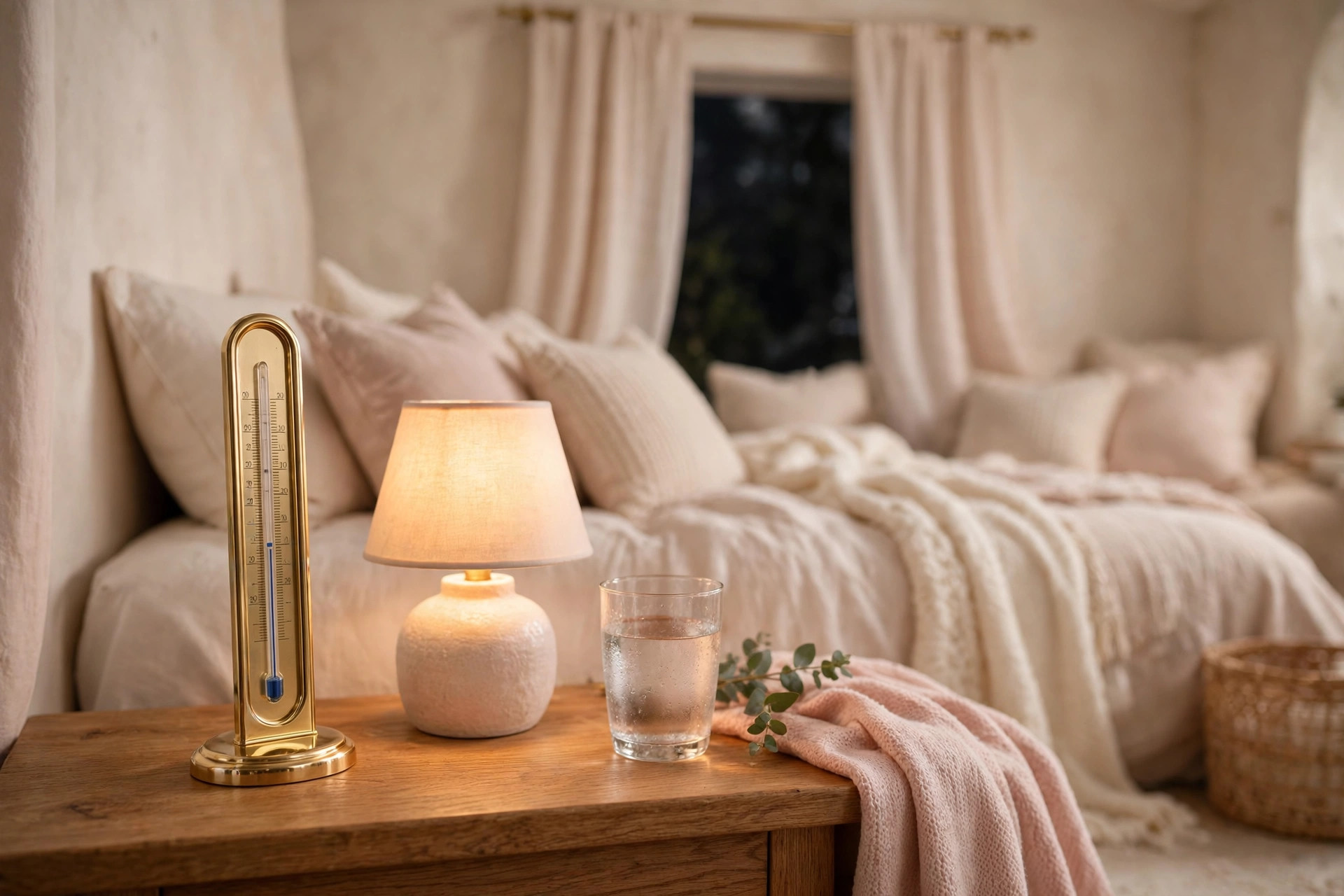
The Sleep Foundation suggests that a bedroom temperature of around 65°F, about 18.3°C, is ideal for most adults. That may sound cool, but remember that your bed itself should feel warm. The contrast between a cool room and a warm bed is exactly what helps many people fall asleep.
In winter, heating the whole bedroom to a warm temperature can backfire. You may fall asleep quickly, then wake up hot and restless in the middle of the night. A cooler room with good bedding usually works better. If your bedroom feels stuffy, open the window for a few minutes before bed to let in fresh air, then close it again.
Which bedding keeps you warm without overheating?
Quick answer: Breathable natural fibres such as cotton and wool keep you warm without overheating. Choose a medium-weight duvet, add a light blanket you can move aside, and use flannel or brushed cotton sheets for a soft, warm feel against your skin.
Bedding matters more than most people realise. The wrong duvet can leave you sweating at midnight or shivering at dawn. Natural fibres help because they breathe — they trap warm air when you are cold and let heat escape when you are warm.
| Bedding choice | Warmth | Best for |
|---|---|---|
| Flannel or brushed cotton sheets | Warm and soft | Cold sleepers, winter nights |
| Medium-weight duvet | Balanced | Most winter bedrooms |
| Wool blanket on top | Extra warmth, breathable | Very cold nights |
| Light cotton blanket | Gentle layer | Adjusting through the night |
Flannel sheets are a winter favourite for a reason. Their brushed surface feels warm the moment you climb in, unlike crisp cotton sheets that can feel icy at first. If flannel feels too warm for you, brushed cotton is a lighter alternative with a similar soft feel.
What should I wear to bed on a cold night?
Quick answer: Wear soft, loose sleepwear in a breathable fabric such as cotton, and add clean bed socks if your feet get cold. Avoid tight clothes and heavy layers in bed, as they can trap heat and leave you restless.

What you wear to bed matters just as much as what you sleep under. Loose, soft pyjamas in cotton or a cotton blend let your skin breathe and move freely. Tight waistbands, heavy fabrics, and too many layers can make you feel hot and restricted, even on a cold night.
Bed socks are a small change with a big effect. Choose a clean, soft pair — not the socks you have worn all day — and keep them loose rather than tight. If your feet still feel cold, a warm water bottle at the foot of the bed works wonders. Some people also like a soft sleep cap or a light scarf, but for most of us, warm feet and a good duvet are enough.
How can a warm bath or a hot drink help before bed?
Quick answer: A warm bath or shower about an hour before bed gently warms your body, and the cooling afterwards helps you feel sleepy. A warm, caffeine-free drink such as herbal tea or warm milk can also be a soothing part of a calm evening routine.

A warm bath is one of the loveliest winter rituals. The warm water relaxes your muscles, and as your body cools down afterwards, you naturally start to feel drowsy. Try a bath about an hour before bed, keep the water comfortably warm rather than very hot, and step into warm sleepwear straight afterwards so you do not get chilled.
A warm drink can complete the routine. Herbal tea, warm milk, or simply warm water with a little honey are all gentle choices. Avoid caffeine in the evening, including coffee, strong tea, and many fizzy drinks, as it can keep you awake long after you have finished it. The NHS advises that most adults need around 7 to 9 hours of sleep a night, and that a regular wind-down routine helps your body prepare for rest.
How to sleep better on cold winter nights when you wake up cold?
Quick answer: If you wake up cold, add a layer, warm your feet, and sip a little water. Avoid checking the time or reaching for your phone, as bright light and worry make it harder to drift off again.
Waking up cold at 3 a.m. is miserable, but it is usually easy to fix. Pull the blanket back over you, tuck the duvet in around your shoulders, and check that your feet are covered. If your feet are cold, put your socks back on or move the hot water bottle down to the foot of the bed.
Try not to check the time. Seeing the hour can start a spiral of worrying about how little sleep you are getting, and that worry is often what keeps you awake. Instead, close your eyes, breathe slowly, and focus on the warmth of the bed.
If you often wake up cold, your bedding may need a rethink. A heavier duvet, an extra blanket, or a thicker mattress topper can all help. And if your bedroom is draughty, a simple draught excluder by the door or a heavier curtain can make a real difference without costing much.
Should I sleep with the heating on all night?
For most people, no. A cool room with warm bedding usually works better than a heated room. If your bedroom gets very cold, set the heating to come on briefly before bed, then let the room cool a little overnight. Warm the bed itself with a hot water bottle or an extra blanket.
Do socks really help you fall asleep?
Many people find they do, because warm feet help the body relax and release heat. Choose clean, loose, soft socks rather than tight ones. If socks feel uncomfortable, a warm water bottle at the foot of the bed gives a similar effect.
What if I feel too hot under a winter duvet?
Try a lighter duvet with a blanket on top, so you can adjust the layers. Natural fibres such as cotton and wool breathe better than synthetic ones. If you often overheat, a medium-weight duvet is usually a better choice than the thickest one available.
How long should my wind-down routine be?
About thirty minutes is a good guide. Dim the lights, put your phone away, and do something calm — a warm drink, a few pages of a book, or gentle stretching. Keeping the same routine each night helps your body learn that it is time to sleep.
Cold winter nights do not have to mean restless sleep. A cool room, a warm bed, soft socks, and a calm half hour before bed are small changes, but together they make a real difference. Try one change tonight — warm the bed before you climb in — and notice how much easier drifting off feels. Sweet dreams, and stay cosy.
Leave a Reply