Last updated: November 2026
Quick answer: To stop lipstick feathering in winter, smooth and moisturise dry lips first, outline them with a liner that matches your lipstick, fill them in lightly, then apply lipstick in thin layers and blot between coats for a neat, long-lasting finish.
Learning how to stop lipstick feathering in winter dry lips can change your whole morning routine. Cold air, indoor heating, and low humidity leave lips dry and lined, so colour slips into tiny cracks instead of staying put. The good news is that feathering is usually a preparation problem, not a lipstick problem. With a gentle routine and a few layering tricks, you can keep your favourite shades looking smooth all day.
In this guide, we walk through winter lip care, liner technique, and the small habits that make colour last. You do not need new skills or a drawer full of products. You need the right order, a light hand, and a little patience.
Why does lipstick feather more in winter?
Winter lipstick feathering happens because dry lips have more texture for colour to travel along. Cold wind strips moisture from the surface, while warm indoor air dries it further, so fine lines become more visible and lipstick settles into them.
Another cause is product build-up. Thick layers of colour sit on top of dry skin instead of gripping it, and they move when you talk, sip a warm drink, or smile. Matte formulas can make this worse if lips are not prepared first, because they cling to every dry patch.
The fix starts before you open your lipstick. Smooth, hydrated lips give colour an even surface to hold on to, which is why preparation matters more than the shade you choose.
How do I prepare dry lips before lipstick in winter?
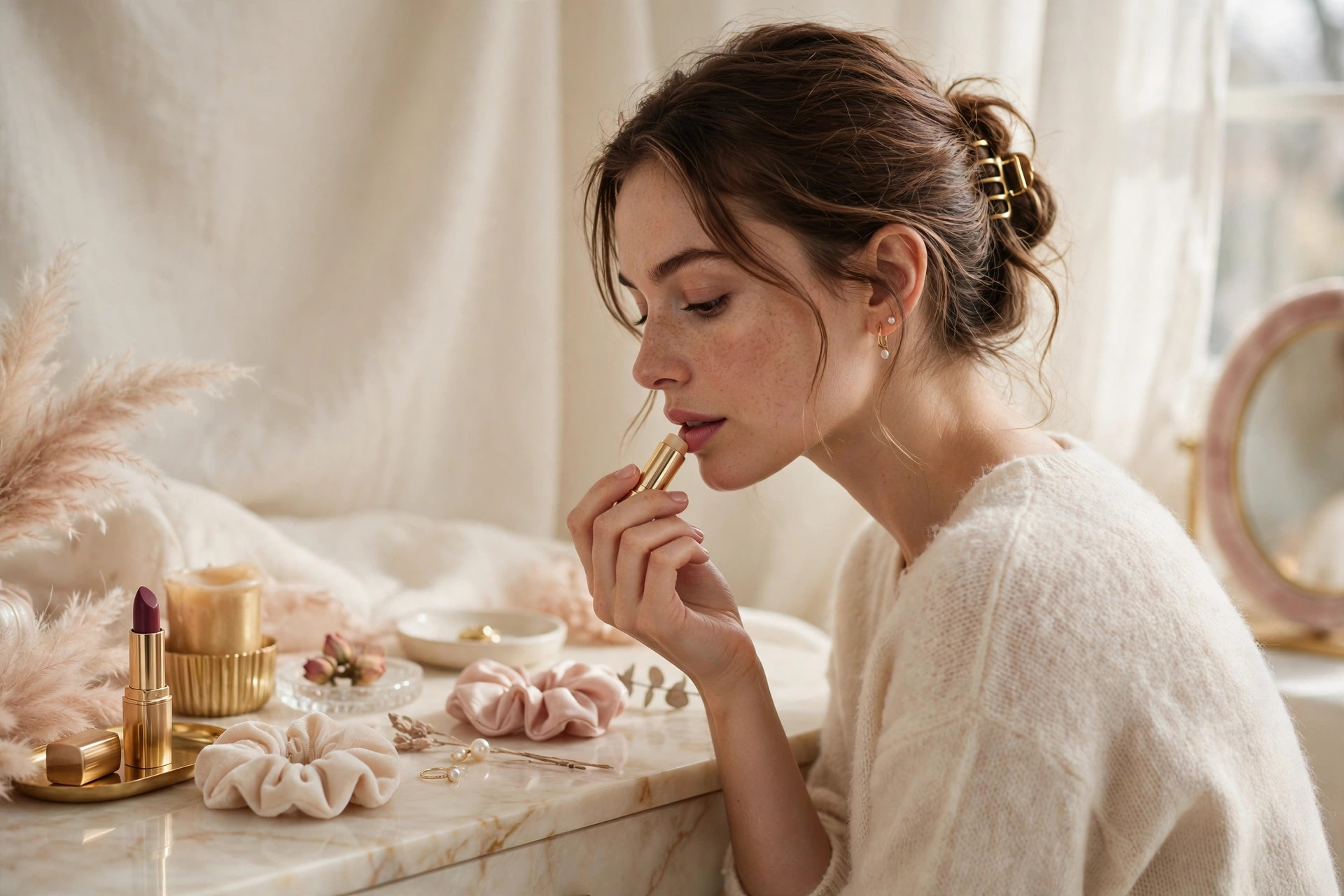
Good winter lip preparation is gentle and simple. Start with a soft lip scrub once or twice a week, using light pressure and a damp cloth if you prefer. Follow with a plain, fragrance-free lip balm and give it a few minutes to sink in.
- Exfoliate gently, only when lips feel rough, and never scrub sore or cracked skin.
- Apply balm first thing in the morning, then do the rest of your make-up while it absorbs.
- Blot away extra balm before colour, so the surface is smooth but not slippery.
- Keep a balm by your bed and reapply before sleep, when lips recover overnight.
Think of balm as a base coat. Too much makes lipstick slide, while too little leaves dry patches. A thin, even layer is the sweet spot for how to stop lipstick feathering in winter dry lips.
Which lip liner technique stops feathering best?
Lip liner is your best defence against feathering. It creates a soft barrier around the edge of your lips, so colour stays inside the line instead of bleeding outwards. Choose a shade close to your lipstick, or a shade close to your natural lip colour for a softer look.

Start at the centre of your upper lip and draw short, light strokes outwards. Then fill in the whole lip lightly with the same liner. This filled-in base gives lipstick something to grip, and it means the colour fades more evenly later in the day.
Avoid drawing far outside your natural lip line. A heavy, obvious outline looks harsh and can actually draw attention to feathering. Keep the line soft, blend it slightly with your fingertip, and let it sit for a moment before adding colour.
How should I layer lipstick so it stays put?
Thin layers last longer than one thick coat. Apply your first layer directly from the bullet or with a lip brush, then press your lips together gently and blot once with a tissue. This removes excess product while leaving an even wash of colour behind.
- Apply a thin first layer and blot lightly with tissue.
- Add a second thin layer, focusing colour in the centre of the lips.
- Press a tissue over your lips and dust a tiny amount of translucent powder through it, if you like a matte finish.
- Finish with a final light layer only where colour looks thin.
Lip brushes are helpful here because they place colour precisely and keep the edges neat. They also make it easier to build coverage slowly, which is exactly what dry winter lips need.
What lipstick finishes work best on dry winter lips?
Not every finish behaves the same in winter. Creamy and satin finishes tend to sit more comfortably on dry lips, because they flex with movement and do not cling to texture. Sheer formulas are also forgiving, and they can be layered for more depth.

Long-wear matte formulas can work, but they need the most preparation. If you love a matte look, prepare lips well, use liner all over, and keep layers thin. Skip the matte formula on days when your lips feel very dry, and choose a creamier shade instead.
| Finish | Winter feel | Best for |
|---|---|---|
| Cream | Comfortable and flexible | Everyday colour on dry lips |
| Satin | Soft shine, even coverage | Polished looks without dryness |
| Sheer | Light and forgiving | Quick, natural winter colour |
| Matte | Long wear, can feel dry | Evenings, with full preparation |
Whatever finish you choose, carry your lipstick with you. A quick touch-up after lunch keeps the edges tidy and stops small feathering from spreading.
How do I fix feathering during the day?
Feathering is easier to fix early, so check your lips after eating or drinking. Use a cotton bud or the corner of a tissue to gently wipe away colour that has strayed outside the line. Then reapply liner only where needed and press a little colour back into place.
If lips feel dry midday, press a tiny amount of balm into the centre of the lips, not over the edges. Balm on the outer edge can encourage more movement, while balm in the centre adds comfort without disturbing the outline.
For an evening event, a full refresh works better than layering over old colour. Remove lipstick gently, reapply balm for a minute, blot, and start again with liner and thin layers. It takes two minutes and looks far fresher.
What daily winter habits keep lips smoother?
Lip care is not only about make-up. Small daily habits protect lips from winter dryness and make every lipstick apply more smoothly. Drinking water regularly, protecting lips outdoors, and avoiding licking them all help, because saliva dries lips out further once it evaporates.

The American Academy of Dermatology notes that lips are vulnerable to dryness because they lack oil glands, which is why regular lip balm matters in cold weather. You can read their everyday lip care advice on the American Academy of Dermatology website. A scarf or high collar also shields lips from cold wind on winter walks.
- Apply balm before going outside, and again after coming back in.
- Use a humidifier at home if indoor air feels very dry.
- Avoid lip products with strong fragrance if your lips feel sore.
- Remove lipstick gently each evening and finish with balm.
In our experience, the women who struggle least with feathering are not using the most products. They are simply consistent, applying balm often and keeping their lip routine gentle.
How do I choose winter lipstick shades that flatter dry lips?
Colour choice can make feathering less noticeable. Mid-tone shades, soft berries, warm nudes, and classic reds with a creamy finish tend to wear gracefully. Very dark or very pale shades show uneven edges more easily, so they need extra care with liner.
Test a new shade in daylight if you can. Winter light is softer, and a shade that looks bold indoors may look gentler outside. Choose shades that make you feel confident, then build your routine around them rather than buying a new lipstick for every occasion.
Remember that your natural lip colour changes slightly in winter, when lips can look paler. A shade one step warmer than your summer favourite often looks fresh and healthy without looking heavy.
Does lip primer really help with feathering?
Yes, a lip primer can help, because it fills fine lines and gives colour a smoother base. It is not essential, though. A well-applied liner and thin layers often give the same result, so try primer only if feathering still bothers you after fixing your preparation.
Should I use a clear liner or a coloured liner?
Both can work. Clear liner creates an invisible barrier and suits every shade, while coloured liner doubles as a base and helps colour last longer. If you wear many shades, clear liner is handy. If you wear one favourite shade often, a matching coloured liner is the better choice.
Can I wear lip gloss over lipstick in winter?
Yes, but keep gloss in the centre of the lips rather than at the edges. Gloss near the outline can encourage colour to travel, while gloss in the centre adds shine and comfort exactly where lips move most.
How often should I exfoliate my lips in winter?
Once or twice a week is plenty for most people. Over-exfoliating makes lips sorer and rougher, which worsens feathering. If lips feel smooth, skip the scrub and simply moisturise.
Winter lipstick does not have to be a battle. Prepare gently, line softly, layer thinly, and touch up kindly, and your colour will stay where it belongs. Try the routine with your favourite shade this week, and notice how much neater your lipstick looks by the end of the day.
Leave a Reply