
Last updated: October 2026
Quick answer: The 2026 peplum is softer, subtler and far more wearable than the stiff versions from the early 2010s: fluid fabrics, a flare that starts at your natural waist, and a silhouette that gives shape without clinging. It works for jeans days, office days and nights out alike.
Fashion loves a comeback, and this autumn’s is a good one. The peplum top — that fitted bodice with a flared ruffle at the waist — is back in a big way, and before you scroll past with memories of the stiff, fussy versions from the early 2010s, hear this out. The 2026 peplum is a different creature entirely: softer fabrics, subtler flares, longer lines and a silhouette that works on real bodies living real lives.
Why now? Peplum hits the sweet spot of several things women want from their clothes this decade. It gives shape without clinging. It adds interest to simple outfits without prints or fuss. It bridges the gap between a plain top and a dressed-up one, which makes it perfect for the blurry lines between work, weekends and evenings. And crucially, the new cuts are designed for comfort — stretch knits, soft drapes and forgiving fits.
If the word peplum still makes you flinch, this guide is especially for you. We will cover why the silhouette works so well right now, how to find the version that flatters your specific body, and outfit formulas for jeans days, office days and nights out. By the end, you might just find yourself converted.
Why Does Peplum Work So Well in 2026?
Peplum is part of a shift toward soft structure — clothes that give the body shape and polish without rigid tailoring — and its fitted top plus floating flare creates an hourglass suggestion that skims the tummy and hips, which is why it feels both polished and comfortable.
The return of peplum is not random. It is part of a broader shift towards what stylists call soft structure — clothes that give the body shape and polish without tailoring it within an inch of its life. After years of boxy, oversized everything, many women are craving a little definition at the waist again. Peplum delivers that definition while skimming rather than squeezing.
The genius of the silhouette is in its balance. The fitted top half shows your shape; the flared peplum skims over the tummy and hips, creating an hourglass suggestion without any bodycon tightness. For anyone who feels self-conscious about their midsection — which is to say, most of us at some point — peplum is genuinely kind. It draws the eye to the narrowest part of the torso and lets the fabric float everywhere else.
The new generation of peplum also benefits from better fabrics. The originals were often stiff ponte or structured cotton that stood away from the body like a lampshade. Today’s versions come in fluid jersey, soft ribbed knits, draped satin and even fine wool blends. The flare falls naturally instead of jutting out, which reads modern and effortless rather than costumey. The name itself is an old one: a peplum is traditionally a short flared strip of fabric attached at the waist of a garment, a detail with roots in classical dress.
Finally, peplum is versatile in a way few statement silhouettes are. One good peplum top can go from school run to date night with a change of bottoms and shoes. That cost-per-wear maths is hard to beat, especially when you are building a wardrobe intentionally rather than impulse-buying.
How Do You Find the Right Peplum Fit for Your Body?
The right fit comes down to three things: the flare should start at or just above your natural waist, a subtle short flare is the most universally flattering and easiest to layer, and fluid stretch fabrics are the most forgiving — always do the sit-down test before buying.
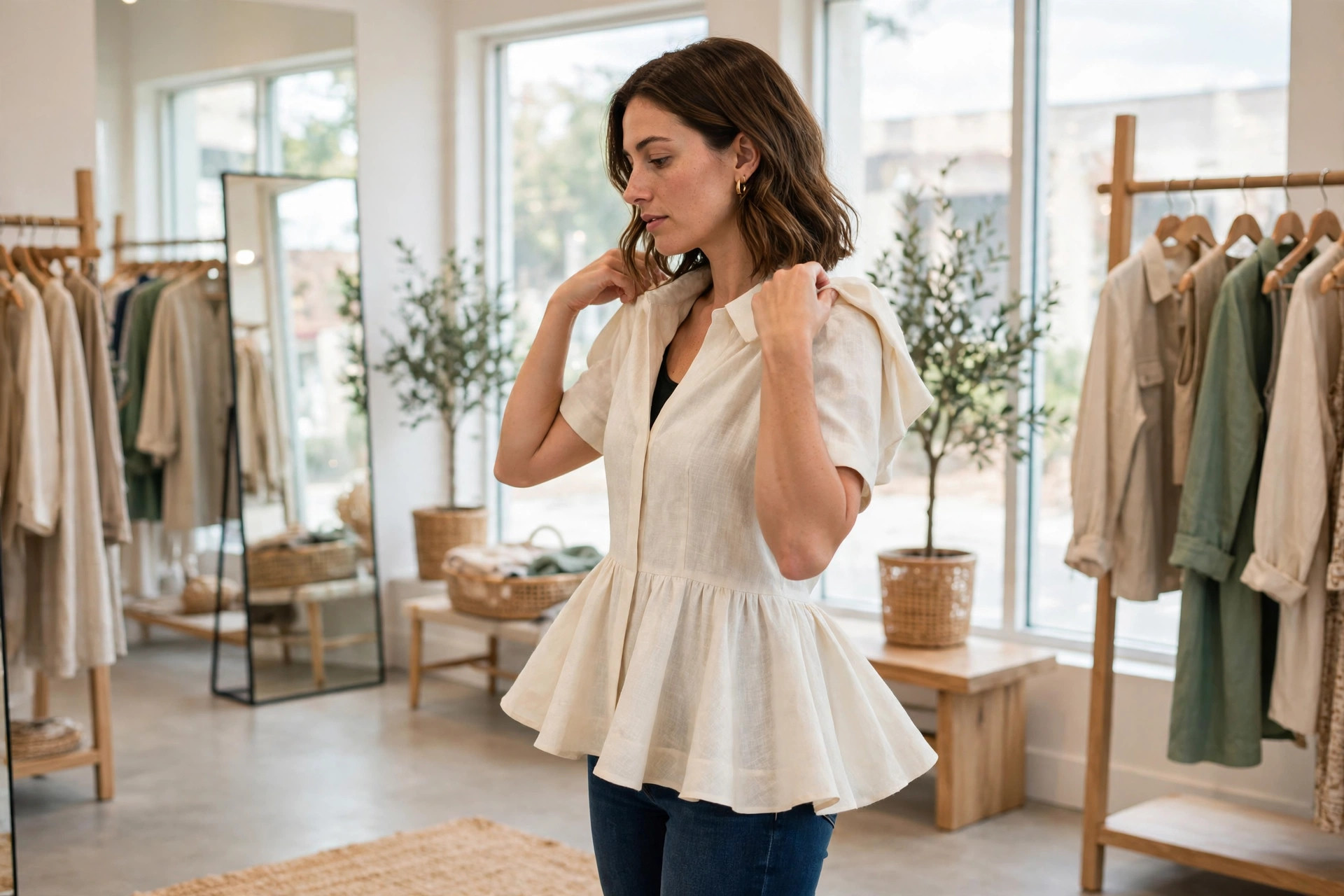
Not all peplums are created equal, and the difference between a peplum you love and one that sits in the drawer comes down to three things: where the flare starts, how deep the flare is, and what the fabric does. Get these right for your body and the top practically styles itself.
Where the flare starts is the big one. The peplum ruffle should begin at or just above your natural waist — the narrowest part of your torso. If it starts too high, under the bust, it can look empire-waisted and maternity-like. If it starts too low, on the hips, it adds width where you do not want it. When trying on, look sideways in the mirror: you want to see a gentle inward curve at the waist before the fabric flares.
Flare depth matters too. A subtle, short flare — just a few inches — is the most universally flattering and the easiest to wear under jackets. A deep, dramatic ruffle is gorgeous for evenings but trickier for everyday, and it can overwhelm a petite frame. If you are under five foot four, stick to shorter, softer flares and make sure the top is not too long overall.
| Body shape | Best peplum choice |
|---|---|
| Pear shapes | A peplum that ends at the hip bone skims beautifully; avoid ones that stop mid-hip where they add width. |
| Apple shapes | Look for peplums with structure through the bodice and a flare that starts at the natural waist. |
| Hourglass figures | Most peplums love you — just avoid overly voluminous flares that hide your waist. |
| Straight / athletic builds | Peplum creates curves you do not naturally have; a fuller flare works wonderfully. |
| Plus sizes | Choose fluid fabrics and a flare that floats rather than clings; dark colours are endlessly flattering. |
Fabric is the final piece. Stretch jersey and ribbed knits are the most forgiving and the easiest to wash and wear. Woven peplums in cotton or satin look sharper but may need ironing. Whatever you choose, do the sit-down test in the fitting room: the bodice should stay smooth and the flare should fall back into place when you stand. Check the care label too — the Federal Trade Commission’s care labelling guidance explains what wash and dry instructions on the label actually require.
How Do You Style Peplum With Jeans?
Peplum with jeans is the 2026 answer to the T-shirt-and-jeans uniform: a ribbed-knit peplum with straight or wide-leg jeans and white trainers for weekends, or a burgundy or navy peplum with dark indigo jeans, ankle boots and a long coat for smarter days.
The fastest way to make peplum feel modern is to pair it with denim. A peplum top with jeans is the 2026 answer to the T-shirt-and-jeans uniform — same ease, twice the polish. The fitted bodice tucks visually into the waistband line while the flare skims over the top of the jeans, creating a clean, defined silhouette.
For weekends, try a ribbed-knit peplum in black, cream or olive with straight-leg or wide-leg jeans and white trainers. Add a crossbody bag and you have an outfit that works for brunch, errands and everything in between. The peplum elevates the jeans just enough that you look intentional, not thrown-together.
Dark-wash jeans are peplum’s best friend for slightly smarter days. A burgundy or navy peplum top with dark indigo jeans, ankle boots and a long coat is a brilliant autumn uniform — warm, flattering and appropriate for everything from parent-teacher meetings to lunch with friends. If your peplum is patterned or textured, keep the jeans simple and dark to let the top lead.
One styling detail makes all the difference: the waistband. Because the peplum flare sits over the top of your jeans, a bulky or embellished waistband can create lumps. Choose jeans with a smooth, flat waistband — or simply let the peplum cover it entirely by picking a slightly longer flare. High-rise jeans work best, as they give the peplum a smooth foundation to skim over.
How Do You Dress Peplum Up for Evenings, Events and the Office?
For evenings, a satin or velvet peplum with wide-leg black trousers rivals a dress; for the office, a peplum blouse in white, navy or black with trousers or a pencil skirt looks sharp and never untucks; for weddings, lace or embellished peplum with a skirt is chic for dress codes.
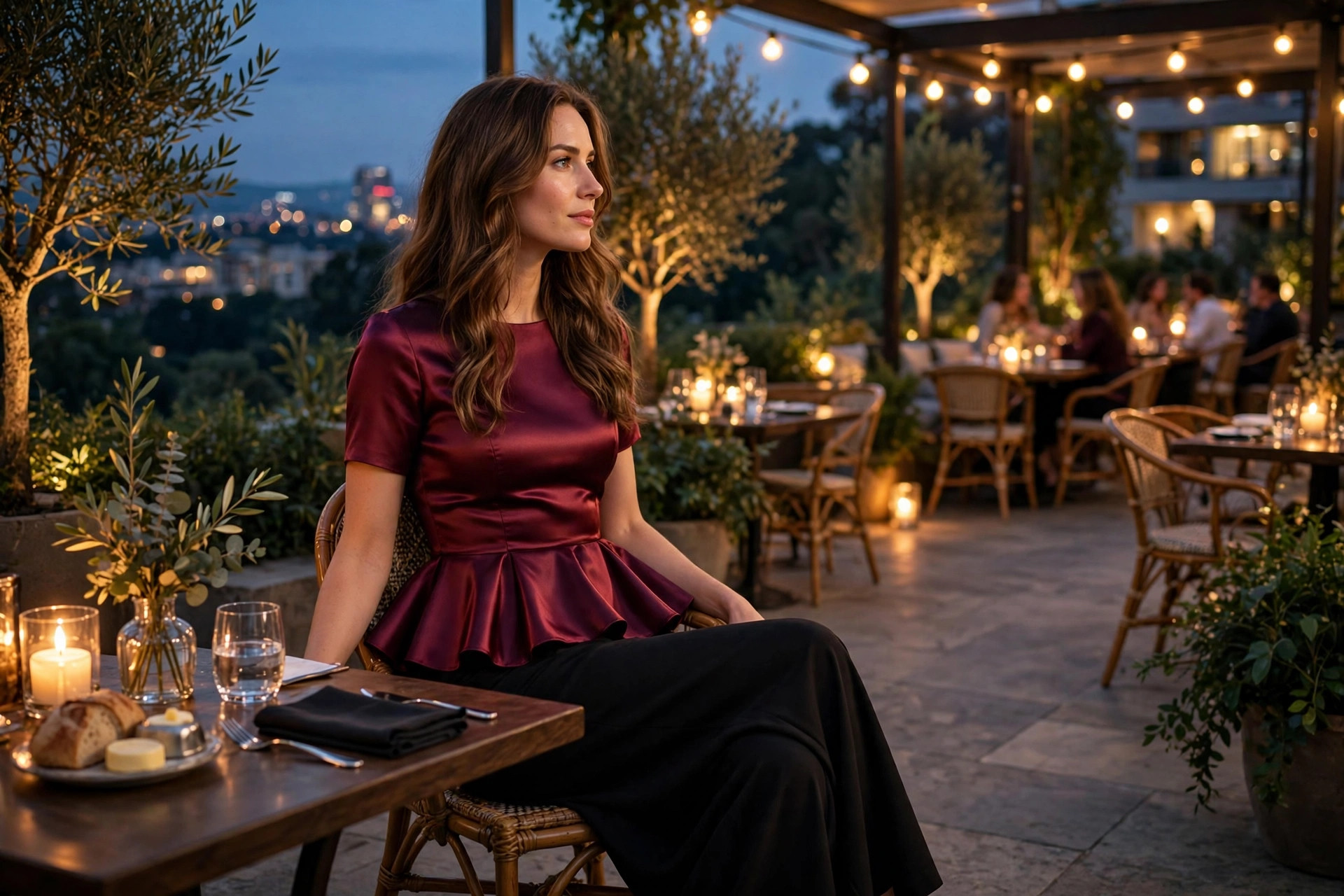
Peplum truly shines when the occasion calls for a little glamour. A satin or velvet peplum top with wide-leg black trousers is an evening outfit that rivals any dress — and it is far more comfortable to sit, eat and dance in. Add statement earrings and a heel, and you are ready for dinners, parties and everything the festive season throws at you. Velvet in particular has a long fashion history as a luxurious pile fabric, as Britannica’s velvet entry describes — which is part of why it reads so festive after dark.
For the office, peplum is a quiet power move. A structured peplum blouse in white, navy or black with tailored trousers or a pencil skirt looks sharp and feminine without trying too hard. The silhouette reads as polished under a blazer, and unlike a tucked-in shirt, it never comes untucked or bunches at the waist. If your workplace is business formal, choose woven fabrics and modest flare depths.
Autumn events — think harvest dinners, gallery openings, birthday meals — are peplum’s natural habitat. Try a jewel-toned peplum (emerald, burgundy, plum) with black wide-leg trousers or a satin midi skirt. The colour does the festive talking while the silhouette keeps everything elegant. A clutch and a swipe of lipstick finish the job.
For weddings and formal occasions, a peplum top in lace or embellished fabric paired with a simple skirt can look incredibly chic — and you will be far more comfortable than in a fitted cocktail dress. Just check the dress code first; peplum separates are perfect for cocktail and smart-casual dress codes, but a very formal black-tie event still calls for a gown.
Related: business-casual work outfits
How Do You Layer Peplum Under Blazers, Cardigans and Coats?
Peplum layers best under open layers, never zipped-up ones: an open blazer lets the flare peek below the hem, long cardigans and belted wool coats worn open work beautifully, while cropped jackets ending at the flare and bulky scarves tend to clutter the silhouette.
Autumn is layering season, and peplum layers beautifully — with one caveat. Because of the flare, peplum works best under open layers rather than zipped-up ones. An open blazer, an open cardigan or an open coat lets the peplum silhouette show while adding warmth and structure on top.
The blazer-over-peplum combination deserves special attention because it is so good. The blazer’s straight lines contrast beautifully with the peplum’s curves, creating a look that is both strong and soft. Wear the blazer open, push the sleeves up slightly, and let the peplum flare peek out below the blazer’s hem. It is the kind of outfit that looks styled without looking fussy.
Long cardigans and duster coats work similarly well, especially in chunky knits that contrast with a smoother peplum top. For colder days, a belted wool coat worn open over peplum is elegant — just make sure the coat is long enough that the peplum does not get lost. Cropped jackets, on the other hand, are tricky: a cropped jacket ending right at the peplum flare can look cluttered, so either go longer or skip the jacket.
Scarves need a light touch with peplum. A bulky scarf piled at the neck can overwhelm the neckline and hide the fitted bodice that makes peplum work. If you need the warmth, choose a fine-knit scarf or wear it loosely draped rather than wrapped thick. Let the top breathe.
Related: structured blazer outfits
What Should You Look for When Shopping for Peplum — and What Should You Skip?
Shop with a checklist: check the flare in motion and the back view, start with black, navy, cream or burgundy, skip heavy embellishment at the flare’s edge and very short boxy cuts, and choose machine-washable fabrics for everyday — the best peplum is the one that fits your actual life.
When you are ready to buy, keep a short checklist in mind. First, check the flare in motion — walk, sit and reach in the fitting room. A good peplum falls back into place; a bad one twists, rides up or collapses. Second, look at the back view. Some peplums flare beautifully from the front but bunch oddly at the back, especially in stiffer fabrics.
Colour-wise, start with black, navy, cream or burgundy. These are the workhorses that pair with everything you own, and dark shades are the most forgiving through the midsection. Once you know you love the silhouette, branch into patterns — subtle stripes, small florals or textured knits all work, though large bold prints on a peplum can overwhelm.
What to skip? Peplums with heavy embellishment right at the flare’s edge — beading or thick trim at the hem adds visual weight exactly where you want lightness. Very short, boxy peplums that hit above the natural waist tend to look dated rather than retro. And be wary of dry-clean-only fabrics for everyday peplums; you will reach for the machine-washable one ten times more often.
Finally, think about your lifestyle honestly. If you spend your days chasing toddlers, a silk peplum blouse is not your friend — get the stretch-knit version and wear it constantly. If you are at a desk all day, the woven blouse that never untucks will earn its place. The best peplum is the one that fits your actual life, not an imagined one.
The peplum comeback is not about nostalgia — it is about a silhouette that finally grew up. Softer, kinder and more versatile than ever, the 2026 peplum deserves a second chance. Try one on with an open mind, and do not be surprised if it becomes the hardest-working top in your autumn wardrobe.
Leave a Reply