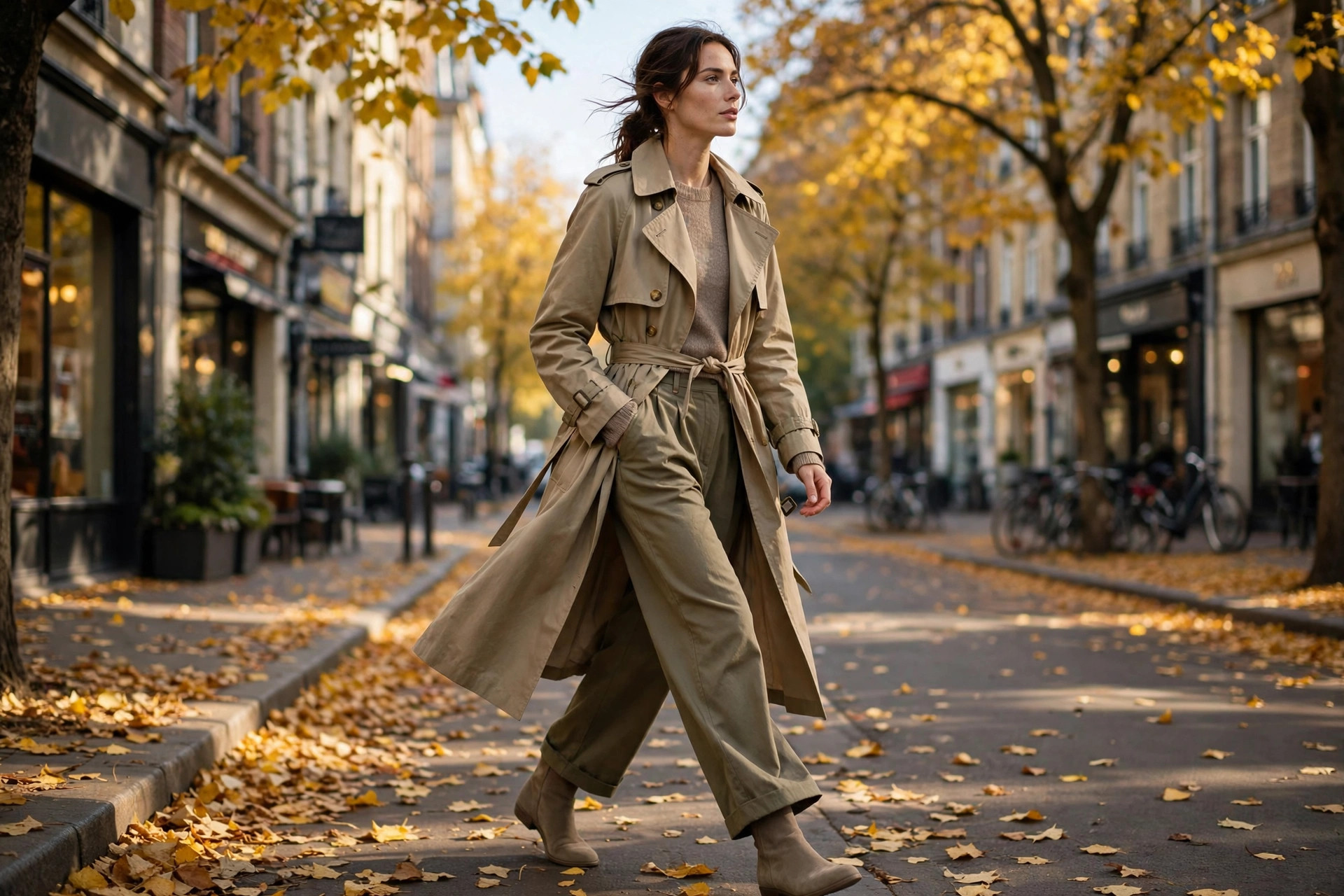
There is a particular kind of confidence that comes from getting dressed in one colour and getting it exactly right. This autumn, that colour is khaki. “Khaki coded” is the styling phrase taking over Pinterest and street style this season: dressing head to toe in khaki’s earthy family — sandy beige, warm taupe, soft olive, deep stone — so the whole outfit reads as one deliberate, expensive-looking palette. It sounds simple, and honestly it is simple, but the difference between a khaki coded outfit that turns heads and one that looks like a safari uniform comes down to a handful of small decisions. This guide walks you through every one of them: which shades actually belong in the khaki family, how to mix them so your outfit has depth instead of blending into one beige blur, which fabrics keep a monochrome look rich rather than flat, and ten complete outfit formulas you can copy this week with pieces you probably already own.
What “Khaki Coded” Means in Fall 2026
The phrase borrows its logic from the idea of being “coded” a certain way — as if your whole look is running on one programme. In fashion terms, it means committing fully to a single colour family and letting tone, texture and silhouette do all the talking. Khaki coded is the autumn 2026 answer to the head-to-toe beige trend of a few seasons ago, but it is warmer, earthier and far more wearable. Where beige could wash people out, khaki’s range — from pale sand through mushroom taupe to mossy olive — flatters nearly every skin tone because there is always a shade in the family that sits close to your own. The trend works because it is built on neutrals you already trust: the trench coat hanging in your hallway, the knit you reach for on chilly mornings, the boots that go with everything. Khaki coded simply asks you to wear them all at once, and to do it with intention. The result looks pulled-together without looking effortful, which is exactly why it photographs so beautifully and why it keeps appearing in autumn street style round-ups.
The Khaki Colour Family, Shade by Shade
Before you build the outfits, it helps to know the family. Khaki is not one colour; it is a spectrum, and learning its members is what stops your look from falling flat. At the lightest end sits sand and ecru — pale, creamy neutrals that act almost like white in an outfit, giving it brightness and lift. Next comes classic khaki and stone, the true middle tones: warm, greyish-beige shades that anchor everything around them. Then taupe and mushroom, which lean slightly cooler and add a sophisticated, almost grey softness. Camel and tan bring golden warmth and are the shades most people reach for first in autumn. Finally, olive and army green sit at the deepest end of the family — still khaki, still earthy, but dark enough to ground an outfit the way black or navy would. You do not need all of these in one outfit. In fact, the sweet spot for most looks is three shades: one light, one medium and one deep. That trio gives your eye somewhere to travel, which is precisely what makes a single-palette outfit interesting instead of monotonous.
The Golden Rule: Mix Tones, Never Just Match
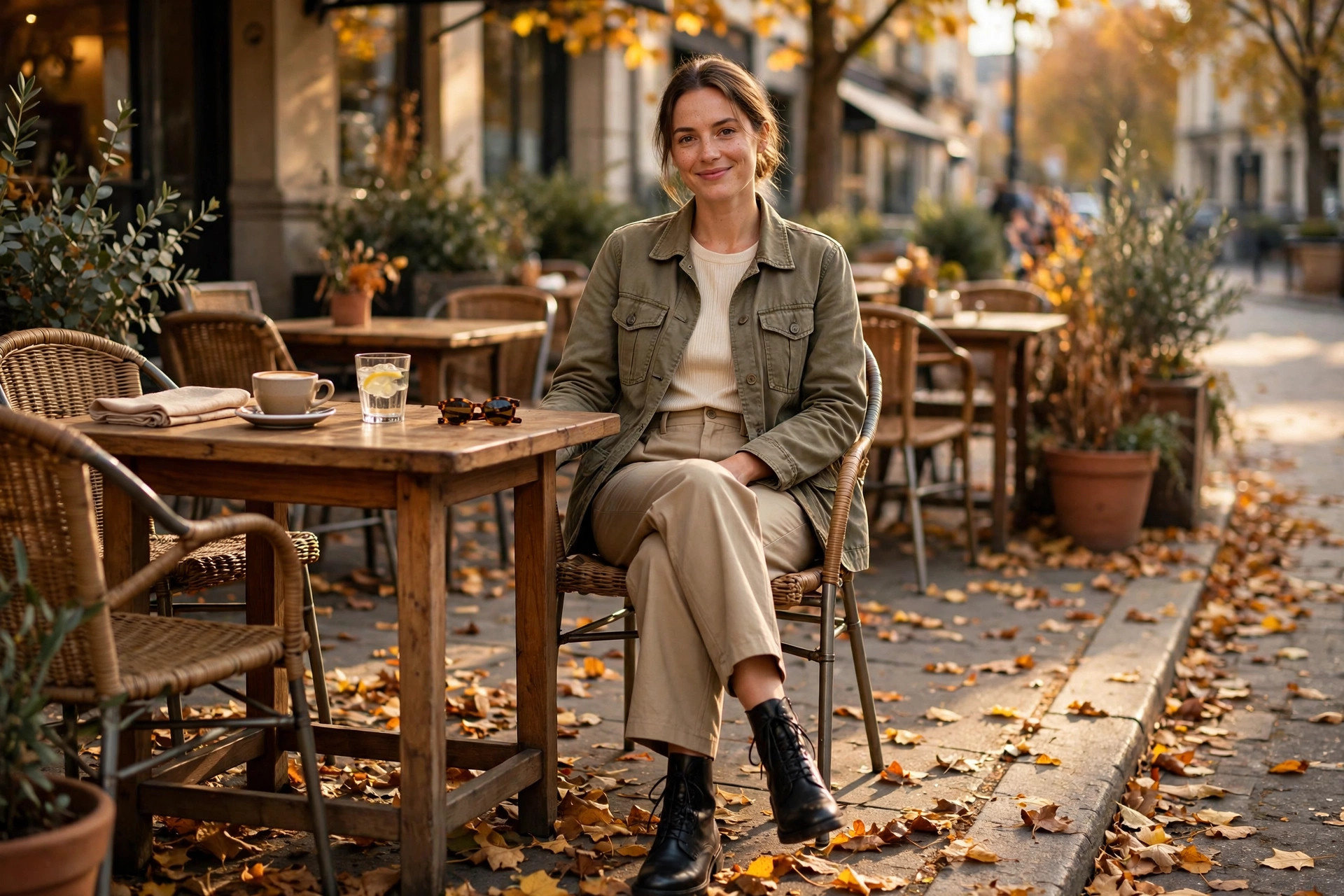
Here is the single most important rule of going khaki coded: mix tones, do not match them. An outfit where the top, trousers and coat are all the exact same shade of khaki will read as a uniform — it flattens your shape and drains the life from the look. Instead, aim for clear steps between your pieces. A cream knit under a true-khaki trench, with deep olive trousers and tan boots, gives you four distinct notes in the same key. The contrast between them is what creates shape and shadow, which is how a monochrome outfit stays three-dimensional. A useful trick is the two-shade rule for beginners: pick one light piece and one dark piece in the khaki family, then let your accessories sit somewhere in between. As you get more confident, add a third or fourth shade. Another approach is to anchor with your darkest piece at the bottom — olive trousers or dark taupe boots — and lighten as you move up, which naturally draws the eye toward your face. Whatever you do, avoid the temptation to buy a matching khaki set and call it done; the whole magic of this trend is in the mixing.
Fabric and Texture Do the Heavy Lifting
When colour is doing less work in an outfit, texture has to do more. This is the secret behind every khaki coded look that seems to glow: the pieces are all in the same family, but they feel completely different. Think of a crisp cotton trench over a soft cashmere-blend knit, with structured wool trousers and suede boots. Four khaki-adjacent shades, four different surfaces, and suddenly the outfit has all the richness of a multi-colour look. Leather and suede are your best friends here — a suede skirt or leather tote in tan adds instant depth. Knits bring softness: ribbed, cable or waffle textures catch the light differently from smooth fabrics and stop everything looking pressed and corporate. Denim in ecru or stonewash beige adds a casual grain that keeps the look relaxed. Even small choices matter: a silk scarf, a woven belt, a pair of corduroy trousers — each introduces a new surface for light to play on. If your outfit ever feels flat when you look in the mirror, the fix is almost never a new colour. It is a new texture.
Ten Khaki Coded Outfit Formulas to Copy
Ready for the practical part? Here are ten complete formulas, each built from the principles above. Treat them as starting points and swap in whatever your wardrobe already holds.
- The classic trench look: sand trench coat, cream ribbed knit, true-khaki wide-leg trousers, tan loafers. The formula that started it all — timeless and office-appropriate.
- Weekend uniform: olive utility jacket, ecru T-shirt, stone straight-leg jeans, white trainers. Relaxed, but the tonal palette keeps it intentional.
- Office polish: camel blazer, mushroom silk blouse, dark taupe tailored trousers, nude pointed flats. Proof that khaki coded works for the boardroom.
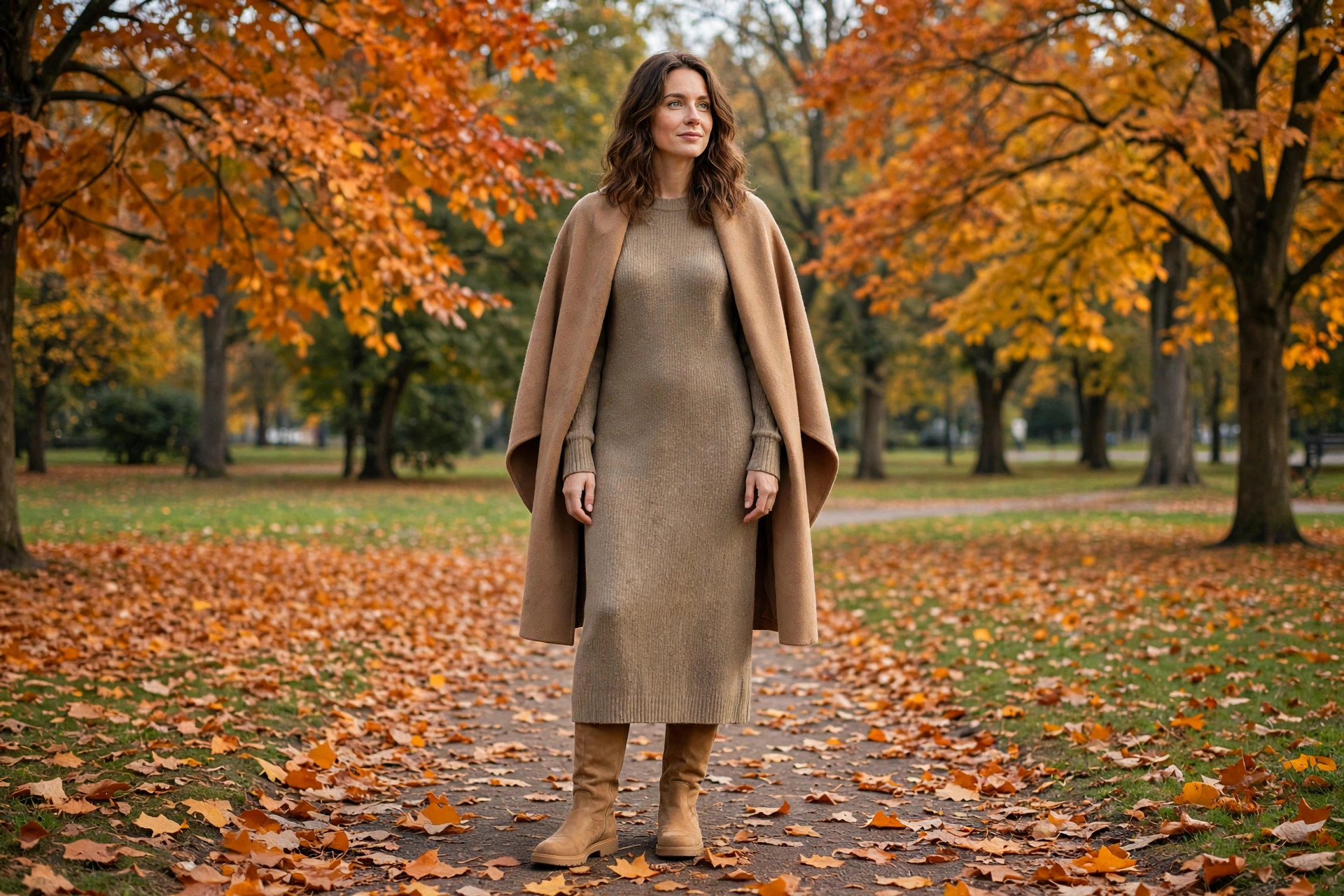
- Cosy knit dress: long khaki knit dress, camel wrap coat over the shoulders, tan knee-high boots. One-and-done dressing with a luxurious finish.
- Autumn layers: cream chunky cardigan, tan camisole, olive cargo trousers, brown ankle boots. Texture heaven, and warm enough for real October weather.
- Evening khaki: champagne satin slip skirt, deep olive fitted knit, taupe heeled boots, gold jewellery. Khaki after dark is softer and more romantic than black.
- The monochrome suit: stone oversized blazer with matching wide-leg trousers, cream vest top underneath, loafers. Break up the matchiness with different shoes and bag.
- Denim days: ecru denim jacket, sand knit, medium-khaki mom jeans, suede ankle boots. The most casual formula on this list, and one of the easiest.
- Rainy day armour: olive waxed raincoat, beige hoodie, dark khaki joggers, tan wellington boots. Practical does not have to mean boring.
- Sunday best: camel midi coat, ivory blouse, taupe pleated midi skirt, nude heels. Soft, feminine and completely within the family.
Shoes, Bags and Accessories That Finish the Look
Accessories are where khaki coded outfits either come alive or quietly die, so choose them with the same care as your clothes. Shoes in tan, cognac or dark brown leather are the natural partners — they sit inside the palette while adding a deeper note at the ground. Nude heels or flats work beautifully for dressier looks, and white trainers keep casual formulas fresh. What to avoid: stark black shoes, which can cut the outfit in half and break the tonal spell (a very dark brown reads softer and keeps the harmony). Bags follow the same logic — tan leather, suede in mushroom, or woven straw for early autumn all belong; just make sure the bag is a different tone from your coat so it does not disappear. Jewellery in gold is the classic pairing with warm khakis, while silver suits the cooler taupe and stone end of the family. A silk scarf in a khaki-adjacent print, a leather belt that defines your waist, and sunglasses in tortoiseshell are the finishing touches that make the whole thing look considered rather than accidental.
Mistakes That Make Khaki Look Flat
A few pitfalls are worth knowing before you commit. The first is wearing one single shade everywhere — as covered above, matching exactly is the fastest way to look washed out. The second is ignoring your skin tone: if pale sand near your face drains you, keep the light shades on your lower half and bring olive or camel up top instead. The third is forgetting contrast in texture — an all-cotton khaki outfit in identical tones will always look flatter than one that mixes knit, leather and suede. Fourth, defaulting to black accessories out of habit; reach for brown, tan or nude first and only use black if the outfit genuinely needs the edge. Finally, neglecting fit: monochrome outfits show every fit flaw because there is no colour contrast to distract the eye, so make sure trousers skim rather than cling and coats sit properly on the shoulder. Get these five things right and khaki coded becomes one of the easiest trends you will ever wear.
Khaki coded endures because it is built on pieces that never really leave our wardrobes — the trench, the knit, the boot — simply asked to work together in a new way. Start with three shades, mix your textures, and let the palette do the quiet, confident talking. This autumn, the best-dressed person in the room might just be the one wearing a single colour family better than anyone else.
Leave a Reply