Last updated: October 2026
Quick answer: The kitchen witch aesthetic is a warm, old-world home style built on natural materials, visible everyday usefulness, handmade touches and thrifted charm — hanging herbs, labelled amber jars, wooden bowls on display, beeswax candlelight. Twelve simple ideas below will make your home feel storied, handmade and alive this fall.
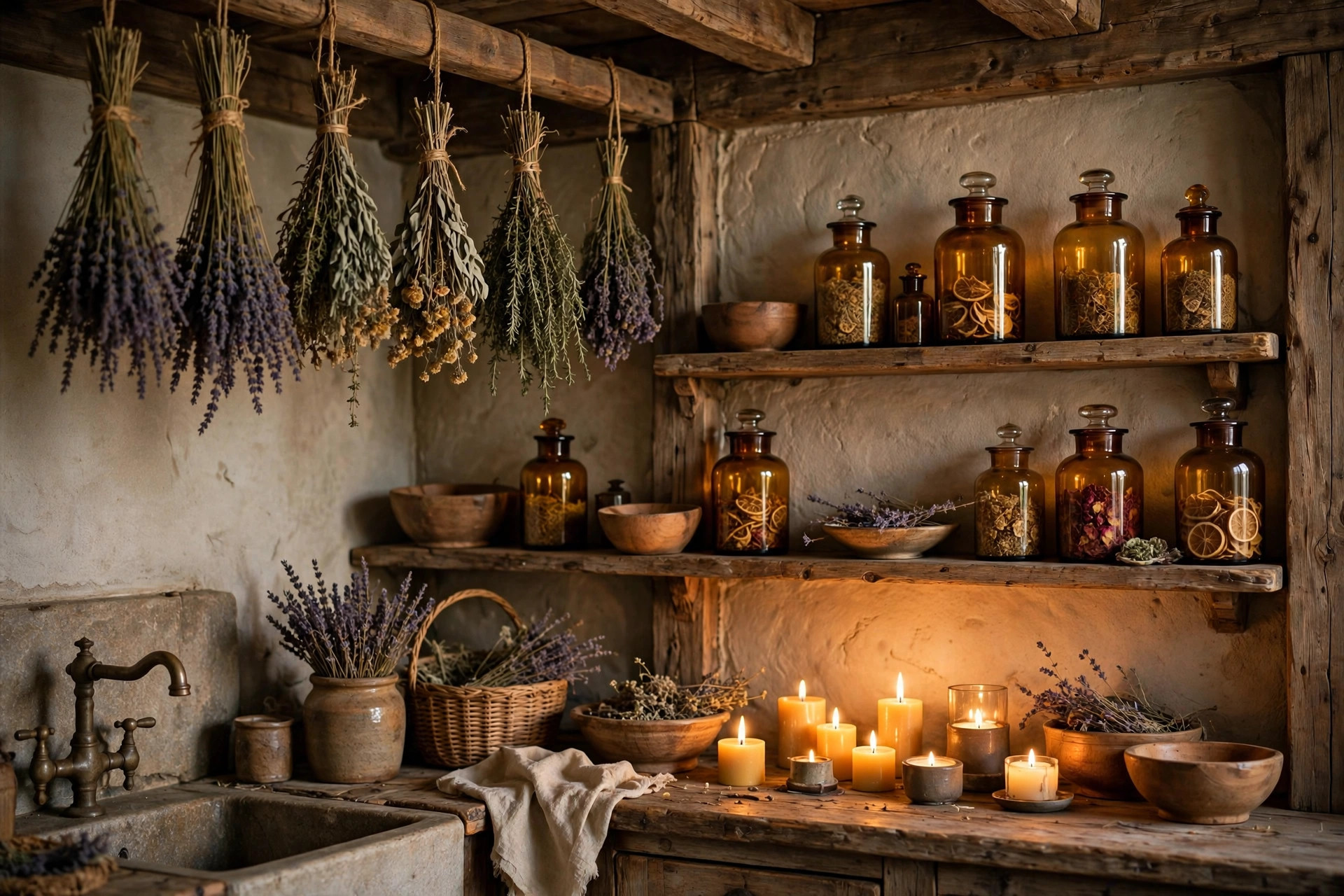
There is a new mood in home decor this fall, and it smells like dried lavender and beeswax. The look is being called “kitchen witch” — rustic, warm, and a little bit enchanted. But you do not need to believe in magic to love this look. At its heart, the kitchen witch home is about something deeply appealing: a house that feels storied, handmade, and alive.
Think of the cosy kitchen from the film Practical Magic — all wooden bowls, hanging herbs, amber glass jars, and shelves full of things with a history. That is the aesthetic: rustic, warm, and a little bit enchanted. It is the opposite of the stark white showroom kitchen. Instead of hiding everything in cupboards, you display the beautiful, useful things. Instead of buying new, you gather, dry, label, and arrange. It is slow homemaking, and it is perfect for fall.
This guide gives you twelve kitchen witch ideas for your home, from drying your first herb bundle to building an apothecary shelf that looks like it belongs in a storybook. None of them require special skills, most cost very little, and all of them will make your home feel warmer, more personal, and just a touch magical. Whether you are fully embracing the witchy aesthetic or just want a cosier kitchen, there is something here for you.
What is the kitchen witch aesthetic?
Quick answer: It is a style built on four ideas — natural materials like wood, glass, linen and clay; visible usefulness, with beautiful things displayed because they are used; handmade touches like labels and bundles; and old-world charm from vintage and thrifted objects — in a warm, earthy palette.
Before the projects, it helps to understand the feeling. The kitchen witch aesthetic is built on four ideas: natural materials (wood, glass, linen, clay), visible usefulness (things are displayed because they are used), handmade touches (labels, bundles, crafts), and old-world charm (vintage, thrifted, and storied objects). The colour palette is warm and earthy: amber, honey, deep green, cream, terracotta, and the soft browns of dried botanicals.
What it is not: it is not about Halloween decorations, plastic skulls, or anything costume-like. It is an everyday style, not a seasonal costume. It is also not about perfection. A kitchen witch shelf is charming precisely because the jars are different sizes, the labels are handwritten, and the dried herbs are a little wild. If your home already leans cosy and collected, you are halfway there. If you loved our dreamy bedroom ideas for a cozy refresh, think of this as the kitchen version of that same warm, layered feeling.
| The four pillars | What it looks like in practice |
|---|---|
| Natural materials | Wood, glass, linen, clay, stone — nothing glossy or plastic-looking |
| Visible usefulness | Beautiful everyday things on display because they are used, not hidden away |
| Handmade touches | Handwritten labels, tied bundles, small crafts made by you |
| Old-world charm | Vintage, thrifted and storied objects with a past |
How do you start with dried herbs?
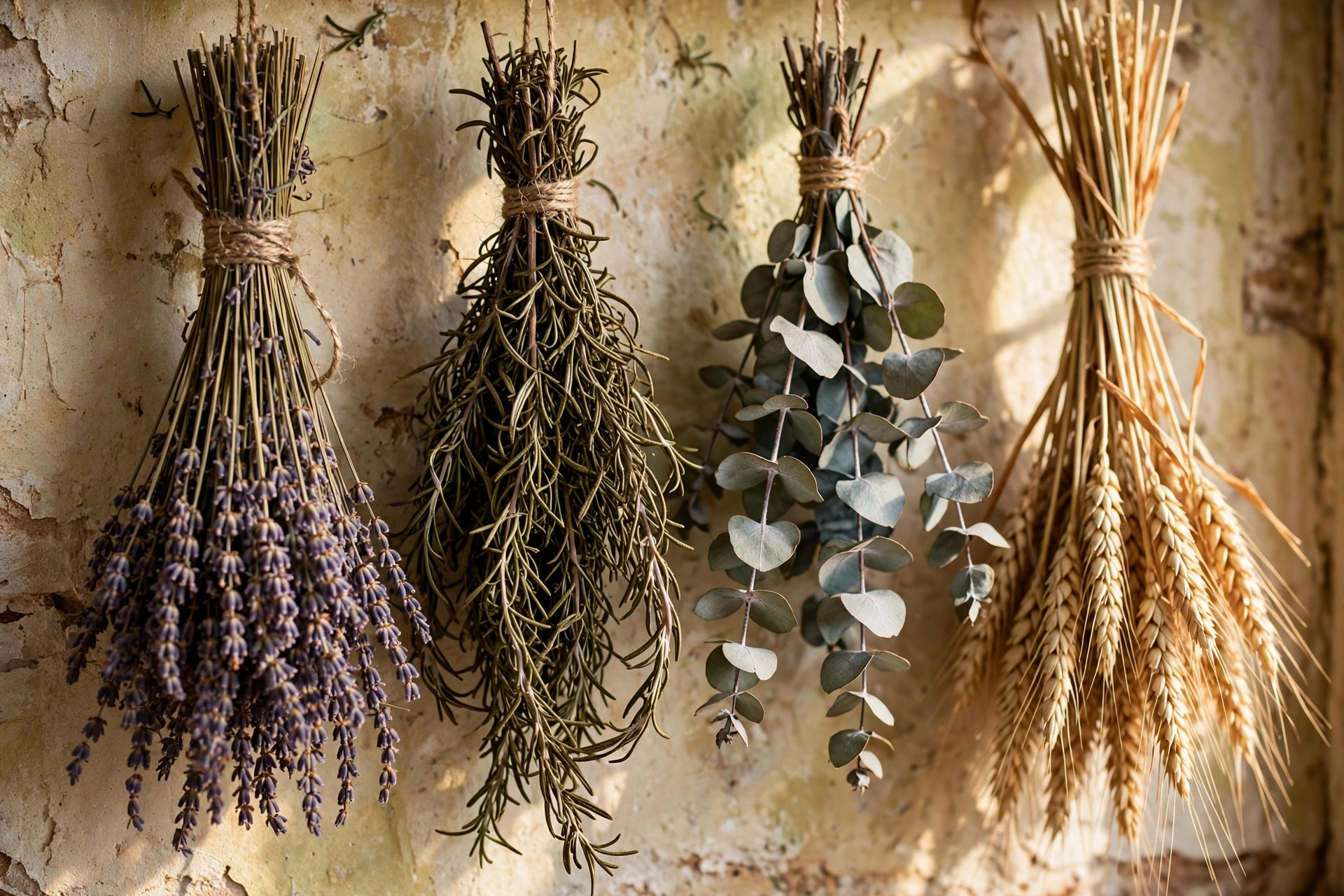
Quick answer: Tie fresh rosemary, thyme, lavender or eucalyptus tightly with twine and hang upside down in a dry, airy spot away from direct sunlight. In one to two weeks you have beautiful dried bundles — then cluster them into a wall display or tie them as gifts.
Dried herbs are the signature of this trend, and they are the easiest place to start.
- Hang your first herb bundle. Buy or pick fresh rosemary, thyme, lavender, or eucalyptus. Tie the stems tightly with twine — they shrink as they dry, so tie them tighter than feels necessary — and hang them upside down in a dry, airy spot away from direct sunlight. A kitchen beam, a curtain rod, or a wall-mounted drying rack all work. In one to two weeks, you have beautiful dried bundles that look gorgeous and are genuinely usable in cooking. Horticultural sources like the Royal Horticultural Society recommend exactly this method — hanging bunches upside down somewhere dark, dry and well ventilated — as the standard way to dry herbs well.
- A dried flower and herb wall. Once you have a few bundles, hang them in a cluster on one wall — different lengths, different plants, all on simple twine or ribbon. Lavender, wheat stalks, dried roses, baby’s breath, and eucalyptus together make a stunning display that costs almost nothing if you dry them yourself. It is part decor, part pantry, and it smells wonderful every time you walk past.
- Herb bundles as gifts. Tie a small bundle of dried lavender or rosemary with ribbon and a handwritten tag, and you have a gift that looks thoughtful and expensive. Tuck one into a hostess gift, tie one around a bottle of olive oil, or leave one on a guest’s pillow. The kitchen witch aesthetic is generous by nature — it is about making things with your hands and sharing them.
How do you build an apothecary shelf?
Quick answer: Start with five or six mismatched amber glass jars, label each by hand with the contents and date, fill them with beautiful ingredients like dried herbs, orange slices and spices, and arrange taller jars at the back with breathing room.
The apothecary shelf is the centrepiece of the kitchen witch home: open shelving displaying jars of beautiful ingredients, labelled by hand. It is practical storage and decor in one, and it is the project that gets the most compliments.
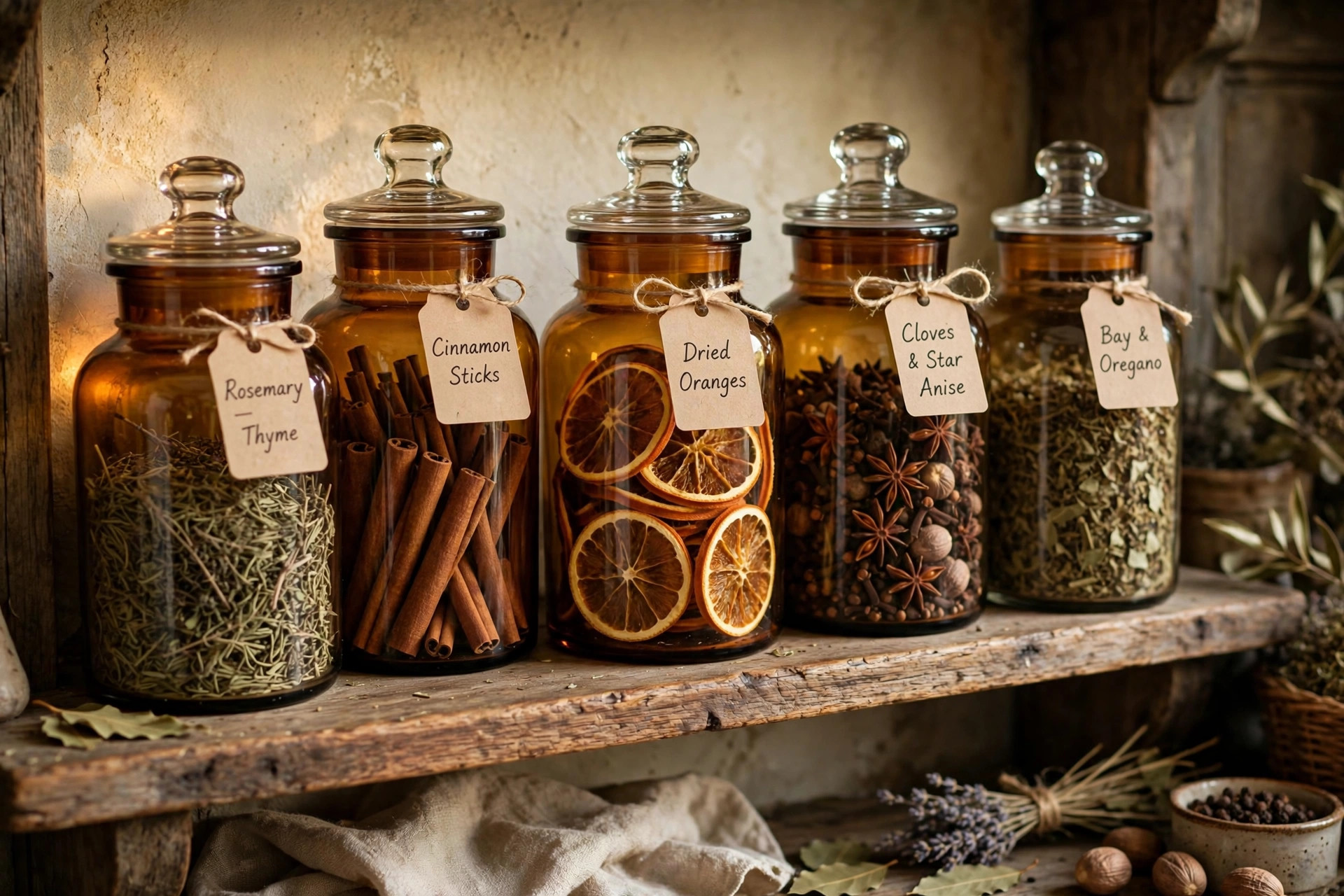
- Start with amber glass jars. Amber-tinted jars are the signature look — they glow warmly in kitchen light and they actually protect their contents from light, which keeps herbs and spices fresher. You do not need a matching set; in fact, mixed sizes and shapes look better. Thrift shops, the pound shop, and online marketplaces are full of them. Start with five or six and build the collection over time.
- Label everything by hand. This is the step that transforms jars of stuff into an apothecary. Use kraft paper tags tied with twine, or write directly on the jars with a chalk marker. Write the contents and the date: “Rosemary — dried Sept 2026,” “Cinnamon sticks,” “Dried orange slices.” The handwriting is the point — it is what makes the shelf feel personal rather than store-bought. If your handwriting is not your favourite thing, printed labels in a vintage-style font work too.
- Fill the jars with beautiful ingredients. Dried herbs and spices, of course, but also think visually: dried orange slices, cinnamon sticks, star anise, dried rose buds, lentils, beans, colourful teas, bath salts. Arrange taller jars at the back, shorter at the front, and leave a little breathing room — a crowded shelf looks like storage, a styled shelf looks like decor. Step back, squint, and rearrange until the colours and heights feel balanced.
Which old-world touches make a kitchen feel magical?
Quick answer: Display wooden bowls, boards and spoons instead of hiding them; cluster beeswax candles for their warm honey-coloured glow; and keep a heavy mortar and pestle on the counter for grinding spices with care.
Beyond the shelf, a few old-world details will make the whole kitchen feel like it belongs in a storybook.
- Wooden bowls and boards on display. Instead of hiding your prettiest wooden bowls, cutting boards, and rolling pins in cupboards, lean them against the backsplash or hang them on the wall. Wood is the warmest material in a kitchen, and displaying it makes the whole room feel more handmade. A collection of wooden spoons in a stoneware crock by the stove is both useful and beautiful.
- Beeswax candles. Making your own candles from beeswax is one of the trending kitchen witch crafts, but you can also simply buy them. Beeswax candles burn with a warm, honey-coloured light and a faint natural sweetness that no scented candle quite matches. Cluster them on the table or the windowsill, and light them at dinner. The glow is the whole point. Whichever candles you burn, the National Candle Association recommends trimming wicks to about 6mm before each lighting to keep the flame steady and reduce smoke and soot.
- A mortar and pestle on the counter. It is useful — grinding your own spices genuinely tastes better — and it looks wonderful. A heavy stone or marble mortar and pestle sitting by the stove says “someone cooks here with care” in a way no gadget does. Use it for crushing cardamom for your morning coffee, grinding dried herbs, or making spice blends to store in your apothecary jars.
What crafts and rituals fit the kitchen witch home?
Quick answer: Lean into the doing, not just the displaying: mix your own spice blends for cooking and gifting, press autumn leaves and flowers for frames and gift tags, and start a Sunday simmer-pot ritual of citrus, cinnamon, cloves and herbs on the stove.
The last three ideas are about the doing, not just the displaying. The kitchen witch trend is a hobbies trend, after all — it is about making things with your hands.
- Make your own spice blends. This is one of the fastest-growing parts of the trend, and it is genuinely useful. Mix up a pumpkin spice blend (cinnamon, ginger, nutmeg, cloves, allspice), an Italian herb blend, or a cosy chai spice mix. Store them in your labelled jars, and give them as gifts in small jars with handwritten tags. Homemade blends taste fresher than anything from a jar, and the making of them — measuring, grinding, mixing, labelling — is exactly the slow, satisfying craft this trend celebrates.
- Press flowers and leaves. Gather autumn leaves, ferns, and flowers, press them between the pages of heavy books for two weeks, and then frame them, use them as gift tags, or decoupage them onto candles. It is a quiet, meditative craft, perfect for a rainy October afternoon, and the results are genuinely beautiful. A framed pressed fern in a vintage frame looks like something from a botanical print shop.
- Start a seasonal simmer ritual. The kitchen witch home always smells wonderful, and the simplest way to get there is a simmer pot — water, sliced citrus, cinnamon, cloves, and herbs, left to bubble gently on the stove. It is the edible version of the aesthetic: natural, handmade, and sensory. For more seasonal inspiration once the pot is bubbling, our cozy fall bucket list is full of ideas for making the most of autumn. Make it a Sunday ritual: start the pot, put on music, and let the house fill with the smell of fall.
Where can you find kitchen witch pieces without spending much?
Quick answer: Thrift and charity shops first for amber glass, wooden bowls and brass; forage and dry your own botanicals; use farmers’ markets for cheap dried bundles; and start with what you already own before buying anything at all.
The kitchen witch aesthetic is one of the cheapest styles to achieve because it is built on thrifted, foraged, and handmade things. Thrift shops and charity shops are your best friends: amber glass, wooden bowls, brass candlesticks, old books, linen napkins, and stoneware crocks are all abundant and cheap. Go regularly, because the good stuff goes fast in fall.
Forage and dry your own botanicals. Lavender, rosemary, eucalyptus, wheat, and wild grasses are easy to dry and free if you grow them or have permission to gather them. Farmers’ markets in autumn sell dried flower bundles for very little that would cost far more in a home decor shop. And the craft shop fills the gaps: twine, kraft tags, chalk markers, beeswax, and dried botanicals you cannot grow yourself.
The most important thing to buy, though, is nothing. Start with what you have: pull the wooden spoons out of the drawer, decant the rice into a jar you already own, tie up the rosemary that is going leggy in the garden. The aesthetic is about using and displaying what is already around you. That is why it feels so personal — because it is.
How do you keep it cosy instead of cluttered?
Quick answer: Everything on display should be either beautiful or useful, preferably both. Dust displayed items regularly, leave breathing room between objects, and let the candlelight do the rest — a kitchen witch home is considered, not maximalist.
The line between a charming apothecary shelf and a cluttered kitchen is a real one, and it is worth watching. The rule is simple: everything on display should be either beautiful or useful, preferably both. If a jar is neither, it goes in the cupboard. Dust the shelves regularly — displayed things collect dust, and dusty jars look sad rather than storied. And leave some empty space. The magic of this style is in the breathing room between the objects, the sense that each thing was chosen. A kitchen witch home is not a maximalist home; it is a considered one. Keep it intentional, keep it clean, and let the candlelight do the rest.
Leave a Reply