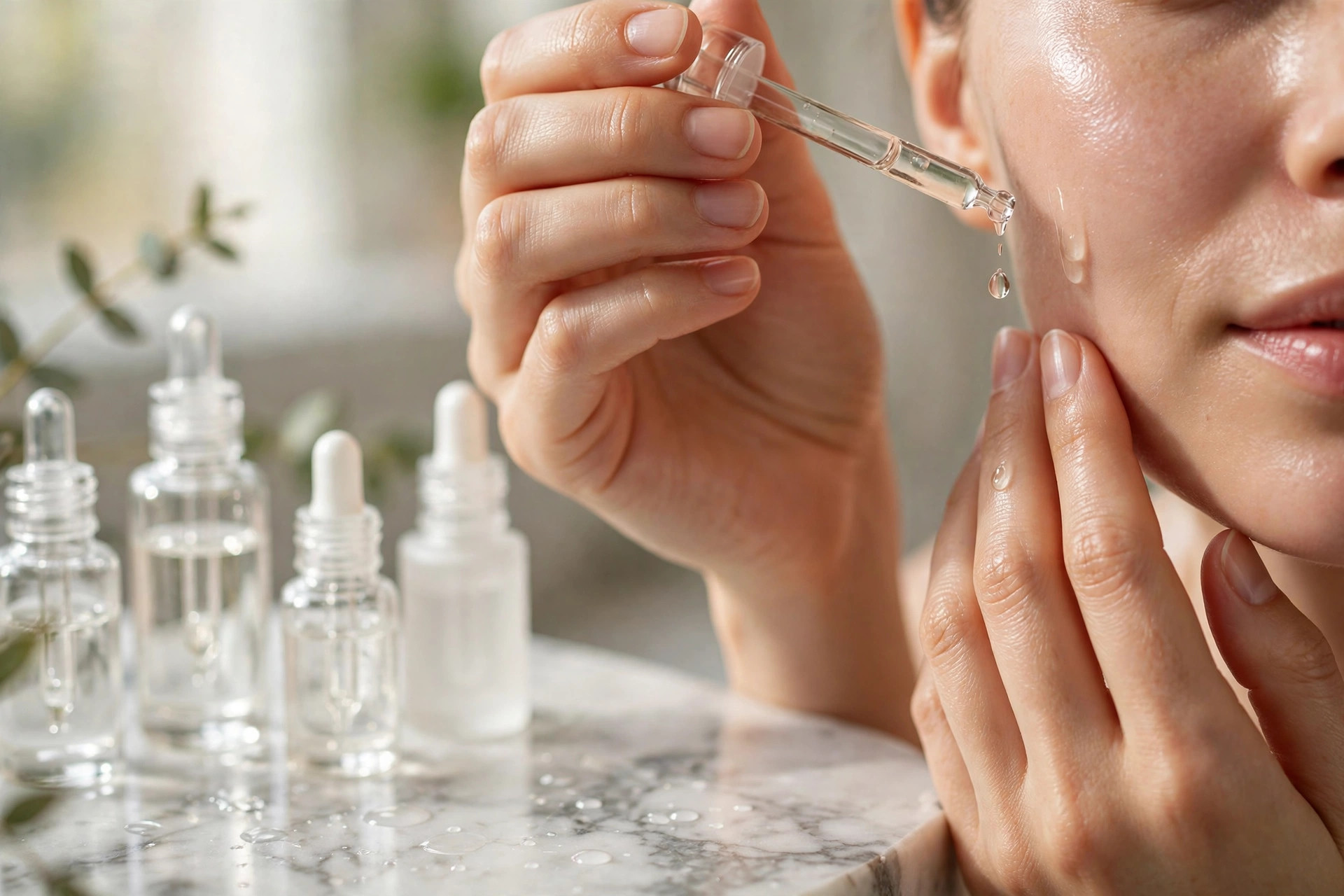
Open any skincare shelf this fall and you will find the same scene: a cleanser, a moisturiser, and then a small crowd of serums and essences, each promising something wonderful, none explaining how they are supposed to coexist. Hyaluronic acid, niacinamide, vitamin C, peptides, a hydrating essence — it is easy to end up either layering them in the wrong order (so the expensive one cannot reach your skin) or combining ingredients that cancel each other out (or worse, irritate). Layering is a genuine skill, and it is simpler than the internet makes it look.
This guide is your complete, calm walkthrough. You will learn the one golden rule that governs all layering, what essences actually do and where they fit, the correct order for every common serum type, which ingredient combinations are dream teams and which should never meet, how much to use and how long to wait between layers, and two sample fall routines — morning and evening — that put it all together. By the end, that crowded shelf will feel like a well-organised toolkit instead of a chemistry exam.
The Golden Rule: Thin to Thick
Almost every layering question has the same answer: apply products from thinnest texture to thickest. Watery essences first, then lightweight serums, then richer serums or oils, then moisturiser, then sunscreen in the morning. The logic is physical, not mystical — thin, water-based formulas need direct contact with your skin to absorb, and if you put a thick cream down first, it forms a barrier that blocks everything layered over it.
Texture is a better guide than product category. A watery vitamin C serum goes before a slightly thicker niacinamide serum, even though both are “serums.” When in doubt, put a drop of each on the back of your hand and compare — the one that spreads and sinks fastest goes first. This simple test resolves ninety per cent of order dilemmas instantly.
There is one nuance worth knowing: pH-dependent actives (like L-ascorbic acid vitamin C and chemical exfoliants) work best applied to clean, dry skin before anything that might buffer their acidity. So while thin-to-thick is the general rule, these particular formulas go first even ahead of a thinner essence. We will map the exact order for common serums shortly.
Essence First: What It Is and Why It Matters
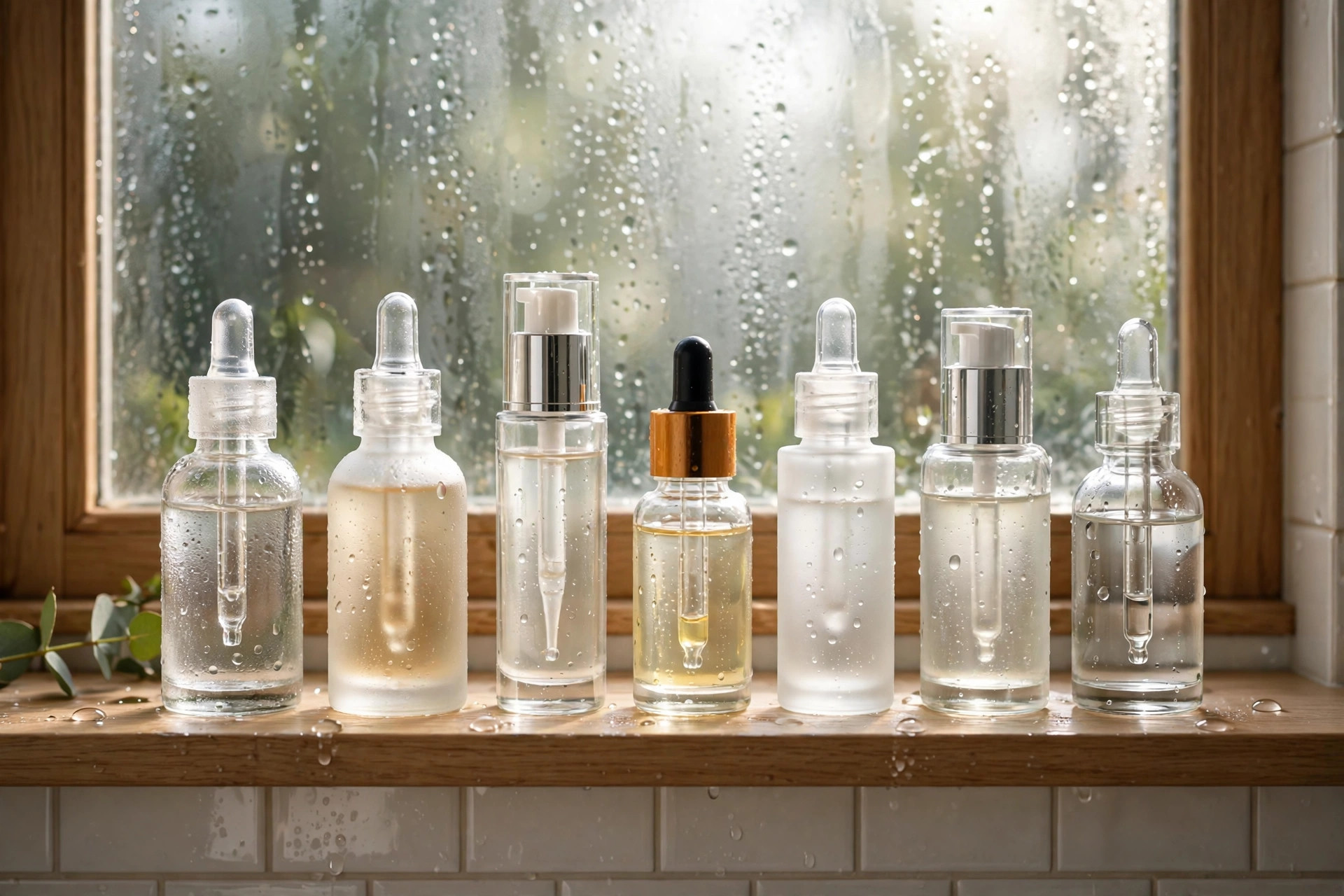
The essence is the most misunderstood step in Western routines, largely because it arrived from Korean skincare without its instruction manual. An essence is a lightweight, watery hydrating treatment — thinner than a serum, more concentrated than a toner — designed to flood the skin with hydration and prepare it to absorb everything that follows. Think of it as priming a sponge: damp skin drinks up subsequent layers far better than dry skin.
In practice, an essence usually contains humectants (glycerin, hyaluronic acid, beta-glucan), fermented ingredients (galactomyces, bifida ferment lysate), or soothing botanicals. You apply it right after cleansing (or after a hydrating toner, if you use one), pressing it into slightly damp skin with your palms rather than rubbing with a cotton pad. Most people use roughly a 10-pence-piece-sized amount — enough to leave the skin feeling dewy, not dripping.
Is an essence essential? Honestly, no — a good hydrating serum can do similar work. But in autumn, when the air is dry and every layer of hydration counts, an essence earns its place. It is the difference between moisturiser sitting on thirsty skin and moisturiser sealing in a well of hydration. If your skin feels tight by midday despite a good cream, a missing essence step is often why. And if you are layering multiple serums, the essence gives them all a damp, receptive base to sink into.
The Correct Order for Common Serums
Here is the practical order cheat-sheet, from first to last, for the serums most people actually own. Remember: within each step, thinner goes before thicker.
- Chemical exfoliants (AHA/BHA/PHA). These go on clean, dry skin first — they need direct contact and their ideal pH to work. Use in the evening, a few nights a week, not daily. Wait a minute or two before the next layer.
- Vitamin C (L-ascorbic acid). Morning is the classic slot, on clean dry skin before other serums. It is pH-dependent like exfoliants, so it goes early. If your vitamin C is a derivative (ascorbyl glucoside, sodium ascorbyl phosphate), it is less fussy about order — thin-to-thick applies.
- Watery hydrating serums (hyaluronic acid, glycerin, beta-glucan). Apply to slightly damp skin — after essence is ideal. These are your hydration foundation and they play well with almost everything.
- Niacinamide serums. After hydrators. Niacinamide is famously easy-going and layers well over or under most things. If you use a high percentage (10% or more) and your skin is sensitive, try it after your hydrating serum rather than directly on bare skin.
- Targeted treatment serums (peptides, tranexamic acid, azelaic acid). These go in the middle of the routine, after hydrators and niacinamide. Peptides in particular prefer to be layered over hydrating serums rather than under strong acids.
- Retinoids (evening only). Retinoids go late in the routine — after water-based serums, before or mixed into moisturiser depending on your tolerance. The “sandwich” method (moisturiser, retinoid, moisturiser) is the gentlest way to start.
- Facial oils. Last among treatments, before (or instead of, for very dry skin) moisturiser. Oils are occlusive — they seal in everything beneath them, which is exactly why they go last.
Then moisturiser, then sunscreen in the morning. That is the full sequence. It looks long written out, but most routines use three or four of these steps, not all seven.
Ingredient Combinations That Work Beautifully Together

Some ingredients are better together — they enhance each other’s effects or cover each other’s weaknesses. These are the pairings worth building routines around.
- Hyaluronic acid + ceramides. Hydration plus barrier support: the humectant draws water in, the lipids lock it there. This is the core of most good fall routines, and it suits every skin type.
- Niacinamide + hyaluronic acid. A calm, hydrating, barrier-supporting duo with almost no irritation risk. An excellent base combination for sensitive skin.
- Vitamin C + vitamin E + ferulic acid. The classic antioxidant trio — each one stabilises and boosts the others, and together they give broader environmental protection than any one alone. Many formulas combine all three in one bottle.
- Peptides + niacinamide. Both support the skin’s firmness and texture through different pathways, and neither irritates. A good “skin quality” pairing for the long term.
- Azelaic acid + niacinamide. Both calm redness and even out tone; together they are a gentle but effective combination for blotchy or uneven skin. Well tolerated by sensitive types.
- Retinoid + moisturiser (the sandwich). Not a serum pairing, but the combination that makes retinoids tolerable: buffering with moisturiser reduces irritation while preserving most of the benefit.
Notice the theme: the best combinations pair an active ingredient with hydration or barrier support. Autumn skin is thirsty skin, and actives always perform better — and irritate less — on a well-hydrated base.
Combinations to Keep Apart
Now the cautionary half. These pairings are not always disastrous, but they are the most common sources of irritation, and beginners should keep them separated — either in different routines (one morning, one evening) or on alternate days.
- Retinoids + exfoliating acids (AHA/BHA). Both accelerate cell turnover; together they frequently cause redness, peeling, and a damaged barrier. Alternate nights is the safe approach.
- Retinoids + vitamin C (L-ascorbic acid). Both are potent and both can irritate; layering them doubles the insult. The standard solution is vitamin C in the morning, retinoid at night — which also matches each ingredient’s ideal timing.
- Exfoliating acids + vitamin C (L-ascorbic acid). The combined acidity can overwhelm the skin. If you love both, use vitamin C in the morning and exfoliate in the evening.
- Benzoyl peroxide + retinoids. Benzoyl peroxide can degrade some retinoids and the combination is harsh. If both are prescribed, your dermatologist will advise on timing — follow their guidance over any general rule.
- Multiple strong actives at once. The meta-rule: if your routine contains two or more potent actives (acids, retinoids, high-strength vitamin C), do not use them all in the same routine. Spread them across morning/evening or alternate days. More is not better; consistent and tolerable is better.
A note on niacinamide and vitamin C: you may see warnings that they must never be combined. This comes from old chemistry done at extreme temperatures — in real skincare, at normal pH and room temperature, they coexist fine. Do not let this myth shrink your routine.
How Much to Use and How Long to Wait
Over-application is the quiet saboteur of layering. Serums are concentrated — a pea-sized amount (two to three drops for dropper serums) covers the whole face. Using more does not increase the benefit; it increases the risk of pilling, where products ball up instead of absorbing, and of irritation from overloading the skin with actives.
Between layers, you do not need the ten-minute waits some routines suggest. A good rule of thumb: wait until the previous layer feels absorbed — skin looks dewy but not wet, and your fingertips do not slide — usually 30 to 60 seconds. The exceptions are pH-dependent actives (exfoliating acids, L-ascorbic acid vitamin C), which deserve a full minute or two on clean skin to do their work before the next layer buffers them.
Pilling usually means one of three things: too much product, incompatible textures (silicone-heavy formulas over watery ones are a classic cause), or not waiting long enough between layers. Fix it by using less, waiting a beat longer, and applying thinner formulas first. If a particular combination always pills, try splitting it — one product in the morning, the other at night.
And introduce new serums one at a time, with a few days between additions. If your skin reacts, you will know exactly which product caused it. Adding three new serums on the same day and then troubleshooting the fallout is a miserable experience the patient approach avoids entirely.
Sample Fall Routines: Morning and Evening
Let us put it all together. These are templates — adjust to your skin’s needs, and remember that a shorter routine you follow daily beats an elaborate one you abandon.
Morning (protection focus): gentle cleanser or lukewarm water rinse → essence pressed into damp skin → vitamin C serum on dry skin (wait a minute) → hyaluronic acid or hydrating serum → niacinamide serum if you use one → moisturiser → sunscreen SPF 30+. The theme is antioxidants plus hydration plus protection — everything your skin needs to face cold air and indoor heating.
Evening (repair focus): gentle cleanse (double cleanse if wearing makeup or sunscreen) → essence on damp skin → exfoliating acid or treatment serum (alternate nights — never both) → hydrating serum → peptide serum if you use one → retinoid (on non-exfoliant nights, starting out) → moisturiser, with a facial oil or occlusive layer on top if your skin is dry. The theme is treatment plus deep hydration while you sleep.
Notice what is missing: there is no step you do not understand the purpose of, and no routine asks your skin to tolerate two strong actives at once. That restraint is the whole secret.
Troubleshooting: Stinging, Breakouts, and Dullness
Even a well-ordered routine can hit snags. Here is how to read the signals.
Stinging on application usually means the barrier is stressed — by too many actives, too-frequent exfoliation, or a new product that is too strong. The fix is a “skin reset”: strip back to cleanser, essence or hydrating serum, and moisturiser for one to two weeks, then reintroduce actives one at a time. If stinging is severe or persistent, see a dermatologist rather than pushing through.
New breakouts after adding a serum need detective work. True purging (accelerated clearing of existing congestion) happens with exfoliants and retinoids, appears where you normally break out, and resolves within a few weeks. Breakouts in new areas, or itchy bumps, suggest irritation or a reaction — stop the new product and simplify. When in doubt, a dermatologist can tell the difference in one look.
Dullness despite layering often means the routine is heavy on actives and light on hydration — very common in autumn. Try adding the essence step, applying hydrating serum to damper skin, or sealing with a slightly richer moisturiser. Sometimes the answer is not another serum but better basics.
Layering serums and essences is not about owning the most bottles — it is about giving each formula the conditions to do its job: the right order, the right partners, the right amount, and skin that is calm enough to receive them. Master thin-to-thick, respect the pairings, and keep your routine as simple as your skin will allow. This fall, let your shelf be a toolkit, not a test. Your skin will show the difference.
Leave a Reply