
Last updated: November 2026
Quick answer: In winter, dewy makeup usually wins for dry or normal skin because it adds glow and hydration, while matte makeup suits oily skin and long days. The best cold-weather finish is often a soft mix: dewy skin with a matte T-zone.
Every winter, the same question pops up in front of the mirror. The question of matte vs dewy makeup winter which is better comes up again and again, because cold air changes how every base behaves. Should your skin glow, or should it stay perfectly matte? Cold air, central heating, and dry skin change how makeup behaves, so the finish that worked beautifully in summer may suddenly look patchy or flat. If you are weighing up matte vs dewy makeup in winter and wondering which is better, the honest answer is that it depends on your skin and your day. This guide compares both finishes honestly, so you can pick the one that flatters you most in cold weather.
What Is the Difference Between Matte and Dewy Makeup?
Matte makeup gives a flat, shine-free finish that absorbs oil and stays put, while dewy makeup gives a fresh, luminous glow that mimics healthy, hydrated skin. Matte looks velvety and polished; dewy looks radiant and youthful.
Matte foundations are usually fuller coverage and oil-absorbing, so they keep shine under control for hours. They are brilliant for photographs and long days, but they can settle into fine lines and dry patches. Dewy foundations are lighter and more hydrating, with light-reflecting particles that make skin look plump and fresh. They can, however, slide around on oily skin or look shiny by midday. Neither finish is better in general — they simply solve different problems. In winter, the question becomes which one works with cold, dry air rather than against it.
Matte vs Dewy Makeup in Winter: Which Is Better for Dry Skin?
For dry skin, dewy makeup is usually better in winter because it adds moisture and light, while matte formulas can cling to dry patches and make flakiness more obvious. A hydrating, luminous base keeps dry winter skin looking soft and comfortable.
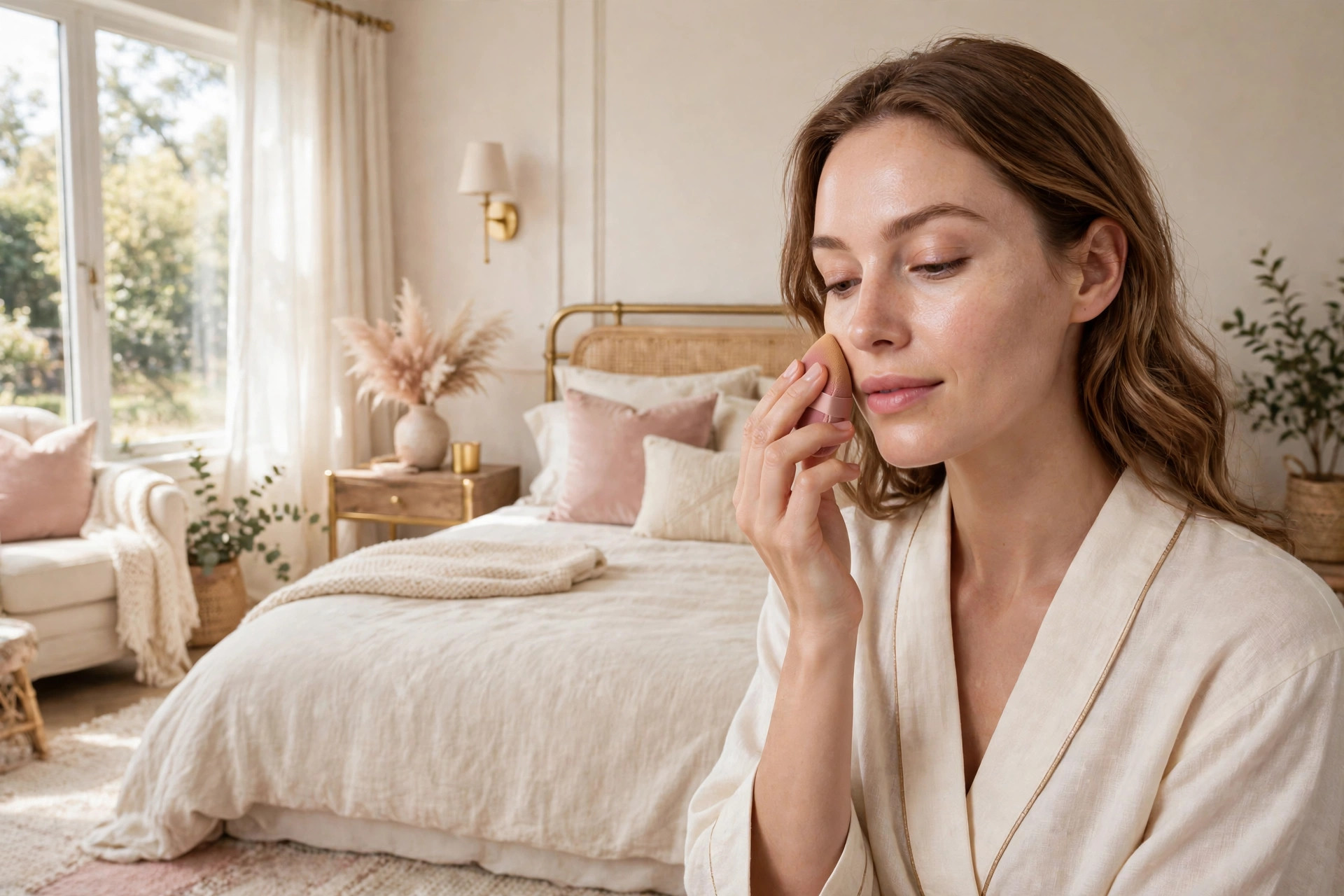
If your skin feels tight after washing, or your foundation goes patchy by lunchtime, matte formulas are probably working against you in winter. A dewy or satin finish glides over dry areas instead of highlighting them. Prep matters just as much as the product: apply a rich moisturiser, let it sink in for a few minutes, and then apply your foundation with a damp sponge for the smoothest result. The American Academy of Dermatology suggests using a gentle, fragrance-free moisturiser on damp skin to ease winter dryness, and that hydrated base is exactly what dewy makeup needs to look its best.
Matte vs Dewy Makeup in Winter: Which Is Better for Oily or Combination Skin?
For oily or combination skin, matte makeup is often better in winter because it controls shine in the T-zone and lasts longer through the day. A soft matte base with a touch of glow on the cheekbones gives balance without greasiness.
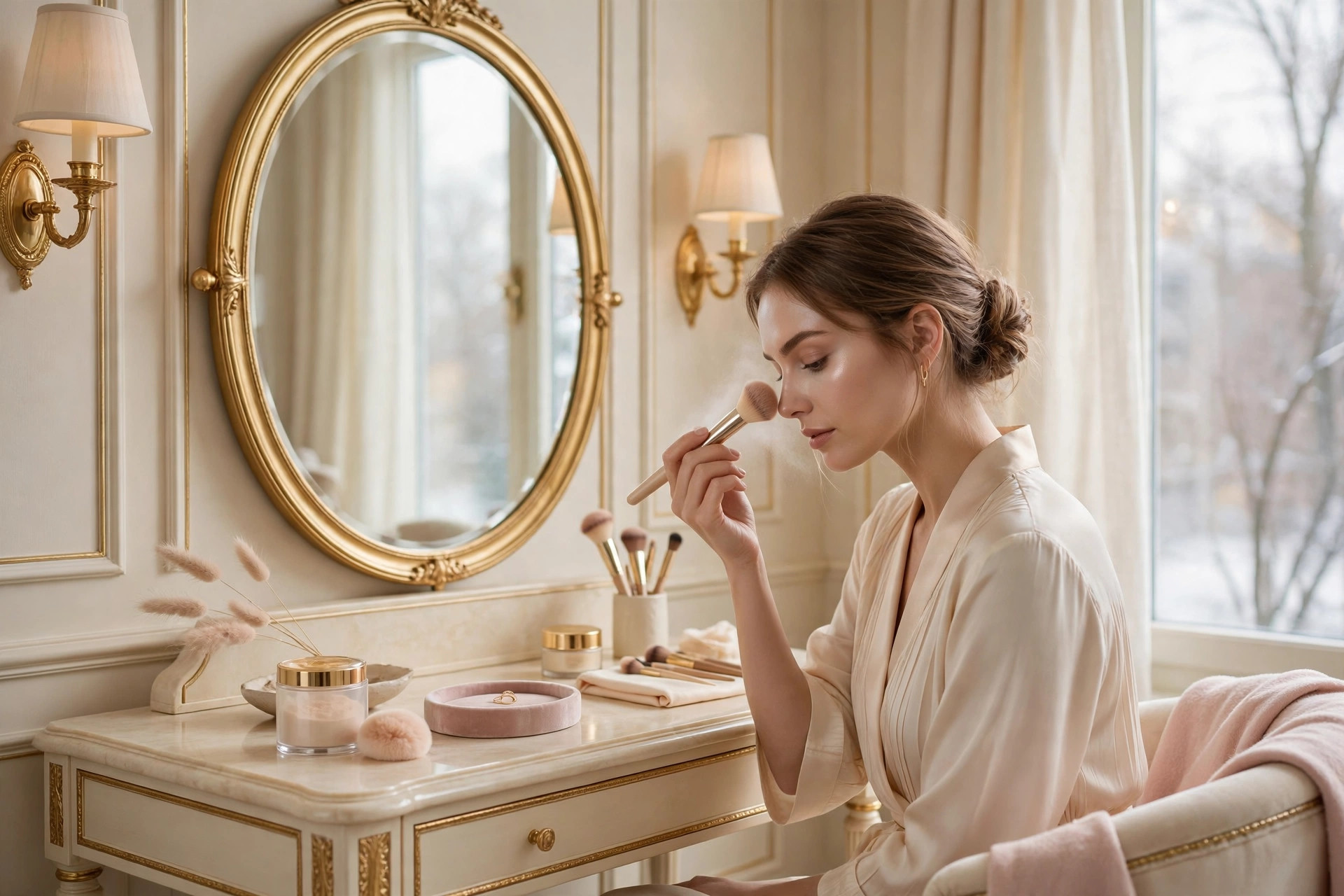
Oily skin does not stop producing oil in winter, even if your cheeks feel dry. That combination — dry cheeks, shiny forehead — is where a mixed approach shines. Try a matte foundation on your T-zone and a lighter, more luminous product on your cheeks. Or use a dewy foundation all over and set only your T-zone with a light dusting of translucent powder. Blotting papers are your best friend for midday touch-ups, since they remove shine without adding another layer of powder that could look cakey in cold, dry air.
How Does Cold Weather Change Each Finish?
Cold weather makes matte makeup more likely to look dry and patchy, while dewy makeup can lose its glow under scarves and hats. Wind and low humidity pull moisture from the skin, so any finish needs a well-hydrated base to look good.
Think of winter as a test of your skin preparation. Wind strips moisture, heating dries the air indoors, and moving between the two all day stresses your base. Matte formulas, which absorb oil, can absorb what little moisture your skin has left and end up looking chalky. Dewy formulas hold up better because they add moisture back, but they can transfer onto scarves and high collars. The fix for both is the same: a good moisturiser, a hydrating primer if you like one, and a light hand with powder. Set only where you truly need it, and leave the rest of your skin free to glow naturally. The American Academy of Dermatology also advises keeping showers short and lukewarm, since hot water strips the natural oils that keep winter skin comfortable under makeup.
Which Finish Lasts Longer on a Winter Day?
Matte makeup generally lasts longer on a winter day because it grips the skin and resists oil, while dewy makeup may need a midday refresh. With setting spray and light powder on the T-zone, a dewy base can still last comfortably from morning to evening.
Here is how the two finishes compare for a typical winter day:
| Matte finish | Dewy finish | |
|---|---|---|
| Wear time | 8 hours or more | 5 to 6 hours without touch-ups |
| Best skin type | Oily, combination | Dry, normal, mature |
| Winter risk | Patchiness on dry areas | Transfer onto scarves |
| Easy fix | Rich moisturiser underneath | Setting spray and T-zone powder |
If you have a long day ahead, matte gives you the most staying power. If your day is shorter or you can carry blotting papers and a small setting spray, dewy is perfectly practical and often more flattering in winter light.
Can I Combine Matte and Dewy Finishes in Winter?
Yes, combining matte and dewy finishes is the smartest winter approach for most skin types. Keep the centre of your face softly matte to control shine, and let your cheekbones, brow bones, and the bridge of your nose carry a gentle glow.
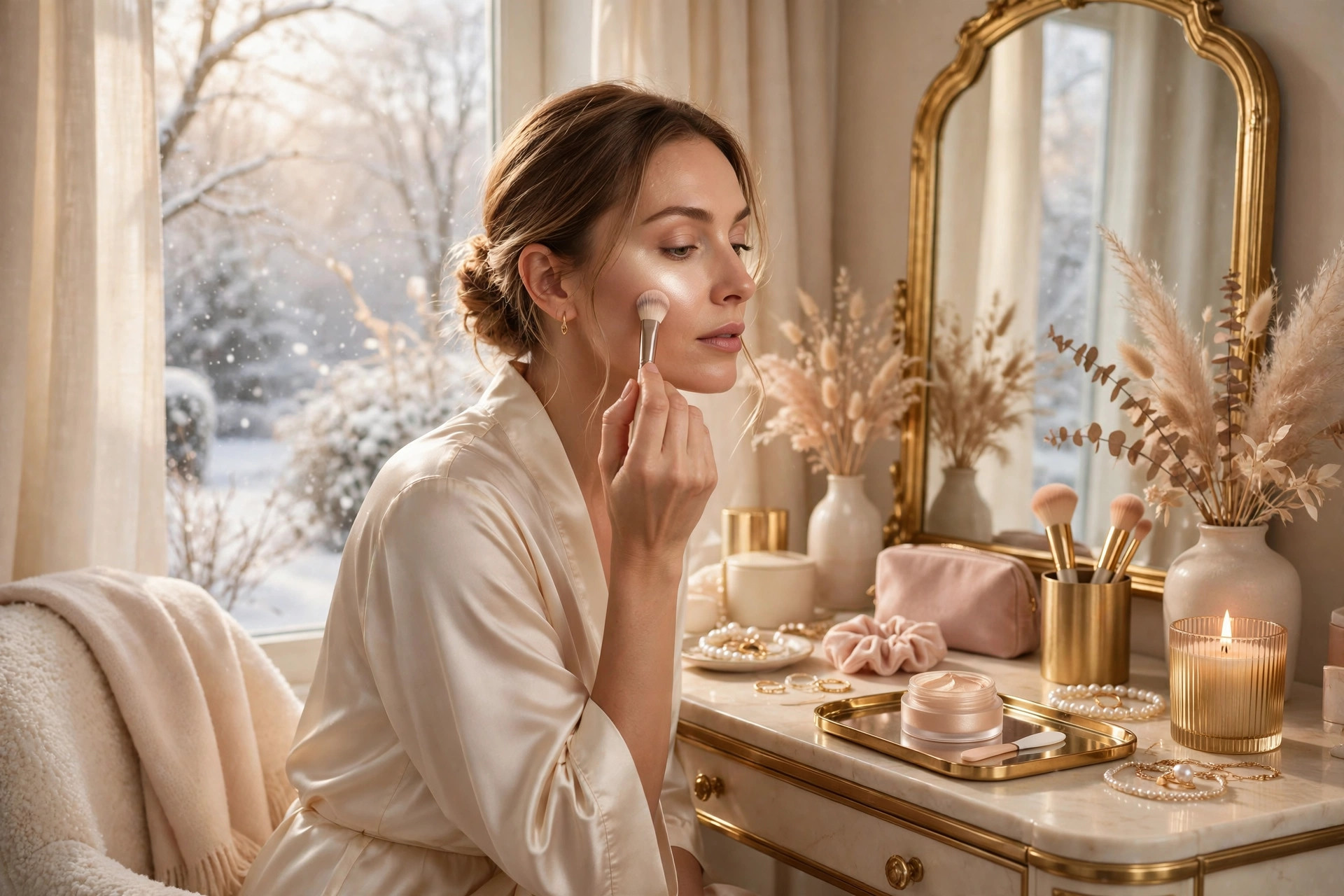
This mixed finish is sometimes called satin or soft glam, and it suits almost everyone. Here is a simple way to build it:
- Apply a hydrating foundation all over with a damp sponge.
- Dust translucent powder only on your forehead, nose, and chin.
- Add a cream highlighter to the high points of your cheeks.
- Finish with a setting spray to melt everything together.
Cream products blend beautifully in winter because they move with the skin instead of sitting on top of it. A cream blush and a cream highlighter over a softly set base give you glow exactly where you want it, without shine where you do not.
What About Winter Evenings and Special Occasions?
For winter evenings, a dewy base with softly matte eyes or a bold lip looks polished and festive, while a full matte base suits long events where you cannot touch up. Choose based on how long the event lasts and how much glow you want in photos.
Evening light is kinder than harsh daylight, so glow photographs beautifully at winter parties. A luminous base with a touch of powder on the T-zone will look radiant in candlelight and camera flash alike. If you are heading to a long dinner or a night of dancing, lean more matte so your base survives the evening. One trick for special occasions is to set your whole base lightly, then add glow back with a highlighter only on the cheekbones — you get the staying power of matte with the radiance of dewy, exactly where it counts.
How Do I Choose the Right Finish for My Skin?
Choose your winter finish by your skin type and your day: dry or mature skin suits dewy, oily skin suits matte, and combination skin suits a mix. Test a new finish at home first, and check it in daylight before wearing it out.
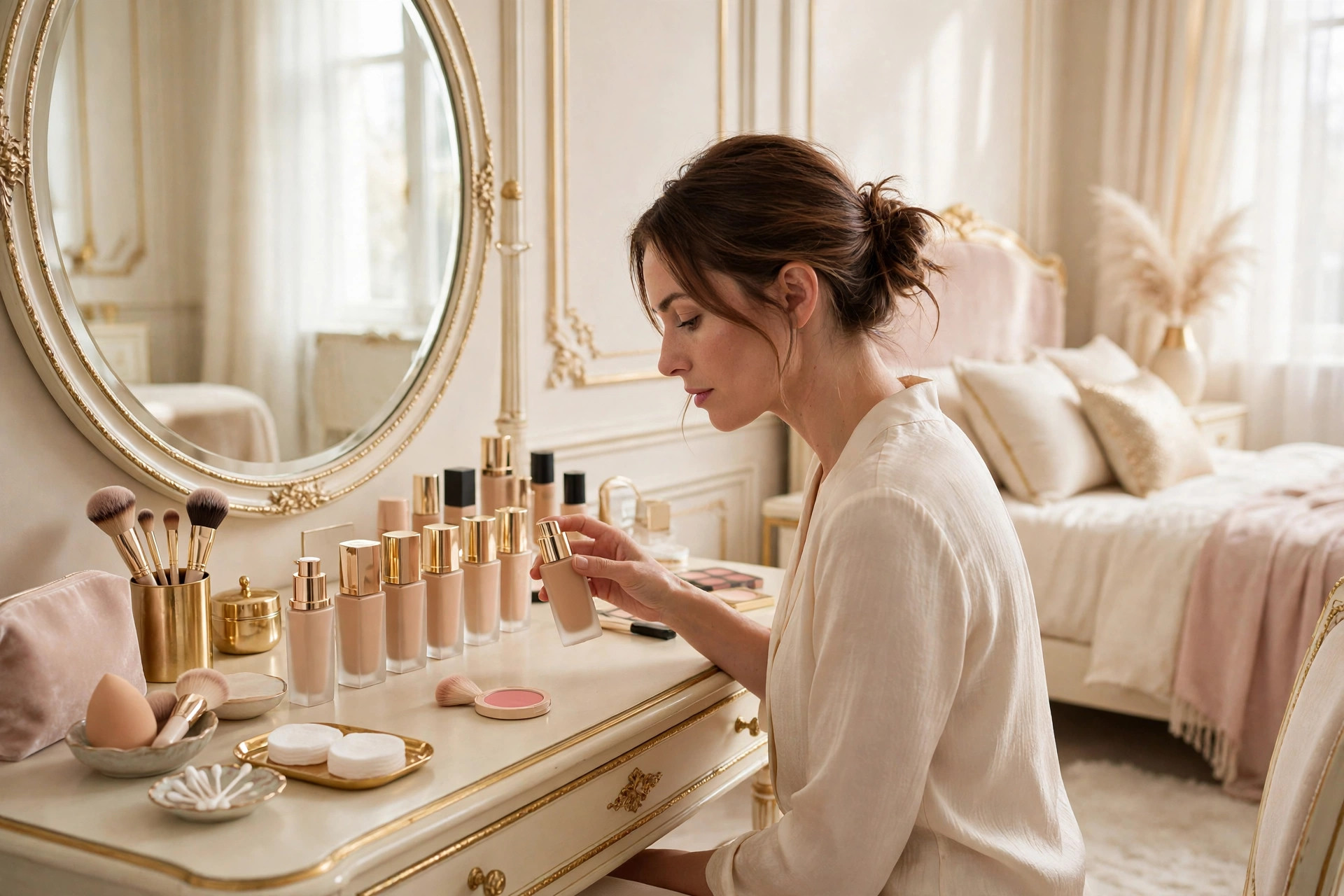
Ask yourself three quick questions before you buy or apply:
- Does my skin feel tight or shiny by midday? Tight points to dewy; shiny points to matte.
- How long does my makeup need to last today? Long days favour matte or a set dewy base.
- Do I want glow or polish? Glow suits daytime and evenings; polish suits work and photographs.
There is no rule that says you must pick one finish forever. Many women switch with the seasons, and winter is the perfect time to experiment with a softer, more luminous base.
Does dewy makeup make oily skin look greasy?
Not if you set your T-zone with powder and use blotting papers through the day. The difference between glow and grease is placement: glow sits on the cheekbones, while grease appears on the forehead and nose.
Can mature skin wear matte makeup in winter?
Yes, but choose a soft matte or satin formula rather than a very flat one, and moisturise well first. Heavy matte formulas can settle into fine lines, so a lighter hand and a hydrating base make all the difference.
Should I change my foundation shade in winter?
Often yes, by half a shade lighter, since most skin gets paler in winter. Test the shade along your jawline in daylight, and blend well into your neck so there is no visible line.
Is setting spray necessary in winter?
It is not essential, but it helps both finishes last longer and stops powder looking dry. A hydrating setting spray is especially kind to dewy makeup in cold weather.
So, matte or dewy this winter? If your skin is dry, let it glow. If it is oily, keep it softly matte. And if you are somewhere in between, mix the two and enjoy the best of both. Try the combination look tomorrow morning — you might find your perfect winter finish has been waiting in your makeup bag all along.
Leave a Reply