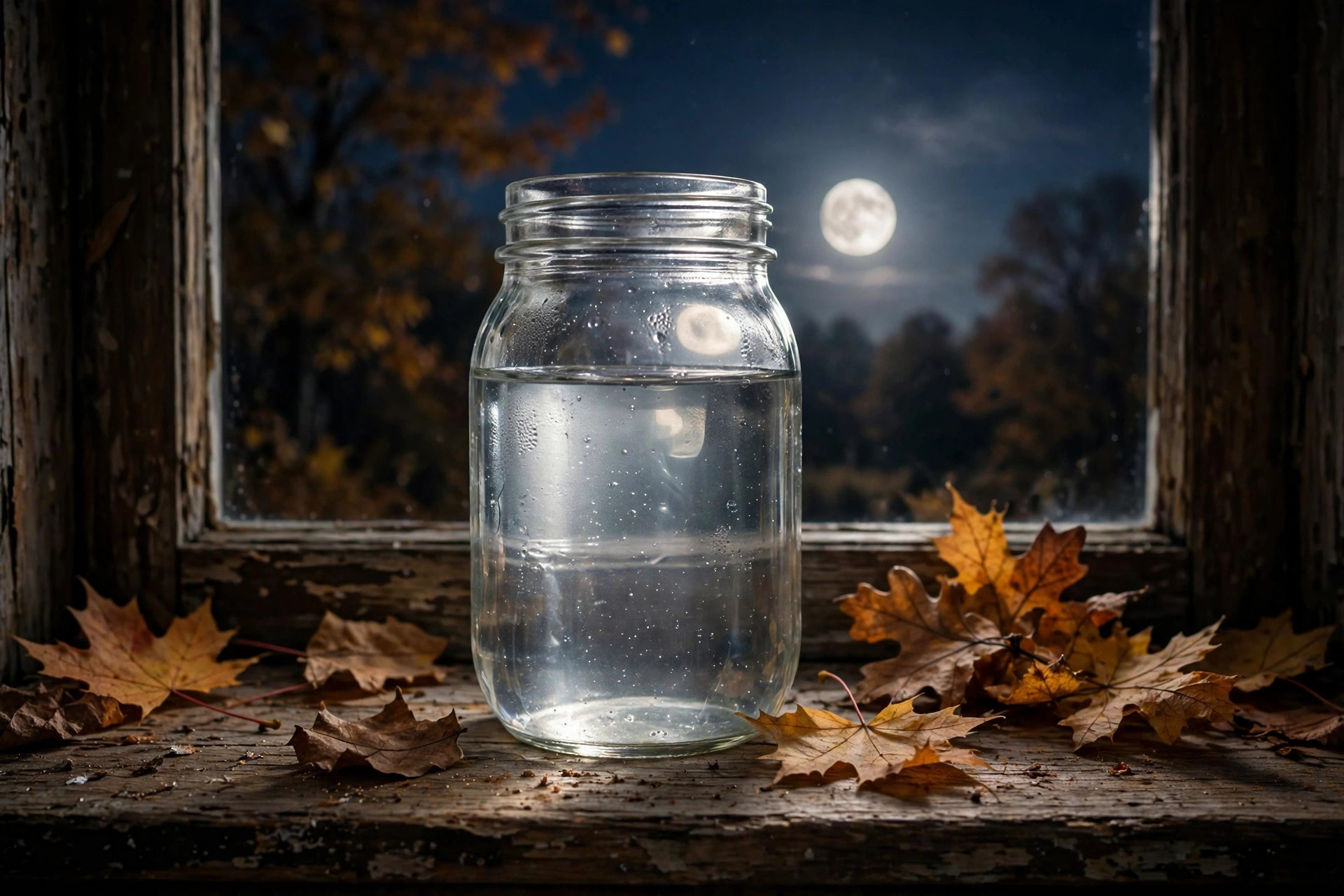
There is something quietly lovely about doing something under the moonlight. Long before electricity lit up our evenings, people planned parts of their lives around the moon — planting, harvesting, gathering, resting. Moon water is a small, modern echo of that old rhythm: water left in a jar to sit beneath the night sky, collected in the morning, and used with intention in your self-care routine. That is all it is. And honestly, that simplicity is the whole point.
If you have seen moon water mentioned online and wondered whether it is complicated, mystical, or expensive, let this guide reassure you. It is none of those things. It is a jar of water, a moonlit night, and a few calm minutes of your evening. The “ritual” part simply means you do it with attention rather than on autopilot — you pause, you notice, you take a breath. In a season when the nights draw in early and everything feels a little hurried, that pause is precious.
This guide treats moon water exactly as it deserves to be treated: as a mindfulness practice. We will not make any grand claims about what it can do. Instead, we will focus on what it genuinely offers — a reason to slow down, a reason to step outside and look up, a reason to mark the passing of the month with something gentle. By the end, you will know how to make your first jar, when the moon is at its best for charging, and nine simple ways to weave moon water into your routine.
What Is Moon Water, Really?
At its most basic, moon water is water that has been left out overnight under the moonlight, usually in a clean glass jar. People have been doing versions of this for centuries across many cultures, often connecting it with the phases of the moon and with the calm, reflective energy of the night. In modern self-care, it has become a small ritual of intention: you set the water out with a wish, a hope, or simply a quiet moment of thanks, and you collect it in the morning as a kind of keepsake of the night.
Think of it less like a product and more like a practice. The water itself is ordinary water. What makes it special is the attention you give it — the walk to the windowsill, the moment of looking up at the sky, the small pause before sleep. Rituals work this way in general: a cup of tea is just a cup of tea until you decide it marks the start of your slow evening, and then it becomes something more. Moon water is the same. It is a simple, beautiful excuse to be present.
It is worth saying clearly: moon water is a mindfulness ritual, not a medicine. It will not heal illness, fix problems, or change your life on its own. If you are dealing with health concerns — physical or mental — please see a doctor or a therapist rather than relying on any ritual. What moon water can do is give your evenings a little structure, a little beauty, and a little calm. For many of us, that is more than enough.
What You Need to Get Started
One of the loveliest things about moon water is how little it asks of you. You do not need to buy anything special, and you certainly do not need a shelf of mystical supplies. Most of what you need is probably in your kitchen already. Here is the full list.
- A clean glass jar or bottle with a lid. A jam jar, a mason jar, or any glass bottle with a cap works perfectly. Glass is traditional because you can see through it, but the material is not magic — it is just pretty. Wash it well and let it dry before you begin.
- Clean drinking water. Filtered water or spring water is ideal. If you plan to use your moon water on your skin or in the bath, ordinary tap water is fine, but start with water you would be happy to touch and smell.
- A windowsill, balcony, or garden spot. Somewhere the moonlight can reach the jar. A spot that gets direct moonlight is lovely, but not essential — even a jar on a windowsill on a cloudy night counts, because the ritual is the point, not the astronomy.
- Optional extras. A candle, a few sprigs of dried lavender or rosemary, a small notebook for writing down your intention. None of these are required. They simply make the moment feel a little more special, like laying a table nicely for dinner.
That is genuinely everything. If you have a jar and some water, you can make moon water tonight. There is no gatekeeping here, no expensive starter kit, no course to complete first. The moon does not check your credentials.
How to Make Moon Water, Step by Step
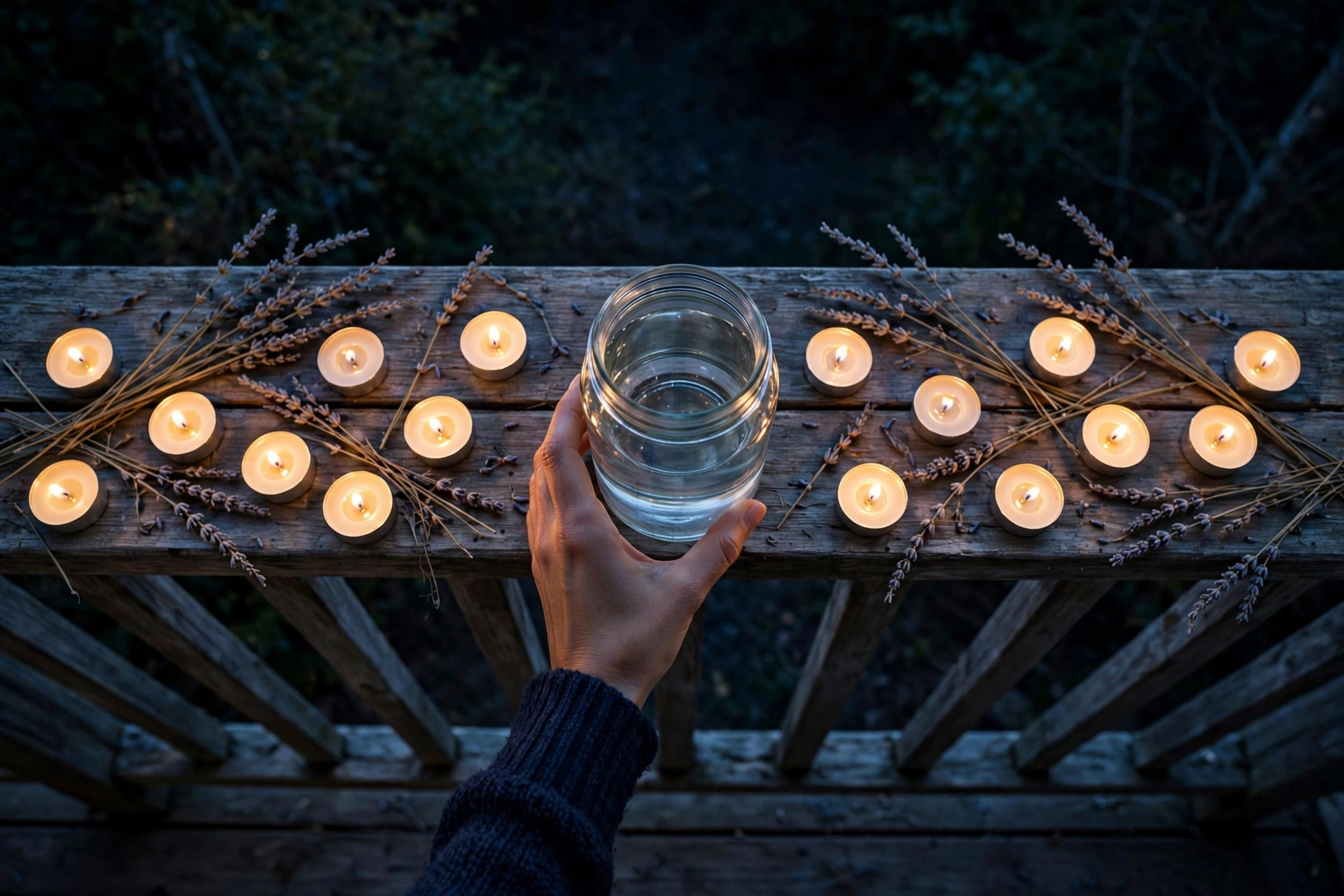
Making moon water takes about five minutes of actual effort, most of it in the evening. Here is the whole process, from jar to windowsill to morning.
- Choose your evening. Any night with a visible moon is perfect for your first jar. A full moon is the traditional favourite — bright, beautiful, and easy to spot — but do not wait weeks for one if you are keen to start. Tonight’s moon is tonight’s moon, and it is enough.
- Clean your jar mindfully. Wash your glass jar with warm soapy water, rinse it well, and let it air dry. As you wash it, you might like to think of this as clearing space — literally and mentally — for something calm. It is a small act, but doing it slowly sets the tone.
- Fill it with clean water. Fill the jar about three-quarters full with your clean water. Leave a little air at the top, which is practical (it stops spills) and, if you like symbolism, gives the water room to breathe.
- Set your intention. Before you put the lid on, hold the jar for a moment and think about what you would like this batch to represent. It could be rest, patience, gratitude, a fresh start, or simply “a calmer October”. Say it quietly to yourself or write it in a notebook. There is no wrong answer, and it does not need to be profound.
- Place it in the moonlight. Set the jar — lid on — on your windowsill, balcony, or garden spot. Take a moment to look up at the moon. Notice the sky. Take three slow breaths. This tiny pause is the heart of the whole ritual.
- Collect it in the morning. Bring the jar inside before the sun gets strong, ideally soon after you wake. Label it with the date and the moon phase if you like — a bit of masking tape and a pen does the job. Store it somewhere cool, and use it within a couple of weeks.
That is the entire method. Six steps, five minutes, one jar. Everything else in this guide is about what you do with the water once you have it — and that is where the fun really begins.
Full Moon, New Moon: Timing Your Ritual
Different phases of the moon have traditionally been linked with different kinds of intentions, and while there is no rulebook you must follow, many beginners enjoy playing with the rhythm of the lunar month. Think of it as a gentle framework for reflection rather than a strict system.
The full moon is the classic moon-water night. Traditionally associated with fullness, gratitude, and celebration, it is a lovely time to charge water with an intention of thankfulness or completion. Many people use the full moon as a monthly checkpoint: what went well this month? What am I grateful for? The bright light also makes for the prettiest jars, which is reason enough.
The new moon, when the sky is dark, is traditionally linked with beginnings and fresh starts. If you like setting monthly intentions — the way some people set goals on the first of the month — the new moon is a natural fit. Your jar becomes a small, private symbol of whatever you are starting.
The phases in between have their own quiet meanings too. The waxing moon (growing toward full) is associated with building and growth, while the waning moon (shrinking toward new) is linked with rest and letting go. But here is the honest truth for beginners: the best moon for your ritual is the one that is up tonight. Do not let perfect timing stop you from starting. A cloudy Tuesday jar made with genuine intention beats a perfectly timed jar you never got around to making.
Nine Mindful Ways to Use Your Moon Water
Once your jar is charged and collected, what do you actually do with it? Here are nine simple, genuinely calming ways to use your moon water. None of them require special skills — just a little time and attention.
- Add it to your evening bath. Pour a cup into a warm bath and let it be part of your wind-down. The point is not the water itself but the ritual: as you pour, think of the night you made it and the intention you set. Baths are already relaxing; this just gives yours a small story.
- Use it as a facial mist. Decant a little into a clean spray bottle and mist it over your face in the evening. Store-bought facial mists do the same job physically, but making your own from your ritual jar adds a layer of intention to a step you already do. If your skin is sensitive, patch test anything new first, and see a dermatologist if you have ongoing skin concerns.
- Water your plants with it. This is a favourite among beginners, because houseplants genuinely benefit from the attention. As you water your favourite plant, take a moment to notice how it is doing — new leaves, dry soil, dust on the leaves. Caring for something green is its own form of mindfulness.
- Use it in your journaling ritual. Keep your jar beside you while you write your evening pages, and take a sip (only if you used clean drinking water in a clean jar) or simply touch the jar when you need a pause. It becomes a small anchor for reflection.
- Add it to your tea or drinking water. A splash in your evening herbal tea turns an ordinary cup into a tiny ceremony. Only do this if your jar and water were clean enough to drink from — when in doubt, keep your moon water for external uses only.
- Freshen your pillow or linens. Sprinkle a few drops on your pillow before bed, the way you might use a linen spray. The cool water and the memory of your intention can become part of your sleep routine, signalling to your mind that the day is done.
- Use it to clean your favourite objects. Dampen a cloth with moon water and wipe down something you love — a mirror, a picture frame, your desk. Cleaning as a mindfulness practice is deeply calming, and doing it with your ritual water makes it feel special rather than chore-like.
- Pour a little into a diffuser or bowl. Place a small bowl of moon water near your bed or desk as a visual reminder of your intention. Some people add a few drops of their favourite essential oil. It is a quiet, pretty presence in the room.
- Share it with someone you love. Give a small bottle to a friend with a note about the intention you set. Moon water makes a sweet, personal little gift — the kind that says “I was thinking of you under the moonlight,” which is a lovely thing to say to anyone.
Start with one or two of these rather than trying all nine at once. The goal is a ritual that fits your life, not another item on your to-do list.
Safety Notes Every Beginner Should Know

Moon water is simple and safe when you follow a few common-sense guidelines. None of these are complicated, but they matter — especially the ones about drinking and about crystals.
- Only drink it if it started as clean drinking water in a clean jar. Water left outside can collect dust, insects, or debris overnight, even with a lid on. If you want to drink your moon water, use filtered or bottled water, a scrupulously clean jar with a proper lid, and bring it in first thing in the morning. If anything looks or smells off, pour it on a plant instead.
- Keep crystals out of drinking water. You will sometimes see advice to charge moon water with crystals sitting in the jar. Some stones can leach minerals or contain elements that are not safe to ingest, and small stones are a choking hazard. If you like the idea, place the crystal beside the jar instead of inside it. Beautiful and completely safe.
- Do not leave jars where they can fall or overheat. A glass jar on a sunny windowsill the next morning can get surprisingly warm. Collect your jar early, and keep it out of reach of small children and pets if the jar is large or the spot is precarious.
- Use it within a couple of weeks. Moon water is not preserved, so treat it like any fresh water: store it cool, keep the lid on, and if it ever looks cloudy or smells odd, pour it away (on a plant, never wasted) and make a fresh batch under the next moon.
- Remember what rituals can and cannot do. Moon water is a mindfulness practice, not a treatment. It will not cure illness, ease medical conditions, or replace professional care. If you are struggling with your health — body or mind — please reach out to a doctor, therapist, or other qualified professional. Rituals are a lovely complement to real care, never a substitute for it.
Making the Ritual Your Own
Once you have made your first jar, you will naturally start to shape the ritual around your own life — and that is exactly as it should be. There is no single correct way to do this. Some people make moon water every full moon without fail, turning it into a monthly anchor. Others make it whenever the mood strikes, on a random clear night when they happen to look up and think, “tonight feels right.” Both are perfectly valid.
You might develop small personal touches: a particular windowsill that becomes “your” spot, a favourite jar you always reach for, a notebook where you record the date, the moon phase, and the intention you set. Over a year, that notebook becomes a quiet diary of twelve moons — a record of what mattered to you, month by month. Many people find looking back through it surprisingly moving.
You could also share the ritual. Making moon water with a friend, a sister, or your children (with the jar kept safely out of small hands) turns a solitary practice into a shared one. Children especially love the magic of it — leaving something out for the moon and finding it changed in the morning. It is a gentle way to teach them about the phases of the moon and about the value of a quiet moment.
And if you ever miss a month, or your jar sits empty on the sill because life got busy, let it go without guilt. The moon will be back next month. Rituals are meant to serve your life, not to become another obligation. The whole spirit of moon water is gentleness — including gentleness toward yourself.
A Small Ritual for Big Calm
Moon water will not change your life. But it might change your evenings — and evenings, added up, are a large part of life. A jar on a windowsill, a look up at the sky, three slow breaths, an intention whispered to the dark: these are tiny things, but tiny things done with attention have a way of adding up to something that feels like peace.
So tonight, if the sky is clear, wash a jar, fill it with water, and set it out. Look up. Breathe. Set your intention. Then go to bed knowing that while you sleep, the moon is doing its quiet work. In the morning, you will have a jar of water — and, more importantly, a new little ritual to call your own. Welcome to the club, moon-gazer. It is a lovely one to be in.
Leave a Reply