Last updated: October 2026
Quick answer: The biggest Oktoberfest outfit mistakes are wearing a cheap costume-style dirndl, choosing the wrong fit and footwear, skipping the traditional blouse and apron, and treating a living Bavarian tradition like fancy dress. A quality dirndl with proper fit, real shoes, and respectful styling looks better and honours the culture.
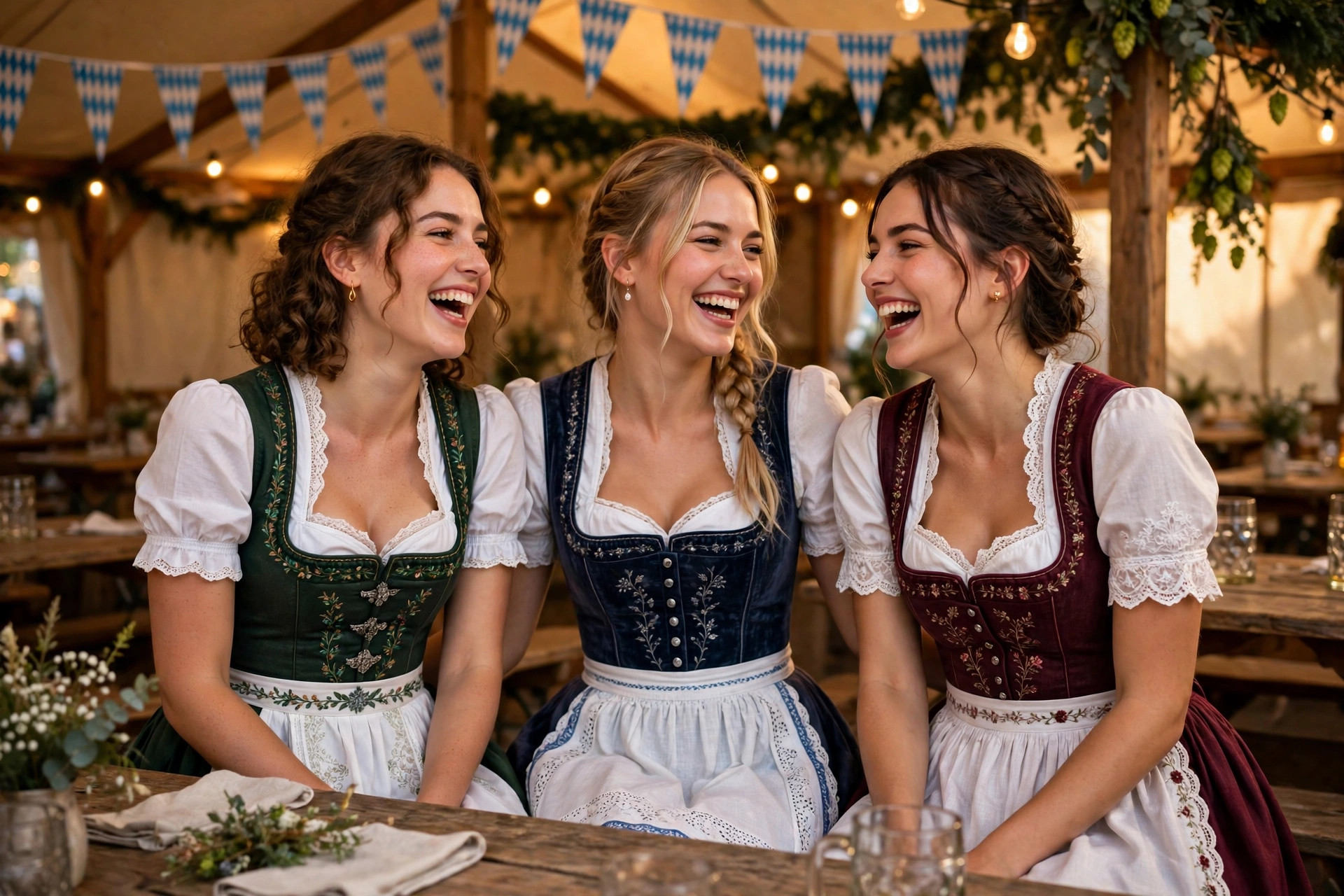
Oktoberfest is one of the world’s great celebrations — millions of visitors gather in Munich each autumn for two weeks of music, food, and genuine Bavarian hospitality. And the traditional dress, the dirndl for women, is genuinely beautiful: rich fabrics, flattering cuts, and details that have been refined over generations. Which makes it all the more painful when visitors get it wrong. These are the Oktoberfest outfit mistakes to avoid — written with love for the tradition and zero judgement for anyone who simply did not know better.
This is not about gatekeeping. Visitors are warmly welcomed in traditional dress, and locals love seeing guests embrace it. It is about doing it well: wearing the real thing, wearing it properly, and understanding what the details mean. Let us walk through the mistakes so you can skip every one of them.
Why do so many Oktoberfest outfits go wrong?
Most Oktoberfest outfit mistakes come from one source: treating traditional Bavarian dress as a costume rather than as clothing with real cultural roots. The dirndl evolved over centuries as everyday and festive wear in the Alpine regions — it is not fancy dress, and the “sexy beer maid” versions sold in costume shops flatten a rich tradition into a stereotype.
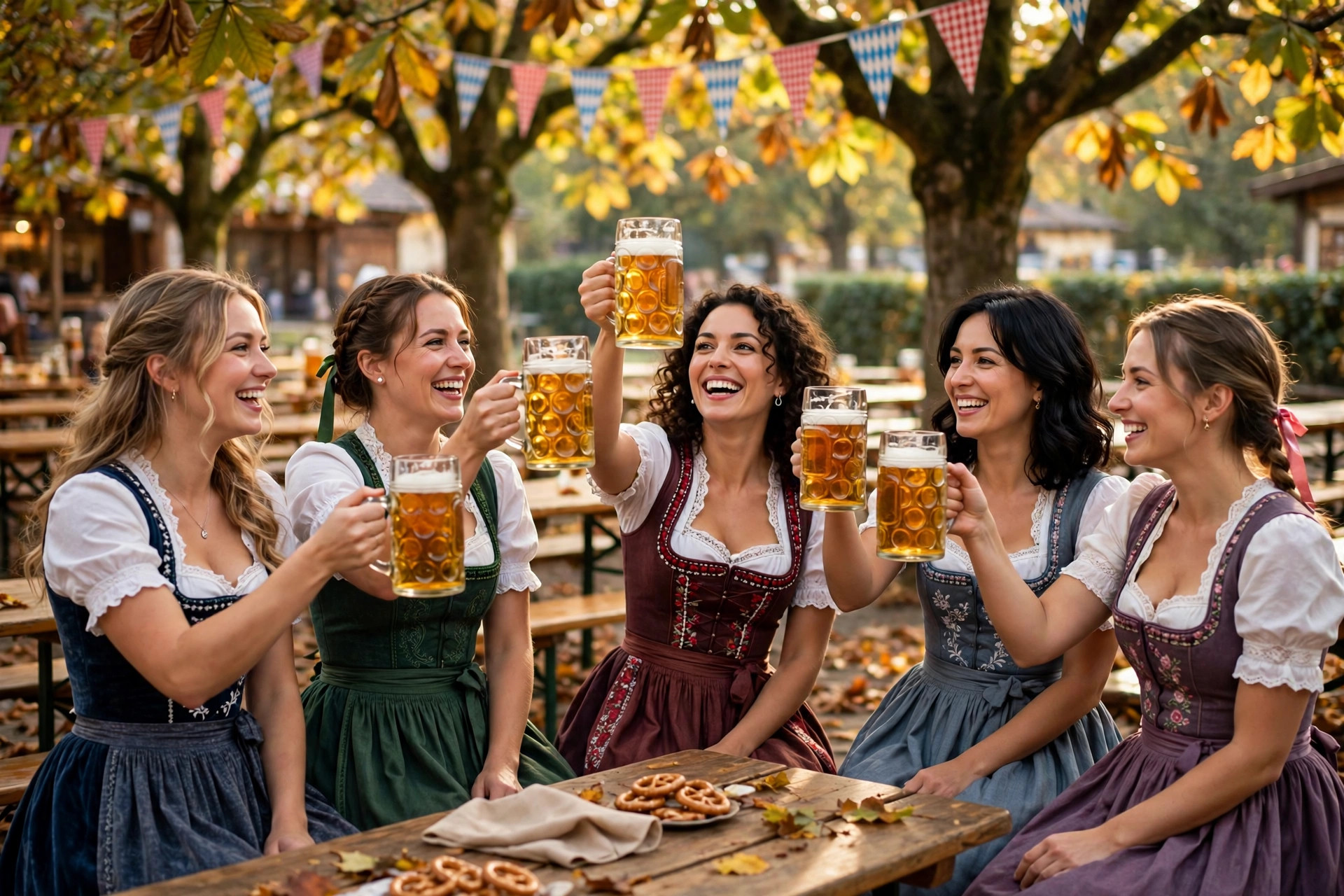
The City of Munich notes that Oktoberfest welcomes around six to seven million visitors in a typical year, and a large share of international guests choose to wear traditional dress — which is wonderful, as long as it is done with respect. You can read about the festival’s scale and history on the official city portal at muenchen.de.
Mistake #1: buying a cheap costume-shop dirndl
The single most common mistake is the flimsy, shiny, polyester dirndl from a party shop — the kind with a printed-on bodice, a scratchy skirt, and an apron that looks like wrapping paper. Next to real trachten (traditional dress), it reads instantly as a costume.
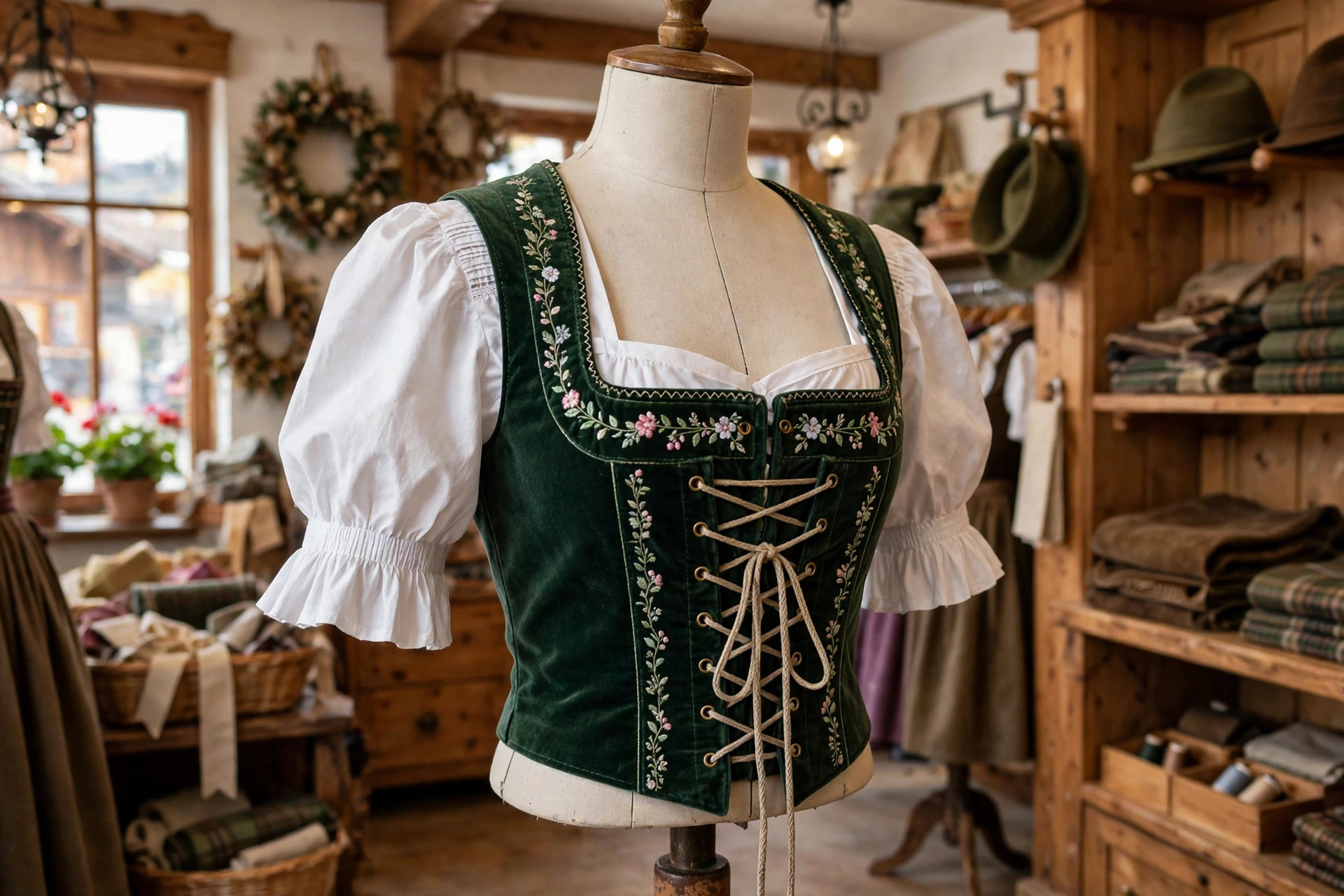
What to do instead: buy or rent a real dirndl. Authentic dirndls are made from cotton, linen, silk, or quality blends, with a structured bodice, proper lacing or buttons, and a separate apron in a complementary fabric. You do not need to spend a fortune — Munich has excellent second-hand trachten shops and rental services, and a well-chosen pre-loved dirndl looks a hundred times better than a new cheap one.
How to spot quality at a glance:
- Fabric has weight and texture — real cotton, linen, or silk, not shiny polyester.
- The bodice is structured — boning or sturdy construction that holds its shape, not a floppy printed panel.
- The apron is a separate piece in a different fabric or pattern, not sewn-in or printed.
- The details are real — actual lacing, real buttons, embroidery you can feel.
Mistake #2: getting the fit, length, and shoes wrong
A dirndl should fit like it was made for you — because traditionally, it nearly was. The bodice should be snug (it is designed to support without a bra doing all the work), the waistband should sit at your natural waist, and the skirt should fall to the knee or just below. Too short reads as costume; too loose reads as borrowed.
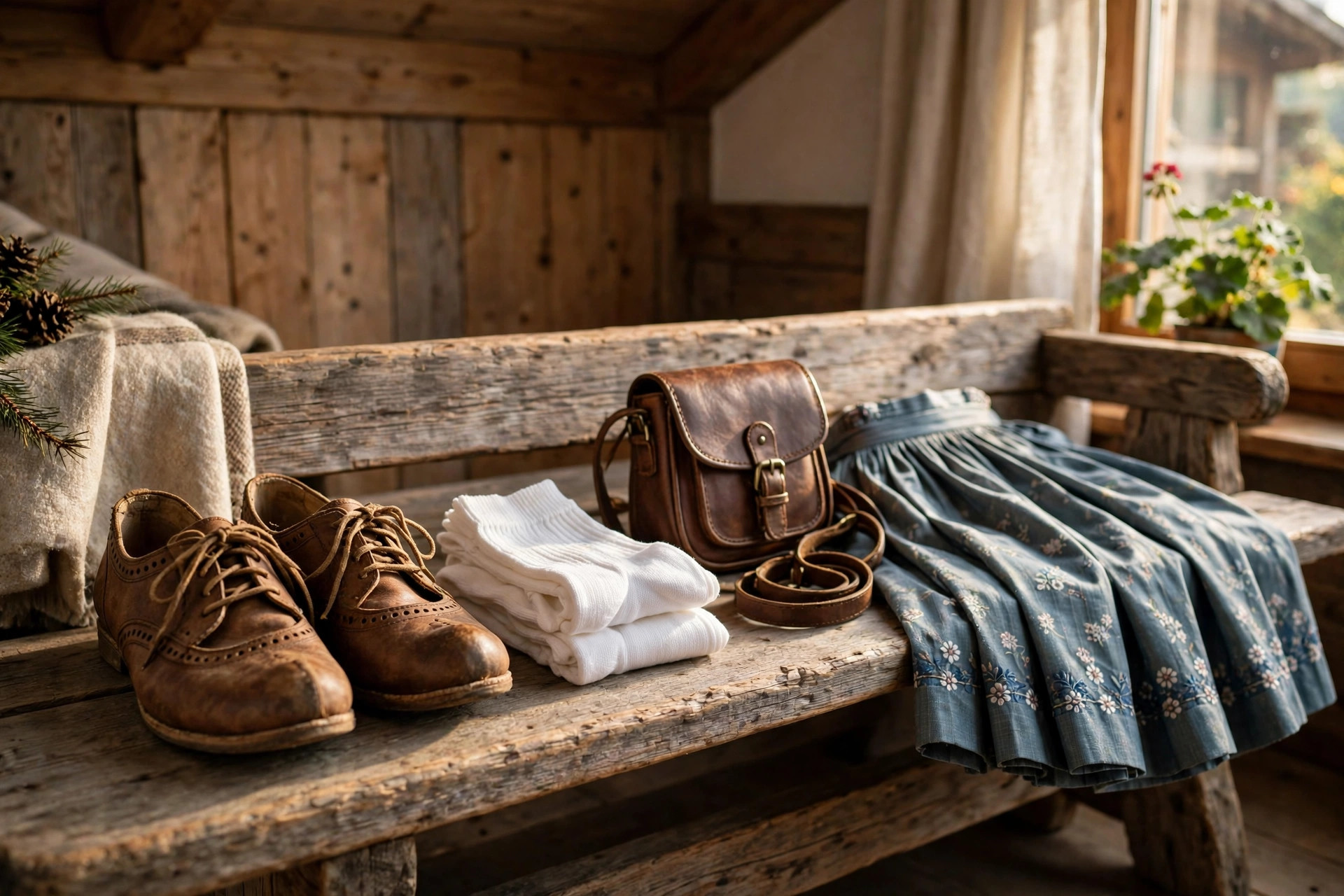
The shoes matter enormously. Traditional footwear means haferl shoes (the classic Bavarian lace-ups) or simple, sturdy pumps and ballet flats. What to avoid:
- Stiletto heels — you will be on your feet for hours on uneven ground, often cobblestones. Towering heels are impractical and look out of place.
- Trainers or sneakers — comfortable, yes, but they break the traditional look completely.
- Brand-new, unworn shoes — break shoes in before the festival. Blisters on day one ruin the whole trip.
Length guidance: the classic dirndl skirt ends at or just below the knee. Mini-length dirndls exist and are worn by some, but the knee-length version is the timeless, respectful choice — especially if this is your first Oktoberfest.
Mistake #3: skipping the blouse and getting the apron wrong
A dirndl is a three-part outfit — bodice and skirt, blouse, and apron — and all three parts matter. The blouse is traditionally white or cream, with puffed or short sleeves, and it should be visible at the neckline and arms. Skipping it, or substituting a random top, is one of the fastest ways to look like you are wearing a costume.
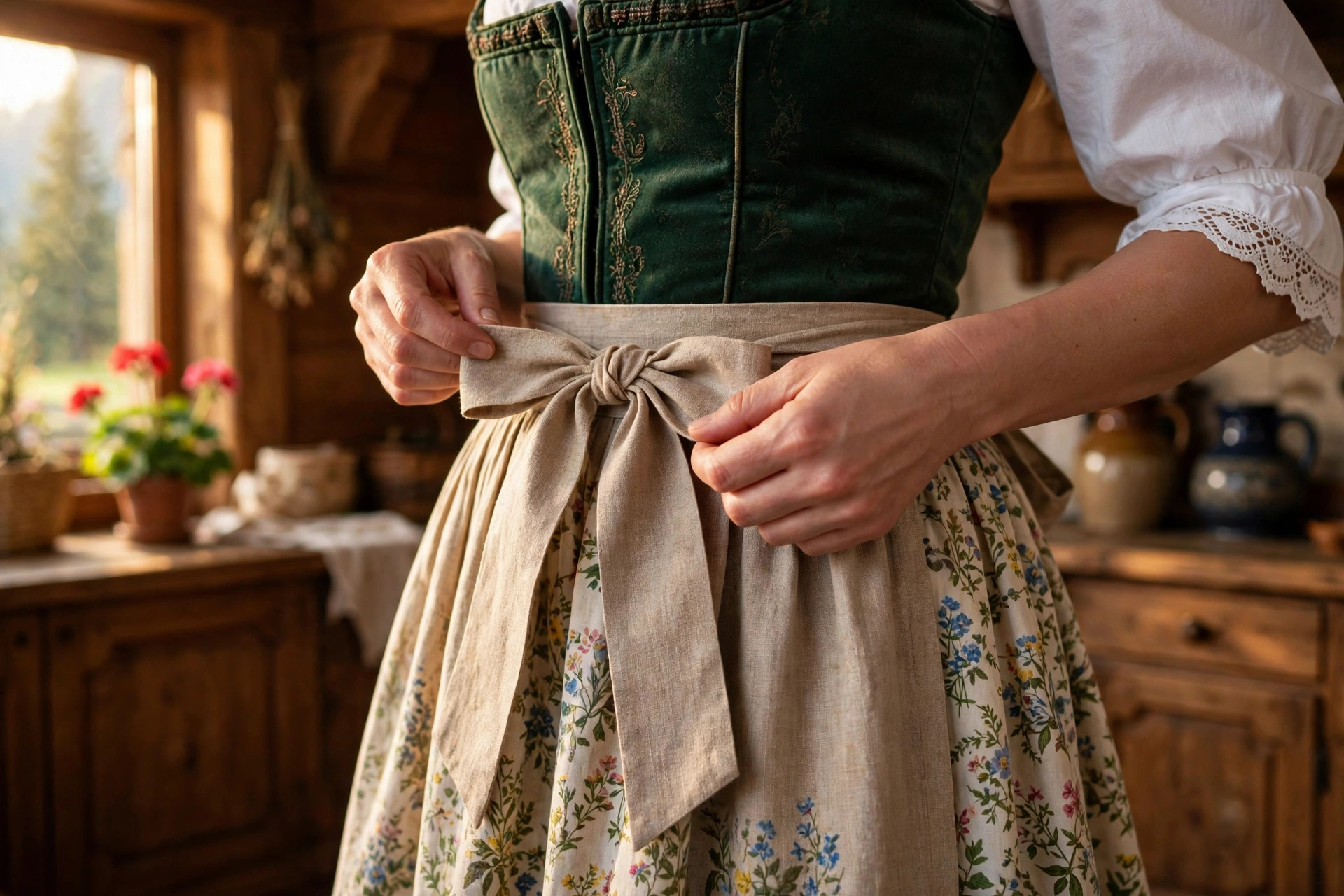
The apron carries the tradition’s most famous detail: the bow. Tied on the left side, it traditionally signals the wearer is single; tied on the right, taken; tied in the centre front, traditionally worn by young girls; tied at the back, historically worn by widows or waitresses. This custom is widely documented in Bavarian folk tradition guides — it is a charming detail, not a strict rule for visitors, but knowing it shows respect.
Apron mistakes to avoid:
- Wearing the apron as decoration only — it should be tied properly at the waist with a real bow, not draped or pinned.
- Mismatched formality — a delicate lace apron over a heavy wool skirt (or vice versa) looks off. The fabrics should feel like they belong together.
- Forgetting it entirely — a dirndl without its apron is like a suit without a tie. It is technically an outfit, but it is missing its finishing piece.
Mistake #4: treating the tradition like a joke
This is the most important section, and it is about attitude rather than clothing. Oktoberfest is a living cultural tradition for Bavarians — families have attended for generations, and the trachten many locals wear are heirloom-quality garments chosen with pride.
What respectful participation looks like:
- Wear the real thing, worn properly. A genuine dirndl, fitted well, with the blouse and apron — this is the opposite of mockery. It is participation.
- Skip the “sexy” versions. Hyper-sexualised costume dirndls with ultra-short skirts and plunging novelty necklines reduce a cultural garment to a punchline. The real dirndl is already flattering — it does not need a costume-shop makeover.
- Learn a little. Knowing that the festival began in 1810 as a royal wedding celebration, or that the tents each have their own character, turns you from a tourist in a costume into a guest who cares. The official Oktoberfest site documents the festival’s history at oktoberfest.de.
- Follow tent etiquette. Do not stand on benches, do not take other guests’ seats, and pace yourself — the beer is stronger than many visitors expect. Respectful behaviour is part of the outfit.
What does a great Oktoberfest outfit actually include?
Here is your checklist for getting it right — the complete, respectful, great-looking version:
| Piece | Get this right |
|---|---|
| Dirndl (bodice + skirt) | Real trachten fabric, snug structured bodice, knee-length skirt |
| Blouse | White or cream, puffed or short sleeves, visible at neckline |
| Apron | Separate piece, tied properly with the bow on your chosen side |
| Shoes | Haferl shoes, sturdy flats, or low comfortable heels — broken in |
| Hosiery | Optional; knee socks or tights in white, cream, or nude if worn |
| Accessories | Simple jewellery, a small crossbody bag — leave the novelty hats at home |
| Outerwear | A shawl, cardigan, or traditional jacket for chilly evenings |
Hair and makeup: keep it natural and festive. A simple braided hairstyle with a small flower or ribbon is traditional and lovely; heavy “festival” makeup with glitter and face paint belongs to a different kind of event entirely.
Can I wear a dirndl if I am not German?
Absolutely — visitors wearing traditional dress are welcomed and celebrated at Oktoberfest. The key is wearing it respectfully: the real garment, fitted properly, with an understanding of what it represents. What locals object to is mockery, not participation.
Should I buy or rent my dirndl?
If this is your first Oktoberfest, renting is smart — Munich has excellent trachten rental shops that will fit you properly and advise on every detail. If you fall in love with the tradition (many do), buying a quality second-hand dirndl is the next step. Either way beats buying a cheap new costume.
What should men avoid wearing to Oktoberfest?
The same principles apply to lederhosen: avoid the shiny costume-shop versions, wear real leather shorts with a proper shirt (never a novelty t-shirt), add haferl shoes and knee socks, and skip the plastic accessories. Quality and respect read the same in every gender’s traditional dress.
Is it okay to wear my dirndl outside the festival grounds?
Yes — during Oktoberfest season, traditional dress is worn all over Munich: in restaurants, on public transport, and around the city. It is part of the festival atmosphere, not confined to the tents. Just remember you are representing the tradition wherever you wear it.
Oktoberfest rewards those who embrace it properly. A real dirndl, fitted with care and worn with respect, does not just help you avoid the mistakes — it connects you to something centuries old and genuinely joyful. Learn the bow, break in your shoes, and raise your glass. Prost — you are going to have the most wonderful time.
Leave a Reply