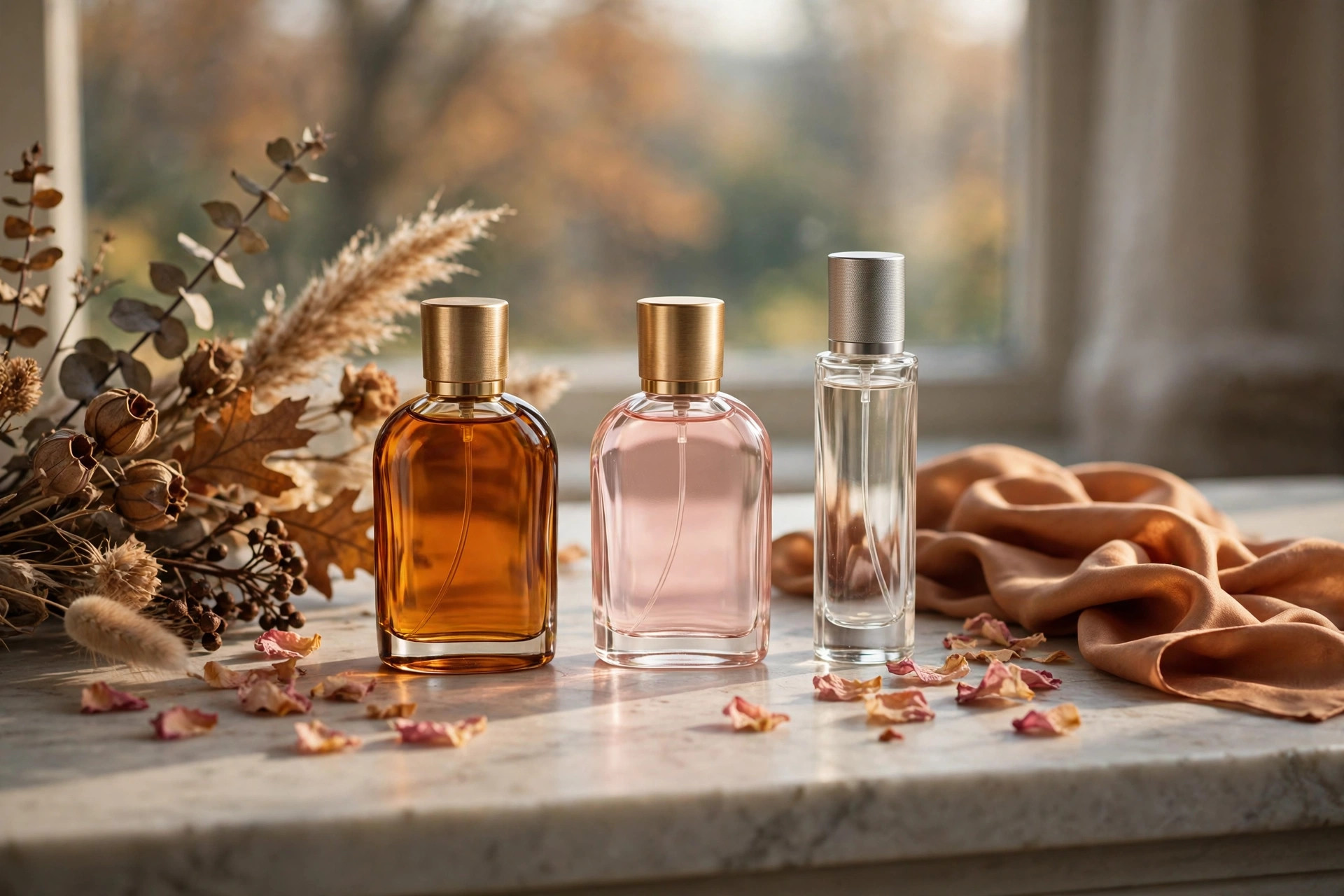
Last updated: October 2026
Quick answer: Perfume layering, or scent stacking, means wearing two or more fragrances together so they blend into a personal signature scent. Apply the heavier scent first as a base, let it settle, then add a lighter scent sparingly over the top or on nearby pulse points.
Have you ever caught a trace of someone’s perfume and thought it smelled like nothing you had ever encountered before? Chances are, they were layering. Perfume layering, also known as scent stacking, is the art of combining two or more fragrances to create something entirely personal — a signature scent that exists on your skin and nowhere else.
The concept is beautifully simple, but the execution rewards a little knowledge. Layer the wrong scents and you get a muddled mess; layer the right ones and the result is richer, longer-lasting, and more interesting than either fragrance alone. Autumn is the perfect season to start experimenting, because cooler air holds scent close to the skin and the season’s warm, cosy notes practically beg to be combined.
This guide will teach you everything you need to begin: how fragrance families work, the simple principles behind successful combinations, seven foolproof pairings to try first, exactly how to apply layered scents, and the common mistakes to avoid. By the end, you will be blending like you have done it for years.
What is perfume layering?
Perfume layering means wearing two or more fragrances at the same time so they blend into one new, unified scent. You can spray one over the other on the same pulse points, or apply different scents to different areas and let them mingle in the air around you.
Perfume layering means wearing two or more fragrances at the same time so they blend into a new, unified scent. Some people spray one over the other on the same pulse points; others apply different scents to different areas — say, a warm vanilla on the wrists and a bright citrus at the neck — letting them mingle in the air around them. Both approaches count, and both can be gorgeous.
The idea is not new. In the Middle East, layering rich attar oils has been practised for centuries, and many luxury fragrance houses now design scents specifically to be combined. What is new is how mainstream it has become: fragrance communities online share layering combinations the way food lovers share recipes, and experimenting has become part of the fun of loving perfume. Britannica traces perfume use back to ancient civilisations, where scented oils and balms were part of ritual and daily life — layering is simply a modern chapter in a very old story.
There are real benefits beyond creativity. Layering can make a light fragrance last longer by anchoring it with something richer. It can soften a perfume you find too intense, or add depth to one you find too simple. And it stretches your collection further — two bottles can produce dozens of different combinations, which is a lovely thought if you are building a fragrance wardrobe on a budget.
How do fragrance families work?
Fragrance families are the broad categories perfumers use to describe scents: floral, amber, woody, fresh, and gourmand. Layering works best when scents share at least one common note, with safe pairings like floral with musk, vanilla with warm notes, and citrus with woods.
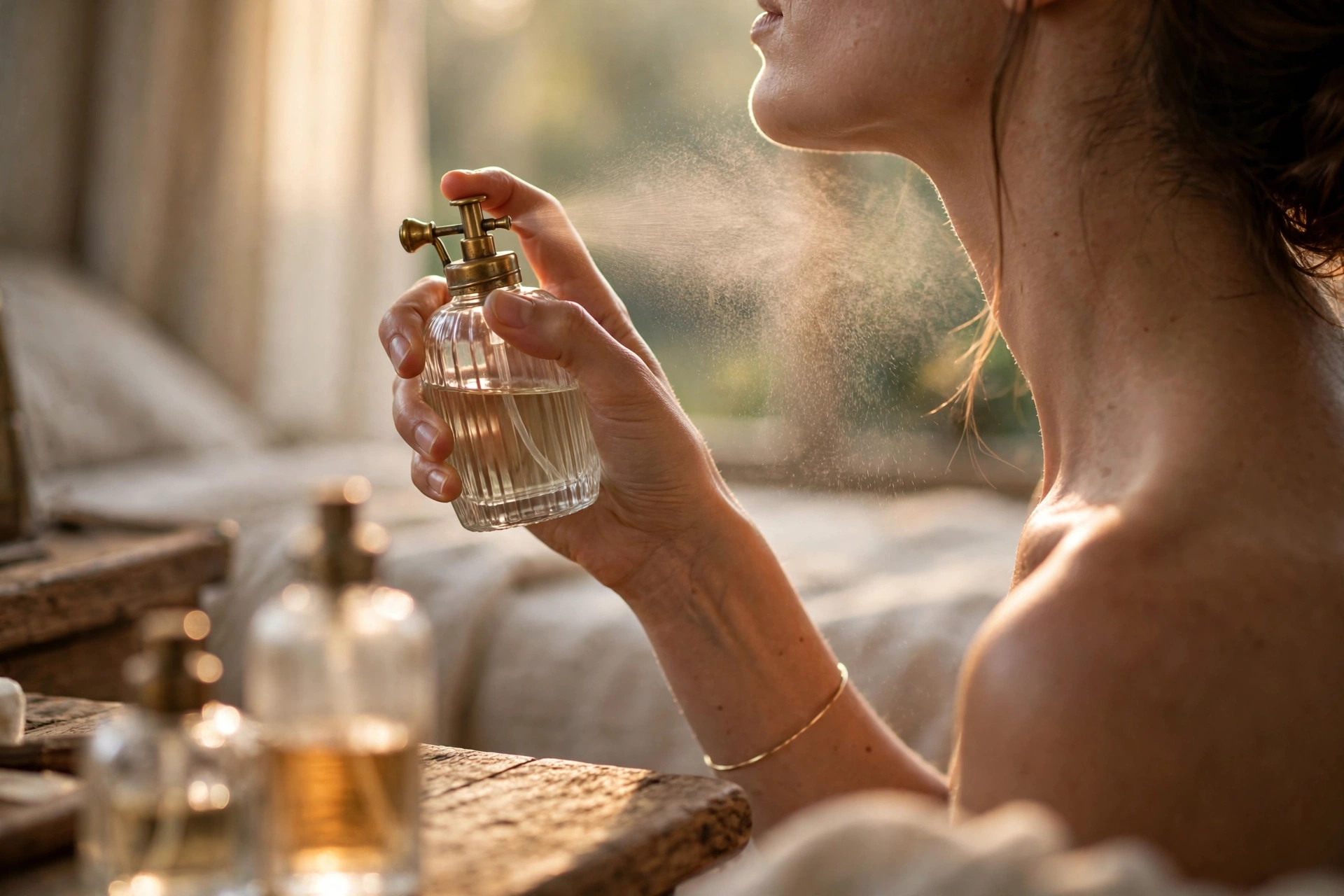
Successful layering starts with understanding fragrance families: the broad categories perfumers use to describe scents. You do not need a chemistry degree — just a rough sense of which families play nicely together.
| Family | Typical notes | Role in layering |
|---|---|---|
| Floral | Rose, jasmine, peony, tuberose | Romantic and versatile; layers beautifully with musks and warm woods |
| Amber (oriental) | Vanilla, amber, spices, resins | Warm, rich anchors that add depth and longevity to lighter scents |
| Woody | Sandalwood, cedar, vetiver, oud | Grounding and sophisticated; adds structure and stops sweet scents feeling too sugary |
| Fresh | Citrus, green notes, aquatic accords, light musks | Bright top layers that add sparkle but fade fastest |
| Gourmand | Caramel, coffee, chocolate, honey, almond | Delicious and comforting; autumn layering gold |
- Safe pairings: Floral + musk, vanilla + anything warm, citrus + woody, gourmand + floral.
- Adventurous pairings: Oud + rose, green notes + amber, spice + fresh citrus.
- Approach with caution: Two very heavy ambers together, or two dominant gourmands, which can become overwhelming.
A useful rule of thumb: pair scents that share at least one common note. If both fragrances contain vanilla, or both contain rose, they are already speaking the same language and will harmonise more easily.
What are 7 foolproof layering combinations?
Start with a heavier base and a lighter scent over the top: vanilla with rose, sandalwood with citrus, amber with fig, musk with peony, coffee with vanilla, cedar with lavender, or honey with jasmine. In each case, the base anchors the combination and the top scent lifts it.
If you are new to layering, start with these tried-and-tested combinations. They use widely available fragrance types, and each one demonstrates a different layering principle.
- Vanilla base + rose: Spray a warm vanilla first, let it settle for a minute, then add rose over the top. Soft, romantic, endlessly wearable — the combination that converts most sceptics.
- Sandalwood base + citrus: A creamy sandalwood underneath with a bright bergamot or neroli over it. The freshness lifts the wood; the wood grounds the citrus. Elegant and office-appropriate.
- Amber base + fig: Rich amber layered with a green fig scent creates a sophisticated autumn profile — warm but not heavy, sweet but not sugary.
- Musk base + peony: A clean skin musk underneath a dewy peony floral. This smells like the best version of freshly showered skin with flowers nearby. Beautiful for everyday wear.
- Coffee base + vanilla: Two gourmands that genuinely work together, smelling like the world’s most luxurious café. Best for evenings and cold days — it is rich.
- Cedar base + lavender: An unexpected but wonderful pairing. The herbal calm of lavender over dry cedarwood smells clean, cosy, and quietly confident.
- Honey base + jasmine: Golden honeyed warmth under bright white florals. Lush and feminine without being overpowering, and gorgeous in autumn air.
Notice the pattern: in each case, the heavier, longer-lasting scent goes on first as the base, and the lighter or brighter scent goes over the top. This order matters, and it leads us to application technique.
Where, when, and how much should you apply?
Start with moisturised skin, apply one to two sprays of your base scent on each wrist and at the throat, wait a full minute, then add the second scent more lightly on the same or nearby pulse points.
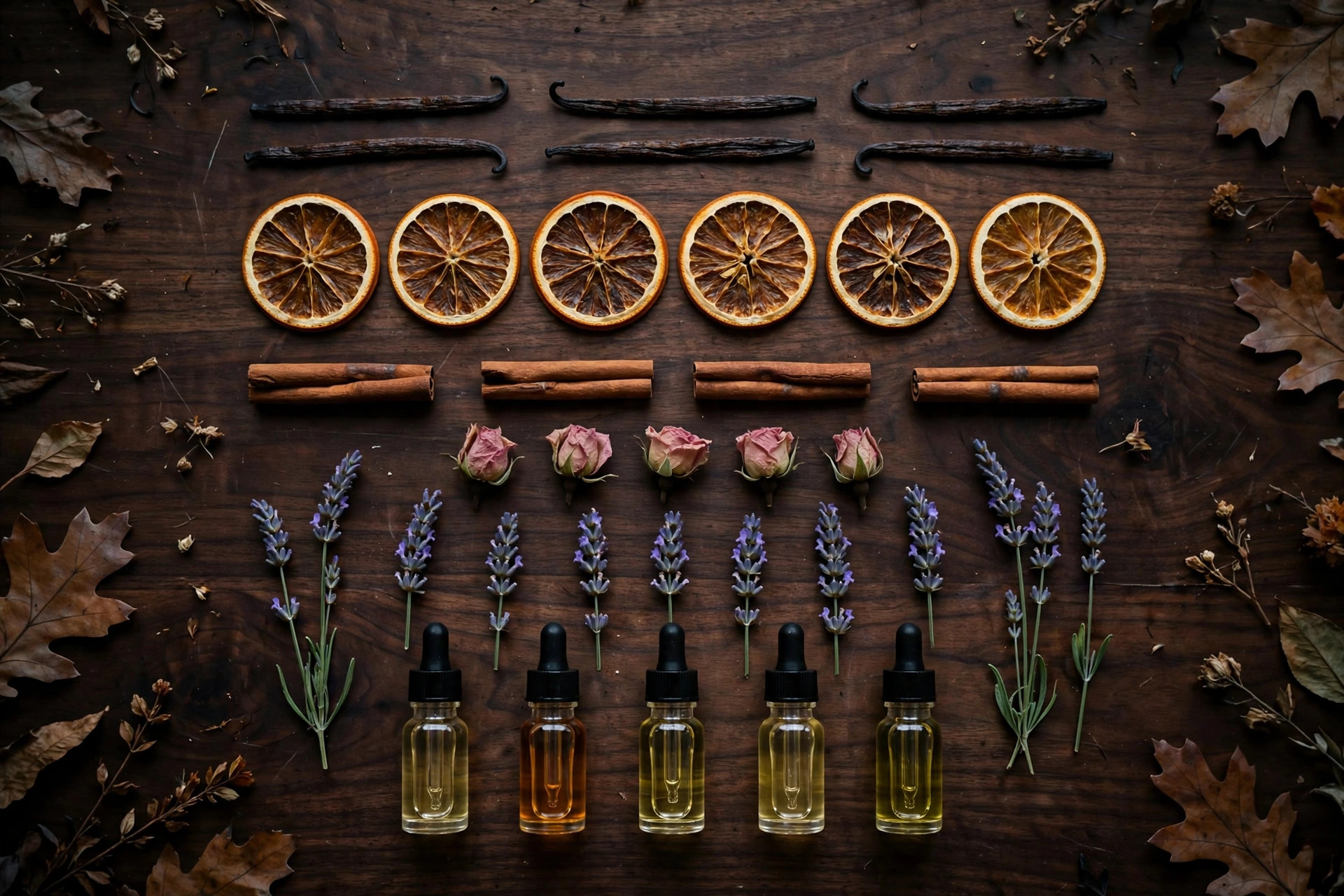
How you apply layered fragrances matters as much as which ones you choose. Start with moisturised skin — fragrance lasts significantly longer on hydrated skin, so apply an unscented lotion first. Scented body lotions can work too, and in fact a matching or complementary scented lotion counts as your first layer.
- Apply your base fragrance first: one to two sprays on each wrist and perhaps one at the base of the throat.
- Wait a full minute to let it settle into the skin.
- Apply your second fragrance more lightly — usually one spray per area — either directly over the same spots or on nearby pulse points like the inner elbows or behind the ears. Applying the second scent slightly offset from the first creates a beautiful diffusion effect as you move.
Less is genuinely more when layering. Two fragrances at full strength can overwhelm; think of it as seasoning rather than drowning. Start with half the sprays you would normally use of each, wear the combination for an hour, and adjust next time. Your nose also adapts quickly, so ask a trusted friend for an honest opinion before deciding a combination needs more.
For longevity, consider the concentration of what you are layering. Eau de parfum bases anchor longer than eau de toilette ones, and a dab of perfume oil as a base under a spray fragrance is a professional trick for all-day wear. In autumn, when cool air keeps scent close, you can afford to be a little more generous than in summer heat.
Which autumn pairings should you try this season?
Autumn’s cooler air suits warm, rich combinations: spiced apple or cinnamon over vanilla, smoky vetiver under soft amber, pear or quince over white musk for daytime, and oud with rose or dark cherry over sandalwood for evenings.
Autumn’s cooler air and cosy mood make it the finest season for fragrance experimentation. Warm notes bloom beautifully in crisp air, and richer combinations that would feel heavy in July feel just right in October.
- Warm kitchen: a spiced apple or cinnamon scent over a vanilla base.
- Bonfire evening: a smoky vetiver under a soft amber.
- Orchard daytime: a pear or quince fragrance over white musk — fresh but with enough warmth for the season.
- Autumn night: oud layered with rose, the iconic rich and enveloping combination. If oud feels too intense, try a dark cherry scent over sandalwood instead for a similar luxurious depth with a friendlier character.
- Grey rainy days: a honeyed amber over a soft cashmere musk — pure comfort in fragrance form.
Keep a little notebook or phone note of combinations you try and how they develop over the day. Fragrance layering is personal chemistry — literally, since your skin’s warmth and natural scent affect how everything blends — and your notes will help you refine your favourites over the season.
What mistakes should you avoid?
Avoid layering two very heavy, complex perfumes together, keep combinations to two or three scents, always test a new pairing at home first, and keep projection subtle in shared spaces. If you notice redness or itching, stop using the combination and speak to a dermatologist if sensitivity persists.
Even experienced fragrance lovers make these errors, so consider this your shortcut past them. First, avoid layering two very complex, heavy perfumes together — the result is usually muddy rather than marvellous. Let one fragrance lead and the other support.
Second, do not layer more than three scents until you are very experienced. Each additional fragrance multiplies the complexity, and most beautiful combinations use just two. Third, always test a new combination at home before wearing it out. What smells promising on a paper strip can develop unexpectedly on skin, and you want to discover that in your living room, not at a wedding.
Fourth, be cautious with projection. Layered scents can project more strongly than you realise because you are wearing more fragrance overall. In offices, classrooms, and other shared spaces, keep things subtle — the people around you will thank you. Finally, remember that some fragrance ingredients can irritate sensitive skin, especially when layered. If you notice redness or itching, stop using the combination, and consider speaking to a dermatologist if sensitivity persists.
As a general note, the US Food and Drug Administration explains that fragrances in cosmetics can be made from natural or synthetic ingredients, and that people with fragrance sensitivity should check ingredient lists and stop use if irritation occurs.
Perfume layering is one of those rare beauty pursuits that is equal parts science, art, and pure play. Start with the foolproof combinations, trust your nose, and do not be afraid to experiment — your signature scent is waiting to be discovered, one layer at a time.
Leave a Reply