Last updated: October 2026
Quick answer: Pressed flower art means flattening and drying flowers and leaves, then arranging them into framed prints, bookmarks, cards and other keepsakes. Autumn is a wonderful time to start, with cosmos, dahlias, seed heads and copper foliage to gather, and the slow pace makes it a calming, hands-on hobby.
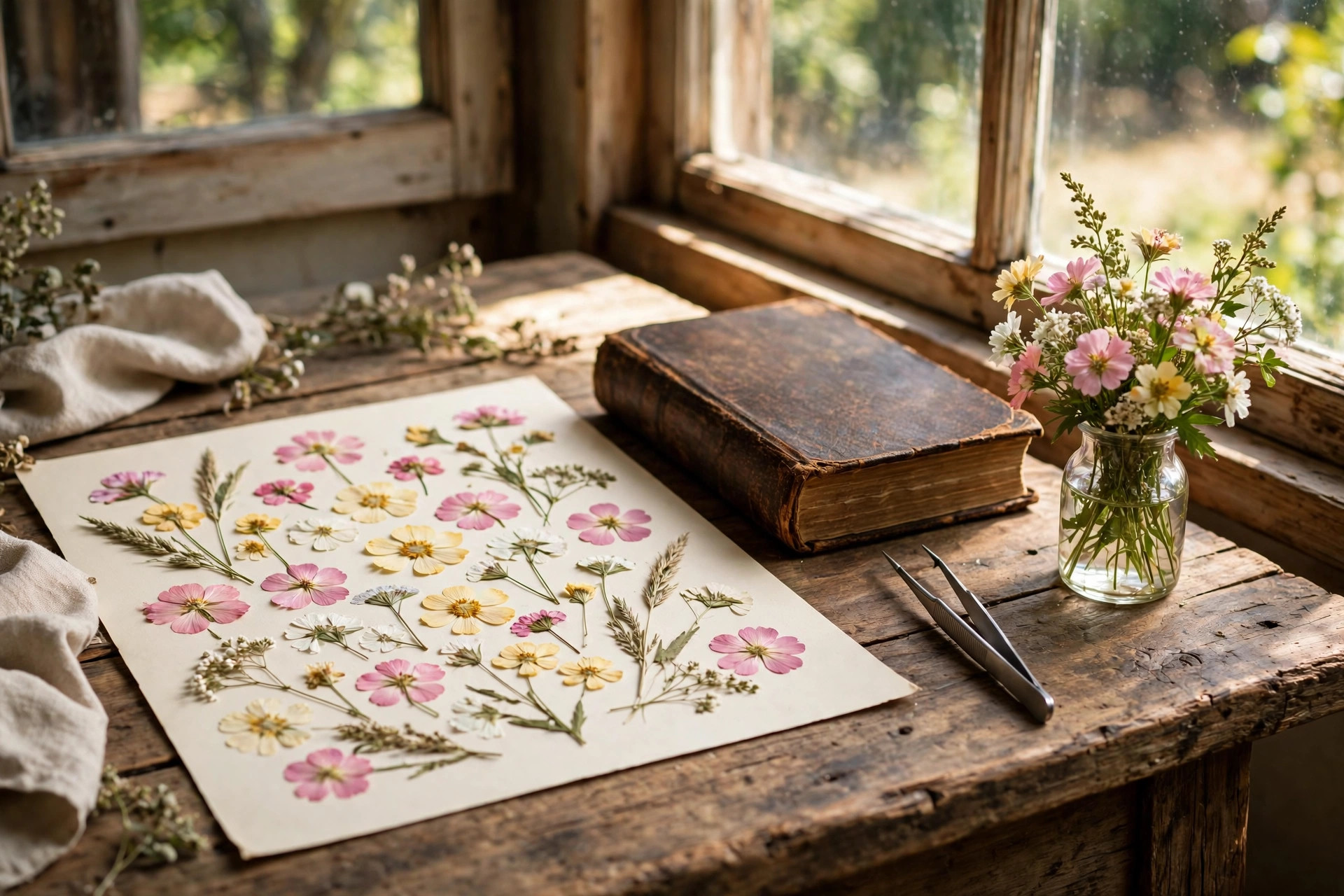
There is something quietly magical about opening a heavy book weeks after you tucked a flower inside and finding it transformed — flattened, papery, its colours deepened like a watercolour. Pressed flower art is one of the oldest creative hobbies in the world, and right now it’s having a glorious revival. Pinterest’s “Backyard Botanist” trend has sent searches for dried botanicals and nature crafts soaring, as thousands of women rediscover the simple pleasure of preserving petals.
What makes flower pressing such a beautiful self-care hobby is its pace. Nothing about it can be hurried. You gather, you arrange, you wait. In a life of instant everything, the enforced slowness feels like a deep breath. And the results — framed botanical prints, delicate bookmarks, one-of-a-kind greeting cards — carry a handmade warmth that no shop-bought decor can match. Best of all, autumn is a perfect time to start, as you’ll see.
Why Does Flower Pressing Feel So Calming?
Flower pressing feels calming because gathering forces you to slow down and look closely, the small precise movements keep your hands busy, and preserving something fleeting into something lasting feels quietly meaningful — especially in autumn, when nature is visibly letting go.
Ask anyone who presses flowers and they’ll tell you the same thing: the gathering is as therapeutic as the making. Wandering through a garden, a park or even your own window boxes with scissors and a basket forces you to slow down and actually look. You start noticing the tiny purple hearts of a violet, the papery translucence of honesty seed pods, the way a fern unfurls. That close attention to nature is a well-documented way to ease a racing mind — it anchors you firmly in the here and now.
The process itself is wonderfully tactile. Trimming stems, arranging petals just so, layering blotting paper — these small, precise movements have a meditative quality, similar to the calm people find in knitting or kneading bread. Your hands stay busy while your thoughts untangle themselves in the background. Many pressers describe it as the one hobby where their phone stays forgotten in another room for hours.
There’s also a gentle satisfaction in preservation. Fresh flowers fade in days, but a pressed bloom can hold its beauty for years. Turning something fleeting into something lasting feels meaningful, especially in autumn when nature is visibly letting go. It’s a small, creative way of saying: this was beautiful, and I noticed — a habit of attention that quietly enriches every walk you take, press in hand or not.
What Should You Pick and Press This Autumn?
Autumn offers late-season blooms, seed heads and foliage that press beautifully. Choose flat, peak-condition flowers on a dry afternoon, favour naturally flat shapes over blowsy roses, and take only what is plentiful — leaving plenty behind for pollinators and protected areas untouched.
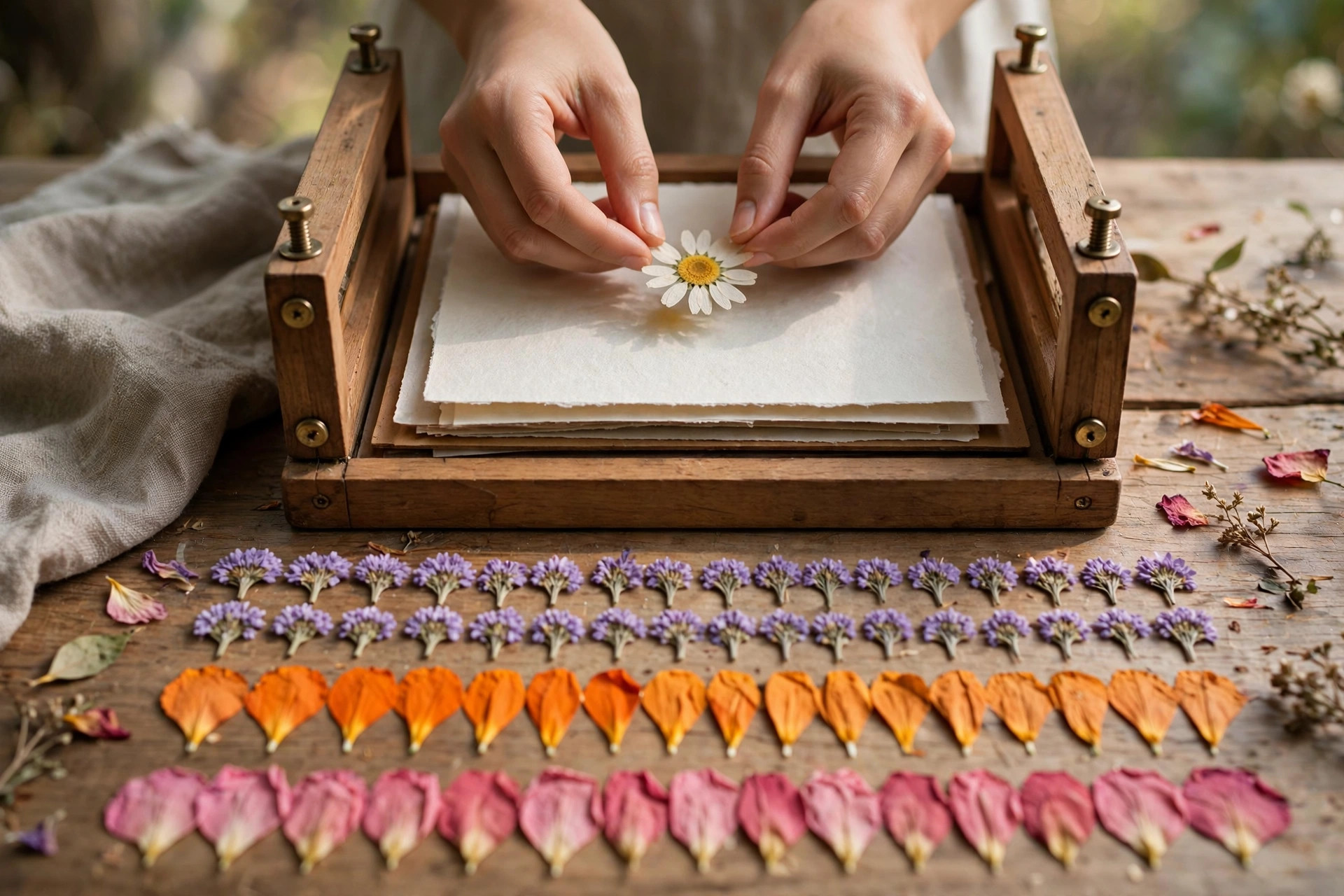
Forget the idea that flower pressing is only a spring hobby — autumn offers some of the most interesting materials of the year. Late-season blooms like cosmos, dahlias (the smaller varieties press best), Michaelmas daisies, sedum and Japanese anemones all press beautifully. Seed heads are autumn’s secret treasure: honesty (the famous “money plant” with its silver discs), poppy heads, teasels and ornamental grasses add gorgeous structure to arrangements.
Don’t overlook foliage. Fern fronds press like a dream and give every composition an elegant backbone. Eucalyptus sprigs, ivy leaves, beech leaves in their copper autumn colours and delicate skeleton leaves all add depth. Even humble weeds can be stunning — pressed dandelion clocks are breathtaking, and tiny wildflowers like yarrow press flat and keep their shape perfectly.
- Best autumn blooms: cosmos, small dahlias, Michaelmas daisies, sedum, Japanese anemones.
- Best seed heads: honesty, poppy heads, teasels, ornamental grasses.
- Best foliage: ferns, eucalyptus, ivy, copper beech leaves, skeleton leaves, yarrow.
A few practical gathering rules will save you disappointment. Pick on a dry afternoon, never after rain or heavy dew, because moisture is the enemy of good pressing. Choose flowers at their peak, not past it, and favour blooms that are naturally fairly flat — big blowsy roses press poorly, while daisies, pansies and single-petalled flowers press beautifully. Take only what is plentiful, never from protected areas or other people’s gardens, and leave plenty behind for pollinators still foraging in autumn.
Pressed plants also have a serious scientific history: Royal Botanic Gardens, Kew explains how bound herbaria of pressed plants became a popular Victorian craft and study aid, after earlier botanists moved to mounting specimens on loose sheets. In our experience, keeping a simple pressing diary in that spirit makes the hobby even more rewarding.
How Do You Press Flowers? Three Methods, Simple to Speedy
You can press flowers in a heavy book for two to four weeks, in a wooden press for flatter, larger batches, or in a microwave in short supervised bursts for results in minutes. Whichever method you choose, store finished blooms flat, away from direct sunlight.
The classic book method needs nothing you don’t already own. Open a heavy book (a phone directory or encyclopaedia is ideal) about two-thirds through, lay down a sheet of blotting paper, kitchen roll or plain printer paper, arrange your flowers face-down in a single layer without overlapping, cover with another sheet of paper, and close the book. Stack more heavy books on top and leave somewhere dry for two to four weeks. Check after a week and replace the paper if it feels damp.
If you’d like neater results, make a simple wooden flower press from two squares of plywood or MDF with bolts through the corners — there are countless free tutorials, and it takes about ten minutes to assemble. Layer cardboard, blotting paper, flowers, blotting paper, cardboard, and tighten the bolts firmly. A proper press gives flatter, more even results and lets you press bigger batches, which is handy once you’re hooked.
Impatient? The microwave method works in minutes. Place flowers between two sheets of kitchen roll inside a microwave-safe press (or two ceramic tiles held with elastic bands) and microwave in 30-second bursts, checking each time, until the flowers feel papery and dry — usually two to four bursts. Colours stay remarkably vivid this way. Do supervise it closely and let everything cool between bursts; dried plant material can scorch if overheated.
| Method | Time | Best for |
|---|---|---|
| Heavy book | Two to four weeks | Beginners, no extra equipment |
| Wooden press | Days to weeks | Flatter results and bigger batches |
| Microwave | Minutes, in 30-second bursts | Quick results and vivid colour, with close supervision |
Whichever method you choose, store finished pressed flowers flat between sheets of paper in a folder or old book, away from direct sunlight, and they’ll keep for years. Handle them with tweezers or dry fingers — they’re delicate, but less fragile than you’d fear.
What Can You Make With Pressed Flowers?
Start with simple projects like framed prints, bookmarks and greeting cards, then grow into candle holders, resin coasters, garlands and a pressed-flower diary. There is no deadline and no audience to impress — a slightly crooked first bookmark is perfectly fine.
Once you have a little collection of pressed blooms, the creative possibilities are endless. Here are twelve ideas, from five-minute makes to weekend projects:
- Framed botanical prints: Arrange a simple composition on handmade or watercolour paper and frame it — the classic, and still the most beautiful.
- Bookmarks: Glue a small arrangement onto card, laminate it or cover with clear sticky-back plastic, and add a ribbon.
- Greeting cards: A single pressed pansy on a blank card beats any shop-bought card, every time.
- Candle holders: Attach pressed flowers to the outside of glass jars with decoupage glue for glowing autumn lanterns.
- Resin coasters: Embed blooms in clear resin for jewellery-like coasters (work in a ventilated space and follow safety instructions).
- Phone case art: Arrange tiny flowers on paper cut to fit a clear phone case for a one-of-a-kind accessory.
- Gift tags: Mini pressed-flower tags make even a simply wrapped present feel extraordinary.
- Wall garland: String pressed-flower cards along twine for a delicate seasonal garland.
- Journal covers: Decorate a plain notebook cover with a pressed arrangement sealed under clear contact paper.
- Table place cards: A sprig of pressed lavender on each place card for autumn dinners.
- Sun catchers: Sandwich blooms between two pieces of clear sticky-back plastic and hang in a window.
- A pressed flower diary: Dedicate a journal to one pressed specimen per page with the date and where you found it — a botanical memory book.
Start with the simple projects and let your confidence grow. There’s no deadline and no audience to impress — the flowers don’t mind if your first bookmark is a little crooked. As your pressed collection grows, you’ll naturally develop favourite combinations: perhaps ferns with tiny white daisies, or copper beech leaves with seed heads, each arrangement a little signature of your own evolving style.
How Do You Display and Care for Pressed Flower Creations?
Sunlight is the main enemy, so hang framed pieces away from direct sun or use UV-protective glass, and seal unframed pieces lightly if you wish. Swap displays seasonally, give cards away generously, photograph favourites, and keep a pressing diary through the year.

Pressed flowers’ one real enemy is sunlight, which fades their colours over time. Hang framed pieces on walls that don’t get direct sun, or use UV-protective glass for your favourites. In a dim hallway or a north-facing room, colours can stay lovely for many years. A light mist of clear acrylic sealer (used outdoors or in a ventilated room) adds a little extra protection to unframed pieces.
Think beyond frames when it comes to display. A cluster of small pressed-flower cards pegged to string with tiny wooden pegs makes a charming seasonal display that you can swap as your collection grows. Prop a favourite piece on a bookshelf, tuck bookmarks into books you’re actually reading, and give the greeting cards away generously — handmade cards are meant to be sent, not hoarded. You might also photograph your best arrangements before giving them away; a simple phone snap in good daylight creates a digital backup of your botanical portfolio and lets you look back on how your eye for composition has developed over the seasons.
If you fall in love with the hobby, consider keeping a pressing diary through the seasons: what you pressed, when, and where. Over a year you’ll build a personal herbarium of your own walks and garden — a quiet record of noticing beauty, one petal at a time. And remember, while gentle hobbies like this are wonderful for everyday calm, they’re a complement to — not a replacement for — professional support if you’re struggling with persistent low mood or anxiety. Your GP or a qualified counsellor is always the right port of call.
So this weekend, take a basket and your sharpest scissors out into the autumn air. The honesty pods are silvering, the sedum is rusting, and somewhere out there is a perfect little cosmos with your name on it. Press it, wait a little, and make something beautiful.
Leave a Reply