
Last updated: October 2026
Quick answer: Burnout recovery begins with real rest, lowered expectations and gentle daily rhythms — consistent sleep, light movement, regular nourishing meals and small joys — rather than pushing harder. Autumn’s slower pace suits this well. If exhaustion, detachment or low mood persist for weeks, speak to your GP or a qualified health professional.
There is a particular kind of tiredness that sleep does not fix. You wake up already weary. Things that used to feel easy — answering emails, cooking dinner, meeting a friend — feel oddly heavy. Your patience is thin, your spark is dim, and somewhere along the way, you stopped feeling like yourself.
If any of that sounds familiar, you may be experiencing burnout — that state of deep physical and emotional exhaustion that builds up after prolonged stress. It is incredibly common, especially as the year winds down and the pressure to finish strong collides with shorter days and lower energy. The good news is that recovery is absolutely possible, and autumn — with its natural invitation to slow down — is a beautiful season in which to begin.
What follows is not a quick fix or a productivity plan. It is a gentler path: eight small, realistic steps to help you rest, reset, and slowly refill your cup. Take what helps, leave the rest, and go at your own pace.
What should I know before starting burnout recovery?
This article offers general wellbeing suggestions, not medical advice, and cannot diagnose anything. Burnout can overlap with depression, anxiety and other health conditions that deserve professional care. The steps below work best as companions to proper support, never replacements for it.
Before anything else, let us be clear about something important. This article offers general wellbeing suggestions, not medical advice, and it cannot diagnose anything. Burnout can overlap with depression, anxiety, and other health conditions that deserve proper professional care.
If you are feeling overwhelmed, hopeless, or unable to cope with daily life — or if low mood, exhaustion, or detachment persist for weeks despite rest — please reach out to your GP or a qualified mental health professional. Asking for help is not a failure; it is one of the bravest and most effective steps you can take. The suggestions below work best as companions to proper support, not replacements for it.
What does burnout actually feel like?
Burnout often shows up as deep exhaustion that sleep does not fix, emotional detachment, irritability or a flat “what’s the point” feeling, trouble concentrating and physical signs like headaches or frequent colds. It is a signal that demands have outweighed resources for too long.
The World Health Organization recognises burnout in its International Classification of Diseases (ICD-11) as an occupational phenomenon — a syndrome resulting from chronic workplace stress that has not been successfully managed, according to the World Health Organization.
Burnout looks different for everyone, but many people describe a similar cluster of experiences:
- Deep exhaustion — tired in your bones, even after a full night’s sleep or a weekend off.
- Detachment — feeling oddly distant from your work, your relationships, or activities you used to enjoy.
- Cynicism or irritability — a shorter fuse than usual, or a flat “what’s the point” feeling about things that once mattered.
- Reduced effectiveness — struggling to concentrate, forgetting things, or finding tasks take much longer than they should.
- Physical signs — headaches, muscle tension, stomach troubles, or getting every cold that is going around.
If you are nodding along, be kind to yourself about it. Burnout is not a character flaw or a sign that you are not trying hard enough. It is what happens when demands have outweighed resources for too long — and it is a signal, not a sentence.
How can I get real rest when I am burnt out?
Real rest means downtime with no output expected — not scrolling on the sofa. Protect your sleep with a consistent bedtime and a wind-down routine, and add deliberate pauses to your days, like a short lie-down with no phone. Rest is the foundation of recovery, not a reward for finishing.

Not the scrolling-on-the-sofa kind of rest. Real rest — the deep, restorative kind your body is actually asking for. When you are burnt out, your system is running on fumes, and the first thing it needs is genuine downtime without guilt attached.
Start by protecting your sleep like it matters — because it does. Aim for a consistent bedtime, keep your bedroom cool and dark, and build a wind-down routine that tells your body the day is over: a warm bath, a book, some gentle stretching. Autumn’s cooler nights and earlier darkness are genuinely helpful here; lean into them.
Then add deliberate rest into your days. True rest means no output expected, and it can feel uncomfortable at first, especially if you are used to earning your downtime. Do it anyway — rest is not a reward for finishing; it is the foundation that makes everything else possible.
- A twenty-minute lie-down with no phone.
- A slow morning where you do not check messages until after breakfast.
- A full day off with nothing scheduled — not even “productive” rest like organising the garage.
How do I lower the bar without feeling guilty?
Recovery asks you to expect less of yourself for a while — and that is a strategy, not a failure. Try a “good enough” week, sort your obligations into must-happen, can-wait and can-drop, and say no to at least one thing you would normally accept from obligation alone.
Burnout often lives alongside perfectionism and over-commitment. Recovery asks you to do something radical: deliberately expect less of yourself for a while. Not forever — just for this season of healing.
Try a “good enough” week. Paper plates are fine. A simple supper counts as cooking. The house does not need to be spotless; it needs to be liveable. At work, do what is required and let the gold-plating go. Say no to at least one thing you would normally say yes to out of obligation — and notice that the world keeps turning.
It can help to write down everything currently on your plate, then honestly sort it into three columns:
| Column | What goes here | Example |
|---|---|---|
| Must happen | Truly time-sensitive or essential | Feeding the family, a work deadline this week |
| Can wait | Important but not urgent | Replying to non-urgent messages, deep-cleaning |
| Can be dropped entirely | Obligation, not necessity | Events you dread, gold-plating at work |
Most burnt-out people are shocked by how much sits in that third column. Letting go of even a few obligations can feel like taking off a heavy backpack you forgot you were wearing.
What is the best way to move when you are exhausted?
Forget workouts for now and choose gentle movement that soothes rather than depletes. A short daily walk is the single most restorative habit many recovering people adopt — autumn’s crisp air and golden leaves are made for it. If an activity leaves you feeling better, it counts.
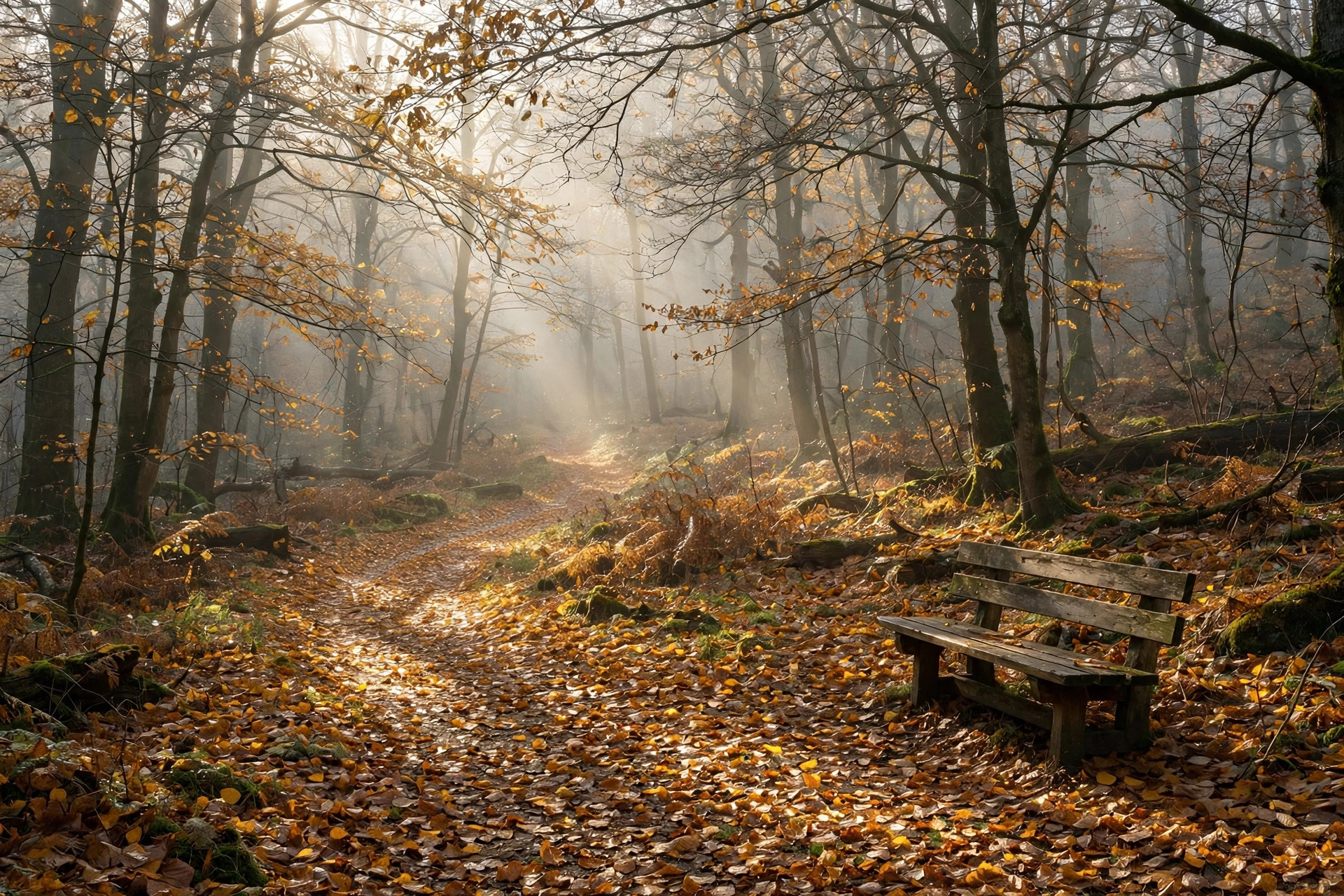
When you are exhausted, exercise advice can feel like another demand. So forget workouts for now. Think instead about gentle movement — the kind that soothes rather than depletes.
A short daily walk is the single most restorative habit many recovering people adopt. Autumn is made for this: crisp air, golden leaves, the crunch underfoot. Even fifteen minutes around the block can shift your whole afternoon. Leave the fitness tracker at home if counting steps feels like pressure; this walk has no targets, only fresh air.
Other gentle options to try:
- Slow stretching while the kettle boils.
- A relaxed swim at an easy pace.
- Gardening or pottering in the fresh air.
- Dancing around the kitchen to one favourite song.
The rule is simple — if it leaves you feeling better than when you started, it counts. If it leaves you drained, it is too much for right now. Listen to your body; it has been trying to tell you things.
How can I protect my sleep during burnout?
Burnout and poor sleep feed each other, so treat bedtime as sacred. Keep a consistent time, switch screens off at least thirty minutes before bed, keep naps short and early, and write racing thoughts in a notepad. If sleep problems persist for weeks, mention them to your GP.
Burnout and poor sleep feed each other in a miserable loop: exhaustion makes sleep shallow, and shallow sleep deepens exhaustion. Breaking the cycle starts with treating bedtime as sacred.
- Keep a consistent time — same bedtime and wake time each night, weekends included.
- Switch screens off at least thirty minutes before bed (an hour is even better).
- Dim the lights — a warm drink, a few pages of a comforting book, or some slow breathing can all signal safety to a frazzled nervous system.
- Keep naps short — twenty minutes before 3pm, so they do not steal from nighttime sleep.
If your mind races the moment your head hits the pillow, keep a notepad by the bed. Writing down tomorrow’s worries gets them out of your head and onto paper, where they cannot loop endlessly. The NHS offers practical guidance on insomnia and sleep habits, and if sleep problems persist for weeks, mention it to your GP — chronic insomnia is a health issue in its own right, and there are effective treatments.
What should I eat to support burnout recovery?
You do not need a perfect diet — you need regular fuel. Aim for three meals a day with some protein, whole grains and vegetables where you can manage it, keep easy options on hand for low-energy days, and drink enough water, since dehydration can masquerade as fatigue.
Burnout has a way of wrecking eating patterns — skipping meals when you are wired, grazing on sugar when you crash, or losing your appetite entirely. None of this is a moral failing; it is your stressed system doing its best. But regular, nourishing food genuinely supports recovery.
You do not need a perfect diet. You need regular fuel. Aim for three meals a day with some protein, whole grains, and vegetables where you can manage it. Autumn’s harvest — squash, apples, root vegetables, hearty grains — is tailor-made for simple, warming meals. Keep easy options on hand for low-energy days:
- Soup (tinned is absolutely fine).
- Eggs on toast.
- Porridge with fruit.
- Frozen vegetables you can steam in minutes.
And drink water. Dehydration masquerades as fatigue remarkably well, and burnt-out people are often running dry without realising it. A big glass of water with each meal is a fine place to start.
How do I stay connected when I have no social energy?
Burnout makes us withdraw, which tends to make everything feel worse. The answer is small, low-pressure connection: a short call with a trusted friend, a walk with a neighbour, a simple “thinking of you” text. Choose people who leave you feeling lighter, not drained.
Burnout tends to make us withdraw. Socialising feels like effort we do not have, so we cancel plans, let messages pile up, and slowly isolate ourselves — which, unfortunately, tends to make everything feel worse.
The answer is not forcing yourself to be the life of the party. It is small, low-pressure connection:
- A twenty-minute phone call with a trusted friend.
- A short walk with a neighbour.
- A text that simply says “thinking of you”.
- A quiet cup of tea with someone who does not demand performance.
Choose people who leave you feeling lighter, not drained, and be honest if you need to — “I would love to see you, but I only have energy for a short visit” is a perfectly good invitation. If you do not have someone you feel you can talk to about how you are really doing, consider that a sign to seek professional support rather than a reason to stay silent. A counsellor or therapist can be exactly the non-judgmental listener you need right now.
Why does scheduling joy help burnout recovery?
In burnout, pleasure disappears first and returns last, so deliberately scheduling small joys is rehabilitation, not frivolity. Think tiny and specific — doodle for ten minutes, bake for the smell, watch leaves fall with a hot drink. Feeling tends to return gradually, like warmth seeping into cold hands.
Somewhere in the burnout fog, pleasure tends to disappear first and return last. Deliberately scheduling small joys is not frivolous — it is rehabilitation for the part of you that remembers life can feel good.
Think tiny and specific:
- Not “take up painting” but “doodle for ten minutes”.
- Not “read more” but “reread a beloved book in the bath”.
- Bake something just because it smells wonderful.
- Watch the autumn leaves from your favourite window with a hot drink.
- Listen to an album all the way through, lying on the floor, doing nothing else.
At first, joy might feel muted — like hearing music through a wall. That is normal in recovery, not a sign that it is not working. Keep going gently. Feeling tends to return gradually, like warmth seeping back into cold hands.
When should I get professional help for burnout?
If you have rested, simplified and been gentle with yourself for several weeks yet still feel persistently exhausted, detached or hopeless — or you are struggling to function — bring in professional support. A GP can rule out physical causes; counselling can untangle the patterns behind the burnout.
Here is the step people skip: recognising when self-care is not enough. Match the level of support to the level of struggle:
| What you are noticing | A sensible next step |
|---|---|
| Still exhausted after weeks of rest and gentleness | Talk to your GP — they can rule out physical causes like thyroid issues, vitamin deficiencies or sleep disorders |
| Persistent low mood, detachment or hopelessness | Consider counselling or therapy to untangle the patterns behind the burnout |
| Struggling to function at work or at home | Ask about confidential employee assistance programmes at work, or speak to your GP |
| Feeling overwhelmed or unable to cope | Reach out to your GP or a qualified mental health professional promptly |
There is no prize for recovering alone, and no shame in needing more than bubble baths and early nights. The strongest thing you can do is match the level of support to the level of struggle.
Autumn teaches us something essential every year: that letting go is natural, that darkness has its own beauty, and that rest is not the end of growth but its preparation. The trees are not failing when they drop their leaves — they are gathering strength for spring. Give yourself the same grace. Recover slowly, gently, and without apology. Your energy will return; and when it does, you will know better how to protect it.
Leave a Reply