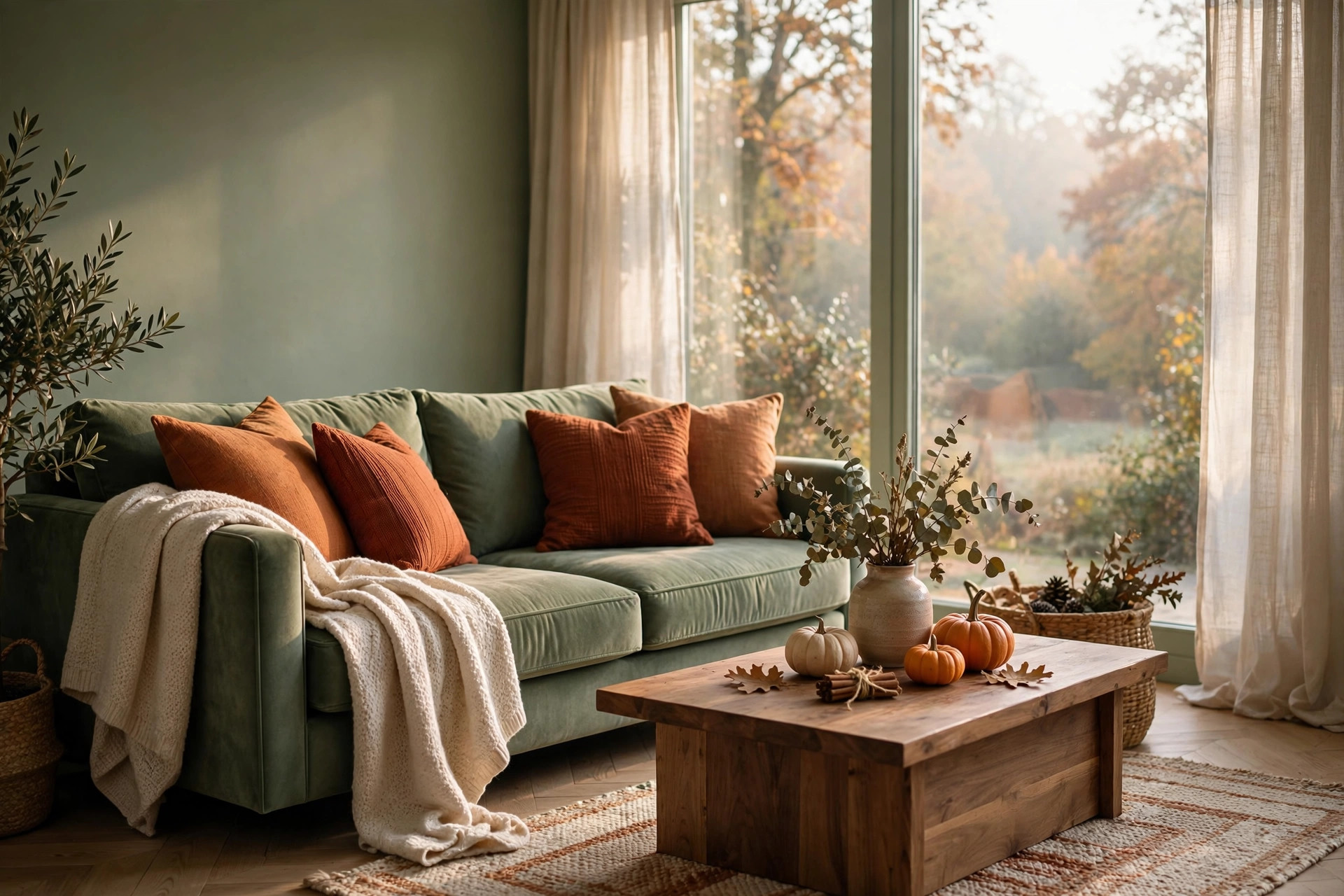
Some colour pairings just make sense the moment you see them, and sage green with cinnamon is one of them. One is soft, greyed and calming — the colour of eucalyptus leaves and misty mornings. The other is warm, spiced and enveloping — the colour of autumn baking and glowing embers. Together they are the definition of cosy, and this fall they are everywhere, from styled mantelpieces to paint swatches.
What makes this pairing so lovable is its balance. Sage green cools and calms; cinnamon warms and energises. Neither shouts. Unlike bolder autumn combinations — think burnt orange with mustard, which can overwhelm a small room — sage and cinnamon stay gentle enough for whole rooms yet interesting enough to feel styled rather than safe. It works in modern flats, country cottages, rented rooms and family homes alike.
Best of all, you probably own half of this palette already. Sage green has been a favourite for years, so check your cushions, throws and even your wardrobe. Cinnamon arrives easily through natural materials — terracotta pots, wooden bowls, dried foliage, actual cinnamon sticks. This guide shows you how to bring the two together deliberately, room by room, with ideas at every budget.
Why This Pairing Works So Beautifully

Colour theory has a simple explanation for why sage and cinnamon feel so right together: they sit opposite each other on the colour wheel. Green and orange-red are complementary colours, which means each makes the other look richer by contrast. But because sage is muted and cinnamon is earthy rather than neon, the contrast reads as harmony instead of clash — like a walk through autumn woods where green leaves meet rust-coloured ones.
Sage green brings a particular kind of calm. It is a desaturated, grey-green that recedes visually, making rooms feel larger and more restful. Interior stylists love it for bedrooms and living rooms because it flatters both natural daylight and warm lamplight. Cinnamon, by contrast, advances — it draws the eye and creates focal points. Used together, sage gives you the serene backdrop and cinnamon gives you the warm highlights, which is exactly the recipe for a room that feels both peaceful and alive.
The pairing is also remarkably forgiving across seasons. Sage green works year-round as a neutral-with-personality, while cinnamon can be dialled up in autumn and softened in spring. If you invest in sage upholstery or paint, you are not locked into a seasonal look — you are simply giving yourself a beautiful base that cinnamon, or any warm accent, can visit each autumn. That longevity makes it one of the smartest colour choices for anyone decorating on a budget.
There is a psychological layer too. Green tones are consistently linked with calm and restoration, while warm spiced tones evoke comfort, appetite and togetherness — think of every cosy café you have ever loved. A sage-and-cinnamon room quietly tells your nervous system to relax and stay a while, which is precisely what we want from our homes as the nights draw in.
Textiles: The Easiest Way In
If you are trying this palette for the first time, start with textiles — they are low-commitment, affordable and instantly effective. A pair of cinnamon or rust cushions on a sage green sofa (or sage cushions on a neutral sofa) is the fastest transformation in this guide, achievable in a single shopping trip. Look for texture as well as colour: velvet, chunky knit and washed linen all catch autumn light beautifully and add the tactile cosiness the season demands.
Throws are your next best friend. A cream or oatmeal knit throw layered over sage bedding, finished with one cinnamon cushion, creates a bed that looks styled in about ninety seconds. In the living room, drape a rust or terracotta throw diagonally across a sofa arm — the diagonal fold looks intentional and shows off the colour. For extra polish, choose throws with a subtle pattern, like a fine stripe or a tonal check, which adds interest without competing with solid cushions.
Rugs and curtains carry larger blocks of colour, so use them to set the ratio. A natural jute or wool rug in warm beige grounds a sage-and-cinnamon scheme perfectly. If your curtains are currently a cool white or grey that fights the palette, consider swapping them for warm ivory linen — it is a small change that makes every other warm tone in the room look richer. In bedrooms, sage green bedding with cinnamon cushions is a combination that photographs beautifully and sleeps beautifully too, since neither colour is visually jarring in lamplight.
When mixing patterns, keep one rule in mind: vary the scale. A large-scale botanical print in sage, a small-scale geometric in cinnamon, and a plain texture to rest the eye. Three patterns at the same scale will argue; three at different scales will harmonise. And remember that natural materials count as neutrals here — wood, rattan, jute and clay all sit happily alongside both colours and keep the scheme feeling organic rather than decorated.
Walls, Paint and Larger Commitments
Ready to go beyond cushions? Sage green is one of the most forgiving paint colours you can choose. It works in living rooms, bedrooms, kitchens and even bathrooms, and it pairs with both warm whites and deep charcoals for trim. A sage accent wall behind a bed or sofa gives you the palette’s calming base permanently, and cinnamon accents then pop against it all autumn long. Sample pots are essential — sage can swing grey or mint depending on your light, so paint large test patches and observe them morning and evening.
If full paint feels like too much, consider the half-wall. Painting the lower half of a wall in sage with warm white above is a classic technique that adds colour without overwhelming, and it suits hallways and dining rooms beautifully. Alternatively, paint the inside of a bookcase or alcove in sage — a small commitment with an outsized effect, especially when styled with cinnamon-toned books, ceramics and candles.
Furniture in sage green is having a quiet moment too. A sage velvet armchair, a painted sideboard or even sage dining chairs can anchor a room for years. Because sage reads almost as a neutral, it is far less risky than it looks — it sits comfortably with wood tones from pale oak to dark walnut. If buying new furniture is not on the cards, a tin of furniture paint and a weekend can transform a tired wooden chair, stool or bedside table into a bespoke sage piece.
For renters, removable options abound: peel-and-stick wallpaper in a sage botanical print for one wall, sage curtains, or a large sage rug that covers most of the floor. None of these touch the walls permanently, but together they deliver the full effect. The cinnamon half of the pairing needs no commitment at all — it arrives through objects you can move in a minute.
The Autumn Details: Foliage, Scent and Table Settings

This is where sage and cinnamon truly come alive, because autumn itself provides the materials. Eucalyptus — silvery sage-green and wonderfully fragrant — is the foliage of the season. A generous bunch in a ceramic vase, a eucalyptus garland along a mantel, or simple sprigs tucked into napkins at the table all deliver the sage note naturally. Dried eucalyptus lasts for months and keeps its colour, making it one of the best-value decorations you can buy.
For the cinnamon note, look to the kitchen and the garden. Bundles of real cinnamon sticks tied with twine make beautiful, fragrant decorations — tuck them into wreaths, lay them across a tablescape, or stand them in a small vase. Dried orange slices, with their amber translucency, bridge the two colours perfectly. Pinecones, acorns and dried seed heads add texture, while small pumpkins in white, green and orange echo the palette exactly as nature intended.
The dining table is the natural stage for this pairing. A sage linen tablecloth or runner, cinnamon-toned napkins, brass or wooden candlesticks with ivory candles, and a centrepiece of eucalyptus, dried oranges and small pumpkins — it is a tablescape that looks professionally styled but assembles in twenty minutes from supermarket and garden-centre finds. It works for a quiet family supper as well as for autumn entertaining, and the scent of eucalyptus and cinnamon is pure seasonal comfort.
Do not neglect scent elsewhere either. Candles in fig, cedar, clove or baked apple reinforce the cinnamon warmth, while a reed diffuser in eucalyptus or sage keeps the green note fresh. Scent is processed by the same part of the brain as memory, which is why a home that smells like autumn feels more autumnal than one that merely looks it — a small investment with an outsized emotional return.
Room-by-Room Styling Ideas
In the living room, let sage lead and cinnamon accent. A sage sofa or sage curtains, a cream rug, then cinnamon cushions, a rust throw and a wooden tray with candles. Add eucalyptus in a floor vase and you have the complete look. If your sofa is a different colour entirely, a sage throw laid across it can visually convert it for the season — nobody will know it is not upholstery.
Bedrooms love this palette because both colours promote rest. Sage bedding — duvet, sheets or even just pillowcases — with a cinnamon throw at the foot and one rust cushion creates a bed that feels like an exhale. Warm bedside lighting is essential: cool bulbs will drain the cinnamon tones, so choose warm white bulbs and fabric shades that diffuse the light softly.
Kitchens and dining spaces take the pairing through ceramics and linens. Sage green crockery is widely available and makes everyday meals look considered; cinnamon-toned linen napkins and a wooden board for serving add the warmth. A small potted herb — sage itself, pleasingly — on the windowsill ties the colour story together and is useful in autumn cooking.
Even bathrooms and hallways can join in. A sage bath mat or sage towels, a cinnamon candle on the vanity, a eucalyptus bunch hung from the shower head for a fragrant steam — small touches, but they make the whole home feel coherent. In hallways, a sage runner or a sage-painted console table with a bowl of pinecones welcomes you home in the palette every single day.
Shopping Smart and Avoiding Common Mistakes
The most common mistake with this palette is getting the undertones wrong. Sage greens with blue undertones can look cold next to cinnamon; look for sages with warm, grey-green undertones that harmonise with spice tones. Similarly, cinnamons that lean too orange can look garish — the prettiest cinnamons have a brown, earthy base, like the actual spice. When in doubt, hold fabric swatches together in your room’s light before committing.
Balance is the second pitfall. Because cinnamon advances visually, a little goes a long way — if every surface is cinnamon, the sage has nothing to calm and the room feels busy rather than cosy. Aim for roughly two-thirds sage and neutrals to one-third cinnamon and warm accents. If a room starts feeling too spicy, add cream or ivory — a plain throw, a light rug — to give the eye breathing room.
Shop in the right order to save money: start with what you own (check cupboards for sage cushions, terracotta pots, wooden pieces), then buy the high-impact textiles (cushions, throws), then the natural details (eucalyptus, cinnamon sticks, dried oranges), and only then consider paint or furniture. Charity shops are excellent for brass candlesticks, wooden bowls and ceramic vases in exactly these tones. And buy cinnamon sticks and dried oranges from food shops rather than craft shops — they are a fraction of the price.
Finally, photograph your room as you style it. The camera reveals imbalances your eye misses — too much cinnamon on one side, a sage cushion disappearing against a sage sofa. Adjust, photograph again, and stop when it feels calm and warm. That feeling is the whole point of the pairing, and it is one of the easiest seasonal looks to get right.
Sage green and cinnamon prove that the prettiest autumn rooms are not the loudest — they are the most harmonious. Start with a cushion, a bunch of eucalyptus and a bundle of cinnamon sticks, and let the palette grow from there. Your home will thank you every golden evening of the season.
Leave a Reply