
For years, the standard makeup routine went something like this: primer, full-coverage foundation, concealer, powder, contour, and then — if there was any face left — a little blush. Skin-first makeup turns that entire approach upside down. The idea is simple: look after your skin properly, then use the lightest possible touch of makeup to enhance what is already there, rather than covering it up.
This is not about going bare-faced if you do not want to, and it is not about throwing away your makeup bag. It is about shifting the balance so that skincare does the heavy lifting and makeup becomes the finishing touch. The result is a face that looks like you on your very best skin day — fresh, healthy, and real — achieved with fewer products and less time in front of the mirror.
Fall is the perfect season to make the switch. Summer’s heat and humidity often demanded heavier, longer-wearing base makeup; autumn’s cooler air is kinder to skin and to lightweight formulas. If you have been curious about the fresh-faced look everyone seems to be wearing, this guide will walk you through the philosophy, a simple seven-step routine, the formulas that work best, common mistakes to avoid, and when it is worth talking to a professional about your skin.
What Skin-First Makeup Actually Means
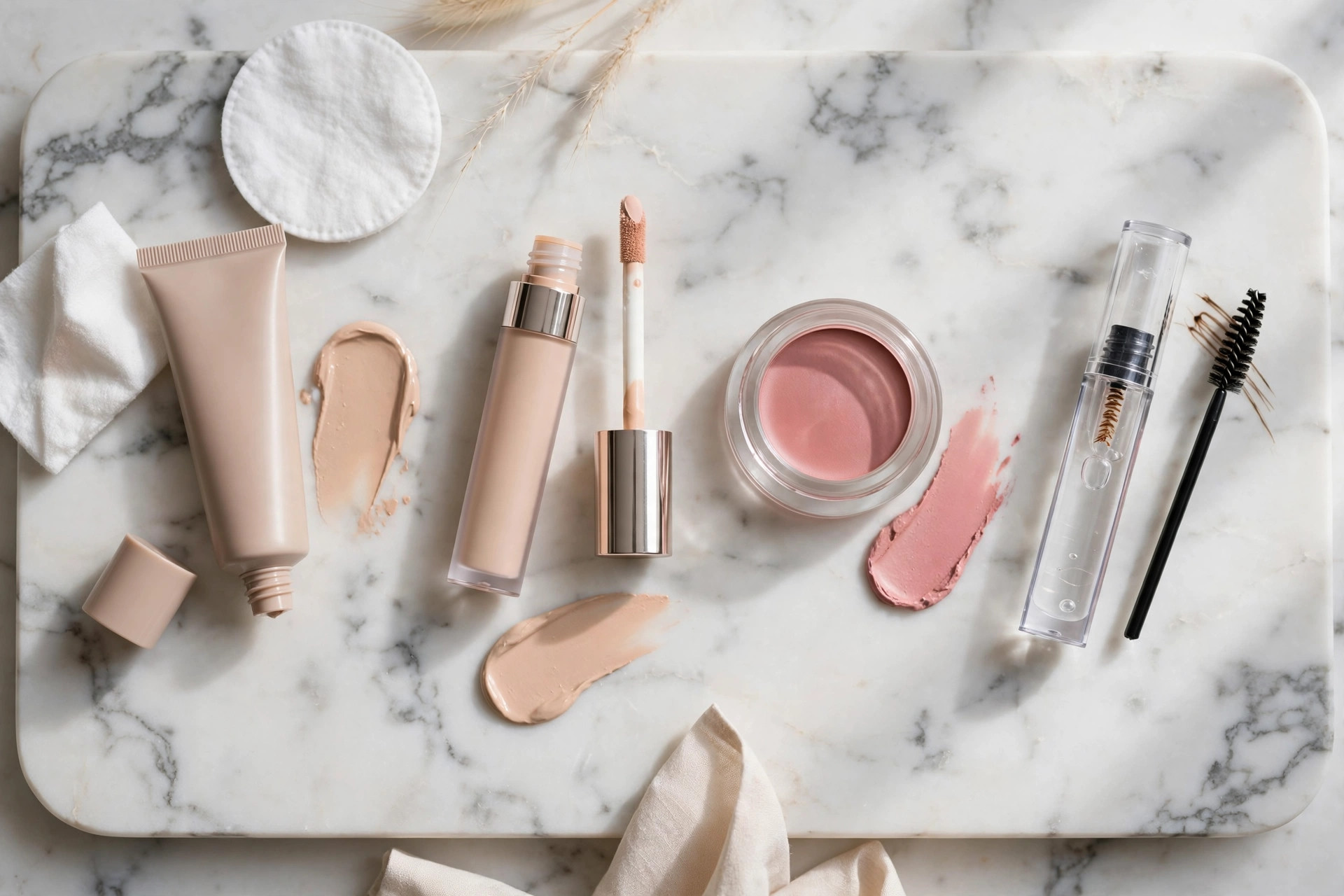
At its heart, skin-first makeup is a priorities shift. Traditional routines treat the skin as a canvas to be perfected with product; skin-first routines treat the skin as the main event and makeup as the supporting act. In practice, that means three things.
First, skincare comes before coverage. A consistent routine — gentle cleansing, moisturising, and sun protection — does more for how your face looks than any foundation can. Well-cared-for skin needs less covering, which is the whole engine of the approach. This does not require a twelve-step routine; the basics done consistently outperform complicated routines done sporadically.
Second, coverage becomes selective. Instead of an even layer of foundation across the whole face, you spot-conceal only where needed — a blemish here, redness around the nose there — and let the rest of your skin show through. Your freckles, your natural flush, the texture of real skin: all of it stays visible, and the result looks like skin, not makeup.
Third, formulas get lighter. Heavy, full-coverage products are replaced with sheer, flexible ones: tinted moisturisers, skin tints, light concealers, cream blushes. These move with your face, fade gracefully through the day, and never settle into fine lines the way heavier products can. The finish is dewy and alive rather than matte and masked.
It is worth saying plainly: skin-first makeup does not promise perfect skin, and no routine can. What it offers is a kinder, more realistic relationship with your face — one where the goal is healthy-looking skin rather than flawless-looking makeup. That shift in goal changes everything about how you approach your morning routine.
Why Fall Is the Season to Try It
Timing matters with beauty changes, and autumn gives skin-first makeup several natural advantages. The cooler air means less sweating through your base, so sheer formulas stay put far better than they would in August. You are also spending more time indoors in softer light, which is flattering to real skin texture — harsh summer sun shows everything, while autumn light is forgiving.
Fall is also when skin tends to get drier, and heavy matte foundations look their worst on dry skin — clinging to patches, emphasising flakes, settling into lines. Lightweight, hydrating formulas do the opposite: they move with dry skin, add moisture rather than absorbing it, and keep the face looking supple. If your foundation has been misbehaving as the weather cooled, that is your skin asking for a lighter approach.
There is a wardrobe argument too. Autumn style leans soft and tactile — knits, wool, suede, brushed cotton. A fresh, dewy face harmonises with those textures in a way that a heavily made-up face does not. The overall effect is coherent: soft clothes, soft hair, soft skin. It is the beauty equivalent of your favourite jumper.
Finally, the darker evenings mean your daytime look can be simpler. When you are mostly seen in warm indoor light, a fresh light base looks effortlessly polished. Save any drama for your lips or nails — as we have covered elsewhere this season, a berry lip or a vampy nail carries plenty of impact on its own.
The 7-Step Fresh Fall Routine
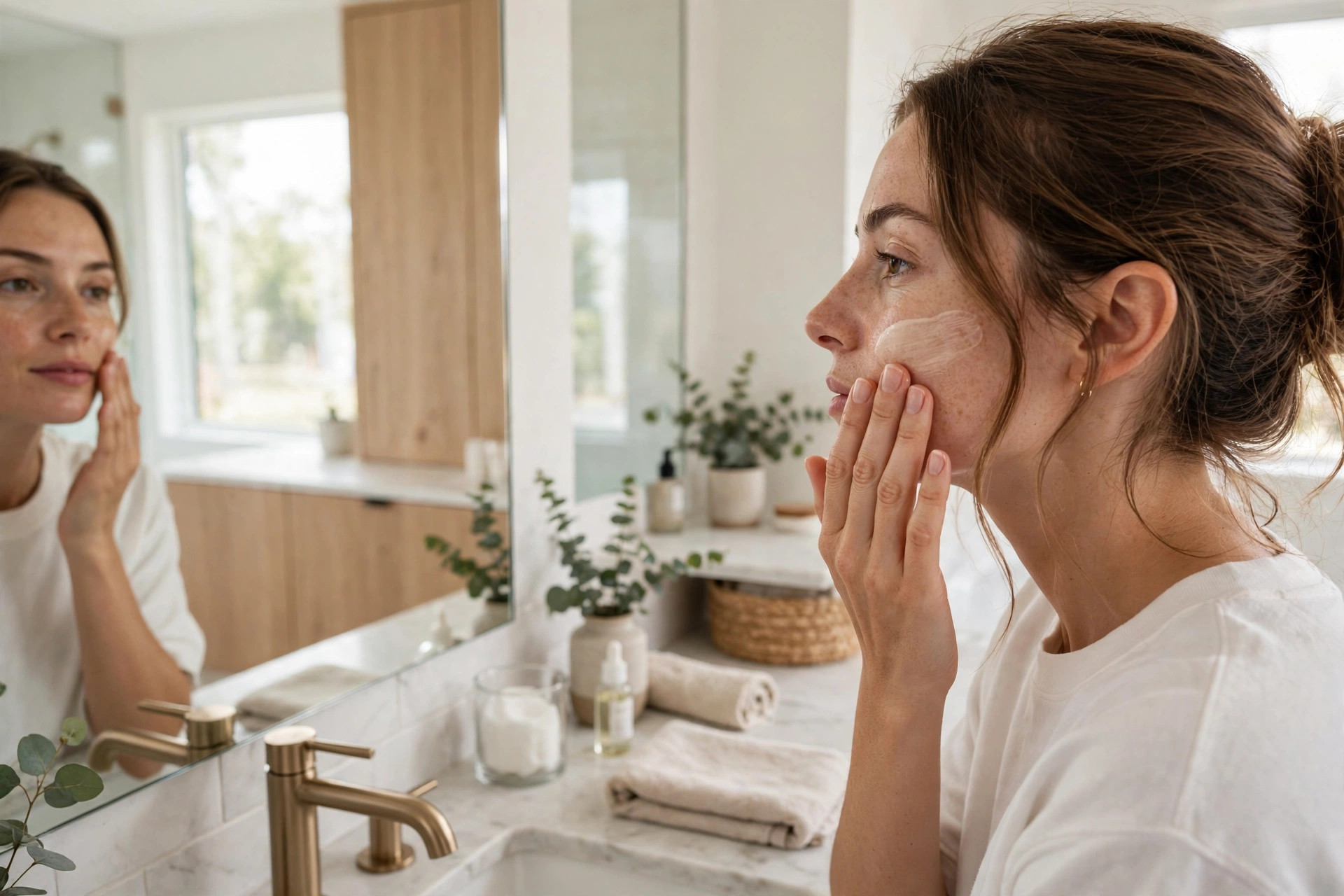
Here is the complete routine, start to finish. It takes about ten minutes once you are used to it — possibly less time than your old foundation routine alone.
- Cleanse gently. Wash your face with a mild cleanser suited to your skin type — creamy or milky for dry skin, gel for oily skin. In the morning, a gentle cleanse is enough; you are removing overnight oil, not the day’s grime. Pat dry with a clean towel rather than rubbing.
- Moisturise well. While skin is still slightly damp, apply moisturiser. In fall, most people benefit from a slightly richer moisturiser than they used in summer. Give it two or three minutes to absorb — this waiting time is what prevents pilling when makeup goes on top.
- Protect with SPF. Yes, even in autumn, even on grey days. UV rays pass through cloud, and daily sun protection is the single most effective long-term skincare habit. Choose a lightweight facial sunscreen that sits well under makeup; many now double as a subtle primer.
- Even out with a skin tint. Instead of foundation, apply a tinted moisturiser or skin tint — a sheer, flexible product that evens tone without masking. Use your fingers or a damp sponge, pressing it in rather than dragging. Focus on the centre of the face where redness and unevenness usually live, and blend outward. Let the edges of your face stay nearly bare.
- Conceal only where needed. With your skin tint in place, look closely and spot-conceal individual concerns: under-eye darkness, a blemish, redness around the nostrils. Use a creamy, lightweight concealer one shade close to your skin, applied in tiny amounts and blended with a fingertip. Less is genuinely more here.
- Add colour back with cream products. A dab of cream blush on the apples of the cheeks, blended upward toward the temples, brings life back to the face. Cream bronzer, used sparingly where the sun would naturally hit, adds gentle warmth. Cream formulas melt into skin-first bases seamlessly; powders can sit on top and look dusty.
- Finish the features lightly. Brush brows upward with a tinted brow gel, curl lashes and apply one or two coats of mascara, and finish lips with a tinted balm or a sheer lipstick. That is the whole face — fresh, defined, and done.
Notice what is missing: no powder all over (a tiny press on the T-zone only if you get shiny), no contour sculpting, no baking, no heavy layers. The routine trusts your skin to look good, and with decent skincare behind it, that trust is repaid.
Choosing Lightweight Formulas
The products matter, because not everything labelled “light” performs the same. Here is what to look for in each category:
- Skin tints and tinted moisturisers: Look for sheer-to-light coverage with skincare ingredients like hyaluronic acid or niacinamide. The texture should feel like a rich moisturiser, not like paint. Shade matching matters less than with foundation, since sheerness is forgiving — but still test along your jawline in daylight.
- Concealers: Choose creamy, flexible formulas over thick, dry ones. A doe-foot applicator lets you place tiny amounts precisely. Avoid full-coverage camouflage concealers for this routine; they defeat the purpose.
- Cream blush and bronzer: Stick or pot formats both work. The colour should melt on contact with warm skin. Start with shades close to your natural flush — soft rose, warm peach, gentle terracotta.
- Brow products: A tinted brow gel is the skin-first staple: it adds colour, holds hairs in place, and takes ten seconds. Choose a shade matching your brow hair, not darker.
- Lip products: Tinted balms, sheer lipsticks, and lip oils keep the look cohesive. Save opaque, heavy lipsticks for evenings when you want contrast.
You do not need to replace everything at once. Start with the base — swap foundation for a skin tint — and see how it feels for a week. Add cream blush next. Build the kit gradually, and let your face tell you what it actually needs.
Common Mistakes to Avoid
Skin-first makeup is simple, but a few easy mistakes can undermine it. Watch for these:
- Skipping moisturiser. Sheer base products cling to dry patches mercilessly. Good hydration underneath is not optional — it is the foundation the whole look rests on.
- Using too much concealer. The temptation is to keep adding until everything is invisible. Resist it. Conceal the worst offenders and let the rest show; real skin has variation, and that is fine.
- Powdering heavily. A dusting of powder on a shiny T-zone is fine, but powdering the whole face over a dewy base kills the fresh effect you worked to create.
- Expecting skincare to transform overnight. Skin improves over weeks, not days. Give any new routine at least a month before judging it, and introduce new products one at a time so you know what is helping.
- Comparing to filtered photos. Much of the “perfect skin” you see online is lighting, filters, or retouching. Skin-first makeup aims for healthy real skin, not airbrushed fantasy. Judge your results in a normal mirror in daylight.
- Neglecting SPF. The freshest makeup in the world will not protect your skin. Daily sun protection is the least negotiable step in the entire routine.
When to See a Professional
Most skin concerns respond well to a consistent basic routine and a little patience. But some situations deserve professional input rather than more products. Consider seeing a dermatologist or your doctor if you notice sudden or severe changes in your skin, persistent painful breakouts, rashes that do not clear, moles that change shape or colour, or any skin issue that is getting worse rather than better.
There is no shame in seeking help for your skin — quite the opposite. A professional can identify what is actually going on far faster than trial and error with products, and can save you considerable money and frustration. Think of it the way you would any other health matter: expert advice early beats guessing late.
Similarly, be cautious with bold product claims. No cream, serum, or device can promise to erase wrinkles, cure acne, or transform your skin overnight, whatever the advertising says. Look for gentle, well-established ingredients, introduce changes slowly, and stop using anything that causes stinging, redness, or breakouts that were not there before.
Adapting the Routine for Your Skin Type
Skin-first makeup flexes to suit different skin, with small adjustments:
- Dry skin: Layer hydration — a hydrating serum under moisturiser works wonders in fall. Choose dewy, luminous skin tints and avoid anything labelled mattifying. A facial oil pressed over moisturiser on very dry days adds comfort.
- Oily skin: Use a lightweight gel moisturiser and look for oil-free skin tints. A light press of translucent powder just on the T-zone keeps shine in check without dulling the whole face. Blotting papers midday refresh better than adding more product.
- Combination skin: Treat zones differently — richer moisturiser on dry cheeks, lighter on the forehead and nose. This targeted approach is very much in the skin-first spirit.
- Sensitive skin: Keep the routine minimal and fragrance-free. Patch-test new products on your jawline for a day or two before full use. Fewer products means fewer potential irritants, which is another quiet advantage of the approach.
- Mature skin: Hydration and light are your friends. Creamy, luminous formulas flatter mature skin far better than matte or powdery ones, which can settle into fine lines. A well-moisturised base is everything.
The Final Word
Skin-first makeup is less a trend than a correction — a return to the idea that your face is already the point, and makeup is just there to help it look its best. It asks for a little more care with skincare and a little less product on top, and in exchange it gives you mornings that are faster, a bag that is lighter, and a face that looks like you.
Try it for a week this fall. Swap the foundation for a skin tint, conceal only what bothers you, and let the rest of your skin simply be skin. You might be surprised how quickly the mirror starts showing you something you like — not a mask, not a project, just your face, fresh and at ease in its own skin.
Leave a Reply