
There is a quiet shift happening in how people think about drinking. It is not the dramatic, all-or-nothing story of quitting forever, and it is not the old pattern of drinking without thinking either. It lives in the middle, and it has a name: soberish. If you have ever thought I like a drink, but maybe a little less of it, this gentle movement might be exactly what you have been looking for.
Soberish — sometimes called sober-curious or mindful drinking — is simply the practice of being more intentional about alcohol. It means drinking less often, drinking less when you do, choosing lower-alcohol options, or taking regular breaks — whatever version feels right for you. There are no rules, no labels, and no purity tests. It is a personal, flexible approach, and that flexibility is precisely why it works for so many people.
Fall is a natural moment to explore it. The season brings its own drinking rhythms: harvest festivals, bonfire nights, holiday parties on the horizon, and the general coziness that makes a glass of something feel almost mandatory. It is also a season of turning inward — slower evenings, earlier nights, more time to notice how things actually make you feel. That combination makes autumn an ideal time to get curious about your own patterns.
This guide is a kind, judgment-free walkthrough of the soberish approach: what it means, why it resonates right now, practical swaps that make drinking less feel easy rather than depriving, how to handle social situations, and — importantly — what to do if drinking ever feels hard to control. No lectures, no shame. Just honest, helpful ideas.
What Does Soberish Actually Mean?
At its simplest, soberish means drinking less alcohol than you used to, on purpose. But the beauty of the term is that it refuses to be pinned down — it looks different for everyone, and that is the point. For one person, soberish might mean only drinking on weekends. For another, it might mean alternating every alcoholic drink with a sparkling water. For someone else, it might mean a full month off, followed by a more moderate pattern afterward.
What soberish is not matters too. It is not a moral judgment on people who drink, and it is not a judgment on people who do not. It is not a diet-style challenge with cheat days and guilt. And it is definitely not a replacement for proper support if alcohol has become a genuine problem — we will talk about that separately and seriously below. Soberish is for the large middle ground of people whose drinking is not a crisis but also not quite what they want it to be.
The movement grew alongside the explosion of excellent alcohol-free options. A decade ago, choosing not to drink often meant nursing a sad soda while everyone else had wine. Today, the non-alcoholic drinks shelf is genuinely exciting: complex botanical spirits, alcohol-free wines that taste like wine, craft-style beers, and sparkling teas that feel celebratory. The soberish lifestyle got easier at exactly the moment people started wanting it — which is probably why it has caught on so fast.
Underneath the trend is a simple question more people are asking: how does this actually make me feel? Not how it looks, not what everyone else is doing — how the third glass genuinely feels versus the first, how Saturday morning feels after two drinks versus five, how a month of lighter drinking changes your sleep, your skin, your energy. Soberish is curiosity turned into a lifestyle. And curiosity, unlike willpower, does not run out.
Why Fall Is a Good Time to Rethink Drinking
Every season has its drinking culture, and fall’s is particularly worth noticing. There is the crisp-weather romance of mulled wine and spiked cider, the social calendar filling up with gatherings, and the general sense that cozy evenings require a cozy drink. None of this is bad — but it does mean autumn drinking can quietly escalate without any conscious decision. You are not drinking more because you decided to; you are drinking more because the season keeps handing you a glass.
Fall also brings earlier darkness and colder weather, which can nudge people toward indoor evening drinking out of simple habit. When the sun sets at five and the sofa is calling, a bottle of wine can become the default shape of relaxation. Noticing that pattern is not about guilt — it is about choice. Once you see the autopilot, you can decide whether you actually want to be on it.
There is a practical angle too. Many people find that alcohol affects their sleep, and sleep is already under pressure in the darker months. Even moderate evening drinking can fragment sleep and leave mornings groggier — which, in a season when mornings are already dark and difficult, is a cost worth being aware of. This is not a medical claim or a reason to panic; it is simply useful information for anyone weighing their own trade-offs.
Finally, the run-up to the holidays makes fall a smart time to experiment. If you arrive at December having already found alcohol-free drinks you love and social strategies that work, the party season becomes genuinely enjoyable rather than a month-long negotiation with yourself. Think of autumn as a low-pressure rehearsal: smaller gatherings, calmer weekends, and plenty of cozy evenings to practise your new favourites.
Small Swaps That Actually Work
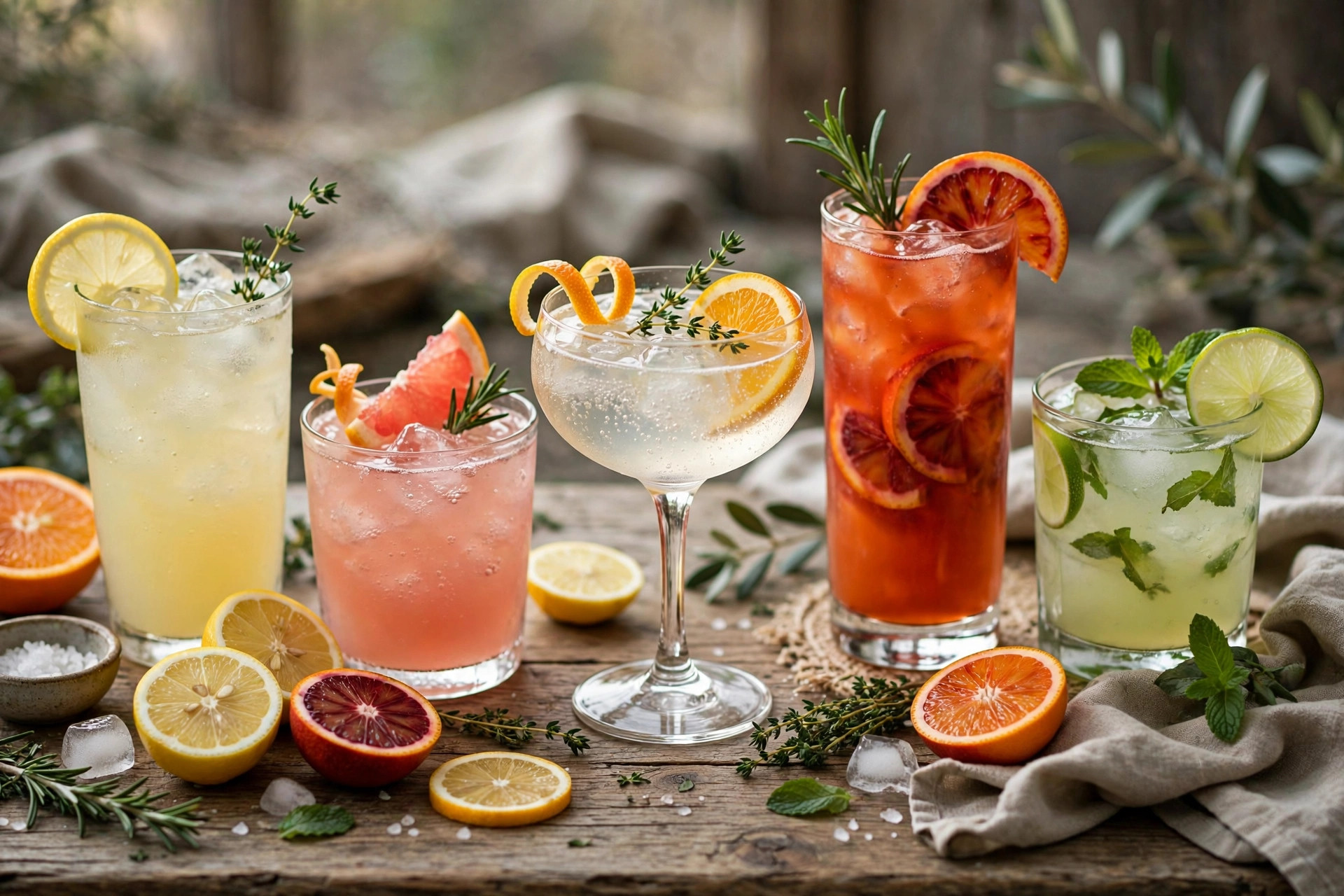
The secret to drinking less without feeling deprived is substitution, not subtraction. Nobody enjoys a lifestyle built on saying no all evening. The soberish approach works because it is built on delicious yeses. Here are swaps that people genuinely stick with:
- Find your signature alcohol-free drink. This is the single most impactful step. Experiment until you find one or two non-alcoholic drinks you truly love — a botanical spirit with tonic, an alcohol-free red you enjoy, a sparkling tea, a really good ginger beer. Your “usual” should be something you look forward to, not a consolation prize.
- Alternate, don’t eliminate. One alcoholic drink, one sparkling water or soft drink, repeat. This simple rhythm roughly halves your intake without changing the social shape of the evening at all. Nobody notices, including you, after the first round.
- Shrink the pour, not the pleasure. Choose smaller glasses, order halves instead of pints, or make spritzers — wine topped with sparkling water is lighter, lasts longer, and tastes refreshing. The ritual stays; the quantity drops.
- Go lower-alcohol. The drinks world now offers “mid-strength” everything: session beers, lower-ABV wines, light spritzes. Switching your regular to a lighter version cuts intake without changing your habits at all.
- Delay the first drink. If you usually pour a glass the moment you get home, try pushing it to with-dinner or after-dinner. That one shift often removes an entire drink from the evening — and you may find you did not miss it.
- Build alcohol-free rituals. The craving is often for the ritual, not the alcohol: something special in a nice glass at the end of the day. A fancy tonic, a warming spiced tea, or a beautiful mocktail in your favourite glass satisfies the ritual completely.
- Stock your home intentionally. Keep appealing alcohol-free options visible and easy, and keep alcohol slightly less convenient. Environment design sounds trivial, but it quietly shapes dozens of small decisions a week.
- Take planned breaks. A week off here, a dry fortnight there — short breaks reset your baseline and remind you how good clear mornings feel. They also make moderate drinking afterward feel like a choice rather than a default.
The thread running through all of these is kindness. Soberish works when it feels like self-care, not self-punishment. If a particular swap makes you miserable, drop it and try a different one. There are dozens of paths to “a bit less” — you only need the ones that suit you.
Navigating Social Situations with Ease

For many people, the hardest part of drinking less is not the drink itself — it is the people. Our social lives are soaked in alcohol: dinners, parties, celebrations, commiserations. Choosing to drink less can feel like opting out of the fun, and other people’s reactions can be surprisingly intense. Here is how to handle it gracefully.
First, know that you owe no one an explanation. “I’m good with this, thanks” is a complete sentence. Most people accept it and move on; the few who push usually drop it when you stay breezy and unbothered. Having a drink in your hand — alcoholic or not — ends most conversations before they start, which is another reason to love a good alcohol-free option that looks like a cocktail.
Second, recruit allies. Tell one or two close friends what you are doing, especially if you socialise with them often. A friend who knows will stop offering refills, suggest alcohol-free venues, and generally make everything easier. Many people discover their friends are quietly curious about drinking less too — your honesty often gives them permission to explore it themselves.
Third, plan your exits and alternatives. If certain events revolve entirely around heavy drinking, it is okay to arrive late, leave early, or skip occasionally — especially in the early weeks while new habits are fragile. Suggest alternatives too: a morning hike, a cooking night, a cinema trip. Friendships built only on drinking often turn out to be sturdier than expected once you add other activities.
And if someone mocks your choice? That says everything about their relationship with alcohol and nothing about yours. A light “I’m just trying something” usually defuses it. You do not need to convert anyone or defend yourself. You are simply a person who decided to drink a bit less — which, when you say it plainly, is a remarkably undramatic thing to be.
If Drinking Ever Feels Hard to Control
This section matters, so let us be direct and compassionate about it. Soberish is a lifestyle choice for people whose drinking is a habit they want to adjust. It is not designed for — and cannot substitute for proper support with — alcohol dependence or problem drinking. And sometimes the line between the two is blurrier than we admit to ourselves.
Be honest with yourself about a few questions. Do you regularly drink more than you intended? Have you tried to cut back before and found you could not? Do you feel anxious, shaky, or unwell when you do not drink? Is alcohol affecting your health, your work, your relationships, or your safety? If any of that feels familiar, this is not a willpower issue and not something a list of mocktail swaps can fix — and recognising that is a sign of strength, not failure.
If drinking feels hard to control, please reach out for professional support. Depending on where you live, options include your doctor, local alcohol support services, helplines, and peer-support communities — all confidential and all accustomed to helping people exactly where you are. You do not need to hit any particular low point to deserve help; “I want support” is reason enough.
There is no shame in any of this. Alcohol is an addictive substance that our culture pushes constantly; struggling with it is a human response, not a character flaw. Whether your path is soberish curiosity or professional support or both, what matters is that you are paying attention to yourself with honesty and kindness. That attention is the whole foundation — everything else is detail.
So this fall, consider a gentle experiment: a little less, a little more intentionally, with delicious alternatives and zero guilt either way. Pour the beautiful alcohol-free spritz, savour the clear Saturday morning, and notice how it feels. Soberish is not about perfection or labels — it is about choosing your own version of enough. And that is a lovely thing to choose.
Leave a Reply