Last updated: October 2026
Quick answer: Somatic exercises are slow, gentle movements done with close attention to how your body feels, rather than for fitness or flexibility. Done for ten to fifteen minutes, they can help you notice and release everyday tension, breathe more slowly, and feel calmer and looser afterwards.
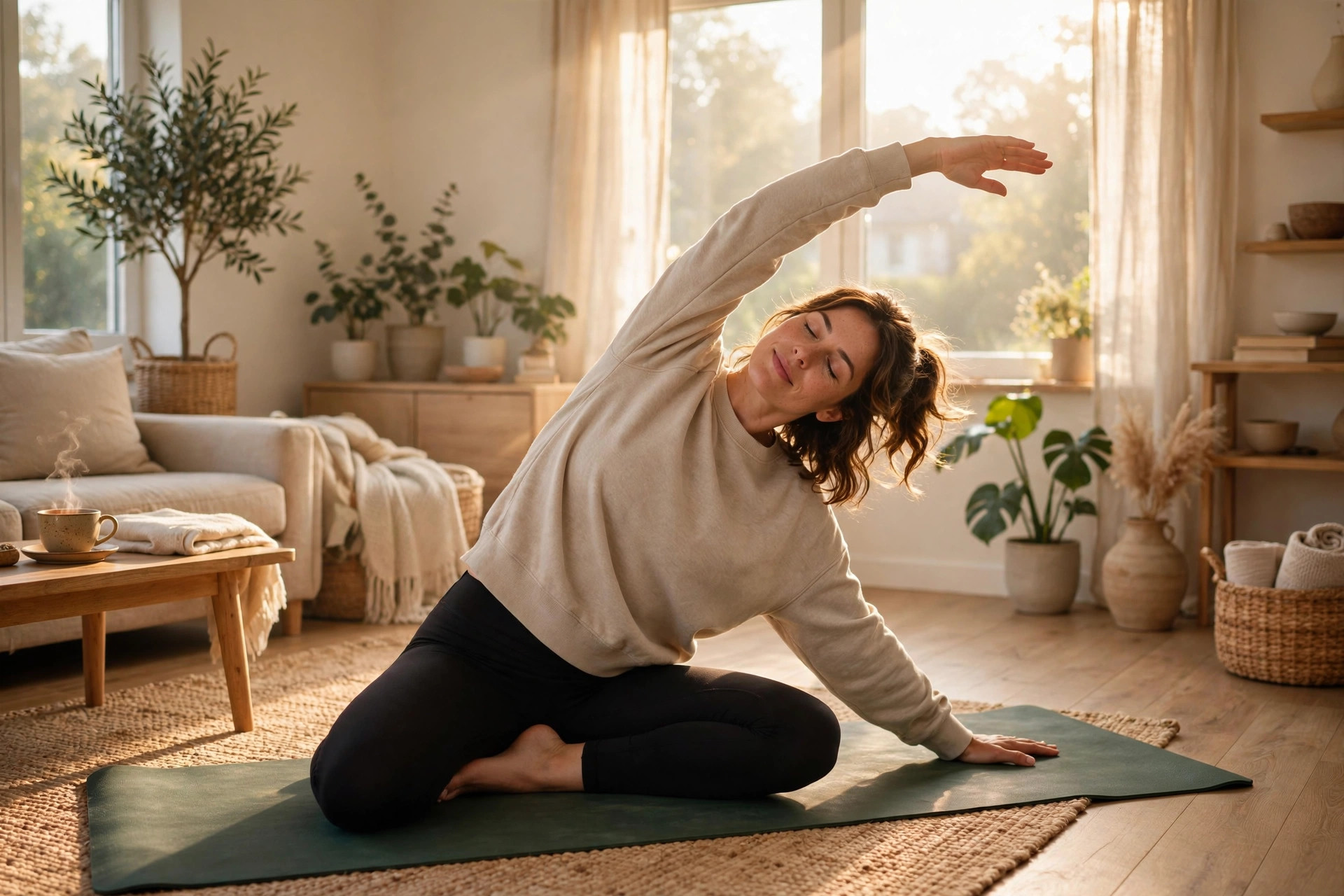
If your idea of exercise involves pounding music, shouted instructions, and feeling quietly terrible about your fitness, somatic exercise will feel like arriving from another planet. There is no pounding, no shouting, and absolutely no punishment. Just slow, gentle movements, done with your full attention, designed to help your body let go of the tension that stress quietly stores in your muscles.
In our experience, the appeal is how little it asks of you: no equipment, no gym, no fitness level. You can do it in your pyjamas on your bedroom floor. Afterwards, many people describe feeling looser, calmer, and more “in” their bodies, like they have just had a long exhale they did not know they were holding.
A gentle note first: somatic exercises are a relaxation and body-awareness practice, not a treatment for any medical or mental health condition. Move gently, never push into pain, and if you have an injury, chronic pain, or a health condition, check with a doctor or physiotherapist before starting anything new. This post is general information only, not medical advice.
What does “somatic” actually mean?
“Somatic” comes from the Greek word “soma,” meaning the living body as you experience it from inside, not how it looks from outside. Somatic exercises are movements done with that internal awareness, paying close attention to sensation rather than counting reps or chasing a burn.
The core idea is simple: stress and tension show up physically. Your jaw clenches during a tense meeting. Your shoulders live near your ears during a hard week. Your hips tighten when you sit all day. Over time, these patterns become habitual, and your muscles can almost forget how to fully relax. Somatic movements aim to interrupt those patterns through slow, deliberate motion paired with deep breathing, giving your nervous system a chance to downshift.
This is not the same as stretching for flexibility or working out for fitness, though it can complement both. Think of it less as training your body and more as listening to it — a conversation rather than a command. The American Psychological Association notes that stress can affect the body in many ways, including muscle tension, which is why a practice that starts with the body can feel so relieving.
How is somatic exercise different from a normal workout?
Somatic practice breaks nearly every rule of conventional exercise: it is slow, feeling-led, and short, with breathing and rest built in. There is nothing to win, no perfect form to achieve, and pain is always a signal to ease off, never a challenge to push through.
| Normal workout | Somatic practice |
|---|---|
| Faster, harder, more reps | Very slow, almost comically slow at times |
| Form and performance matter most | How the movement feels from inside matters most |
| Longer sessions feel more worthwhile | Ten to fifteen attentive minutes is a complete practice |
| Breathing is background | Slow exhales are part of every move |
| Rest is a break from the work | Pausing to notice sensations is the work |
| Push through discomfort | No pain, ever — ease off or skip it |
If traditional exercise feels stressful rather than stress-relieving, this approach can be a revelation. Speed is the enemy of awareness here, and a little gentle movement done attentively beats an hour of distracted stretching. Slow exhales paired with the release phase of each movement help signal safety to your nervous system, and pausing between movements to notice what you feel is not laziness — it is the practice itself.
How do I set up a practice space?
You need very little: a clear patch of floor about the size of a yoga mat, a mat or thick blanket, and clothes you can move in. Soft lighting, a silenced phone, and optional quiet instrumental sounds help, while evening wind-downs and morning stiffness-easers are both popular times.
- Space: a clear patch of floor about the size of a yoga mat, with a mat or thick blanket for comfort.
- Clothes: anything you can move in — pyjamas genuinely count.
- Lighting: soft lighting rather than harsh overhead lights, which work against the whole point.
- Sound: quiet instrumental music, nature sounds, or silence — nothing with lyrics, which pulls attention outward.
- Phone: on silent, out of reach, so nothing interrupts the quiet.
- Timing: evening as a wind-down, morning to ease out of sleep stiffness, or after a stressful day — the best time is the time you will actually do it.
The goal is an environment that tells your nervous system that nothing is demanded of you here. Mayo Clinic describes relaxation techniques as ways to help calm the mind and body, and a calm, uncluttered corner supports exactly that. If strong emotions surface during slow bodywork — which can happen — be kind to yourself, stop if you need to, and consider talking it through with a professional.
What are 10 gentle somatic moves to try?
These ten beginner-friendly moves form a complete fifteen-minute sequence in order, or you can pick three or four favourites. Move slowly, breathe deeply, pause between moves to notice how your body feels, and never push into pain.
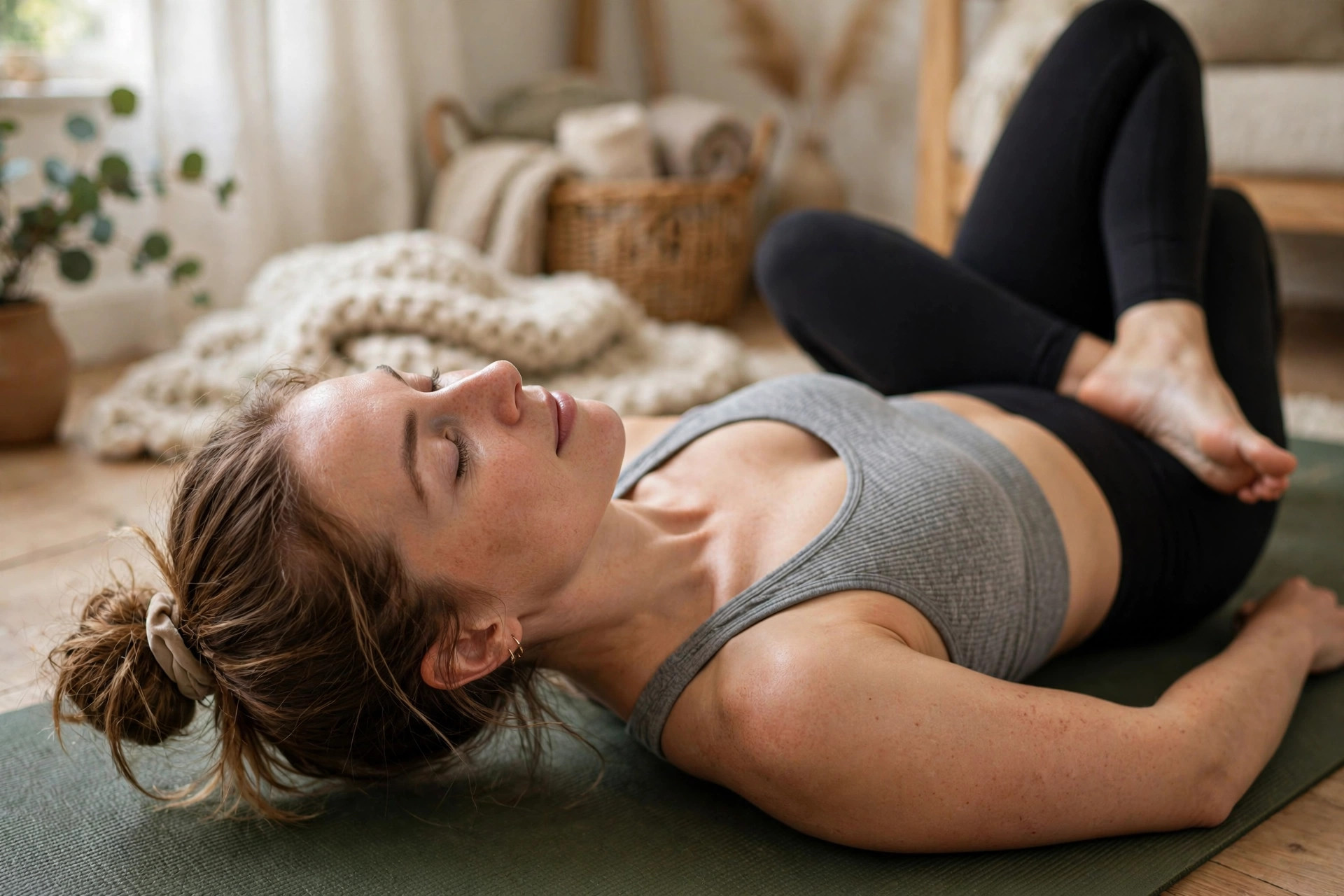
- Constructive rest. Lie on your back with knees bent, feet flat on the floor, arms at your sides. Close your eyes and breathe for a minute, feeling your body sink into the floor. A fine practice all on its own.
- Pelvic tilts. From constructive rest, gently rock your pelvis so your lower back presses into the floor, then release. Repeat slowly ten times, exhaling as you press down.
- Knee sway. Still on your back, let both bent knees fall slowly to one side, then the other, like a windscreen wiper in slow motion. Keep your shoulders on the floor.
- Shoulder shrugs and drops. Sitting or standing, inhale as you lift your shoulders to your ears, hold for three seconds, then exhale with an audible sigh as you let them drop completely. Repeat five times.
- Neck half-circles. Slowly roll your chin toward your chest, then let your head drift ear-to-shoulder on each side — just the front half of the circle, never dropping the head backwards. Two slow rounds each way.
- Standing shake-out. Stand with feet hip-width apart and gently shake your hands, then your arms, then your whole body for 30 to 60 seconds. Then stand completely still and notice the tingling aliveness.
- Cat-cow breathing. On hands and knees, inhale as you gently arch your back and lift your head, exhale as you round your spine and tuck your chin. Let the breath lead and the body follow, for eight slow rounds.
- Hip release (figure-four). Lying on your back, cross one ankle over the opposite knee and gently draw the bottom leg toward you until you feel a mild stretch deep in the hip. Hold for five slow breaths each side.
- Jaw release. Place your fingertips on your jaw muscles and make small slow circles while letting your jaw hang slightly open. Then open your mouth as wide as comfortable, hold five seconds, and release with a sigh.
- Full-body stretch and rest. Lying on your back, stretch your arms overhead and point your toes for one deep breath — then let everything go completely limp. Rest for a full minute, noticing the contrast between effort and release.
That final contrast is the whole lesson of somatic work in a single move. The NHS offers simple breathing exercises for stress, and pairing slow exhales with these moves follows the same gentle logic: breathe out, let go, notice what changes.
How do I build a simple daily practice?
You do not need all ten moves every day — a short practice you repeat beats a long one you abandon. Pick one ready-made routine below, tie it to something you already do, and notice small wins like looser shoulders or less morning jaw aching.

| Routine | Moves | Best for |
|---|---|---|
| The 5-minute desk reset | Shoulder shrugs and drops, neck half-circles, jaw release, standing shake-out | Lunch breaks and tense workdays |
| The 10-minute evening unwind | Constructive rest, pelvic tilts, knee sway, cat-cow, hip release, full-body stretch and rest | Winding down before bed |
| The 3-minute emergency calm | Shoulder shrugs with sighing exhales, standing shake-out, one minute of constructive rest breathing | Days when everything feels like a lot |
Consistency matters more than duration. Doing five minutes most days will change how your body feels far more than one heroic hour-long session a month. Tie it to something you already do — after brushing your teeth, before your morning coffee — and it will stick much faster. Keep a little mental note of what you notice; these small wins are the practice working, and noticing them keeps you coming back.
When should I go deeper — and when should I get support?
Home somatic practice suits everyday tension, but it has limits worth respecting. Stop and consult a doctor or physiotherapist if you have chronic pain, a recent injury, are recovering from surgery, or feel dizziness or pain during any movement, and seek professional support if strong feelings keep surfacing.
Gentle does not mean universally safe for every body, and slow, body-focused work can sometimes stir up emotions — a wave of sadness during hip stretches, or tears during deep breathing. This is a recognised phenomenon and not a sign you are doing it wrong. If it happens, pause, breathe normally, and be gentle with yourself. If strong feelings come up repeatedly, a somatic therapist or counsellor can help you explore them safely; seeking one is a sign of wisdom, not weakness.
For those who want to go further, there are lovely next steps: somatic yoga classes, Feldenkrais or Alexander Technique lessons, and trauma-informed bodywork practitioners. But none of that is required. The ten moves above, done slowly in your pyjamas with your full attention, are a complete and legitimate practice exactly as they are.
So tonight, clear a little patch of floor, lie down, and have a slow conversation with your body. It has been carrying your stress all day without complaint. Ten gentle minutes is the least it deserves — and you might be surprised how much lighter you feel afterwards. Remember, this is general wellbeing information, not medical advice, and your doctor or physiotherapist is the right person to ask about anything that hurts or worries you.
Leave a Reply