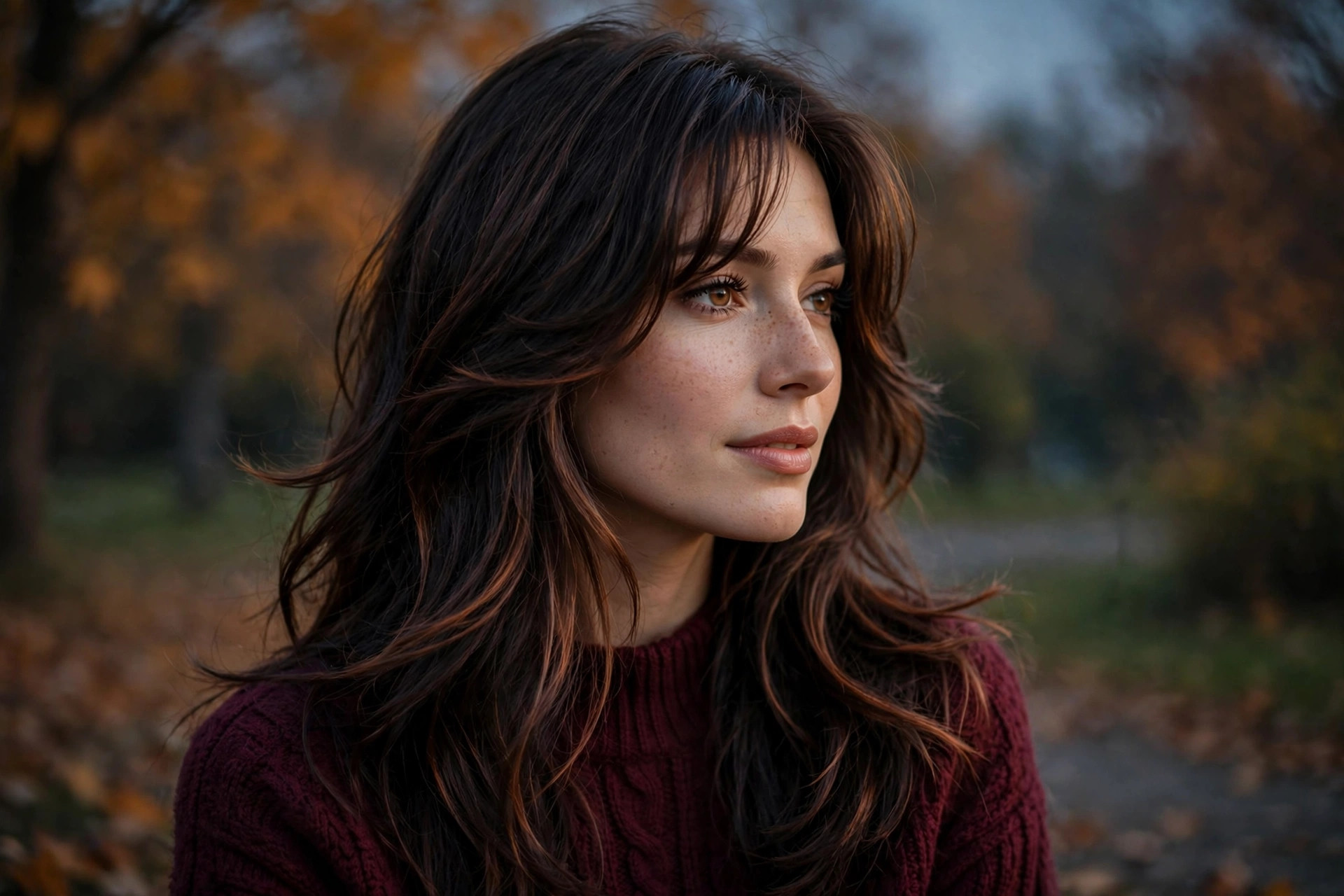
Some haircuts are just haircuts. And then there are haircuts that feel like stepping into a novel — the kind that make you stand a little straighter and reach for a dark lipstick you have not worn in years. The vampire haircut is firmly in the second category. Fall 2026’s most talked-about chop is long, dark, and unapologetically romantic: cascading layers, face-framing pieces that move like curtains, and a moody, storybook elegance that suits the season perfectly.
Before anyone worries — this is not a costume look. The vampire haircut, despite its dramatic name, is one of the most wearable statement cuts around. It is essentially a refined take on long layers, elevated with darker colour, softer face-framing and a touch of gothic romance. In this guide, we will unpack exactly what defines the cut, who it suits (spoiler: more people than you think), seven beautiful variations, the precise language to use with your stylist, and how to style those layers at home without a glam squad.
What Is the Vampire Haircut?
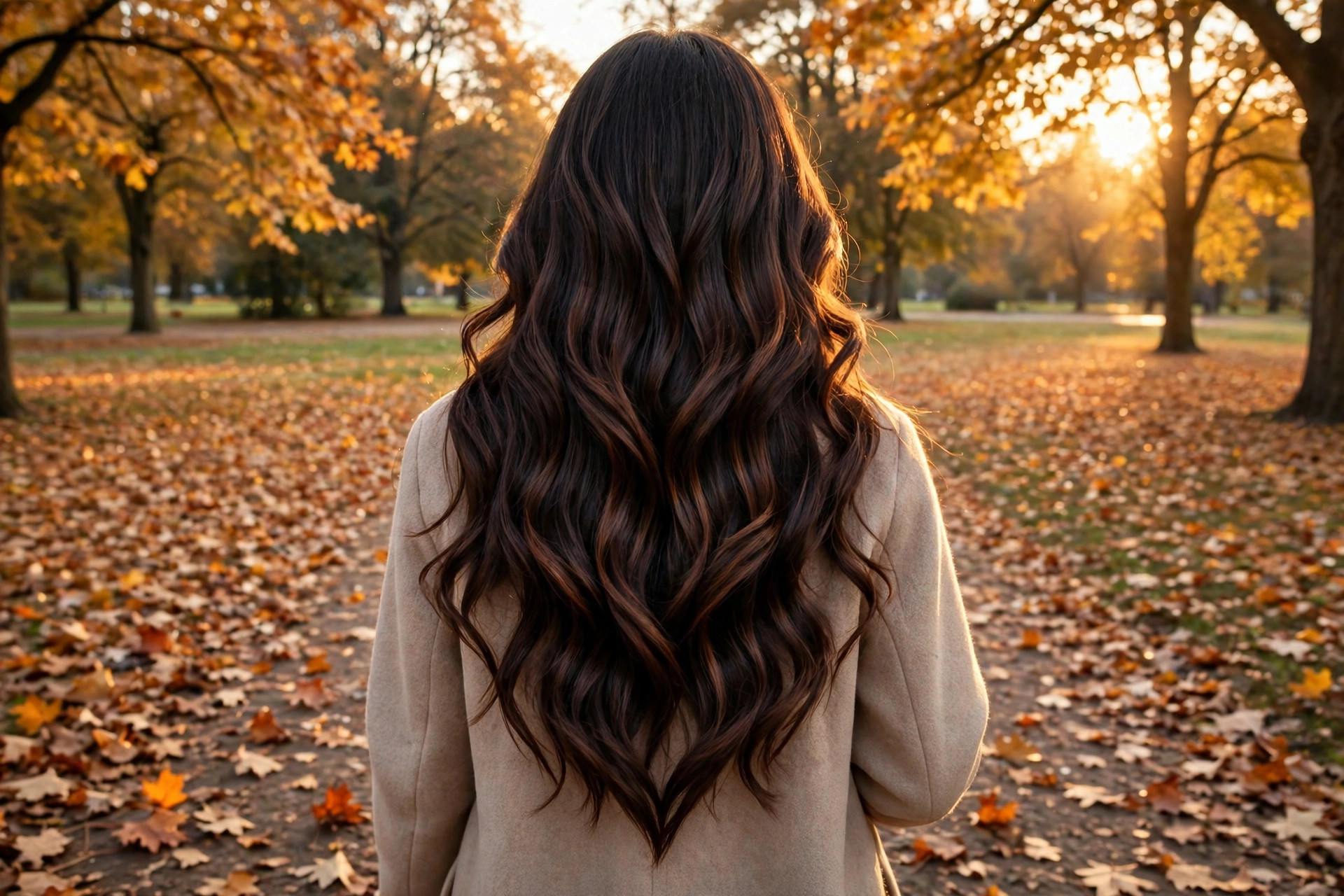
The vampire haircut is a long layered cut defined by three signature elements: significant length (usually past the shoulders, often to the mid-back), dramatic face-framing layers that start around the cheekbones and cascade downward, and a dark, rich colour palette — deep espresso, black cherry, mahogany or raven black. The overall effect is romantic and slightly mysterious, like the heroine of a gothic novel who also happens to have an excellent blowout.
It helps to understand what it is not. It is not a wolf cut — the vampire haircut is sleeker and more polished, without the choppy, shaggy texture. It is not just “long layers” either; the face-framing here is more deliberate and dramatic, often paired with a curtain fringe or long bottleneck bangs. And it is not exclusively for one hair type: the cut adapts beautifully to straight, wavy and curly hair, with the layering adjusted to suit each texture.
The name, of course, comes from the aesthetic rather than anything spooky. Think candlelit libraries, velvet dresses, autumn mist — romance with an edge. It is the hair equivalent of swapping your summer florals for a burgundy knit and oxblood boots. The timing makes sense too: as the light softens and wardrobes darken, hair that echoes that mood feels exactly right.
Who Suits It (and How to Adapt It)
The vampire haircut is more versatile than its dramatic reputation suggests, but the details should be tailored to you. Here is how to think about it for different features and textures.
- Face shape: The face-framing layers are the most customisable part. Rounder faces benefit from longer framing that starts below the chin, which elongates. Longer faces suit framing that starts higher, around the cheekbones, plus a curtain fringe to add width. Oval faces can wear almost any version.
- Hair texture: Straight and wavy hair show off the sleek, cascading layers best. Curly hair works beautifully too — the layers remove bulk and create gorgeous shape — but ask for a stylist experienced with cutting curls dry or in their natural state.
- Hair density: Thick hair is ideal, as the layers create movement without looking thin. Fine hair can absolutely wear this cut, but keep the layering softer and the length moderate so the ends do not look wispy.
- Lifestyle: Be honest about your styling routine. The vampire cut looks stunning air-dried on wavy hair, but very straight hair may need heat styling to get the signature movement. If you are strictly wash-and-go, discuss a lower-maintenance version with your stylist.
The colour element is flexible as well. While deep, dark shades are the signature, the cut itself works in any colour — the “vampire” feel comes from the combination of length, layering and richness. If going very dark feels like too much, a deep chocolate or rich auburn captures the mood while staying closer to your natural shade.
7 Vampire Haircut Variations to Consider
One cut, many moods. These seven variations show the range of the vampire haircut — bring your favourites to your consultation as reference points.
- The classic romantic. Mid-back length, long curtain fringe, deep espresso colour. The definitive version — timeless, feminine and endlessly photographable.
- The soft goth. Raven black with subtle face-framing and a slightly blunter perimeter. Edgier, more graphic, and stunning with minimal makeup and a strong brow.
- Cherry noir. Black-cherry colour — nearly black indoors, glowing deep red in sunlight — with flowing layers. The most autumnal option on this list.
- The modern muse. Slightly shorter (collarbone to chest length), with airy, feathered layers. A fresher, more everyday take that still keeps the romantic framing.
- Copper vampire. Deep copper or auburn instead of near-black. Unexpected, luminous, and gorgeous against autumn wardrobes.
- The curtain queen. A full, bouncy curtain fringe as the star, with the rest of the hair in soft long layers. Maximum face-framing drama.
- Wavy and undone. The same cut worn with natural texture and minimal styling — soft waves, lived-in ends, effortless romance. Ideal for wavy and curly hair types.
What to Ask Your Stylist: The Exact Language
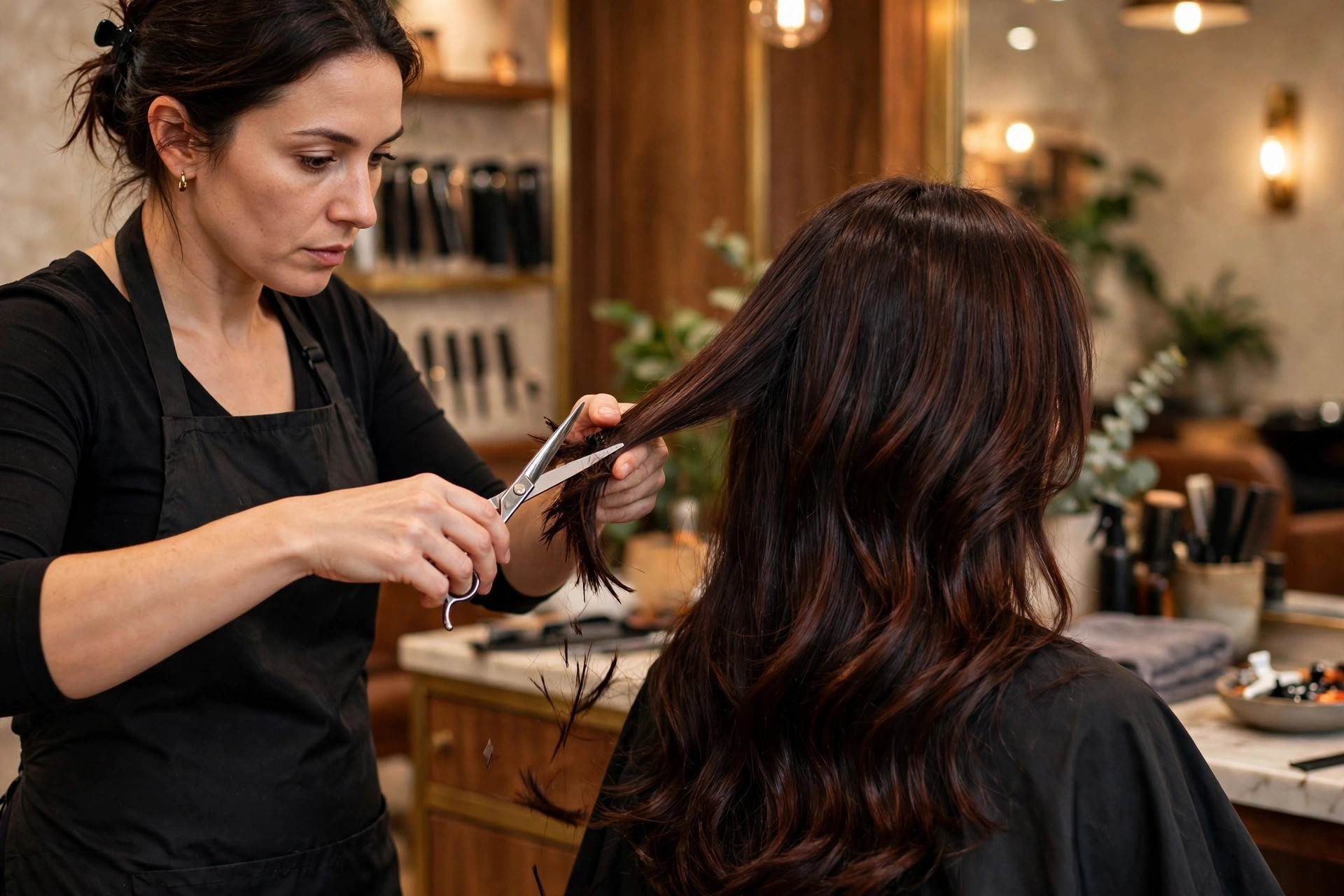
A great vampire haircut lives or dies on communication. “I want the vampire haircut” means different things to different stylists, so arrive with specifics. Here is a script that works: “I would like to keep significant length — at least past my shoulders. I want long, soft layers throughout for movement, with dramatic face-framing pieces starting around my cheekbones [adjust to your preference], and I am interested in a curtain fringe. For colour, I am thinking deep and rich — [espresso / black cherry / mahogany]. I want it to feel romantic and polished, not choppy.”
Bring reference photos — three to five images showing the length, the framing and the colour you want. Photos eliminate guesswork in a way words never fully can. Also bring one photo of what you do not want, if you have a clear anti-reference (for example, a shaggy wolf cut when you want sleek layers). Stylists consistently say this is one of the most helpful things a client can do.
Ask questions before the scissors come out: How will the layers behave with my natural texture? How much length needs to come off to make the shape work? What maintenance will the colour need? A good stylist will welcome these questions — they signal that you are invested in a result you will love living with, not just photographing once.
Styling Your Vampire Layers at Home
The beauty of this cut is that the shape does much of the work. Here is a simple routine for the signature soft, romantic movement.
The everyday blowout: After washing, apply a heat protectant and a smoothing cream to damp hair. Rough-dry until about eighty percent dry, then use a large round brush to blow-dry the face-framing sections away from your face — this creates that sweeping, curtain-like movement. Finish the lengths with the brush for polish, and set everything with a light-hold hairspray.
Heatless waves: For second-day texture, braid damp hair loosely into two braids before bed, or twist sections around a soft heatless curl band. In the morning, shake out the waves with your fingers (never a brush, which frizzes the layers) and add a drop of hair oil to the ends.
The sleek version: Sometimes the vampire cut looks best straight and glossy. Flat-iron in small sections with a heat protectant, then finish with a shine serum concentrated on the mid-lengths and ends. Tuck the front framing pieces behind your ears for a sharp, editorial feel.
Whatever your method, the non-negotiables are heat protectant every time you use hot tools, and regular trims every eight to twelve weeks to keep the layers fresh. Split ends are the enemy of romantic hair — they turn “storybook heroine” into “needs a trim” faster than anything else.
Colour Pairings That Complete the Look
If you are committing to the cut, the colour deserves equal thought. The vampire palette is deep and dimensional — flat, one-process black can look harsh, while colour with subtle dimension looks expensive and alive.
- Espresso with caramel ribbons: Deep brown base with a few face-framing highlights two shades lighter. Adds light around the face without breaking the moody feel.
- Black cherry: As described above — near-black with red undertones that ignite in sunlight. Ask for a gloss treatment to keep the red tones vivid.
- Mahogany: Rich reddish-brown that flatters warm skin tones beautifully and feels unmistakably autumnal.
- Midnight with a blue-black gloss: For the full gothic romance — inky, reflective, dramatic. A clear gloss every six weeks keeps it mirror-shiny.
Dark colour shows regrowth more obviously than lighter shades, so plan for root touch-ups every four to six weeks if you are covering grey or going significantly darker than your natural colour. Semi-permanent glosses are a lower-commitment way to test the dark side before going permanent.
The vampire haircut endures because it taps into something timeless: the pleasure of feeling a little bit dramatic. It is a haircut with a point of view — romantic, confident, unbothered. Whether you go full raven-black romance or a softer copper interpretation, wear it like the main character you are. Autumn, with all its mist and golden light, is the perfect season to begin.
Leave a Reply