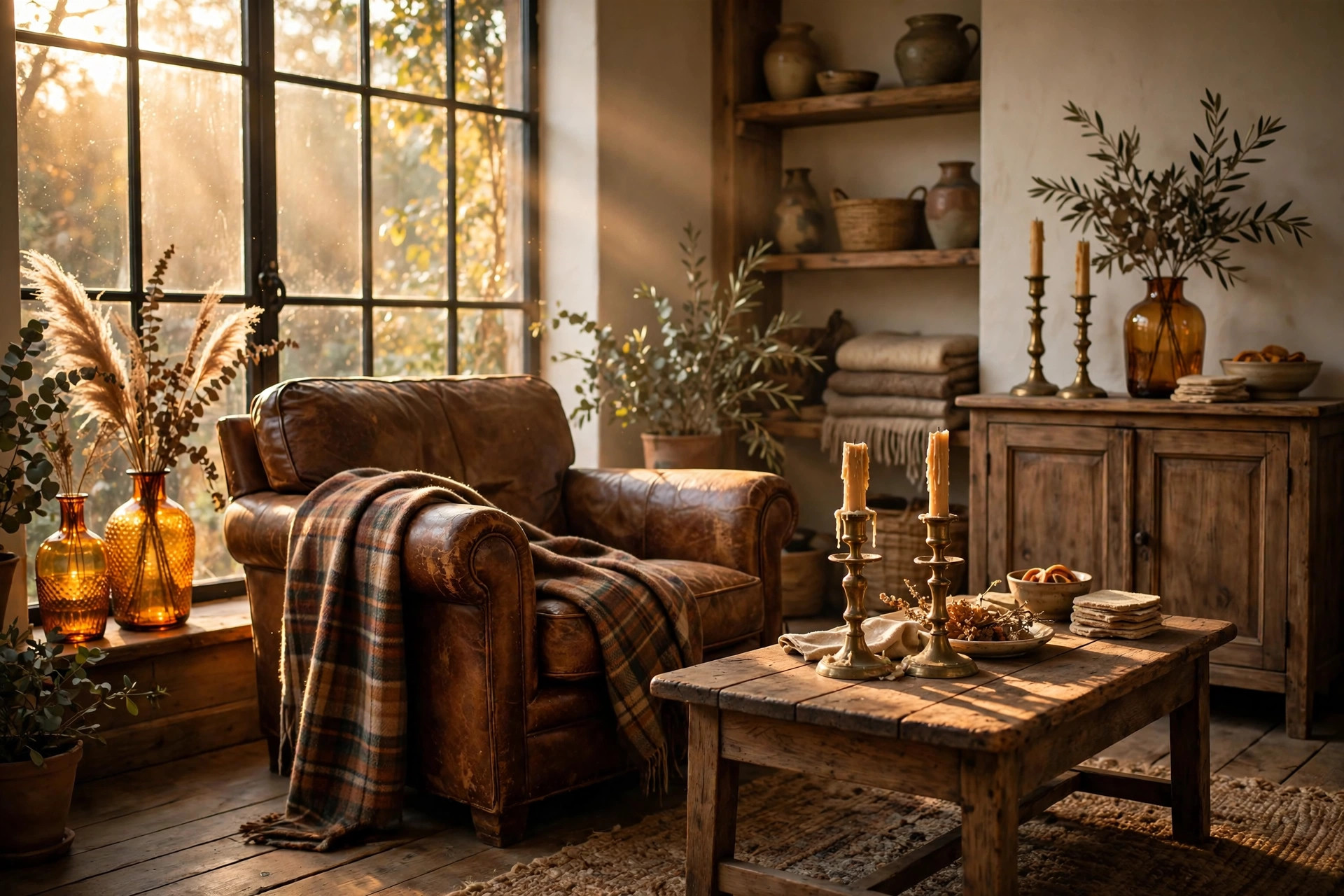
There is a particular kind of living room that stops you in your tracks when you scroll past it or step into it — not because it is perfect, but because it feels like it has a history. Nothing matches exactly. The coffee table has a ring mark from somebody’s teacup, decades old. The candlesticks are brass and slightly tarnished in the most beautiful way. A wool throw is draped over the arm of a chair that has clearly been sat in a thousand times.
This is the collected look, and it is the soul of vintage-inspired fall decorating. It is not about buying a complete autumn collection from one shop and unboxing it in an afternoon. It is about gathering pieces over time — from charity shops, flea markets, your grandmother’s attic, the bargain shelf at the antique centre — and letting your living room tell the story of who you are.
Fall is the perfect season for this aesthetic because autumn itself is about richness and age and things glowing at their peak. The low golden light of October afternoons was practically designed for brass, amber glass, aged wood, and worn leather. And the cosiness we all crave as the evenings draw in comes naturally when every surface holds something with a story.
Start With Your Big Pieces: The Bones of a Collected Room
Before you think about pumpkins and throws, look at the bones of your room. A collected living room is built on a handful of substantial vintage-style pieces that anchor everything else. If you already own a wooden coffee table with a bit of wear, a leather or velvet armchair, or a bookshelf with real heft to it, you are already halfway there.
If your furniture is mostly modern, do not despair — and do not replace it all. One or two vintage anchors will do the heavy lifting. A great place to start is a side table or a drinks trolley from a charity shop. Brass-legged side tables, mid-century teak pieces, and little wooden stools show up constantly in second-hand shops and cost far less than their style suggests.
Look for these characteristics when you are hunting:
- Worn wood with a patina — scratches and softened edges are a feature, not a flaw. A dark-stained oak sideboard or a pine trunk will ground your room instantly.
- Real brass or aged gold finishes — tarnish is welcome. Polished-to-a-mirror-shine brass reads formal; slightly dulled brass reads cosy.
- Worn leather in cognac or chestnut tones — the cracks and creases are the whole point. A thrifted leather pouffe or a battered document case on the shelf adds enormous character.
- Aged textiles — a faded kilim rug, a plaid wool blanket, or linen curtains that have softened with years of washing.
Arrange your anchors first, then build the autumn layers around them. The room should feel like it looked beautiful in July too — the fall part is the seasoning, not the whole dish.
The Amber Glass and Brass Moment
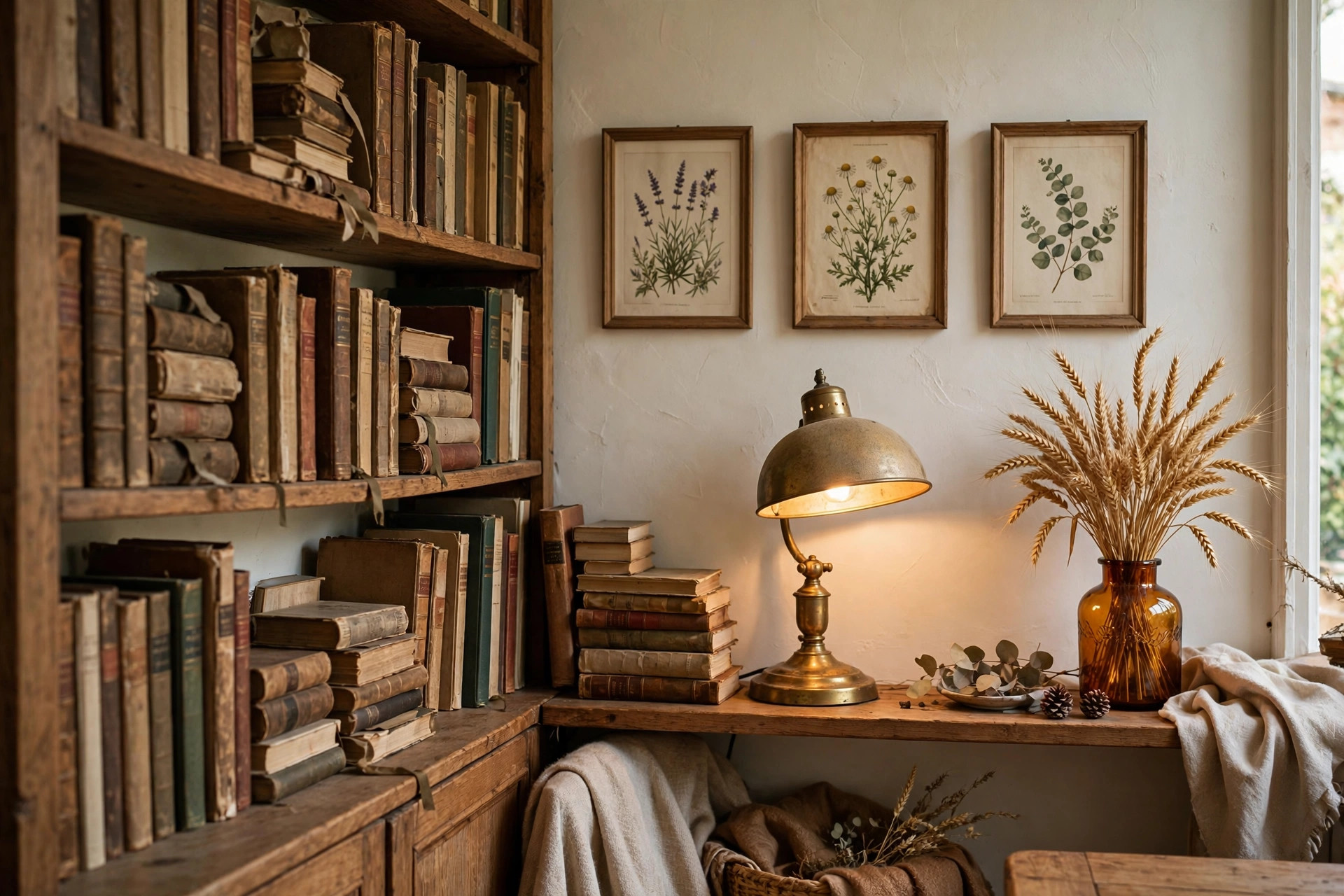
If there is one pairing that defines the vintage fall living room, it is amber glass and brass. Together they catch low autumn light and throw it around the room in the warmest possible glow. The good news is that both are charity-shop gold: amber glass vases, bottles, and jars are among the most common vintage finds in Britain, and brass candlesticks turn up everywhere.
Build a little amber-and-brass cluster somewhere the afternoon light hits — a windowsill, a side table near the window, or the mantel. Group pieces in odd numbers: three candlesticks of different heights, a couple of amber bottles, maybe a small brass dish. Odd numbers look collected rather than staged, which is exactly the feeling you want.
Use your amber glass practically. Fill a small amber bottle with dried wheat or a single branch of autumn foliage. Put tealights inside larger amber jars — the glass turns candlelight into something deeply golden. A brass tray underneath pulls the whole grouping together and protects your tabletop from wax.
Do not over-polish. A brass candlestick with darkened crevices and a few water spots looks like it has lived a life, which is the entire aesthetic. If a piece is genuinely black with grime, give it a gentle wipe, but stop well before it looks new.
Textiles: The Fastest Way to Autumn
Textiles are where the season changes fastest and cheapest. You can take a room from summery to fully autumnal in the time it takes to swap the cushions and unfold the throws — no new furniture required.
The vintage-inspired fall palette lives in the warm, dusty end of the spectrum: rust, burnt orange, mustard, olive, tobacco brown, warm cream, and deep bottle green. You do not need all of these; pick three or four and repeat them around the room so the space feels intentional rather than random.
Layering is everything. Try this formula on your sofa:
- A base of neutral cushions you keep all year — cream, natural linen, or a soft beige.
- Two autumn cushions in rust or mustard, ideally in natural fabrics like wool, velvet, or linen. A thrifted cushion cover in a paisley or botanical print adds the vintage note.
- A throw draped with intention — folded over the arm or casually across one corner of the sofa, never spread flat like a picnic blanket. Wool plaids and chunky knits are the classics for a reason.
Underfoot, a rug makes the room feel instantly warmer. If a full rug is not in the budget, layer a small vintage-style rug over your existing carpet or floor in front of the sofa or fireplace. Even a runner down one side of the room adds the collected, travelled feeling.
One caution: keep patterns in the same family. A vintage room can handle florals, plaids, and stripes together, but they should share colours and feel equally aged. One crisp, modern geometric print will stick out like a sore thumb.
The Mantel: Your Autumn Stage
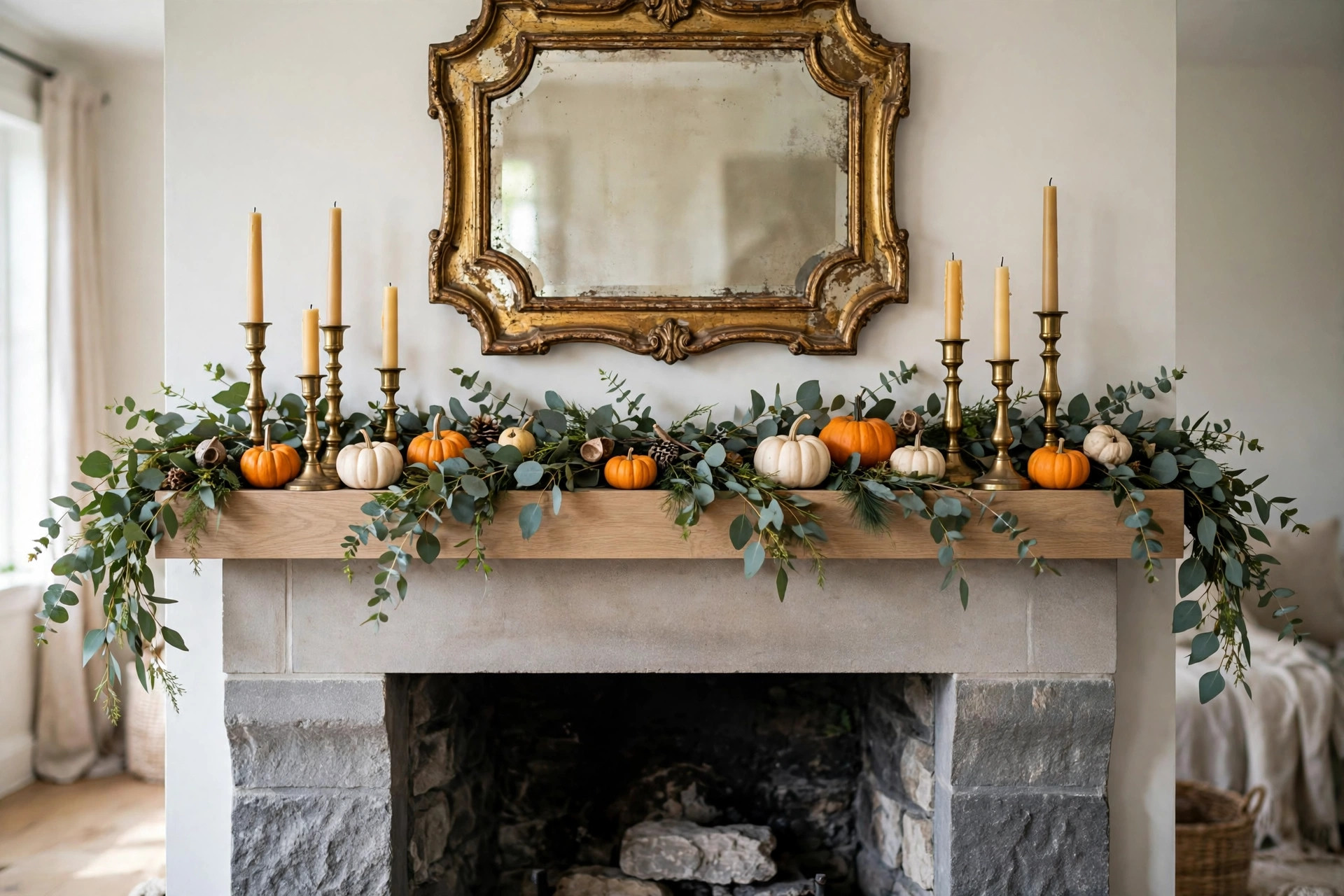
If you have a fireplace or even just a mantel shelf, it is the natural stage for your fall vignette. The mantel is where the collected look shines brightest because it is small enough to style in an afternoon and visible enough to change the whole room’s feeling.
Start with a mirror or a large piece of art as the anchor — an aged gilt frame or a thrifted landscape print in moody autumn tones is perfect. Lean it rather than hanging it if you like the relaxed collected feeling. Then build outward in layers:
- Height at the ends: brass candlesticks, tall amber bottles, or branches in a vase. Keep the two sides roughly symmetrical in height but not identical in objects — matching pairs read formal, near-matches read collected.
- A garland through the middle: dried eucalyptus, preserved oak leaves, or a simple string of wooden beads. Drape it so it dips slightly in the centre.
- Small treasures in front: tiny pumpkins or gourds, a brass dish holding conkers, a stack of two or three old books with a small pumpkin on top.
Step back and squint. You should see a pleasing rhythm of heights, not a flat line of same-sized objects. If everything is the same height, swap in something taller at one end and something lower at the other.
No fireplace? A console table, the top of a bookshelf, or even a wide windowsill can host the same arrangement. The principles do not change.
Shelves and Corners: Where the Stories Live
Open shelves are the collected room’s autobiography. This is where your old books, framed photographs, small brass objects, and dried botanicals live together — and where the fall season gets its quietest, loveliest expression.
The rule for styling collected shelves is simple: group, don’t scatter. A single brass candlestick alone on a shelf looks lost; three brass pieces of different heights with a small stack of books and a dried flower posy looks intentional. Leave breathing room between groups — crowded shelves read as clutter, grouped shelves read as curation.
For autumn, tuck seasonal touches into your existing arrangements rather than rebuilding them. Slip a few dried hydrangea heads or wheat stems into a vase that already sits on the shelf. Lean a small framed autumn print against the books. Place a conker or two in a brass dish you already own. These tiny interventions take minutes and the room will suddenly feel like October.
Corners deserve attention too. A floor basket filled with rolled throws, a tall branch in a stoneware vase, or a stack of vintage suitcases as a side table all fill awkward empty corners with character. Corners are where rooms feel either finished or forgotten — a basket of firewood by the fireplace, even a decorative one, is the ultimate autumn corner.
Lighting: The Secret Ingredient
Here is the truth about every cosy living room photograph you have ever admired: at least half of the cosiness is the lighting. Harsh overhead light will flatten the prettiest vintage styling, while warm, low, layered light makes everything glow.
For autumn evenings, aim for pools of warm light rather than one bright ceiling fixture. Table lamps with fabric shades in cream or amber tones are ideal — the shade itself becomes a glowing object. If your lamp shades are white and modern, consider swapping just the shades for something warmer; it is a small change with an enormous effect.
Candles are non-negotiable in a vintage fall living room. Cluster them: a group of pillar candles on a brass tray, tealights in amber glass, taper candles in your brass candlesticks. Mix real flame with good-quality LED candles where safety matters, but keep at least some real candles for the way real flame moves.
Fairy lights have their place, but keep them warm-white and restrained — a single strand woven through your mantel garland or draped inside a large glass jar. Cool-white lights will fight your amber-and-brass palette.
Collected rooms are never finished, and that is the joy of them. Every charity shop visit, every flea market wander, every piece handed down is a chance to add another layer to the story your living room tells.
Keeping It Current: The Difference Between Vintage and Dated
The line between a collected vintage room and a room that just looks old comes down to three things: breathing room, light, and one or two modern touches. A room packed wall-to-wall with dark old furniture can feel heavy; the same pieces with space around them, good lighting, and a clean-lined modern lamp or a simple linen curtain feel curated and current.
Keep your walls and larger textiles light enough to let the vintage pieces stand out. Cream walls, a natural jute rug, or simple white bedding-style throws on the sofa give dark wood and brass the contrast they need to shine.
Finally, edit. The collected look is not an excuse for clutter. Every few weeks, walk into your living room as if you were a guest and remove one thing that is not earning its place. A room with twenty beloved objects looks collected; a room with sixty looks like a storage unit. The discipline of editing is what keeps vintage feeling fresh instead of fusty.
Your vintage-inspired fall living room does not need to be finished this weekend. Add the amber glass now, hunt for the brass candlesticks next Saturday, swap the textiles when you feel like it. The best collected rooms are the ones that grew slowly — and autumn, with its long golden evenings, is the perfect season to enjoy every layer as it arrives.
Leave a Reply